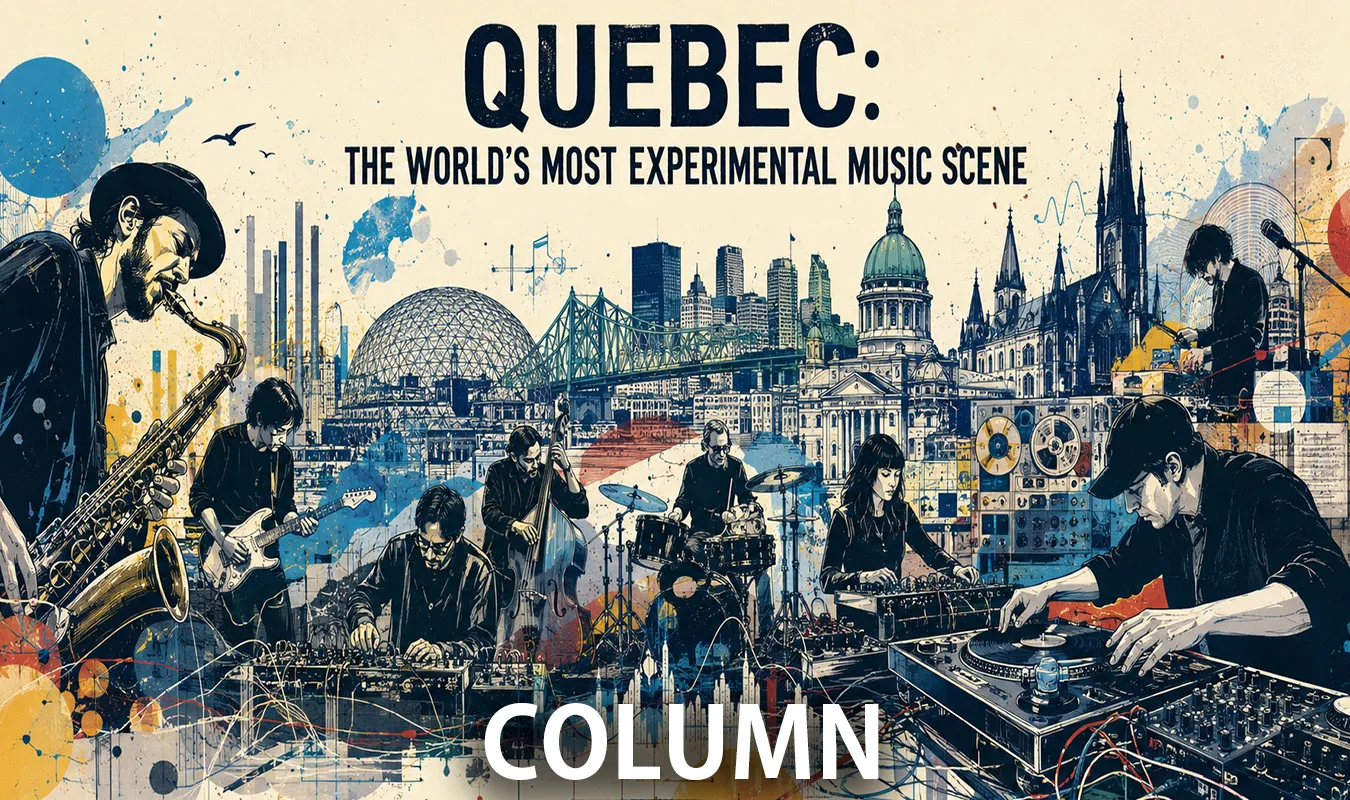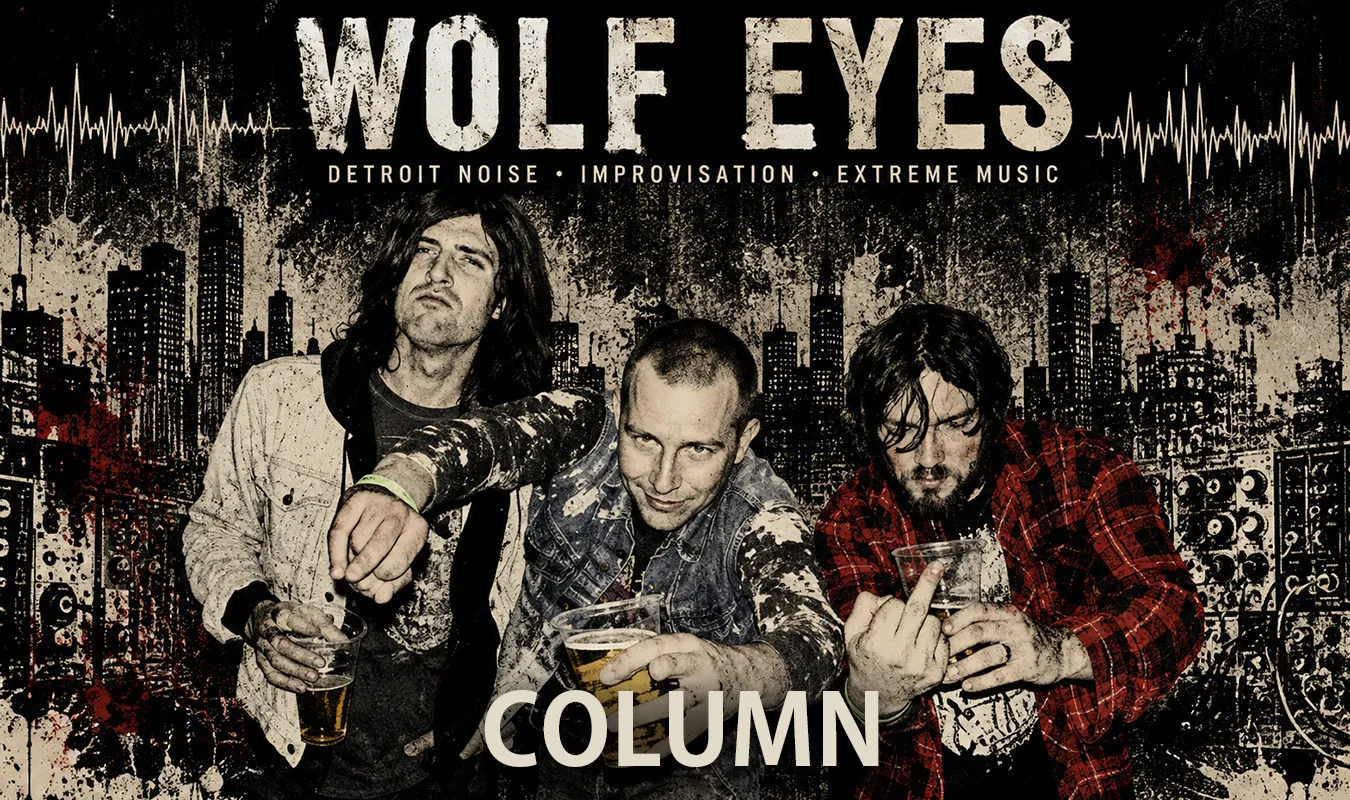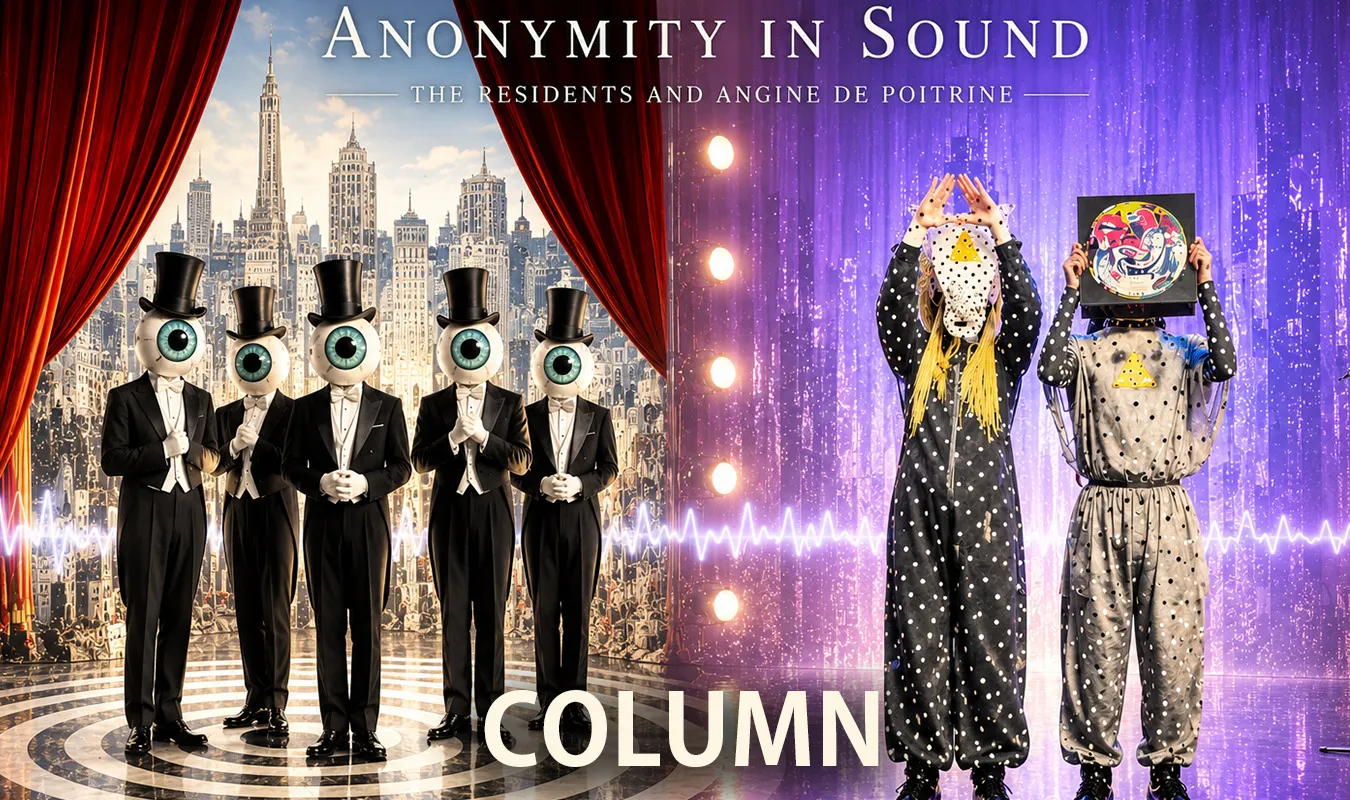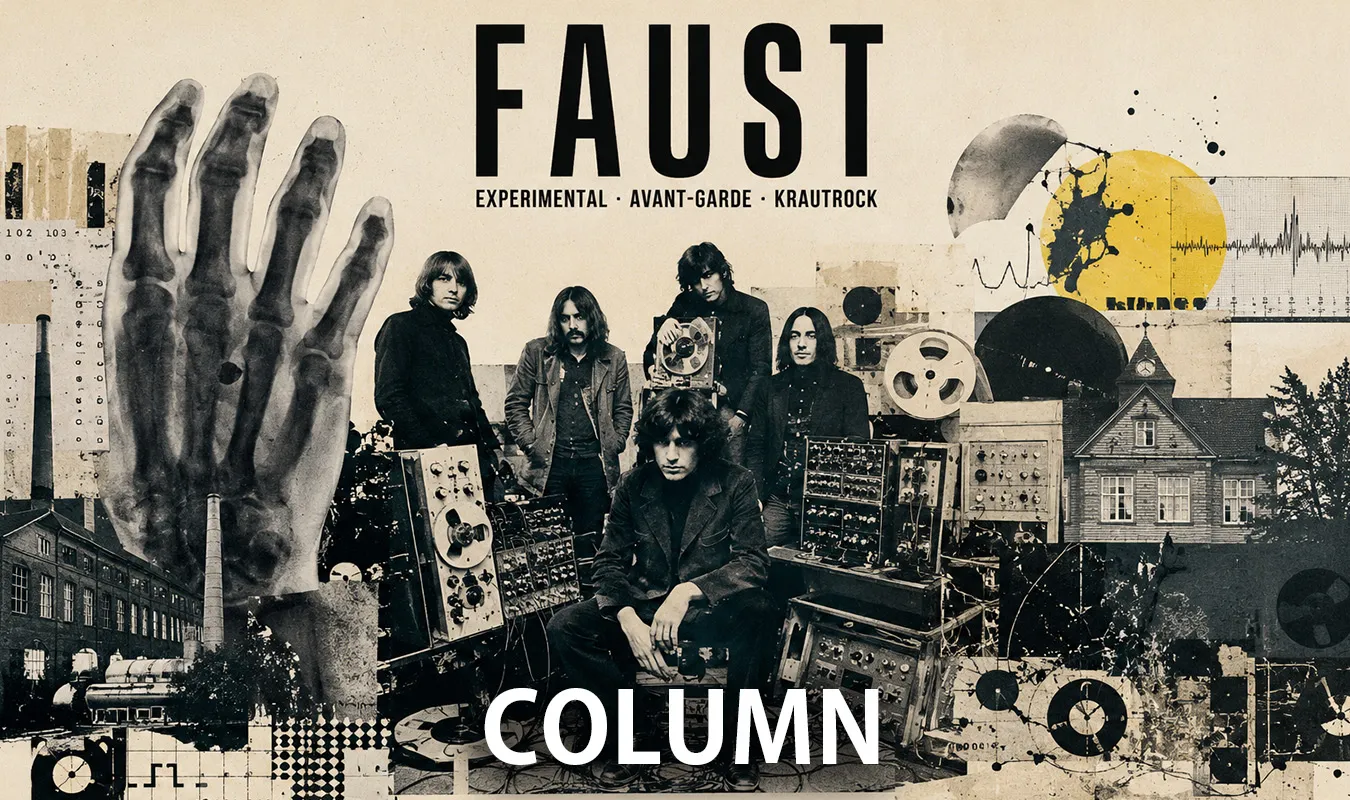
[Column] Angine de Poitrine VS Caroliner VS Rubber O Cement: Artist anonymity in Quebec and San Francisco
Column en Avant-Garde Experimental Noise
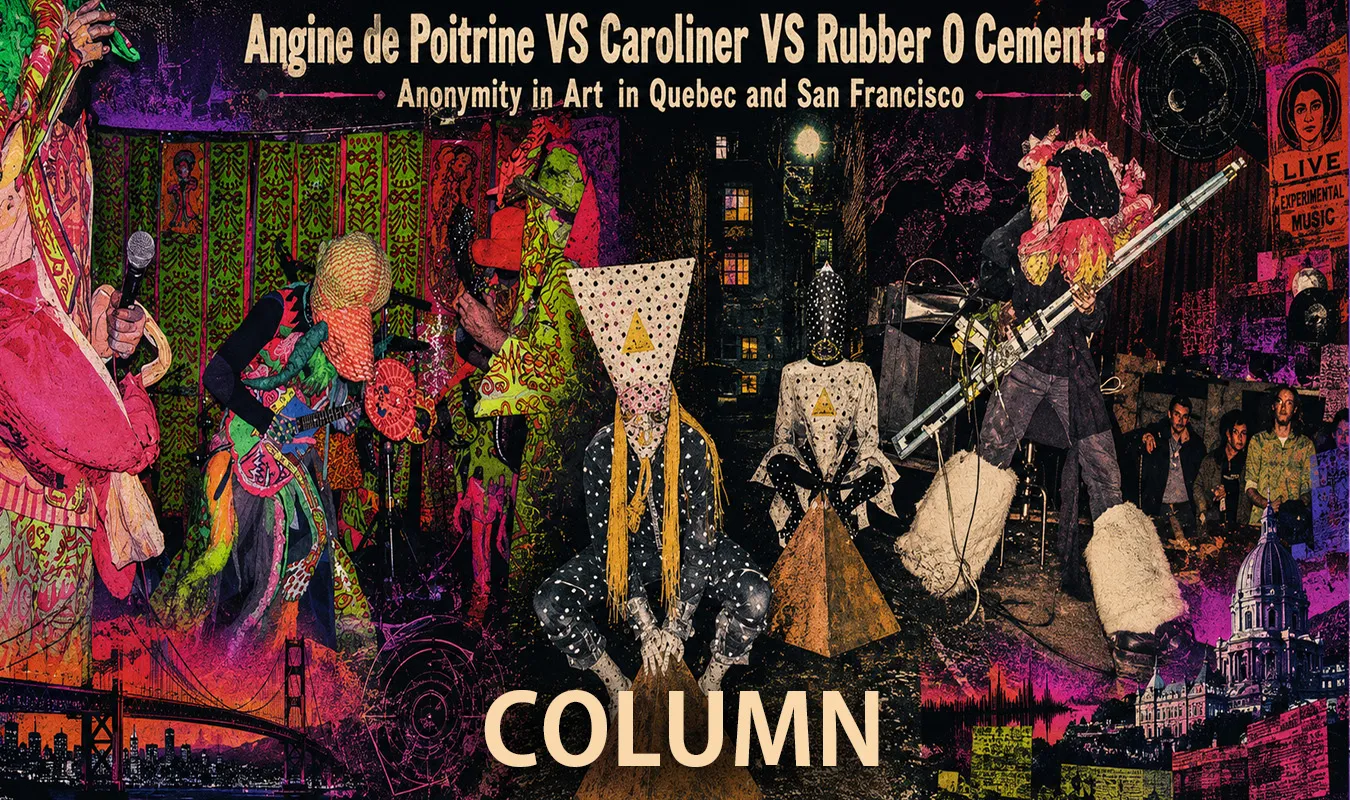
Erasing a name does not mean erasing existence.
| Text: mmr | Theme: Why was the expression method of anonymity born, and why did it develop independently in different cities? Deciphering the influence of anonymity on music, art, and community through the activities of three groups representing Quebec and San Francisco |
In the history of music, there are many artists who have hidden their true identities.
However, the purpose is not just one.
There are examples of people using masks to create commercial buzz, and there are also examples of people choosing to remain anonymous as a way to express their desire for their work to be evaluated purely. Furthermore, there are cases in which individual names have been abandoned in order to transform the community itself into a work of art.
Anonymity is not just a stage performance, but can also become a methodology for establishing the creation itself.
Since the 1980s, this idea has undergone its own evolution, especially in the North American underground.
At its heart are two regions: San Francisco on the west coast and Quebec on eastern Canada.
At first glance, the two have little in common.
San Francisco was a city of hippie culture, DIY spirit, experimental art, and performance art, while Quebec, with its own French-speaking cultural background, was a land where improvisational music, experimental music, and art intersected.
However, surprisingly similar ideas are emerging in these two places.
It is ““a feeling of discomfort in a situation where the author stands out more than the work.’’
This sense of discomfort fostered a culture of anonymity in different ways.
In San Francisco, anonymity has become a celebration.
In Quebec, anonymity has quietly disappeared.
The three groups of artists compared in this article symbolize these differences.
- Angine de Poitrine *Caroliner *Rubber O Cement
Although their active years and production methods are different, the one thing they have in common is an attitude of not bringing the individual to the forefront.
However, the content of that anonymity is surprisingly different.
Some create fictitious ethnic histories, some transform the author into a story, and some disappear, leaving behind only their works.
In other words, there is a wide variety of ideas that cannot be explained using the single word “anonymous.”
In this column, we will not simply introduce bands, but will interpret anonymity itself as an artistic concept.
The following three points are the axis of comparison.
- What did anonymity exist to protect?
- What kind of freedom did anonymity give to the work?
- How has urban culture influenced anonymous expression?
By comparing the three groups from this perspective, we can see that not having a name was not just a cover-up, but an extremely creative choice.
In this article, we view anonymity not as a ““technique to hide one’s identity,” but as ““the conditions for the creation of a work itself,” and compare the differences between the two. Not only the works but also the personality itself came to be treated as a commercial value.
Where did the anonymous culture originate?
Anonymous expression did not suddenly emerge in the 1980s.
If we look back at art history, a culture that prioritizes the community over the artist’s name has existed since ancient times.
In medieval Europe, many religious paintings did not bear the names of their creators.
What was important was faith, not the individual, and the work was a service to the community.
Later, in the modern era, the concept of an artist became established, and the artist’s name began to have value.
From the 19th century to the 20th century, we moved into an era in which market value was determined by who made the product.
However, in the second half of the 20th century, a backlash against this idea emerged.
In avant-garde art, the very system of commercializing works became a subject of criticism.
In performance art, the body becomes the work, and in conceptual art, the idea itself becomes the work.
Here, actions and concepts began to be considered more important than the author’s name.
Furthermore, from the late 1960s to the 1970s, DIY culture spread in North America.
The idea is to record the music ourselves, print it ourselves, and distribute it ourselves.
In this culture, bypassing major labels and established media became valuable.
Anonymousness also begins to take on new meaning in this flow.
The goal is not to “become famous” but to “create things freely.”
In fact, personal names sometimes even hindered creativity.
It’s not just music.
Collaborative production became commonplace in many fields, including zine, comics, video, installation, and improvisational theater.
It is no longer rare to find works in which we do not know who made them and to what extent.
This environment makes for particularly rich soil in San Francisco.
In Quebec, however, things are a little different.
Here, improvisational music and contemporary art are strongly linked, and a tendency has developed to place more emphasis on the ““collective sound” than on the ““individual performer.”
Anonymity is not self-denial.
Rather, his idea was to take a step back from his ego in order to concentrate on his work.
Even within the same anonymity, the backgrounds differed greatly depending on the city.
Anonymous culture did not suddenly appear, but was nurtured as an extension of a long history of collaborative production, avant-garde art, and the DIY spirit.
“Performance of anonymity” developed in San Francisco
San Francisco, a city on the west coast of the United States, has become an important center for experimental art since the 1960s.
Beat Generation, hippie movement, psychedelic culture, improvisation, mail art, performance art, DIY publishing.
In this city, where such different cultures developed simultaneously, the question ““What is a work?’’ was always being asked.
In this context, the traditional values that put the individual artist at the forefront are often called into question.
An increasing number of artists began to consider not only their works of art but also the systems surrounding them as objects of expression.
Anonymity was a very natural option in this culture.
It’s not about hiding your identity.
It was also a production to blur the boundaries between the work and the real world and draw the audience into the world of the work.
A live performance is not just a concert, but a ritual.
The album becomes not a sound source, but a fictitious historical document.
Posters become fragments of stories rather than advertisements.
Anonymity was a device for establishing the entire world of the work.
In San Francisco, many ideas like this were seen in the 1980s and 1990s.
A typical example is Carolinar.
On the other hand, in the same region, there were also entities that approached anonymity from a completely different direction, such as Rubber O Cement.
Even though they were in the same city, the meaning of anonymity was never the same.
In San Francisco, anonymity grew up as an expression not for ““hiding,” but for ““creating the world itself.”
Caroliner─The moment when anonymity turns into myth
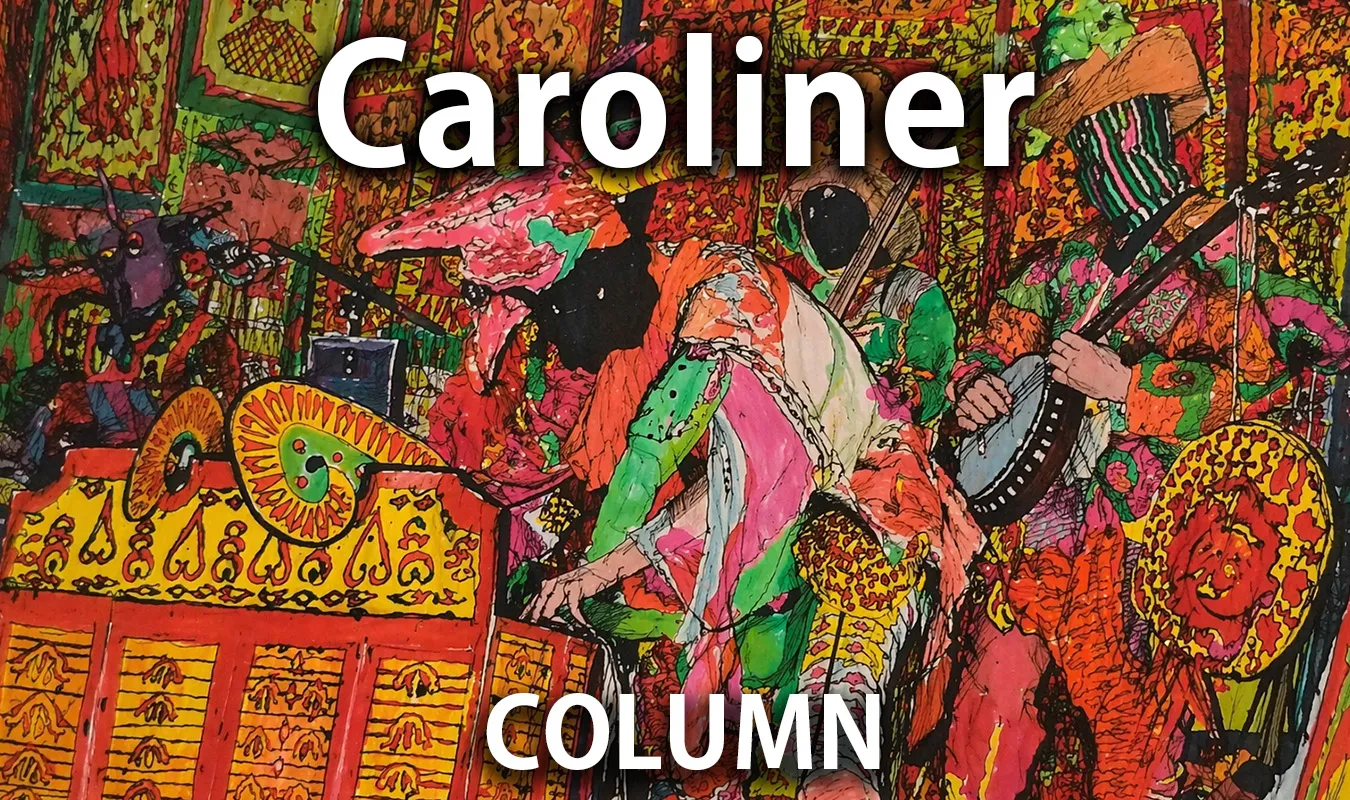
Caroliner is one of San Francisco’s leading avant-garde groups that has been active since the late 1980s.
The first thing that surprises people who see the work for the first time is the overwhelming amount of information it contains.
Album title.
jacket.
Live costume.
Handouts.
stage decoration.
All of them are consistently constructed with a worldview that resembles fictional history, folklore, or ethnography.
The story is fragmentary yet vast, and it is impossible to understand the whole picture from just one piece.
But that’s exactly what Carolinar is aiming for.
They did not aim for “works to be explained.”
The premise was that the audience would collect the fragments themselves and assemble the world in their own way.
At live performances, the members appear more like residents of an unknown community than humans, wearing giant masks, cloth, and handmade costumes.
It doesn’t matter who is playing.
What is important is the collective illusion of ““Caroliner’’ that exists in the scene.
Anonymity here is not a technology that erases the individual.
It is a theatrical device to make a fictional race appear in reality.
Music is also inseparable from that worldview.
A mix of noise, folk, improvisation, punk, and folk music elements, defying formal genre classification.
The listener receives not only the song, but the entire work as a cultural sphere.
This attitude was also typical of San Francisco, which treats everything from album production to live performances, art, and costumes as a comprehensive art form.
Anonymity in Caroliner was not a means to hide the performer, but an essential mechanism for establishing a mythical world.
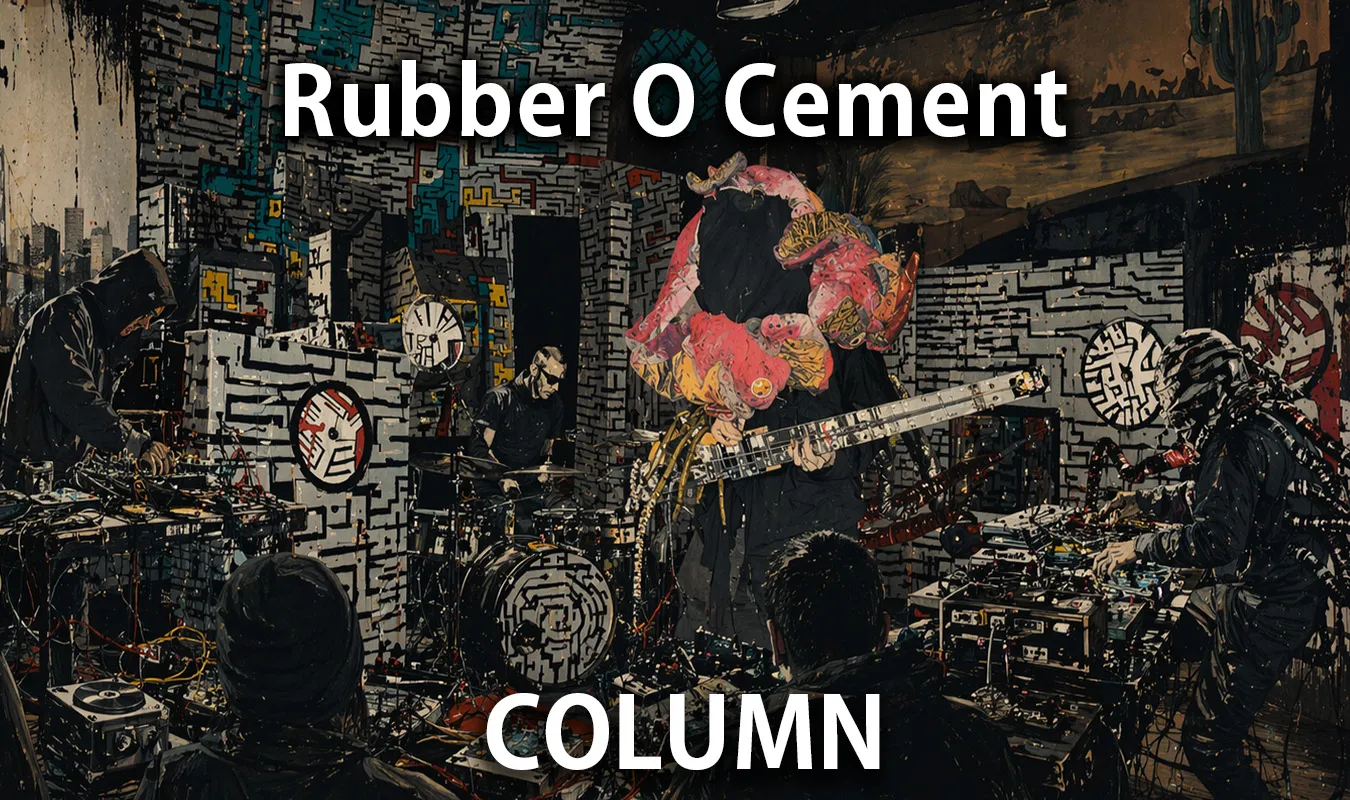
Rubber O Cement──The work continues to move on rather than the author
Rubber O Cement embodies anonymity in a completely different way than Carolinar.
While the works have a certain aesthetic, there is very limited information about the individual creators.
As a result, the listener naturally turns their attention to the work itself.
This has a slightly different meaning from the ““profile private’’ often seen among modern anonymous artists.
In the case of Rubber O Cement, the goal is not to hide personal information, but rather to maintain the independent existence of the work.
In other words, the question of ““who made it?’’ is pushed outside the work itself.
The work has a strong sense of collage.
Recorded material.
noise.
Fragmented sounds.
environmental sounds.
Reconstruction by editing.
Although these are integrated into a single work, the creator’s personality is hardly ever foregrounded.
This is highly compatible with DIY culture.
When producing independently, we are responsible for distribution and advertising ourselves.
However, the goal is not to become a star.
Continuing expression becomes a goal in itself.
Rubber O Cement is an example of putting this idea into practice in a very quiet way.
Anonymous is not a showy performance.
Rather, it was the creation of a natural environment in which works could continue to be circulated for a long time.
For this reason, even though there are people who know about the work, very few people talk about the author personally.
This structure itself embodies the idea of anonymity.
Rather than mystifying the creator, Rubber O Cement chose a state in which only the work continues to exist autonomously.
Even in the same city, anonymity can vary so much
Both Caroliner and Rubber O Cement come from the DIY culture of the San Francisco area.
However, there is a big difference in the concept of anonymity.
In Caroliner, anonymity is an active production to make the story come true.
The performer becomes a character and becomes part of the world of the work.
By participating in the live performance, the audience becomes residents of that fictional world.
At Rubber O Cement, on the other hand, anonymity works toward minimizing the production.
The author does not appear publicly, and only the work remains quietly.
There is an emphasis on autonomy rather than theatricality.
In other words, the two approaches the same question in diametrically opposed ways.
“Who does the work belong to?”
Caroliner replies, “It’s a communal fantasy thing.”
Rubber O Cement answers, “It’s the work itself.”
Although they both distance themselves from a view of art that centers on personal names, their methods of practice are surprisingly contrasting.
San Francisco’s anonymous culture was not a single ideology, but developed in different directions of theatricality and autonomy, giving rise to a variety of creative forms.
“Quiet anonymity” fostered in Quebec
In San Francisco, anonymity developed as an active device for expanding the world of work.
Meanwhile, in Quebec, the idea of anonymity was developed from a completely different direction.
Behind this is the region’s unique cultural environment.
Quebec, and Montreal in particular, has long been known as one of North America’s most unique artistic cities.
Although it has a French-speaking cultural background, it also has contact with American experimental music and European contemporary music, and is a place where diverse values intersect.
Since the 1970s, improvisation, contemporary music, noise, sound art, video, and fine art have been closely intertwined in this region.
The idea of clearly dividing genres was relatively weak, and it was not uncommon for a single artist to cross over multiple fields.
As a result, the boundaries between roles such as ““performer” and ““artist” and ““composer” and ““recording engineer” are becoming blurred.
Here, a work is often seen as a thought process rather than a finished product.
Therefore, there was not necessarily a strong need to strongly emphasize the individual author.
Rather, the emphasis is on leaving space in the work itself to begin a dialogue with the viewer.
The anonymity fostered in this cultural soil does not hide oneself behind flashy masks or stories.
It is similar to the idea of quietly disappearing and leaving only the works behind.
Anonymity is not a performance, but a creative attitude itself.
Angine de Poitrine is a person who symbolizes this characteristic.
Québec’s anonymous culture was developed not as a theatrical mask, but as an idea that quietly blended the author into the work.
Angine de Poitrine──Creative method of “disappearing”
Angine de Poitrine is a unique figure in the Quebec experimental music scene.
His works have a consistent aesthetic.
However, on the other hand, there is very little information about the creator himself.
They do not actively disseminate their profiles, nor do they bring to the fore any production that mystifies their activities.
As a result, the first thing the listener is faced with is always the sound.
This is no coincidence.
As you listen to his work, you can feel his precise sense of editing and compositional ability.
Subtle acoustics.
Fragmented melody.
environmental sounds.
noise.
Electronic sound.
silence.
These materials are carefully arranged to form a single acoustic space.
Rather than recording an improvisational performance, it is a production approach that feels like sculpting time itself.
The sounds appear and disappear one after another, never clearly explaining anything.
That’s why listeners begin to search for meaning on their own.
At this time, if the author’s personality and background come to the foreground, the viewing experience may change significantly.
By removing as much unnecessary information as possible, Angine de Poitrine creates a situation where the work and the listener interact directly.
The important point here is that ““anonymity’’ is not the goal.
The purpose is to create an environment where the work itself can exist independently.
As a result, the author naturally recedes into the background.
In other words, anonymity is not a self-denial, but a choice to foreground the work.
At Angine de Poitrine, anonymity itself is not the subject matter, but functions as a method to create an environment in which only the work can quietly stand up.
“Disappearing author” and “appearing sound”
In art history, the concept of ““the death of the author’’ is often talked about.
“Death” here does not refer to an actual person.
The idea is that the meaning of a work is not determined solely by the artist, but is born out of the relationship with the viewer.
Angine de Poitrine’s work has a high affinity with this way of thinking.
His works rarely present a clear story.
Listeners construct their own meanings from the flow of sound.
Therefore, each person has a different interpretation.
To some, it may sound like an echo of a city.
To others, it may give the impression of an abstract painting.
For others, it may resonate as a soundscape that evokes fragments of memory.
None of the interpretations can be unilaterally rejected.
Precisely because the artist is not in the foreground, the work is constantly updated by the experience of the viewer.
This structure is in contrast to the Carolinar.
Caroliner presents a wealth of worldviews.
The audience participates in the myth.
On the other hand, in Angine de Poitrine, the world of the work is only minimally defined.
The work is completed by the audience filling in the blanks themselves.
Although they share the commonality of anonymity, their philosophies are completely different.
Angine de Poitrine’s anonymity does not erase the author, but can be said to be a structure that maximizes the blank space for the viewer to enter the work.
What is the decisive difference between Quebec and San Francisco?
Comparing the three groups we have looked at so far, we can see that the meaning of the word anonymous varies greatly depending on the region.
In San Francisco, anonymity is often a device for creating a sense of community.
Live performances, art, costumes, stories, publications, etc. come together, and the audience participates in the world.
Anonymous was a creative way to launch a “new reality.”
In Quebec, on the other hand, anonymity is more like creating an environment for maintaining the transparency of works.
With the author actively disappearing, only the work exists quietly.
Here, the emphasis is on dialogue with the sound itself, rather than theatricality.
This difference is not superior or inferior.
Both have in common that they distance themselves from cults of personality.
However, the way it is practiced varies widely depending on cultural background.
San Francisco “adds” anonymity.
Quebec is “removed” by anonymous.
This contrast is the central axis of comparison in this paper.
Even with the same word, anonymous, San Francisco amplified the world, while Quebec developed in contrasting directions, purifying the work.
DIY culture and underground distribution that supported anonymity
From the 1980s to the early 2000s, in the world of experimental music, noise, and improvisational music, distribution networks that were not mediated by major record companies were formed around the world.
At the heart of this was the DIY culture.
DIY here does not simply mean ““make it yourself.’’
The idea is to complete recording, duplication, jacket production, distribution, sales, and promotion either by yourself or within a small community.
This system was deeply connected to independent culture after punk.
Small quantity production rather than mass production.
Hand delivery rather than nationwide distribution.
Word of mouth rather than advertising.
Continuation over profits.
These values were very compatible with the anonymous method of expression.
There is no need to compete for popularity.
There is no need to post a photo of your face.
In distribution without a star system, ““what was made” is naturally more important than ““who made it.”
Caroliner, Rubber O Cement, and Angine de Poitrine have all published work within this cultural sphere.
Of course, there are differences in the form of activities and production methods.
However, they shared a common set of values in terms of a creative approach that was not aimed at mass consumption.
Anonymity does not mean isolation.
Rather, it was a culture that could easily be established within a small but closely connected community.
DIY culture not only made anonymity possible, but also fostered an environment in which works could be evaluated anonymously.
A “shelter for works” called a small label
For major labels, artist profiles and image strategies are important elements of sales promotion.
However, things are different for small labels that deal with experimental music.
The work itself was the center of distribution, and information about the individual creator was often kept to a minimum.
The jacket design also clearly expresses this attitude.
Abstract paintings, collages, typography, hand-drawn illustrations, or very simple designs are often used instead of flashy advertising slogans or artist photos.
These expressions were also an expression of the buyer’s intention to ““face the work itself.’’
There was also active exchange between small labels.
Through the exchange of sound sources, joint projects, and participation in compilations, a cross-border network is being formed.
In this process, trust was more important than name recognition.
As long as the quality of the work and the attitude toward activities were shared, that alone was enough.
Being anonymous didn”t necessarily mean they weren”t to be trusted.
Rather, his attitude of continually presenting his works was the foundation that supported his existence.
This is in contrast to the large-scale music industry.
Rather than being a place to sell works, small-scale labels functioned as ““shelters’’ where diverse expressions could exist safely.
Why cassette culture encouraged anonymity
From the 1980s to the 1990s, cassette tapes became an important medium for experimental music.
Cassettes were cheap, easy to reproduce, and suitable for small-lot production.
It was common for artists to produce works ranging from dozens to hundreds and distribute them at live concerts and via mail order.
With this distribution method, there is no need for advertising based on the assumption of mass sales.
Works pass from hand to hand to people who are interested in them.
In this case, short explanations accompanying the work, jacket design, and word of mouth played an important role.
This system was extremely convenient for artists who worked anonymously.
It doesn”t matter if you don”t have a photo of your face.
Even if there is little exposure to the media, the work will be distributed.
Even if he did not perform live often, he could reach fans around the world through his recorded works.
Additionally, cassette culture had an atmosphere that welcomed experimentation.
Variations in recording quality and even rough editing were often perceived as characteristics of the work.
This tolerance was also strongly linked to anonymous expression.
Not a perfect product, but a one-time expression.
This sense of value is similar to the works of Migumi.
Cassette culture was the perfect medium for anonymous artists to continue their journey freely through their works.
International experimental music network connected by mail
Before the Internet became popular, underground music was supported by the mail.
Send registered mail or postal money order to the label, and a few weeks later the work will arrive from somewhere in the world.
Although it is difficult to imagine today, this exchange built an international community.
Catalog sent with the work.
handwritten letter.
Newsletter.
Flyer.
These paper media were also an important source of information about new works and artists.
Once you order a piece of work that interests you, it will lead you to other labels and artists.
Through this chain, experimental music scenes in North America, Europe, Japan, and Oceania were loosely connected.
Interestingly, anonymity was not an obstacle for this network.
What was important was not his real name, but the trust he had in continuing to produce outstanding works.
As a result, works became separated from the individual creators and were naturally shared within a single cultural sphere.
Angine de Poitrine, Carolinar, and Rubber O Cement each benefited from this international distribution network in different ways, delivering their works to many enthusiasts.
The postal network became an important foundation that supported an era in which works were appreciated across national borders, even if they were anonymous.
Why did anonymity spread from the 1980s to the 2000s?
Artists working anonymously existed even before that.
However, the reason why its presence has grown since the 1980s is due to a combination of multiple factors.
First, the DIY culture has matured.
Second, there is an increase in small-scale labels.
Thirdly, media suitable for distribution in small quantities, such as cassettes and self-produced CDs, are becoming more widespread.
Fourth, an international underground network for evaluating works has been established.
As a result of these interactions, an environment has expanded where the ““work itself” is evaluated rather than the ““personal brand.”
Anonymity is not a byproduct of the environment.
Rather, it was one of the expressions that symbolized the environment.
Caroliner created the story, Rubber O Cement let the work stand on its own, and Angine de Poitrine quietly receded the author into the background.
Although the methods of the three methods are different, they were all possible because of the same cultural conditions of the time.
The expression “anonymous” was not just a product of individual choice, but also a product of the creative environment fostered by underground culture as a whole since the 1980s.
Compare the anonymity of the three parties
As we have seen, while Angine de Poitrine, Carolinar, and Rubber O Cement all place anonymity at the core of their expressions, they practice it in very different ways.
If you just look at the word “anonymous”, it seems like they have something in common, but in reality, their goals and the effects they had on their works are not the same.
In Caroliner, anonymity was a stage set for establishing a fictional world.
The work is not about the individual members, but the community called “Caroliner” itself.
Audiences participate in the myth system through live shows and records.
Anonymous was a creative engine for amplifying worldviews.
At Rubber O Cement, anonymity functions as an environment that protects the autonomy of the work.
The composition is such that the sound and collages themselves are perceived as independent entities, without pushing information about the author to the forefront.
In this case, the emphasis is on ““what kind of experience the work brings” rather than the question ““who made it?”
An even quieter anonymity is found in Angine de Poitrine.
The artist actively disappears, leaving only the work in front of the viewer.
As a result, the work continues to acquire different meanings depending on the listener.
Anonymity is a structure that ensures space for viewers to freely interpret the work.
While moving away from ““author-centeredness’’ from different directions, each of the three established their own unique creative methods.
What all three have in common is not a form of anonymity, but a consistent creative attitude of ““placing the work before the creator.’’
Chronology: Until anonymous expression matured
The expression “anonymous” was not created by a single artist.
It has been nurtured over time in underground culture and DIY networks.
The chronology below organizes the flow covered in this paper in chronological order.
| Years | Events | Relationship with anonymous expressions |
|---|---|---|
| 1960s | Experimental art and hippie culture develop in San Francisco | Formation of collaborative production and performance |
| 1970s | Punk, experimental music, and mail art with a DIY spirit expand | Values that emphasize works over personal brands spread |
| 1980s | Small-scale labels and cassette culture become active | An environment is created to distribute works anonymously |
| Late 1980s | Caroliner becomes active | Develops unique expression that combines anonymity and fictional world |
| 1990s | Underground distribution network connecting North America, Europe, and Japan matures | Exchanges between anonymous artists become active |
| 1990s to 2000s | Rubber O Cement presents works | An attitude of putting the work more front than the artist spreads |
| Since the 2000s | Angine de Poitrine continues to present works | Quiet anonymity and acoustic expression attract attention |
| Currently | Digital distribution has become commonplace | The method of anonymity is being reevaluated in a new way |
Anonymous expression is not a passing fad, but an important legacy of underground culture that has been passed down for more than half a century.
What does anonymity mean in the digital age?
Nowadays, publishing your work has never been easier.
By using video distribution services, music distribution services, and SNS, even individuals can deliver their works to the world.
On the other hand, the existence of the creator himself has also become more visible than before.
profile.
Daily posts.
Live streaming.
The algorithm draws attention not only to the “work” but also to the “person” itself.
In this environment, the choice to remain anonymous begins to take on a different meaning than before.
I want you to evaluate only the work.
I want you to accept it without any preconceptions.
I want to separate the world of my work from reality.
Even today, there are many artists who choose to remain anonymous based on this idea.
However, its purpose is not exactly the same as in the 1980s.
At that time, the distribution system itself had a structure that was compatible with anonymity.
In today’s world, in an environment where visibility has become the norm, choosing to remain anonymous has a paradoxical meaning.
That’s why the anonymity demonstrated by Carolinar, Rubber O Cement, and Angine de Poitrine still offers fresh suggestions even today.
Their works continue to quietly demonstrate that ““being known for one”s name” and ““having one”s work appreciated” are not necessarily the same thing.
Anonymity in the digital age is not a vestige of the past, but also a modern option for continuing to choose work-centered creation.
Conclusion: Anonymous does not mean “no one”
The word anonymity brings to mind the image of ““hiding one’s true identity’’ for many people.
However, the activities of the three groups discussed in this paper cannot be explained by this alone.
Caroliner has built a magnificent mythical world through anonymity.
Rubber O Cement has made the work independent from the author through anonymity.
Through anonymity, Angine de Poitrine created a space for viewers to expand their interpretations.
The methods are different.
The destinations are also different.
However, what they all had in common was the attitude that ““the work should speak first.’’
In modern times, it has become commonplace for creators to continue transmitting their work.
That’s why the idea of a work continuing to exist quietly seems so refreshing.
Anonymity does not mean erasing existence.
It is a creative method that allows the work itself to resonate more richly by taking a step back from knowing the author.
The activities of the three artists, who were nurtured in the different cultural regions of Quebec and San Francisco, have each shown this in different ways.
Anonymity is not a dead idea.
As long as we try to put the work at the center, this expression will continue to be passed down in different forms.
Anonymity is not a technique that erases the author, but a creative structure that allows the work to continue to freely communicate with the times and viewers.
YouTube Podcast
*This podcast is in English, but you can watch it with automatic subtitles and translation.