[Column] Anonymity and atypical pop—The anti-music horizon opened up by The Residents

Column en Art Avant-Garde Experimental
[Column] Anonymity and atypical pop—The anti-music horizon opened up by The Residents

Prologue: The concept of unknown identity

Text: mmr|Theme: The trajectory of an avant-garde group that redefined the very framework of music using anonymity and multimedia as its weapons

Strategy as a Nameless Being

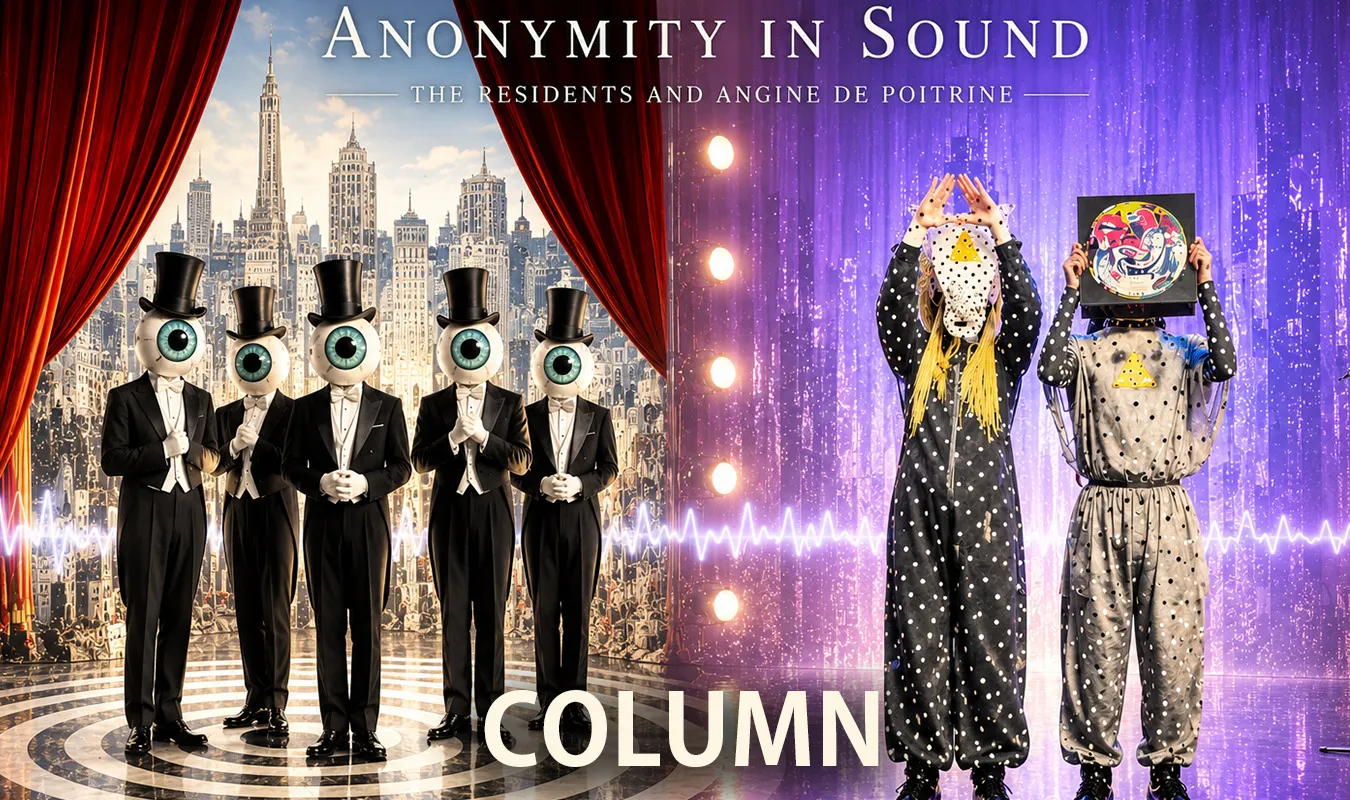
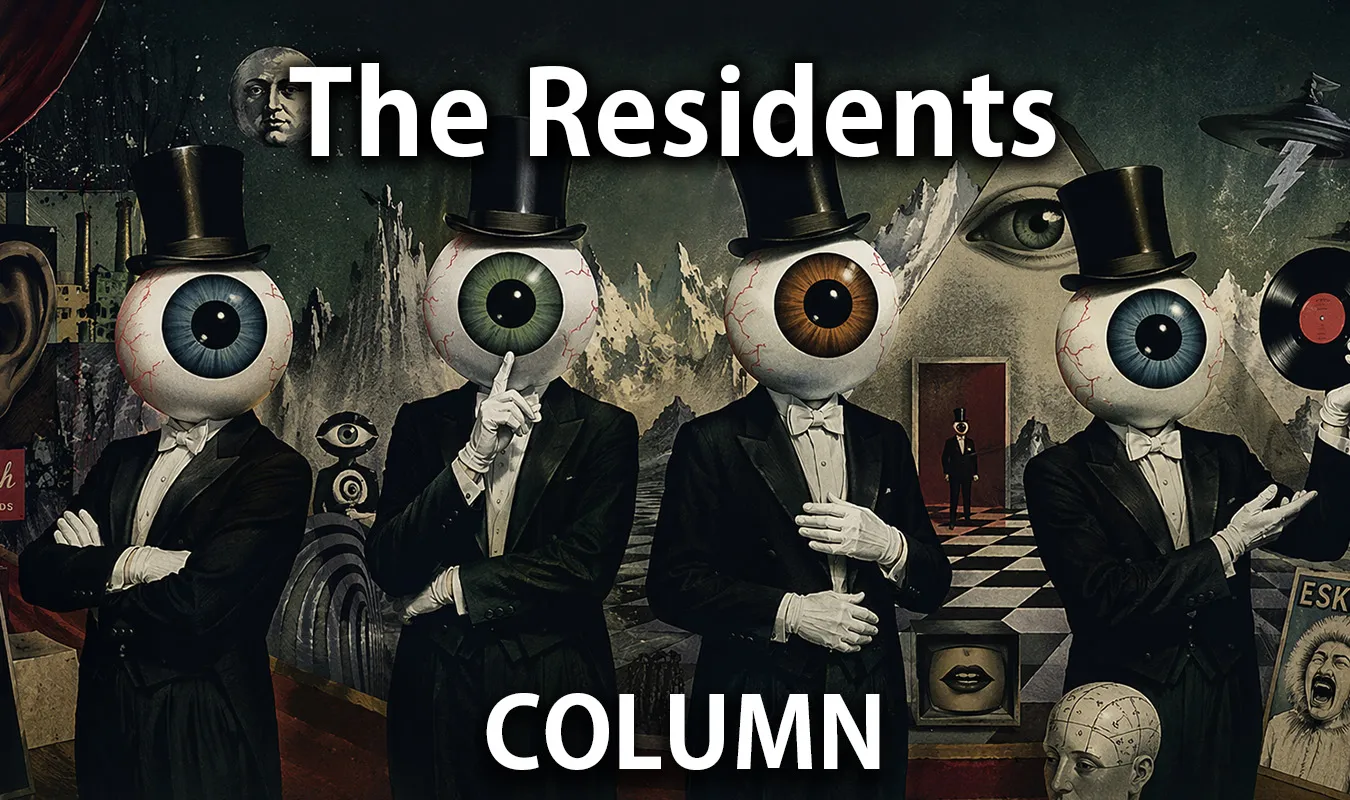
Since their debut in the early 1970s, The Residents have consistently focused on anonymity. The identities of the members are not made public, with only the visual symbols of giant eyeball masks and top hats serving as their “faces.” This complete depersonalization was a clear counter to rock’s star system, a device that focused attention on the work itself.

From the beginning of their career, they have treated music, video, performance, and design as inseparable elements, and have transcended the boundaries of being just a band. They are said to have ambiguous origins in the southern United States, and they are said to have eventually established a base of operations in San Francisco, but even this is just part of the information that has become a myth.

Anonymity was not a cover-up, but the most radical way to ensure a thorough focus on the work.


Initial impulse: DIY and outsider aesthetics

Ralph Records and independent production culture

In the 1970s, they established their own label, Ralph Records, in order to operate outside the major system. What is important here is that they autonomously controlled not only music production but also distribution and packaging.

One of his masterpieces, Meet the Residents (1974), was a collection of deliberately distorted pop songs that functioned as an attempt to deconstruct existing musical grammar. Despite its Beatles-like familiarity, its interior is filled with dissonance and fragmented structure.

Rather than showing off their musical instrument playing skills, they created new sounds through recording techniques, editing, and the handling of noise. This can be said to be a pioneering attitude that will lead to later DIY culture and lo-fi aesthetics.

Their sound was shaped not by a lack of technology, but by a distrust of existing technology.


Work world: concept and deconstruction

Pop Reconstruction

In the late 1970s and 1980s, The Residents moved toward more conceptual work. In particular, ““Eskimo’’ (1979) is an album that combines narrative and sound sculpture, and is located at the intersection of environmental sounds and narrative rather than music.

In ““The Commercial Album’’ (1980), he experimented with keeping all 40 songs to about one minute, which included a critique of advertising culture. This was a structure that took advantage of the format of TV commercials at the time, and was also an attempt to expose the consumer nature of pop music.

Their works constantly question “form itself.” The album unit, song length, and genre boundaries are all subject to manipulation.

For them, music was nothing more than a material for dismantling structures.


Visual and physicality

Meaning of eyeball mask

The giant eyeball mask that is a symbol of The Residents is not just a novelty, but a device that indicates the reversal of the relationship between “seeing and being seen.” The audience watches the performance, but at the same time, they are also stared back at by giant eyes.

In a live performance, images, lighting, and costumes are closely linked to create a comprehensive piece of art. This idea is similar to later multimedia art and installation ideas.

flowchart TD A[music] --> B[picture] B --> C[performance] C --> D[physicality] D --> E[Audience cognitive transformation]

Vision did not reinforce sound, but existed as a layer equivalent to sound.


Relationship with technology

Video media and CD-ROM

From the late 1980s to the 1990s, they actively adopted computer technology. In particular, his CD-ROM work ““Freak Show’’ is a pioneering work that provides an interactive experience, and has been praised as media art that goes beyond the boundaries of music.

During this period, music becomes part of an interface rather than a standalone work. The structure in which the experience changes depending on the user’s operations is similar to modern digital art and game-like ideas.

Technology is not only a means of expression, but also an element that changes the structure of the work itself.


Chronology: Main movements of The Residents

Flow of activities

timeline 1970 : 結成(詳細不明) 1974 : Meet the Residents 発表 1979 : Eskimo 発表 1980 : The Commercial Album 発表 1985 : ライブ活動の拡張 1994 : Freak Show CD-ROM 2000 : デジタル作品の拡張 2010 : 長期プロジェクト展開

Consistent change was their only style.


Impact and positioning

The intersection of avant-garde and pop

The Residents influenced many artists, even though they were not mainstream successes. His influence is far-reaching, especially in experimental music, industrial, noise, and even contemporary electronic music.

Their importance lies in the fact that they do not belong to any particular genre. Rather, it has been praised for its ““attitude to question the very concept of genre.’’

The strategy of anonymity also influenced later artists, who continue to present the theme of separation between personality and work.

Although they were located on the outside of music history, they definitely changed the internal structure.


Conclusion: A project that never ends

Anonymous body that keeps changing

The Residents have been around for more than half a century, but their essence remains static. We are constantly exploring new forms while incorporating changes in members and technology.

Their works are not “completed”, but exist as a process of constant renewal. This leads to a perspective that sees music not as an object, but as something temporal and relational.

The Residents continues to present not a work of art, but a way of thinking itself.


YouTube Podcast

*This podcast is in English, but you can watch it with automatic subtitles and translation.


Monumental Movement Records

Monumental Movement Records