はじめに — 名前が示すもの
文:mmr|テーマ:即興とノイズを軸に拡張された実験的ハードコアの集団構造と記録
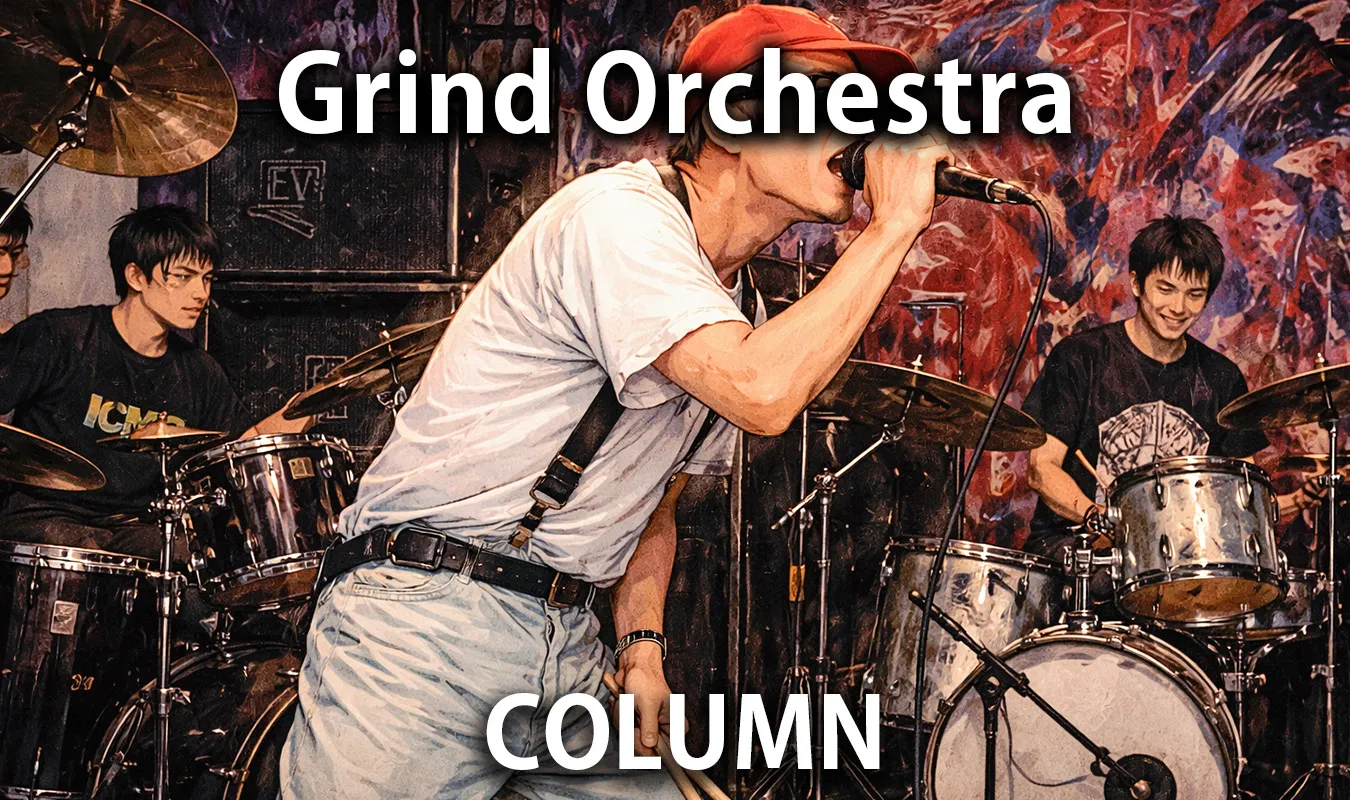
Grind Orchestraという名前は、音楽の性質を端的に示している。「Grind」は摩擦や粉砕、「Orchestra」は集合体としての音楽を意味する。この二つの語の組み合わせは、単なるバンドではなく、音の衝突と集積によって成立する場そのものを指している。
1995年、元ボアダムズの吉川豊人を中心に結成されたこのプロジェクトは、ハードコア、ノイズ、即興音楽の境界を横断する形で活動を開始した。
一般的なバンド構造を持ちながらも、その実態は固定された楽曲を演奏する集団ではなく、音の衝突と展開をリアルタイムで生成する実験体に近い。
Grind Orchestraは、ハードコアの衝動と即興の自由を融合させた音の集合体である。
結成と背景 — 関西オルタナティブからの派生
1990年代、世界的にも注目を集めた関西オルタナティブ・シーン。その中心にいたボアダムズに在籍していた吉川豊人は、ヤマツカEYEとともにフロントマンとして強烈なパフォーマンスを展開していた。
その脱退前後となる1994年、彼が新たに始動させたのがGrind Orchestraである。
結成当初からその編成は極めて特異だった。総勢4名のパーカッションに加え、テルミンとエレクトロニクスという構成は、従来のバンド概念を逸脱していた。
この編成により生み出されたのは、怒涛の躍動ビートと、意味と音が多層的に絡み合う日本語ボーカルである。それは単なるノイズでもハードコアでもなく、どこにも存在しない異様なポップ世界として立ち上がった。
Grind Orchestraは、異形の編成によって唯一無二のポップ構造を生み出した。
メンバー — 固定と流動の交差
Although Grind Orchestra was fluid, the following eight members were the main core members.
・Ago ・Gaku Terauchi ・Koichi Nakaya ・Mitsuhiro Yoshida ・Nana Lala Fafafa ・Toyohito Yoshikawa ・Tsutomu Motoyama ・Yojiro Tatekawa
初期の特徴である複数パーカッション体制は、リズムの「分業」ではなく「重層化」を生み出した。個々のリズムが同期するのではなく、ズレや衝突を含んだまま共存することで、巨大なビートの塊が形成される。
そこにテルミンや電子音が加わることで、空間的な広がりと異質な音響が付与される。
初期編成の構造
この編成自体が、音楽の方向性を決定づけていた。
Grind Orchestraは、編成そのものを音楽構造として機能させた集団である。
音楽性 — 怒涛のビートと多次元ボーカル
Grind Orchestraの音楽的核心は、圧倒的なリズムの運動と、言語の解体に近いボーカルにある。
複数のパーカッションによるビートは単なるリズムではなく、うねりや塊として知覚される。そこに重なる日本語ボーカルは、意味伝達よりも音響的役割を担い、多次元的に響く。
この組み合わせによって生まれるのは、混沌でありながらどこかキャッチーな感覚、いわば「歪んだポップ性」である。
1999年以降、ギターやベースといったメロディ楽器が加わることで、このポップ性はさらに拡張された。断片的だった構造に輪郭が生まれ、音の展開はより多様化する。
音楽的進化
This change was not simply an increase in the number of notes, but an expansion of the dimension of music itself.
Grind Orchestraは、ビートと声を核にポップの概念を再定義した。
ディスコグラフィ — 主要作品一覧
Grind Orchestraの音源は、Tag Ragレーベルを中心にリリースされた。
アルバム
・SoWap(1995 / CD / Tag Rag / TR-CD004) ・Banging Sounds!!(1999 / CD / Tag Rag / TRCD-022) ・3(2002 / CD / Mini Album / Tag Rag / DDCH-1030) ・没個星 周(2002 / CD / Tag Rag / DDCH-1031)
シングル / EP
・Jolly Throats E.P. (1998 / Japan Overseas)
映像作品
・Banging Sounds!!(1999 / VHS / Tag Rag / TRVD-001)
その他 / ライブ音源
・Early Grind - Live音源 Pure 4(2002 / Limited Promo / Tag Rag / TRCD-P2) ・’96 - ‘97 Live
これらの作品は、初期のパーカッション中心の混沌から、後期の構造化されたサウンドまでの変遷を記録している。
Grind Orchestraのディスコグラフィは、音楽的進化の軌跡そのものである。
年表 — 活動の流れ
短期間ながらも、音楽的には大きな飛躍を遂げたことが分かる。
Grind Orchestraは、短期間で急激な進化を遂げた実験音楽プロジェクトである。
影響と位置づけ
Grind Orchestraは、日本のハードコア/ノイズシーンにおいて特異な位置を占める存在である。
関西オルタナティブの流れを汲みながらも、その枠組みに留まらず、編成・構造・言語のすべてを再構築した。
特に、リズムと声を中心に据えたアプローチは、後続の実験音楽に大きな影響を与えた。
Grind Orchestraは、音楽の構造そのものを再設計した存在である。
結論 — 構造を逸脱するポップ
Grind Orchestraは、ハードコアの衝動とノイズの質感を基盤にしながら、そこに異形のポップ性を見出した稀有なプロジェクトである。
複数パーカッションによる物理的なビート、意味を超えたボーカル、そして後期に導入されたメロディ要素。それらが交錯することで、他に類を見ない音楽が形成された。
それはジャンルではなく、現象として存在する音楽である。
Grind Orchestraは、構造を逸脱することで新たなポップを生み出した。
Explore more like this

【コラム】 Wolf Eyes──デトロイトから世界へ広がったノイズ・ミュージックの再定義
デトロイトという都市が育てた異端の音楽
【コラム】 Faustとは何だったのか —— ノイズと実験でロックを解体したジャーマン・アヴァンギャルド
ロックを「破壊」するために現れたバンド
【コラム】 Rubber O Cementとサンフランシスコ実験音楽の地下構造
Rubber O Cementとは何か
【コラム】 キャロライナー:サンフランシスコ地下音楽に潜む仮面の共同体
What is Carolliner?

【コラム】 山本精一とディレイが描くサイケデリック・ギターの深層構造
山本精一とは何者か
【コラム】 Throbbing Gristleとインダストリアルの誕生——音楽が崩壊し再構築される瞬間
はじめに:音楽はどこから壊れるのか

【コラム】 Zeni Geva ─ 日本実験ノイズロックの極点としての30年史
イントロダクション
【コラム】 MERZBOW ── ノイズという解放の音響学
序章:静寂の反転としてのノイズ

【コラム】 Glitch:ノイズが美に変わるとき
エラーという快楽
![[Column] Ben Frost and acoustic architecture: Between noise and structure](/../assets/images/column-ben-frost.webp)
[Column] Ben Frost and acoustic architecture: Between noise and structure
Ben Frost and Acoustic Architecture - Frequency Violence