Rubber O Cementとは何か
文:mmr|テーマ:サンフランシスコ地下音楽における集団即興とDIY精神の交差点
サンフランシスコの地下音楽シーンにおいて、「Rubber O Cement」は明確なジャンルに回収されない存在として知られている。固定された編成やスタイルを持たず、即興、ノイズ、パフォーマンス、映像、さらには空間そのものを作品化するアプローチによって活動してきた。
彼らの特徴は、バンドというよりも「可変的なプロジェクト」である点にある。参加メンバーは流動的であり、特定の中心人物を軸にしながらも、その都度異なるアーティストやパフォーマーが関与する。この構造は、1970年代以降のサンフランシスコにおけるアート・コレクティブ文化と密接に関係している。
音楽的には、明確なメロディやリズムを避け、フィードバック、断片的なサンプル、フィールドレコーディング、電子ノイズなどを組み合わせることで、聴覚体験そのものを再構築する方向に向かっている。
Rubber O Cementは「作品」ではなく「状況」を生成するための枠組みとして機能している。
サンフランシスコ地下シーンとの関係
Rubber O Cementを理解するためには、サンフランシスコという都市の文化的背景を無視できない。1960年代のカウンターカルチャー以降、この都市は常に主流から逸脱した表現を受け入れる土壌を持っていた。
特に1980年代から1990年代にかけては、ノイズ、インダストリアル、即興音楽、パフォーマンスアートが交差する独自のシーンが形成される。この時期、倉庫スペースやギャラリー、非公式な会場でのイベントが増加し、従来のライブハウスとは異なる環境が重要な役割を果たした。
Rubber O Cementは、こうした「非制度的空間」での活動を主軸とし、音楽と視覚、身体表現を統合するイベントを展開していく。観客は単なる受け手ではなく、空間の一部として巻き込まれる構造になっている。
彼らの活動は都市の「隙間」を舞台に成立していた。
メンバーと役割
可変的構造の中の中核
Rubber O Cementは流動的なコレクティブであり、固定メンバーという概念自体が曖昧だが、その中でも活動の軸として知られているのがGruxとMick Goldwaterである。
Gruxは、視覚的・身体的なインパクトを伴うパフォーマンスで知られる存在であり、音楽とオブジェクト、衣装、身体の境界を崩す役割を担っている。実際のパフォーマンスでは、異形のマスクや構造物を装着し、楽器そのものを拡張された身体の一部として扱う。これにより、演奏行為は単なる音の生成ではなく、視覚的な出来事としても成立する。
一方、Mick Goldwaterは音響面の構築に深く関与しており、電子機器、フィードバック、加工された信号を用いて空間全体の音の流れを設計する役割を担う。彼のアプローチは、楽曲的構造よりも「音の状態」を重視する点に特徴がある。
この二者の関係は、演奏者と伴奏者といった従来の役割分担ではなく、「空間を異なる側面から制御する二つの力」として機能している。
Rubber O Cementの中核は、身体性と音響設計の交差によって成立している。
音楽的アプローチと構造
Rubber O Cementのサウンドは、一見すると無秩序に聞こえるが、実際にはいくつかの明確な原則に基づいている。
まず、即興性が中心にある。事前に決められた構成は最小限に抑えられ、その場の音響や参加者の反応によって展開が変化する。これはジャズの即興とは異なり、調性やリズムの共有を前提としない点でよりラディカルである。
次に、音素材の選択が重要である。電子機器、テープ、金属オブジェクト、環境音など、あらゆる音源が同列に扱われる。これにより、音楽とノイズの境界が曖昧になる。
さらに、空間性が強く意識されている。音は単に時間的に並ぶのではなく、配置される。スピーカーの位置、反響、移動などが作品の一部となる。
Rubber O Cementの音楽は「演奏」ではなく「配置」の連続である。
DIY精神と制作環境
Rubber O Cementのもう一つの重要な側面は、DIY精神である。彼らは商業スタジオや大規模な設備に依存せず、自ら機材を改造し、独自の制作環境を構築してきた。
この姿勢は、パンク以降のDIY文化と共鳴しているが、単なる反商業主義ではない。むしろ、音そのものを制御するための技術的探究として現れている。
録音方法も従来のアルバム制作とは異なり、ライブ録音や現場での記録が中心となる。編集も最小限にとどめ、出来事としての音をそのまま残す傾向が強い。
制作プロセスそのものが作品の一部として機能している。
パフォーマンスと身体性
Rubber O Cementの活動は、音楽にとどまらずパフォーマンスアートとしての側面を強く持つ。演奏者の動き、観客との距離、空間の使い方などがすべて重要な要素となる。
しばしば視覚的要素が導入され、映像投影や照明、オブジェクトの配置が音と連動する。これにより、観客は単に音を聴くのではなく、環境全体を体験することになる。
また、パフォーマンスは再現不可能であることが前提となっている。同じセットアップであっても、同じ結果にはならない。この不可逆性が、彼らの表現の核心にある。
一回性こそが彼らの作品の価値を規定している。
年表
Rubber O Cementの主な動向
彼らの活動はシーン全体の変化と同期している。
視覚と音の融合
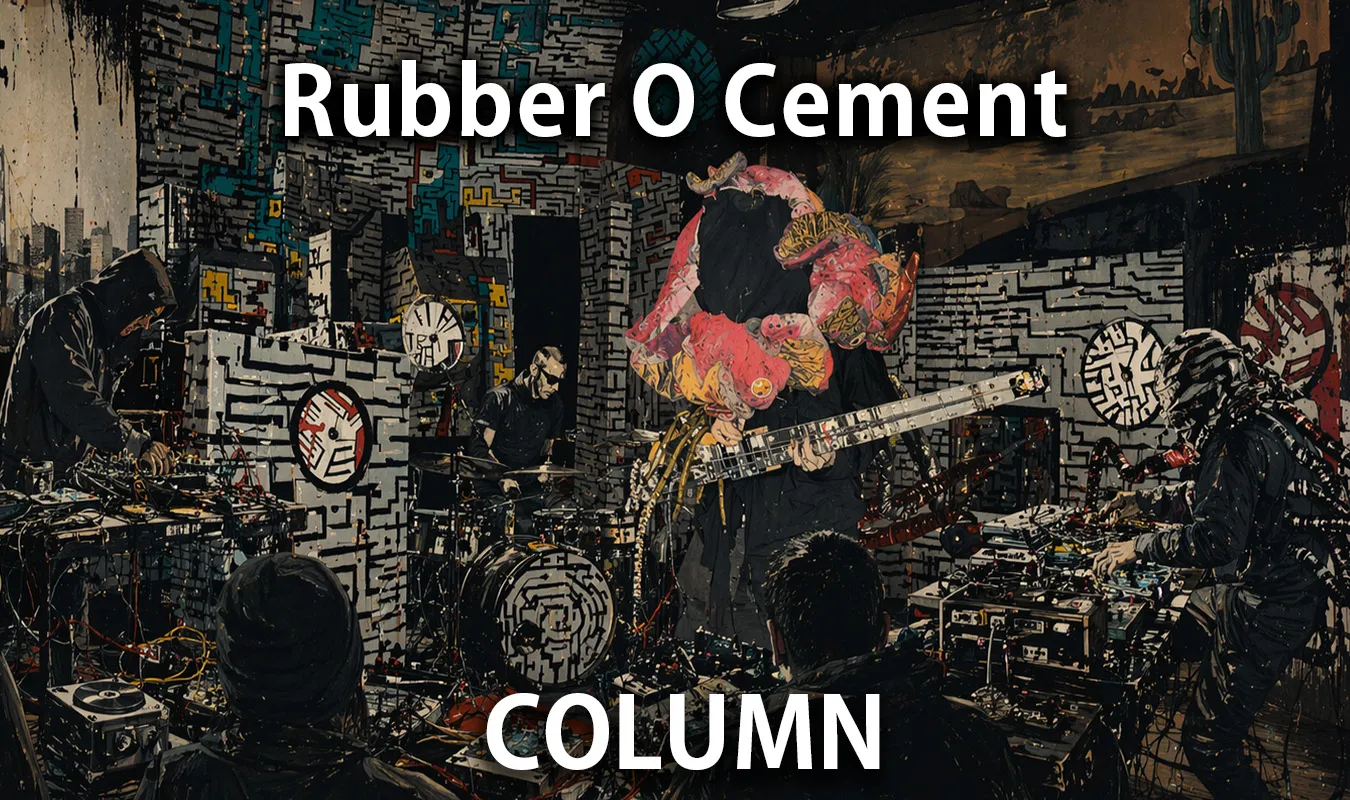
実際のパフォーマンスイメージからも明らかなように、Rubber O Cementは視覚的な構築物を極めて重視している。迷路状のセット、手描きのグラフィック、異形の装着物などは、単なる装飾ではなく、音響と同じレイヤーで機能する要素である。
Gruxによる装着型のオブジェクトは、音の発生源であると同時に視覚的ノイズとして空間に干渉する。これに対してMick Goldwaterの電子音は、空間を満たす「見えない構造」として働く。
視覚と音響は独立せず、同一の現象として知覚される。
コレクティブとしての拡張性
Rubber O Cementの重要な特徴は、このコアメンバーを中心にしながらも、常に外部の参加者を取り込む拡張性にある。イベントごとに異なる演奏者やパフォーマーが加わり、その都度異なる構造が生成される。
この構造により、Rubber O Cementは固定されたスタイルを持たず、むしろ変化そのものを前提としたプロジェクトとして機能する。GruxとMick Goldwaterは、その変化を制御する「軸」として存在している。
Rubber O Cementはメンバーではなく関係性によって定義される。
同時代との比較
Rubber O Cementは、同時代のノイズや即興音楽と共通点を持ちながらも、いくつかの点で異なる。
多くのノイズアーティストが個人名義で活動するのに対し、彼らは集団性を重視する。また、音そのものの強度よりも、状況や構造に焦点を当てる点が特徴的である。
さらに、ギャラリーやアートスペースとの関係が強く、音楽シーンと美術シーンの境界を横断する存在となっている。
Rubber O Cementはジャンルではなく接続点として機能している。
現代的意義
現在、即興音楽やノイズはデジタル環境の中で再構築されつつあるが、Rubber O Cementのアプローチは依然として有効である。特に、空間と身体を含めた表現は、オンラインでは代替しにくい価値を持つ。
また、可変的なメンバー構成や非固定的な作品形態は、現代のコラボレーション文化とも親和性が高い。プロジェクトベースで動くアーティストにとって、彼らのモデルは一つの参照点となる。
Rubber O Cementは現在の表現環境においても更新可能な構造を提示している。
結論
Rubber O Cementは、単なる実験音楽バンドではなく、サンフランシスコの地下文化が生み出した「方法論」である。その核心には、即興性、空間性、集団性、そしてDIY精神がある。
彼らの活動は、音楽の定義そのものを問い直すものであり、作品と体験、演奏と環境の境界を曖昧にする。結果として生まれるのは、再現不可能でありながら強く記憶に残る出来事である。
このような実践は、商業的な成功とは異なる価値基準を提示し続けている。そしてそれこそが、地下シーンが持つ持続力の源でもある。
Rubber O Cementは音楽の外側に広がる可能性を具体的に示した存在である。
YouTube Podcast
※このPodcastは英語ですが、自動字幕・翻訳で視聴できます
Explore more like this


【コラム】 Wolf Eyes──デトロイトから世界へ広がったノイズ・ミュージックの再定義
デトロイトという都市が育てた異端の音楽

【コラム】 Faustとは何だったのか —— ノイズと実験でロックを解体したジャーマン・アヴァンギャルド
ロックを「破壊」するために現れたバンド

【コラム】 This Heat: 断絶の時代を録音したポストパンク最深部
This Heatとは何だったのか

【コラム】 ジョン・ゾーン:音楽の境界を解体し続けるサウンドの錬金術師
ジョン・ゾーンという存在
【コラム】 キャロライナー:サンフランシスコ地下音楽に潜む仮面の共同体
What is Carolliner?
【コラム】 匿名性と異形のポップ—The Residentsが切り拓いた反音楽の地平
Prologue: The concept of unknown identity

【コラム】 山本精一とディレイが描くサイケデリック・ギターの深層構造
山本精一とは何者か
【コラム】 Grind Orchestra — 境界を越える音の集団とその構造
はじめに — 名前が示すもの