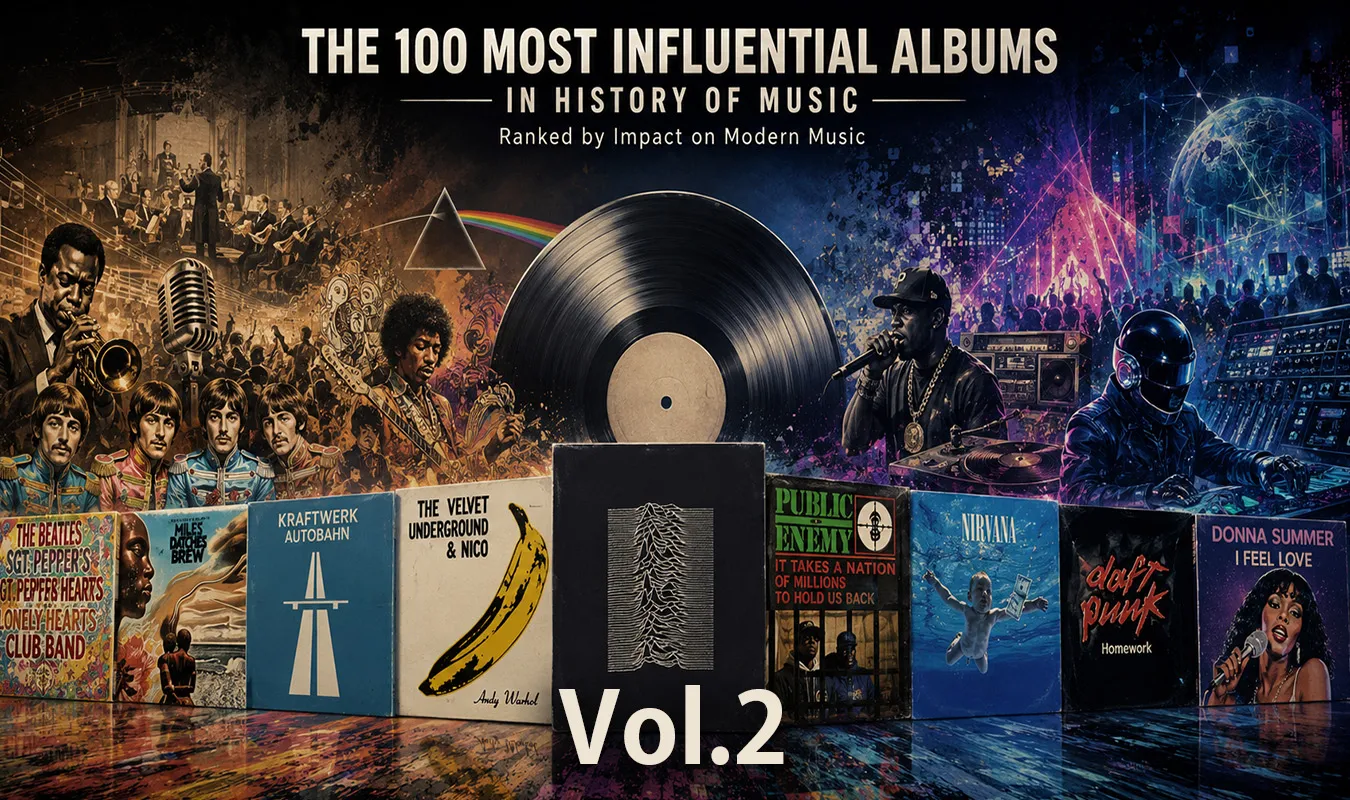
【コラム】 音楽史上最も影響力のあった100枚:現代音楽への影響度だけで再構築する新しい音楽史(第1回・1〜10:現代音楽を生んだ10枚の革命)
Column en Psychedelic Rock Rock Sampling Techno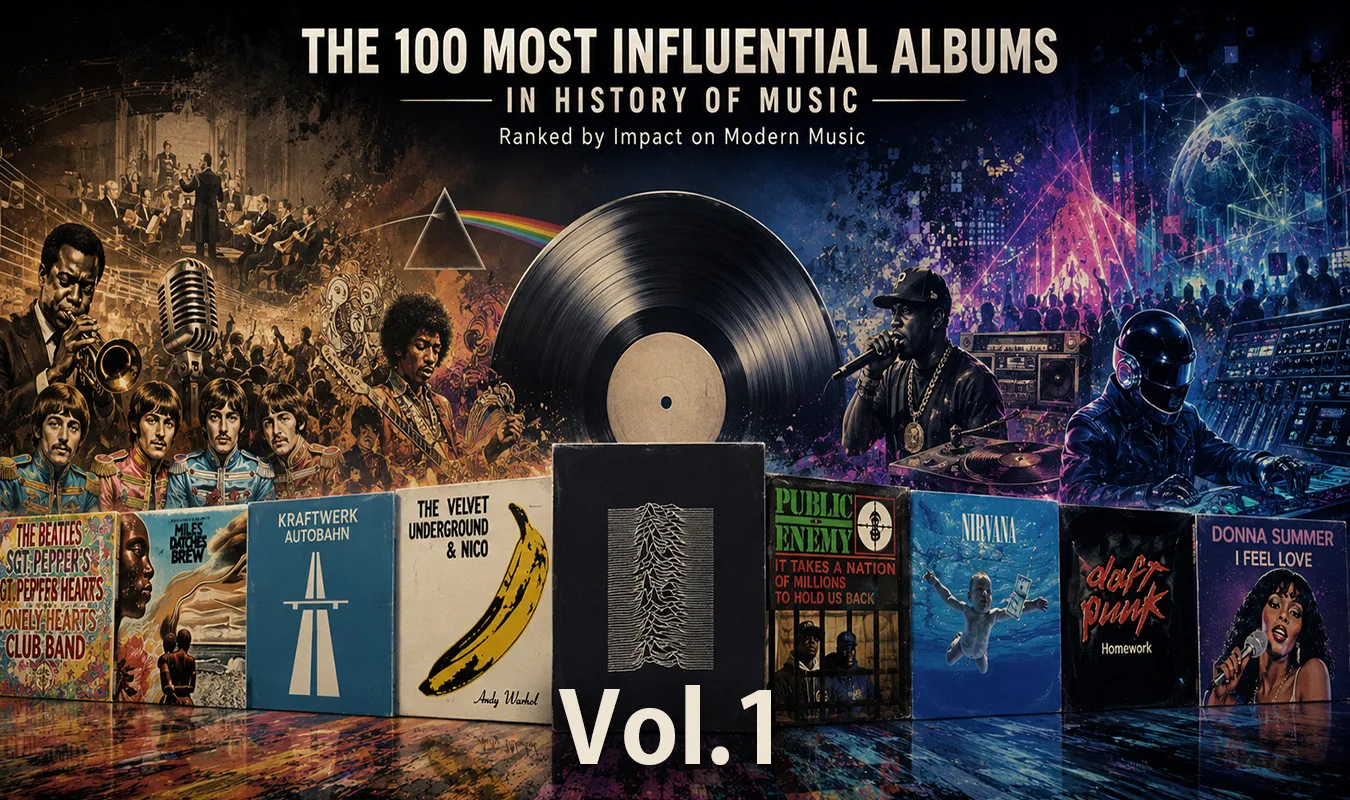
プロローグ:音楽史を「物語」ではなく「構造変化」として読む
文:mmr|テーマ:現代音楽への影響度だけで再構築する新しい音楽史
音楽史はしばしば「名盤の歴史」として語られる。しかし本稿ではその見方を一度捨てる。
We are not talking about “masterpieces” here, but only works that have rewritten the very rules of modern music.
ジャンルを作った作品ではなく、ジャンルの前提を壊した作品。 It’s not music that creates emotion, but music that changes the way music is made.
Music history is not a genealogy of talent, but a chain of rule breaking.
評価基準:影響とは何か
本シリーズでの「影響」は感覚的な評価ではない。以下の4軸でのみ判断する。
- 構造:曲の設計そのものを変えたか
- 技術:録音・編集・機材の使い方を変えたか
- 拡張:新ジャンルを生んだか
- 波及:音楽以外(クラブ文化・政治・デザイン)に影響したか
1st (1st place)
1位 Sgt. Pepper’s Lonely Hearts Club Band — The Studio as a New Instrument
1967年のロンドン。ビートルズはすでにツアー活動を停止し、ステージから撤退していた。その空白は単なる休止ではなく、録音という行為そのものを再設計するための時間だった。
Sgt. Pepper’s Lonely Hearts Club Band は、その結果として生まれた“架空のバンドによる架空のライブ”というコンセプトを持つアルバムであり、同時に音楽制作の前提条件を根本から書き換えた作品でもある。
当時のポップ・ミュージックはまだ「シングル中心」の産業構造に支配されていた。しかし本作はその構造を逸脱し、アルバム全体を一つの作品として設計するという新しい時間概念を導入した。
録音はロンドンのEMIスタジオ(後のAbbey Road Studios)で行われ、プロデューサーはジョージ・マーティン。彼はクラシック音楽の編曲的視点をポップに持ち込み、ストリングス、ブラス、テープ編集、逆再生、可変速度録音などを統合した。
Particularly symbolic is the “disappearance of breaks” between songs. Audience applause, ambient sounds, and orchestral glissandi dissolve the gaps between songs, making the entire album function as one continuous stream of consciousness.
この構造は後のコンセプト・アルバムの基準点となり、ロック音楽における「作品単位」という概念を確立した。
録音技術面では、4トラック・レコーダーという制約の中で無数のテープダビングが行われ、音の層が人工的に構築された。この“制約から生まれた過剰な密度”こそが、後のスタジオ・プロダクションの原型となる。
また「A Day in the Life」に代表されるように、異なる作曲断片を編集で接続する手法は、従来のソングライティングを“編集芸術”へと変換した。
文化的には、1967年のサマー・オブ・ラブと完全に同期し、サイケデリック文化の象徴となる。しかし重要なのは、それが単なる時代の反映ではなく、時代そのものの“編集者”として機能した点である。
Rather than music reflecting society, music redesigns society’s perceptual structure. This reversal is happening here.
後続への影響は直接的である。プログレッシブ・ロック、アートロック、さらには現代のポップアルバム設計まで、すべてがこの作品の影響圧力の中にある。
This album does not exist as a ““collection of songs,” but as an ““edited conscious space.”
“We were trying to get away from ourselves and into something else — a fictional world that could only exist on tape.”
2nd place Pet Sounds — Internalized pop structural revolution
1966, America’s West Coast. Brian Wilson left the tour and confined himself in the studio to work on the album. The result was Pet Sounds.
Although this work is often described as a “response to the Beatles,” it is actually much more complex than that. This work redesigned the very inner workings of pop music and became the blueprint for all subsequent studio music.
特徴的なのは、ロックバンドの編成がほぼ解体されている点である。実際の演奏の多くはWrecking Crewと呼ばれるスタジオ・ミュージシャンによって行われ、ビーチ・ボーイズは主にボーカル・レイヤーとして機能する。
What is important here is the collapse of the concept of ““band = performance unit.’’ What emerges in its place is a sound structure completely engineered by the producer.
Recording took place at a number of studios in Los Angeles, with the environments of Sanborn and Western Studio playing an especially important role. Brian Wilson considered the composition based on the “color of sound” and designed the music based on acoustic density rather than harmony.
使用された楽器も特異である。サーモン缶を叩いたようなパーカッション、ベル、チェロ、テレミン的音色のオンド・マルトノなど、ポップの文法から逸脱した音素材が組み込まれている。
結果として生まれたのは「感情のための構造音楽」である。従来のヒット曲が持っていたフックやリフの機能は希薄化し、代わりに感情の流れそのものが構造化されている。
このアルバムは後のインディーポップ、ドリームポップ、さらにはアンビエント的ポップの起点となる。音楽が“外向的な表現”から“内面的な構築物”へと移行する転換点である。
また制作過程でのブライアン・ウィルソンの精神的負荷は、創造性と孤立の関係を象徴するものとして後年語られることになる。
His approach became the prototype for later producer-driven music production, anticipating the modern studio artist.
“I was trying to make the most beautiful record ever made, even if nobody understood it at the time.”
3rd place The Velvet Underground & Nico (1967)
The album that turned a “commercial failure” into one of the biggest successes in music history
1967年3月に発売された『The Velvet Underground & Nico』は、発売当時こそ商業的には失敗作だった。しかし現在では、ロック史のみならず20世紀音楽全体を代表する作品のひとつとして評価されている。
「売れなかったアルバムが、最も多くのバンドを生んだ」
という有名な言葉は、この作品を象徴するものとして半ば伝説化している。
実際、このアルバムが存在しなければ、パンク、オルタナティブ・ロック、ノイズ・ロック、インディーロック、ゴシック・ロック、ドリームポップ、さらには現代の実験音楽の歴史さえ大きく変わっていただろう。
ニューヨークという都市が生んだ異端
1960年代半ば。
アメリカではヒッピー文化と「サマー・オブ・ラブ」が広がり、ロックは愛と平和を歌う音楽へ向かっていた。
On the other hand, New York had a completely different atmosphere.
There are
- drag
- アンダーグラウンド映画
- 現代美術
- Avant-garde theater
- Experimental music
が混在する独自の芸術圏が存在していた。
その中心人物こそ芸術家のAndy Warholである。
Warhol went to a studio called the Factory.
- Painter
- Film director
- poets
- ドラァグクイーン
- ミュージシャン
were brought together to form a new artistic community.
Then, what appeared was
- Lou Reed
- John Cale
- Sterling Morrison
- Maureen Tucker
によるThe Velvet Undergroundだった。
They weren’t psychedelic or blues rock.
They were the first rock band to bring the dark side of city life directly into their music.
Lou ReedとJohn Caleという奇跡的な組み合わせ
The biggest feature of this work is
ポップソング職人であるLou Reedと、
前衛音楽家John Caleという対照的な二人の才能だった。
Reed has been writing short stories since his student days, translating the realities of the city into lyrics.
一方のCaleは、La Monte Young率いる前衛音楽集団Theatre of Eternal Musicでドローン音楽を研究していた。
What he was learning was
- Long lasting sound
- Overtone
- Microtone
- Minimalism
だった。
As this idea of modern music was brought into rock,
単なるコード進行では説明できない独特の緊張感が生まれた。
この融合は当時ほぼ前例がなく、
It was the first successful example of a serious combination of rock and contemporary music.
Andy Warholが「プロデューサー」だった意味
The album lists Andy Warhol as its producer.
しかし実際には、
録音技術そのものを指揮したのは主にTom Wilsonであり、Warholは芸術監督に近い役割だったと考えられている。
Warhol’s greatest work was
“Do not interfere with the band”
That was it.
The record company at the time was
- 曲を短くしろ
- ノイズを減らせ
- 歌詞を書き換えろ
と要求することが普通だった。
しかしWarholは一切そうした指示を行わなかった。
彼はレコード会社との交渉役となり、
バンドがありのまま録音できる環境を守った。
また彼はドイツ出身モデル・歌手のNicoをバンドへ参加させることを提案した。
This decision was not necessarily welcomed by the band members, especially Lou Reed, but it ended up giving the album a unique contrast.
録音スタジオと制作環境
レコーディングは1966年に複数回行われた。
主な録音場所は、
- Scepter Studios
- TTG Studios
It is.
当初録音されたマスターはすぐには発売されず、その後追加録音や再編集を経て現在知られるアルバムの形となった。
使用された機材は当時一般的だったアナログ・マルチトラック環境であり、録音は比較的シンプルだった。
むしろ特徴的なのは、
“Performance itself rather than recording technology”
It was.
John Caleはヴィオラを歪ませ、
持続音をロックバンドへ組み込んだ。
さらにLou Reedのギターは、通常のロックギターとは異なるチューニングや反復リズムを多用し、コードよりも質感を重視した演奏を行った。
Maureen Tucker, on the other hand, played a drum set with a different configuration than typical rock drummers, creating a minimalist beat that minimized the use of cymbals.
その結果、各楽器は技巧を競うのではなく、一定のリズムと持続音が重なり合うことで独特の没入感を形成した。
Lyrics that depict taboos head-on
1967年当時、多くのポップソングは恋愛を主題としていた。
But Lou Reed
- ヘロイン
- Prostitution *BDSM
- 都市の孤独
- ドラッグ依存
- 暴力
- 性
を驚くほど冷静な視点で描写した。
『Heroin』では、薬物を賛美するのではなく、依存者の内面を一人称で描き出している。
"”I’m Waiting for the Man’’ features a character waiting for a drug dealer on the streets of New York.
『Venus in Furs』は、Venus in Fursを題材に、当時のポップミュージックでは極めて異例だった性的テーマを扱った。
These lyrics were not intended to be sensational per se, but were born from an attitude of trying to record the ““reality that exists in the city’’ without embellishing it.
「美しい世界だけではなく、誰も歌おうとしなかった現実をロックの言葉として提示したことこそ、本作最大の革新である。」
発売当時の評価――時代が早すぎたアルバム
The Velvet Underground & Nico, released on March 12, 1967, was not exactly well-received.
発売元のレーベルであるVerve Recordsは、ジャズ作品を多く扱う名門であり、このアルバムのような前衛的なロック作品をどのように売り出せばよいのか明確な戦略を持っていなかった。
さらに発売直後には、アルバム・ジャケットに描かれたウォーホルの「バナナ」のステッカー仕様や、裏面に掲載された写真に写る人物の権利問題などが発生し、一時的な出荷停止も余儀なくされた。
その結果、十分な流通が行われないまま市場から姿を消す地域も少なくなかった。
加えて、ラジオ局にとって本作は放送しにくい要素ばかりを備えていた。
"”Heroin” deals with drugs, ““Venus in Furs” deals with SM, and ““I’m Waiting for the Man’’ depicts drug dealing.
Many songs were not eligible for airplay due to the high possibility of violating the Broadcasting Code.
商業的な結果も芳しくなく、当初の売上は極めて限定的だった。
当時のアルバム・チャートでは一時的にランクインしたものの、大ヒット作品には遠く及ばず、レコード会社から見れば成功作とは言えなかった。
しかし興味深いのは、批評家の反応も大きく割れていたことである。
一部の評論家は「不快」「演奏が粗雑」「歌詞が退廃的」と否定的に評価した一方で、少数ながら「ロックの新しい方向性を示した作品」と高く評価する声も存在した。
つまり、このアルバムは理解されなかったのではなく、「理解できる人がまだ極めて少なかった」のである。
「売れなかった」がゆえに伝説となった
1970年代に入ると、このアルバムは中古レコード店や音楽好きの間で密かに語り継がれる存在となる。
その象徴として語られるのが、音楽プロデューサーのBrian Enoによる有名な言葉である。
「最初のアルバムは3万枚しか売れなかった。しかし、その3万人全員がバンドを始めた。」
この発言には諸説あり、実際にEnoがどの場でこの表現を用いたかについては明確な一次資料が確認されていない。
しかし、この言葉が広く引用され続けている理由は、それが事実上、この作品の歴史的影響を非常に的確に表現しているからである。
本作を聴いた若いミュージシャンたちは、「演奏が完璧でなくてもよい」「大きなスタジオでなくても作品は作れる」「既存のテーマ以外を歌ってもよい」という新しい価値観を受け取った。
つまり、このアルバムは「成功する方法」を教えた作品ではない。
「自由に表現してよい」という思想そのものを広めた作品だった。
パンク以前に「パンク」を作ったアルバム
1970年代後半にパンク・ロックが登場したとき、多くの中心人物はVelvet Undergroundから直接的な影響を受けていた。
Patti SmithはLou Reedの文学的な歌詞表現を受け継ぎ、ニューヨークの詩とロックを融合させた。
Ramonesは、シンプルで短い楽曲構成と反復リズムを発展させ、パンク・ロックの基本形を築いた。
Televisionは、都市的な緊張感とギター・アンサンブルの可能性をさらに推し進めた。
さらに1980年代以降になると、その影響はより広範囲へ及ぶ。
- Sonic Youthはノイズとオルタナティブ・ロックを融合。
- R.E.M.はインディーロックの美学を確立。
- The Jesus and Mary Chainはフィードバック・ノイズを前面に押し出した。
- Galaxie 500はミニマルな演奏と浮遊感を深化させた。
- My Bloody Valentineは轟音ギターを芸術表現へ昇華し、シューゲイザーの基礎を築いた。
これらのバンドは音楽性こそ異なるが、「既存のロックのルールを書き換える」という姿勢において、共通してVelvet Undergroundの系譜に位置付けられる。
インディペンデント精神の原点
本作が音楽史に与えた影響は、サウンドだけではない。
「売れること」と「表現すること」は必ずしも一致しないという考え方を、ロックに根付かせた点も極めて重要である。
後のインディーレーベル文化、DIY精神、アンダーグラウンド・シーンの形成は、このアルバムが示した価値観と切り離して考えることはできない。
商業的な成功を最優先しない姿勢は、1980年代のインディーロック、1990年代のオルタナティブ、そして21世紀のベッドルーム・ミュージックやデジタル時代の自主制作文化へと連続している。
今日、世界中の無数のアーティストが小規模な環境で自由に作品を発表できるという文化的土壌は、この作品が示した「表現の自由」の理念とも深く共鳴している。
「『The Velvet Underground & Nico』はヒット作ではなかった。しかし、その影響力は売上という尺度をはるかに超え、ロックを“音楽”から“表現手段”へと拡張した。その革新性こそが、本ランキング第3位に位置付ける最大の理由である。」
4位 What’s Going On (1971)
世界が壊れている時代に、「愛」を政治へ変えたアルバム
What”s Going On, released on May 21, 1971, didn”t just change the history of soul music.
この作品は、「ポップ・ミュージックは社会を語ることができる」という価値観を決定づけた、20世紀音楽最大級の転換点である。
それまでのヒット・ソングが恋愛やダンスを中心に描いていた時代に、本作は戦争、人種差別、警察暴力、環境破壊、貧困、信仰、家族という現実社会そのものをアルバム全体のテーマに据えた。
しかも説教ではなく、圧倒的に美しいメロディーと滑らかなグルーヴによって包み込むように表現したのである。
この作品以降、ソウルは単なるエンターテインメントではなく、「社会を映す芸術」として新たな地位を獲得することになった。
激動するアメリカ社会
1970年前後のアメリカは、戦後最大級の社会不安のただ中にあった。
The Vietnam War turned into a quagmire, many young people were drafted into the military, and returning soldiers were left with deep physical and mental scars.
1968年にはMartin Luther King Jr.が暗殺され、続いてRobert F. Kennedyも凶弾に倒れる。
The civil rights movement was entering a new phase, with riots occurring one after another in urban areas.
さらに工業化による公害や環境汚染への危機感も高まりつつあり、人々は「豊かさ」と引き換えに何を失っているのかを問い始めていた。
こうした時代背景の中で、音楽にも社会的な役割が求められるようになっていく。
However, at the time, Motown’s main product was sophisticated pop-soul.
政治色の強い作品は市場性に乏しいと考えられ、所属アーティストにも恋愛をテーマにした楽曲が求められることが多かった。
その方針に真正面から異議を唱えたのが、Marvin Gayeだった。
What changed Marvin Gaye
1960年代のMarvin Gayeは、「I Heard It Through the Grapevine」をはじめ数多くのヒット曲を持つMotownのスターだった。
However, around 1970, he was suffering from severe mental distress.
大きな要因の一つは、公私ともに親しかった歌手Tammi Terrellの死である。
長年デュエットを重ねたTerrellは脳腫瘍との闘病の末、1970年に24歳で亡くなった。
その喪失感から、Marvin Gayeは一時ステージに立つことさえ拒むようになる。
It was also important that his younger brother, Frankie Gaye, returned from the Vietnam War and told of his harrowing experiences on the battlefield.
彼の証言は、「戦争は英雄譚ではなく、人間を壊していく現実である」という認識をMarvin Gayeに強く植え付けた。
同時期には、警察による黒人への暴力、公民権運動の停滞、貧困問題も身近な現実として迫っていた。
彼は「恋愛だけを歌い続けること」に強い違和感を覚えるようになる。
タイトル曲誕生の背景
The inspiration for ““What’s Going On’’ came from Renaldo Benson (Four Tops)’ experience witnessing violent suppression of protests by police.
Bensonは「なぜ誰も、この状況について歌わないのか」と感じ、社会を見つめる楽曲を書き始める。
その後、作曲家Al Clevelandが加わり、最終的にMarvin Gaye自身が歌詞を書き換え、より普遍的な視点を持つ作品へと発展させた。
タイトルにある「What’s Going On」は、「何が起きているんだ?」という単なる疑問ではない。
There are
「私たちはなぜ互いに争い続けるのか」
という、人類全体への問い掛けが込められている。
Motownとの対立
完成したタイトル曲を聴いたMotown創設者のBerry Gordyは難色を示した。
彼は、
- 政治的すぎる
- Not commercially viable
- ラジオ向きではない
Therefore, they refused to release the single.
しかしMarvin Gayeは譲らなかった。
「この曲を発売しないなら、もうレコーディングはしない。」
With that declaration, they effectively go on strike.
Motownにとって最大級のスターを失うことは大きな損失だった。
最終的にBerry Gordyは折れ、1971年1月、タイトル曲はシングルとして発売される。
結果は予想を覆した。
楽曲はR&Bチャートで大ヒットし、ポップ・チャートでも成功を収める。
この成功を受けて、レコード会社はアルバム制作を正式に認めることとなった。
Recording studio and innovative production methods
アルバムは主にHitsville U.S.A. Studio A(デトロイト)と、Motownが拠点を移しつつあったロサンゼルスのスタジオで録音された。
The Funk Brothers, Motown’s talented group of studio musicians, participated in the production, and their outstanding playing skills supported the overall sense of unity of the work.
Unusually for the time, Marvin Gaye recorded his vocals not just once, but multiple times.
そのきっかけは偶然だった。
When the engineer accidentally played different takes at the same time, Marvin Gaye liked the sound and asked to keep both.
This double vocal technique created a unique floating feeling, as if the main melody and free fakes were having a conversation, and became the iconic sound of this work.
さらに、曲と曲の間をほとんど途切れさせずにつなぐ構成も画期的だった。
Each song is not an independent single, but flows continuously as a single story.
この構成は後のコンセプト・アルバムに大きな影響を与えることになる。
コンセプト・アルバムという「一つの祈り」
『What’s Going On』を語る上で欠かせないのが、その構成である。
アルバムは単なる楽曲集ではない。
It is designed as a story about a veteran returning home, looking at a changed society, and thinking about human conflict, environmental destruction, faith, family, and hope.
The opening song, ““What’s Going On,” begins with the call, ““Brother, brother, brother,” demonstrating the need for dialogue that transcends race and position.
続く『What’s Happening Brother』では、戦地から帰還した兵士の視点から、仕事も社会も変わってしまった祖国への戸惑いが歌われる。
"”Flyin’ High (In the Friendly Sky)” deals with drug addiction, ““Save the Children” deals with responsibility for future generations, and ““Mercy Mercy Me (The Ecology)’’ deals with the crisis of environmental destruction.
1971年当時、環境問題を真正面から扱ったヒット・アルバムは極めて珍しかった。
"”Mercy Mercy Me’’ expressed concerns about air pollution, oil pollution, and radiation, and resonated with the growing environmental movement that began that year.
アルバム終盤の『Inner City Blues (Make Me Wanna Holler)』では、都市部の貧困、税負担、警察との緊張関係など、アメリカ社会が抱える矛盾が静かな怒りとともに表現される。
そして最後は完全な絶望では終わらない。
アルバム全体を通して流れているのは、「愛によって世界は変えられるのではないか」という祈りにも似た希望である。
Evaluation at the time of release and historical success
The album received high praise immediately after its release in May 1971.
Following the title song, ““Mercy Mercy Me (The Ecology)” and ““Inner City Blues (Make Me Wanna Holler)” were also hits, achieving great commercial success.
What is noteworthy is that its success overturned the conventional wisdom in the music industry at the time that ““works that deal with social issues do not sell.’’
Critics hailed it as Marvin Gaye’s breakthrough from soul singer to all-around artist.
This album also gave Motown artists greater creative freedom, allowing them to become more actively involved in album production.
レコード会社主導ではなく、アーティスト自身が作品全体のテーマやサウンドを構築するという考え方は、その後のブラック・ミュージック全体に大きな影響を与えていく。
Rewritten the future of black music
『What’s Going On』以前にも社会性を持つ楽曲は存在した。
However, they were often released as singles.
本作は、アルバム全体を通して一つの社会的メッセージを描いた点で画期的だった。
このアプローチは後の多くのアーティストへ受け継がれる。
Stevie Wonder’s works, such as Music of My Mind, Innervisions, and Songs in the Key of Life, combine personal expression with social themes.
Curtis Mayfieldは都市の現実や黒人コミュニティをより鋭く描写し、ソウルの社会性をさらに押し広げた。
From the 1980s onward, Prince developed an artist-driven creative approach to producing albums that crossed genres.
さらにヒップホップの時代になると、その精神は新しい形で継承される。
Public Enemy, 2Pac, Kendrick Lamar, and others have taken up social inequality and racial issues as central themes in their works, and have continued the ““dialogue with society through music’’ that this work opened up into the present day.
In addition, neo-soul standard-bearers such as D’Angelo, Erykah Badu, and Maxwell were greatly influenced by this work in their approach to constructing the entire work as a single idea.
Why is it ranked 4th in this ranking?
What”s Going On doesn”t change rock history.
しかし、「音楽が社会を語る方法」を根本から変えたアルバムである。
政治的主張を叫ぶのではなく、慈愛に満ちた歌声と洗練されたサウンドによって、人々に対話を促した点は極めて革新的だった。
さらに、アーティストがレコード会社の意向に左右されず、自らの思想をアルバムという形で表現する先例を築いたことも、その歴史的価値を高めている。
今日、社会問題や個人的信念を作品全体で表現することは、多くのジャンルで当たり前となっている。
その文化的基盤を築いた作品の一つが、『What’s Going On』なのである。
“‘What’s Going On’ confronts soul music with society and sublimates the album format into a single ideology. Can music change the world? - It is a historical masterpiece that answers the question with beauty and empathy, and is worthy of being ranked 4th in this ranking.”
5位 Kind of Blue
「たった2日間」でジャズの未来を書き換えたアルバム
Kind of Blue, released on August 17, 1959, is the best-selling album in jazz history, and one of the most influential works in all of music history.
This work is not just a masterpiece.
It was a revolutionary work that completely overturned the conventional wisdom of jazz performance and changed the way of thinking from ““performances that follow chord progressions” to ““performances that sing freely within a scale (mode).”
This single album spread the new concept of mode jazz to the world, and had an immeasurable influence not only on subsequent jazz, but also on rock, fusion, ambient, film music, and contemporary music.
Despite its innovation, it only took two days to record.
Turning point in 1950s jazz
1940年代、Charlie ParkerやDizzy Gillespieらによって確立されたビバップは、高速で複雑なコード進行と高度な即興演奏を特徴としていた。
その後、ハード・バップやクール・ジャズが発展したものの、多くの演奏家は依然として複雑なコード進行の中で即興を構築することを求められていた。
Miles Davisは、この状況に次第に限界を感じ始める。
He believed that by changing chords one after another, the performer was forced to concentrate on following the harmony, and the room for singing the melody itself was limited.
He sought a wider musical space and was searching for new ways to improvise.
そのヒントとなったのが、作曲家・理論家のGeorge Russellが提唱したモーダル理論だった。
Russell published ““Lydian Chromatic Concept of Tonal Organization’’ in 1953, presenting a musical theory centered on modes, rather than the conventional idea centered on harmony.
Miles Davisはこの考え方に深い関心を抱き、それを実践するアルバムとして『Kind of Blue』を構想する。
奇跡のメンバーが集結する
It’s not just the theory that makes Kind of Blue special.
参加したメンバーは、ジャズ史上屈指の顔ぶれだった。
- Miles Davis (trumpet)
- John Coltrane(テナー・サックス)
- Julian ‘Cannonball’ Adderley(アルト・サックス)
- Bill Evans(ピアノ)
- Wynton Kelly(『Freddie Freeloader』のみ)
- Paul Chambers
- Jimmy Cobb
後年、それぞれがジャズ史を代表する巨匠となる演奏家たちが、一つのスタジオに集結したのである。
In particular, the presence of Bill Evans was decisive.
彼はClaude DebussyやMaurice Ravelに代表される印象派音楽から強い影響を受けており、従来のジャズには少なかった透明感のある和声感覚を持っていた。
The sound perfectly matched Miles Davis’s goal of ““music with blank space’’.
ほとんどリハーサルをしなかった理由
The biggest feature of this work is its thorough emphasis on the ““moment of playing for the first time’’.
Rather than handing out completed scores, Miles Davis only gave the members a quick sketch right before the performance.
そこには細かなアレンジは書かれておらず、
- モード
- 曲の流れ
- おおまかな構成
だけが記されていた。
つまり演奏者は、その場で音楽を「発見」しなければならなかったのである。
後年Bill Evansはライナーノーツの中で、日本の水墨画にたとえながら、この制作方法について語っている。
一筆で描く書や墨絵のように、即興とは修正できない一回限りの行為であり、その瞬間の精神状態がそのまま作品になる——そうした考え方が、本作全体を貫いている。
そのため、録音には過度なリハーサルが行われなかった。
完成度よりも、初めて音を紡ぐ緊張感と自然な対話が優先されたのである。
Sounds of Columbia 30th Street Studio
録音は1959年3月2日と4月22日の二日間、Columbia 30th Street Studioで行われた。
This studio is a renovated building originally built as a church, and was known for its high ceilings and rich reverberations.
It was an environment in which the original sound of the instrument spread naturally throughout the space without relying on artificial reverb.
レコーディング・エンジニアを務めたFred Plautは、その音響特性を生かし、各楽器の距離感や空気感を忠実に記録した。
当時としては一般的なアナログ・テープによる録音だったが、編集は最小限に抑えられ、多くの演奏がファーストテイク、あるいは数回のテイクのみで採用されている。
そのため、アルバム全体にはスタジオ作品というより、一つのライヴ・セッションを目の前で聴いているかのような自然な息遣いが残されている。
モードという「自由の設計」
『Kind of Blue』の核心は、モード(旋法)による即興という発想にある。
従来のジャズでは、コード進行が細かく変化し、その上で即興が構築されていた。つまり演奏者は常に「次の和音」を予測しながらフレーズを組み立てる必要があった。
しかしモード・ジャズでは、一定のスケール空間が長く維持される。その中で演奏者は「和音の移動」ではなく、「音階内部の色彩変化」に集中できる。
As a result, improvisation was freed from competition in technique and changed to expressions more like singing or speaking.
この構造は単なる理論ではなく、アルバム全体の空気感そのものを決定づけている。
例えば『So What』では、ほぼ同じモードが長時間維持され、その中でベースとホーンが対話を続ける。
『Blue in Green』では、明確なコード進行よりも、響きの移ろいが中心となり、時間そのものがゆっくりと溶けていくような感覚を生み出している。
2テイクで世界を変えた録音現場
『Kind of Blue』の録音は驚くほどシンプルだった。
セッションはわずか2日間で行われ、ほとんどの楽曲が初見に近い状態で録音されている。
Miles Davisはスタジオに入る前から詳細なアレンジを用意せず、メンバーに極めて簡素な指示のみを与えた。
この方法は一見すると無計画にも見えるが、実際には高度に設計された「制約の美学」である。
演奏者に自由を与えつつも、モードという枠を設定することで、無限の選択肢を一定の方向性へと収束させていた。
Bill Evansは後年、この制作方法について「完成された絵ではなく、描かれる瞬間そのものが作品だった」と語っている。
As those words suggest, ““Kind of Blue’’ was an album that recorded the process itself, rather than the resulting music.
ジャズ史から「音楽史」へ拡張された影響
本作の影響はジャズというジャンルに留まらない。
1960年代後半以降、ロックや映画音楽、電子音楽の分野でも「モード的思考」が広がっていく。
The Doorsは長尺の即興的構造にモード的アプローチを取り入れ、曲の時間感覚そのものを拡張した。
映画音楽では、ミニマルな和声を維持することで心理的緊張を作り出す手法が一般化していく。
Furthermore, in fusion from the 1970s, Herbie Hancock and Wayne Shorter developed modal ideas and blurred the boundaries between jazz and rock.
現代ではアンビエントや電子音楽においても、「コード進行を持たない音楽空間」は標準的な手法となっている。
その源流のひとつが、このアルバムにある。
再評価と「ジャズの教科書化」
発売当初、『Kind of Blue』は必ずしも爆発的ヒットではなかった。
However, its reputation gradually increased from the late 1960s, and by the 1970s it was widely recognized as a standard introduction to jazz.
その後CD時代に入ると再発が繰り返され、ジャズ史上最も売れたアルバムとしての地位を確立した。
しかしこの「教科書化」は、同時にある矛盾も生んでいる。
本来この作品は自由な即興の記録であり、理論や形式に閉じ込められることを拒む音楽だった。
それにもかかわらず、後世では「モード・ジャズの教本」として分析され続けている。
つまりこのアルバムは、
“The freest music has become the most structured music.”
という逆説を抱えた存在でもある。
なぜ第5位なのか
『Kind of Blue』は、音楽史における「言語の再発明」と言える作品である。
しかしこのランキングにおいては、あくまで“構造そのものを破壊した作品”ではなく、“構造の内部を拡張した作品”として位置付けられる。
ビバップからモードへの転換は革命的だったが、依然としてジャズという枠組みの中にある。
それに対し上位作品群は、ジャンルそのものの境界や社会構造、あるいは音楽と文化の関係性そのものを再定義していく。
However, the idea of ”“design for freedom’’ presented by Kind of Blue became the premise for all subsequent musical improvisation.
「『Kind of Blue』は即興演奏の自由を最大化するために、最小限の構造を設計した作品である。その静謐な革新性は、ジャズを超えて音楽そのものの思考方法を変えた。よって本ランキング第5位とする。」
6th place Nevermind
「最後のロック革命」がポップ・カルチャーを破壊した瞬間
1991年9月24日に発売されたNevermindは、単なるヒット作ではない。
それは1980年代まで続いていた「商業ロックの秩序」を崩壊させ、インディー・カルチャーを一気にメインストリームへ押し上げた転換点である。
このアルバム以降、音楽業界の中心は大きく変わる。
LAのハードロック・シーンやMTV的スターシステムは急速に影響力を失い、代わりにシアトル発のグランジが世界のポップ・カルチャーの中心に躍り出た。
This work was a symbol of that.
The “invisible city” of Seattle
The American music scene in the late 1980s was leaning toward extreme commercialization.
Glamorous hair metal, flashy PVs, and excessive production.
しかしその裏側で、まったく異なる音楽が育っていた。
それがワシントン州シアトルの地下シーンである。
雨の多い陰鬱な気候、孤立した地理条件、そして大都市圏からの距離感は、独自の音楽文化を形成した。
その中心にいたのがNirvanaであり、ボーカル/ギターのKurt Cobainだった。
彼らは当初、インディーレーベルSub Popからデビューし、ローカルな存在にすぎなかった。
しかしその音楽には、すでに従来のロックを破壊する要素が詰め込まれていた。
プロデューサーと音の決定的変化
本作のプロデューサーを務めたのはButch Vigである。
彼はインディー的な荒々しさを残しつつも、商業的に成立する音像へと仕上げるバランス感覚を持っていた。
Recording was primarily done at Sound City Studios.
このスタジオは分厚いドラムサウンドで知られ、多くのロック名盤を生み出した場所である。
特にデイヴ・グロールのドラムは、ここでの録音によって極めて強いアタック感と空間的な広がりを獲得した。
ギターは意図的に歪ませられ、低音域を強調したミックスが施された。
それまで主流だった「クリアで整った80年代サウンド」とは真逆のアプローチである。
「アンチ・ポップ」としてのポップアルバム
The greatest feature of Nevermind lies in its contradictions.
Although it had a catchy melody at first glance, the sound was extremely rough, the structure simple, and the lyrics unstable and introspective.
代表曲『Smells Like Teen Spirit』は、青春のアンセムとして世界中で受け入れられたが、その歌詞は皮肉と倦怠感に満ちている。
Kurt Cobainはしばしば「ヒットソングを書くつもりはなかった」と語っているが、結果的にこの曲はMTVとラジオを席巻することになる。
この現象は、アンダーグラウンド文化がメインストリームへ吸収される典型例となった。
音楽業界の構造変化
The success of Nevermind wasn”t just the band”s breakthrough.
音楽業界全体の構造を変えた。
それまで主流だったヘアメタル・シーンは急速に衰退し、多くのバンドがレーベル契約を失った。
代わってグランジやオルタナティブ・ロックが主要市場へ進出し、Geffen Recordsなどのメジャーレーベルがインディー的サウンドを積極的に取り込むようになる。
Furthermore, MTV’s music programs were forced to change direction from focusing on visuals to ““realistic images of bands.’’
この流れは1990年代全体の音楽ビジネスモデルを再編することになる。
Kurt Cobainという矛盾
Kurt Cobainは、成功そのものに強い違和感を持っていた。
He was originally an artist with a punk and hardcore spirit, and was not aiming for commercial success.
However, ““Nevermind’’ quickly became a worldwide hit, expanding to a scale beyond his control.
この「成功の暴走」は、彼の内面的葛藤をさらに深めることになる。
名声と疎外感、影響力と自己否定、その両立不能な状態こそが、後の作品や生涯に大きな影を落とすことになった。
後続音楽への影響
『Nevermind』の影響は1990年代以降のロック全体に及ぶ。
- ポスト・グランジ
- Alternative rock
- Emo
- Indie rock
などのジャンルが一気に拡大した。
Foo Fightersのようにグランジ後のポップ構造を再整理するバンドも現れた。
また、より内省的な表現を志向するアーティスト群が増え、「完璧な演奏」よりも「感情のリアリティ」が重視される価値観が定着していく。
なぜ第6位なのか
『Nevermind』は音楽史において「最後の巨大なロック革命」と呼ぶことができる作品である。
However, the essence of this is not the creation of a genre, but the ““reorganization of the existing rock industry’’.
上位作品群が音楽の言語そのもの、あるいは文化構造そのものを変えたのに対し、『Nevermind』はポップ・ロックの中心を更新することで時代を変えた。
Nevertheless, the destructive power of this work is overwhelming.
“‘Nevermind’ is a work that brought the indie spirit to the mainstream and reset the commercial structure of rock once and for all. Its impact became a prerequisite for music culture from the 1990s onwards, and it is ranked 6th in this ranking.”
7位 The Dark Side of the Moon
「人間の内面そのものを音響化したアルバム」
1973年に発表されたThe Dark Side of the Moonは、ロック史において「完成度」という概念を再定義した作品である。
それ以前のロックは、演奏・歌詞・構造のいずれかに重点が置かれていた。しかしこのアルバムはそれらをすべて統合し、「人生そのものを音で設計する」という領域に踏み込んだ。
テーマは極めて普遍的でありながら抽象的でもある。
- time
- Money
- 狂気
- 死
- 労働
- 疎外
これらは個別の曲テーマではなく、アルバム全体を貫く「ひとつの意識構造」として設計されている。
スタジオという“実験室”
録音はAbbey Road Studiosで行われ、エンジニアAlan Parsonsが音響設計の中心を担った。
ここで重要なのは、録音が単なる記録ではなく「構築」であった点である。
- テープループによる時間の歪み
- Multi-layer arrangement of clock sounds
- 環境音のコラージュ
- アナログシンセによる空間生成
These are all ““rearrangements of real sounds’’ and are not performance-centered structures like traditional rock.
Paradox of music with the theme of “time”
At the core of this album is the concept of “time.”
In ““Time’’, the sound of a clock invades as a rhythm, and time itself is depicted as being forced from outside.
一方で『Breathe』では、呼吸がテンポの基準となり、時間は内面化される。
つまりこのアルバムは、
- External time (social)
- Internal time (body)
The tension between these two is expressed in music.
音楽が「状態」になる瞬間
『The Dark Side of the Moon』以前のロックは「曲の集合」だった。
しかし本作は異なる。
各トラックは独立していながら、切れ目なく接続され、「連続する心理状態」として機能する。
その結果、リスナーはアルバムを“聴く”のではなく、“体験する”ことになる。
Why is it ranked 7th?
この作品はロックの完成形のひとつである。
しかし同時に、あくまで「ロックという枠組みの内部での最大到達点」にとどまっている。
While his top works move toward the dismantling of genres themselves and the redefinition of social structures, this album is positioned at the “ultimate refinement of the inner world.”
“‘The Dark Side of the Moon’ is a work that completely visualizes human consciousness as a sound structure. Its level of perfection is a milestone in the history of rock, and ranks it 7th in this ranking.”
8位 Autobahn
「機械が音楽を演奏し始めた瞬間」
Autobahn, released in 1974, marked the “end of anthropocentrism” in music history.
Kraftwerkは、それまでのロックが前提としていた「人間の演奏」「感情表現」「即興性」を意図的に排除した。
What was presented instead was a mechanical rhythm and a structured sound system.
“Music” on the expressway
アルバムの中心曲『Autobahn』は、ドイツの高速道路をテーマとしている。
しかしこれは風景描写ではない。
「移動という現象そのもの」を音楽化した試みである。
- Constant speed repetitive rhythm
- 機械的な音色変化
- minimal melody
- 長時間の構造維持
As a result of these, music changes from “development” to “sustained.”
「演奏する主体」の消失
In traditional music, the physicality of the performer was central.
しかしKraftwerkはその構造を逆転させる。
*Program, not performance
- 感情ではなく設計
- 即興ではなく反復
Ralf Hütter and Florian Schneider transformed music from “human expression” to “system output”.
Not the “origin” but the “branching point” of electronic music
What is important is that this work is not just the beginning of electronic music.
Rather, it is
音楽が人間の手を離れる最初の明確な瞬間
だった。
After:
- テクノ
- ハウス
- Electro
- Ambient *EDM
これらすべての構造的起点となる。
Why is it ranked 8th?
『Autobahn』は音楽を「機械的システム」に変えた革命的作品である。
しかしその射程はまだ「音楽の内部進化」に留まっている。
In the top works, music transforms the social structure and cultural system itself.
In contrast, this work is at the stage where the form of existence of music itself is connected to machines.
「『Autobahn』は音楽から人間の手を離し、システムとしての音楽を確立した作品である。その歴史的転換点としての意義から、本ランキング第8位に位置付ける。」
ロックが“世界支配の言語”になった瞬間
これまでの流れで音楽はすでに3段階の変質を経ている。
- 内面化(Pet Sounds / Kind of Blue)
- 構造化(Sgt. Pepper / Dark Side of the Moon)
- Mechanization (Autobahn)
- 社会化(What’s Going On / Nevermind)
そして最後に残るのは、音楽が「産業」として世界規模の支配構造を持つ段階である。
その象徴が9位と10位である。
- 9位:Thriller
- 10th place: It Takes a Nation of Millions to Hold Us Back
Although these two albums are contrasting, they are both works that have reached the concept of ““music = the world system.’’
9th place Thriller
The album that turned pop music into “world infrastructure”
Thriller, released in 1982, was more than just a global hit.
This was the moment when music went beyond a cultural phenomenon and transformed into a global device that integrated “economy, media, race, and visual culture.”
Michael Jacksonはこの作品によって、ポップスターという概念そのものを再定義した。
スタジオという「産業装置」
制作はWestlake Recording Studiosを中心に行われた。
Producer Quincy Jones is the person who perfected pop music as a ““designable product.’’
この作品では、従来のバンド的録音ではなく、
- Division of labor for session musicians
- 精密なミックス設計
- 異ジャンル融合(ロック・ソウル・ファンク)
- MV前提の楽曲構造
が徹底された。
The transformation of “music = video”
The essence of “Thriller” lies not in the music alone, but in its integration with the images.
In particular, the short film ““Thriller” elevated music videos to a ““movie-level narrative device.”
これ以降、音楽は「聴くもの」から「見るもの」へ拡張される。
MTVの台頭と完全に同期し、ポップミュージックは視覚文化の中心へ移動した。
Why is it ranked 9th?
『Thriller』は音楽の表現を拡張したが、依然としてポップスの内部にある。
However, it is historically extremely important in that it completely integrated music, video, industry, and the global market within it.
「『Thriller』はポップスを世界的インフラへ変換し、音楽を産業・映像・文化の統合システムへと進化させた。その到達点として本ランキング第9位とする。」
10位 It Takes a Nation of Millions to Hold Us Back
音楽が“政治兵器”になった瞬間
1988年に発表されたIt Takes a Nation of Millions to Hold Us Backは、ヒップホップを「エンターテインメント」から「政治的メディア」へ変えた作品である。
Public Enemyは、このアルバムで音楽の役割そのものを再定義した。
サウンド=情報戦
制作にはThe Bomb Squadが関わり、極端に密度の高いサンプリング構造が採用された。
- Noise
- スピーチ断片
- ファンクの断片
- サイレン音
- Media audio
これらが同時多発的に配置されることで、音楽は「一つのメッセージ」ではなく「情報環境」となる。
ヒップホップの再定義
それ以前のヒップホップは主にパーティ文化や自己表現だった。
However, this work brings a clear political aspect to it.
- 人種問題
- Media criticism
- 社会構造批判
Music has changed from something to dance to to something to read.
なぜ10位なのか
『It Takes a Nation of Millions…』は音楽を「武器」に変えた作品である。
However, rather than destroying the form of music itself, we are still at a stage where politics has been expanded to the maximum extent within it.
「『It Takes a Nation of Millions to Hold Us Back』はヒップホップを情報戦レベルへ引き上げ、音楽を政治的メディアへと転換した。その歴史的意義から本ランキング第10位とする。」
Next preview (Part 2)
ジャンルが「崩壊し、再構築される瞬間」
第1回(1〜10位)では、音楽はすでに「OSレベルの再設計」を終えた。
- Pops to the world structure (Sgt. Pepper / Pet Sounds)
- ジャズは時間概念を再定義(Kind of Blue)
- ソウルは社会言語へ(What’s Going On)
- ロックは産業と文化を破壊・再編(Nevermind / Thriller)
- Music expands to machines, information, and politics (Autobahn / Public Enemy)
In other words, the first session was ““The history of the invention of music itself.’’
However, from the second episode onwards, the phase changes.
第2回(11〜20位)
テーマ:ジャンルの分裂と再構築
From this point on, music loses its “single center.”
What appears instead is:
- ジャズの分岐(フュージョン・アヴァンギャルド)
- Rock collapse and post
- ヒップホップの制度化
- アンビエント・電子音楽の誕生
- ポストクラブという新領域
音楽はもはや「進化」ではなく分裂と拡散へ向かう。
Major albums covered in Part 2 (11th to 20th)
- Bitches Brew
- The Rise and Fall of Ziggy Stardust and the Spiders from Mars
- Exile on Main St. *London Calling
- In the Airplane Over the Sea
- My Life in the Bush of Ghosts
- 3 Feet High and Rising
- Straight Outta Compton *Blue Lines
- Selected Ambient Works 85–92
第2回の核心構造
Part 2 is not just an introduction to great records.
It becomes a series of questions like this:
- Why did the genre collapse?
- 「ロック」という中心はどこで消えたのか?
- サンプリングは音楽をどう変えたのか?
- How did electronic music erase “composition”?
- Why did hip-hop become a system?
Central axis of structural change
次回スタート
In Part 1 of Part 2,
11位:Bitches Brew
Starting from
「ジャズがロックを吸収した瞬間」
Analyze it deconstructively.
Explore more like this
![[Column] The 100 most influential albums in music history: A new history of music reconstructed solely by the degree of influence on modern music (Part 4, 31-40: The golden age of hip-hop and the leap forward of modern black music)](/../assets/images/column-influential-album-04.webp)
![[Column] Expanding trajectory of Minimal Music: Aesthetics of repetition and change as seen from Techno, House, and Rock](/../assets/images/column-minimal-music.webp)
【コラム】 ススム・ヨコタ — 静寂の中の宇宙:電子音が描く魂の風景
第1章:電子音楽と日本 — 横田進の位置づけ
![[Column] Japanese rock history: The intersection of mainstream and underground](/../assets/images/column-japanese-mainstream-underground-rock.webp)
[Column] Japanese rock history: The intersection of mainstream and underground
Double structure of Japanese rock history: front stage and underground water vein
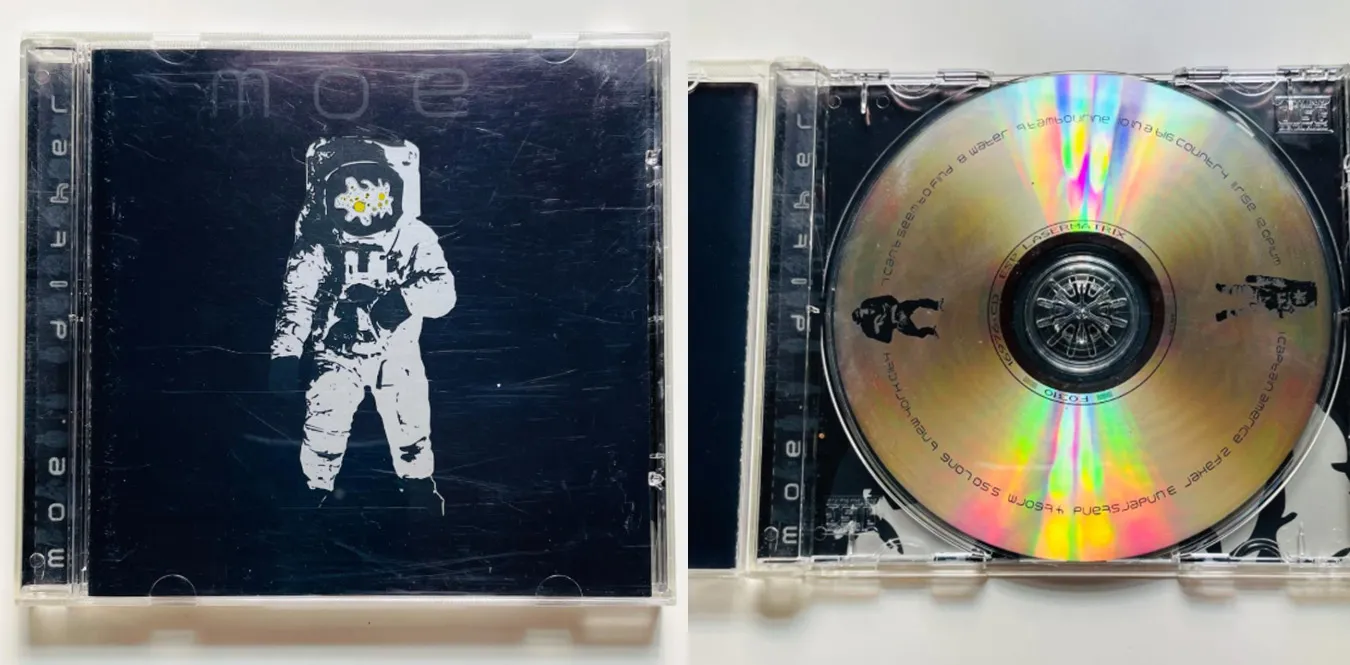
Moe. – Dither
Moe は、1989年にバッファロー大学で結成されたアメリカのジャムロックバンド。
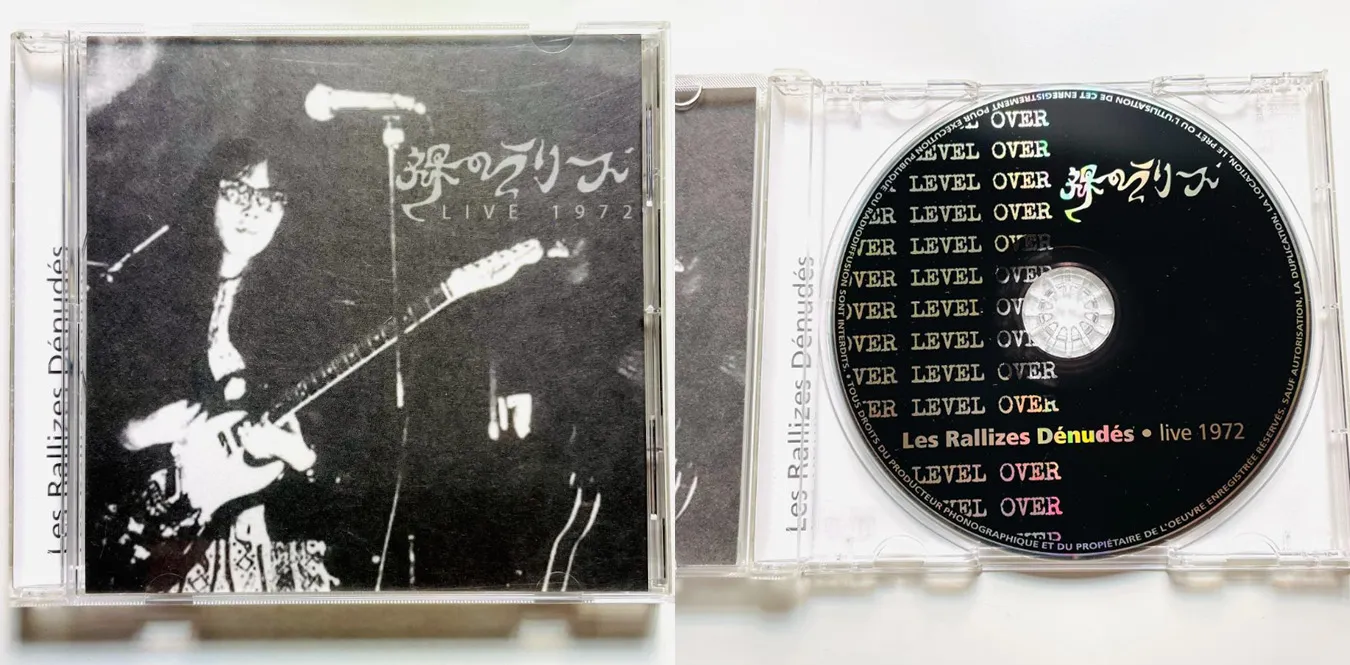
裸のラリーズ Les Rallizes Dénudés – Live 1972
裸のラリーズ (Les Rallizes Dénudés/Hadaka no rariizu)は、1967年に水谷孝を中心に京都で結成されたエクスペリメンタルノイズロック・サイケデリックロックバンド。1960年代から1990年代に活動した裸のラリーズは、国内外のノイズロックシーンに多大なる影響を与え、現在もカルト的人気を誇る。結成当時のメンバーは水谷孝、中村武志、若林盛亮。その他、山口冨士夫(元村八分、後にティアドロップス)、久保田麻琴などが一時在籍するなどメンバーは流動的。1996年を最後に活動を休止している。