[Column] Penguin Cafe Orchestra - An imaginary paradise that resonates between ambient and folklore
Column en 70s 80s Ambient Minimal![[Column] Penguin Cafe Orchestra - An imaginary paradise that resonates between ambient and folklore](/../assets/images/column-penguin-cafe-orchestra.webp)
Prologue: Reverberations of a “fictional cafe” found nowhere else in the world
Text: mmr|Theme: From the establishment of PCO to the trajectory of its activities, acoustic structure, analysis of major works, Simon Jeffes’ thoughts
Penguin Cafe Orchestra (PCO) is a music unit that suddenly appeared in England in the late 1970s. Rather than a band, they can be called a ““musical body of thought”, and their unique sound that transcends the boundaries of ensemble form, instrumentation, and genre is still hailed as ““one-of-a-kind” to this day.
It’s not folk, classical, ambient, or world music. Although it includes all elements, it does not belong completely to any category. This is PCO’s greatest appeal, difficulty, and reason for its enduring support.
The central figure, Simon Jeffes, started a ““quiet revolution’’ that had nothing to do with trends in Britain, where punk new wave was sweeping the scene. Systematic minimalism, a cross-ethnic approach to instruments, and a musical outlook filled with humor and poetry. The ““imaginary cafe’’ he built continues to invite music fans from all over the world.
Chapter 1 Birth: A project that started from a feverish “vision”
PCO’s origins lie in a strange event in 1972, when founder Simon Jeffes “succumbed to a high fever due to food poisoning.” That’s when he had a daydream-like inspiration that later became known as the “Penguin Cafe vision.” There existed a “utopia” where people could gather freely and continue to make music without discipline or form.
To realize this vision, Jeffes constructs a unique music that mixes classical chamber orchestration, the rustic drive of folk, the vitality of African and South American rhythms, and the repetitive structure of minimal music. The music was neither traditional nor avant-garde, but crystallized as a sound that could only be found here.
Chapter 2 Organization and philosophy: An unfixed “orchestra”
PCO’s composition changes with each album and live performance, and is different from a “band” with fixed members. Led by Simon Jeffes, former classical musicians, folk musicians, and experimental musicians participate, and they act as a ““chamber music group that gathers on a project basis’’.
● Main participants
- Simon Jeffes (guitar, cavaquinho, ukulele, keyboard, composition)
- Helen Liebmann (cello)
- Geoffrey Richardson (viola, other instruments)
- Steve Nye (keyboard)
- Gavyn Wright (violin)
- Julio Segovia (percussion)
● Characteristics of organization
- Ethnic instruments: cuatro, charango, African drum
- Chamber instruments: cello, viola, violin
- Small stringed instruments: ukulele, cuatro
- Ancient and modern instruments coexist
- Layered structure of repeated phrases
● The core of their ideology
Jeffes described his music as “spontaneous structures.” It is not the rules of Western music or the traditions of folk music, but an organic process in which an accumulation of sounds takes shape by chance. This “spontaneousness” is the reason why PCO’s sound, while sometimes magical, has a warm, everyday feel to it.
Chapter 3 Deep structure of representative songs - Acoustic analysis
This chapter analyzes the internal structure of PCO’s iconic songs.
3-1. Music For a Found Harmonium (1984)
PCO’s signature song. An iconic anecdote is that he composed music by playing on a broken harmonium he found on the streets of Kyoto.
Structural features
- The main melody is a simple scale movement
- Contains microtonal shift in the middle part
- Dispersed chords on the guitar are repeated around the sustained note of the harmonium.
- A fusion of folk music dynamics and classical precision
Even today, this song is frequently used in movies, commercials, and dance works, and has the “light, celebratory feel” that symbolizes PCO.
3-2. Perpetuum Mobile (1987)
One of PCO’s most famous songs, used in many TV programs in Japan. It has a repeating structure similar to minimal music, but it is not as strict as Steve Reich’s, but rather has a warm repetition.
structure
- Repeating keyboard arpeggio
- Create space with long notes of stringed instruments
- Percussion is added from the middle to gain driving force
- “Reciprocating structure” that returns to tranquility at the end
It’s a quiet yet dramatic song that feels like the expansion and contraction of time has been turned into music.
3-3. Telephone and Rubber Band (1981)
A strange piece of music in which a two-tone telephone suddenly rings out over a classical ensemble.
Features
- Looping telephone audio by tape manipulation
- Electronic sound that exists as a “foreign object” above the ensemble
- Humorous but postmodern at the same time
In terms of minimal + found sound, this work intersects with Brian Eno’s lineage.
Chapter 4 World view by album
**PCO constructs an ““imaginary space” for each work.” ** The main albums are explained below.
● Music from the Penguin Cafe (1976)
Debut album released on Virgin Records’ sub-label Obscure. Among the Obscure works produced by Brian Eno, this is the most “different” and “bright”. Folklore and repetitive structures are fused, and the later style is almost complete.
● Penguin Cafe Orchestra (1981)
Contains the famous song “Telephone and Rubber Band”. He has a strong folk music approach and has acquired a unique “dance quality.”
● Broadcasting from Home (1984)
Contains the famous song “Music For a Found Harmonium”. An album that reaches its peak with the bright sound that is unique to PCO.
● Signs of Life (1987)
The atmosphere has become more chamber music, evolving into a more cinematic world. Includes “Perpetuum Mobile”.
● Union Cafe (1993)
Simon Jeffes’ last studio work before his death. The overall structure is more meditative, the acoustics more transparent. It is a work that strongly expresses Jeffes’ spirituality in his later years, and received a rapid rise in acclaim in later years.
Chapter 5 Cultural Influence - Why “stateless kindness” has permeated the world
PCO’s music was received in a variety of ways in many countries, despite being independent of trends in the commercial music world.
● Affinity with cafe/lounge culture
It was reevaluated during the “cafe music” boom in the late 1990s. The ““ambient music with a statement’’ that was light and easy to listen to, yet did not become part of the background, attracted attention.
● Heavy media usage
- TV program BGM
- CM
- Movies (especially works by European directors)
- Ballet/dance company sound source
PCO’s music is emotional but not descriptive, so it is valued as ““sound that allows images to breathe’’.
● Impact on subsequent generations
- Max Richter *Olafur Arnalds
- Penguin Cafe (successor project by son Arthur Jeffes)
- Folk/Minimal artists
PCO’s approach of ““absence of genre” and ““a fusion of chamber music and folk instruments” was a forerunner of the modern postclassical trend.
Chapter 6: The Death and Aftermath of Simon Jeffes
In 1997, Simon Jeffes passed away at the age of 48 from a brain tumor. Although it was a great loss to the music world, the remaining recordings, unreleased notes, and performance scores are still being reevaluated.
Later, his son Arthur Jeffes started a new project under the name “Penguin Cafe”. While inheriting the spirit of PCO, they tour the world as a more modern ensemble.
Appendix: Chronology/Illustrations
Chronology: Penguin Cafe Orchestra Chronology
Illustration: PCO acoustic structure map
Illustration: Instrument layer structure (Perpetuum Mobile)
Conclusion: Why PCO resonates “timelessly”
Penguin Cafe Orchestra’s music remains fresh nearly 50 years later. What supports this longevity is――
- has no nationality
- Not dependent on era
- Don’t force emotions
- but has a deep temperature
It is a fusion without contradiction.
PCO’s sound can either ““melt into the background” or ““take center stage.” The song listens to the listener’s state of mind and sounds completely different each time.
It may be that the ““imaginary cafe’’ that Simon Jeffes saw in his fever is still quietly operating somewhere around the world.
YouTube Podcast
*This podcast is in English, but you can watch it with automatic subtitles and translation.
Explore more like this
![[Column] Japanese Ambient / Environmental Music](/../assets/images/column-japanese-ambient-environmental-music.webp)
[Column] Japanese Ambient / Environmental Music
Introduction: Until silence covers the world
[Column] Japanese Ambient / Environmental Music
Introduction: Until silence covers the world
![[Column] Tatsuro Yamashita: Analog aesthetics and changes in sound after transition to digital](/../assets/images/column-yamashita-tatsuro.webp)
[Column] Tatsuro Yamashita: Analog aesthetics and changes in sound after transition to digital
Production environment, equipment, recording methods, studio culture, media specifications
![[Column] Kronos Quartet: The trajectory of a string quartet that continues to innovate and take on challenges](/../assets/images/column-kronos-quartet.webp)
![[Column] New Age Steppers: The revolution of an action label that reconnected the strata of post-punk and dub](/../assets/images/column-new-age-steppers.webp)
[Column] New Age Steppers: The revolution of an action label that reconnected the strata of post-punk and dub
Prologue: Destruction and Reconstruction of London in 1979–80
![[Column] Parliament / Funkadelic: The whole story of the P-Funk revolution - deciphering space myths, groove techniques, and cultural heritage](/../assets/images/column-parliament-funkadelic.webp)
[Column] Parliament / Funkadelic: The whole story of the P-Funk revolution - deciphering space myths, groove techniques, and cultural heritage
Prologue: What is P-Funk? A cosmic cultural revolution that goes beyond “funk”
![[Column] Toots and the Maytals — The soul of reggae etched by live performances](/../assets/images/column-toots-and-the-maytals-live-history.webp)
[Column] Toots and the Maytals — The soul of reggae etched by live performances
Introduction: The birth of reggae and the origins of live culture
![[Column] Apocalypse of images and sounds:](/../assets/images/column-koyaanisqatsi.webp)
[Column] Apocalypse of images and sounds: "Koyanisqatsi" and the world of Philip Glass
Prologue: What a film without words says
![[Column] Marvin Gaye: Between Love and Pain - Salvation and Destruction as Seen by the God of Souls](/../assets/images/column-marvin-gaye.webp)
[Column] Marvin Gaye: Between Love and Pain - Salvation and Destruction as Seen by the God of Souls
From Motown star to lonely wanderer to tragic end
![[Column] Mobile Suit Gundam and the universe of music - Mobile suits as a symphony](/../assets/images/column-gundam.webp)
[Column] Mobile Suit Gundam and the universe of music - Mobile suits as a symphony
I. Starting point in the 1960s: Beyond musical institutions
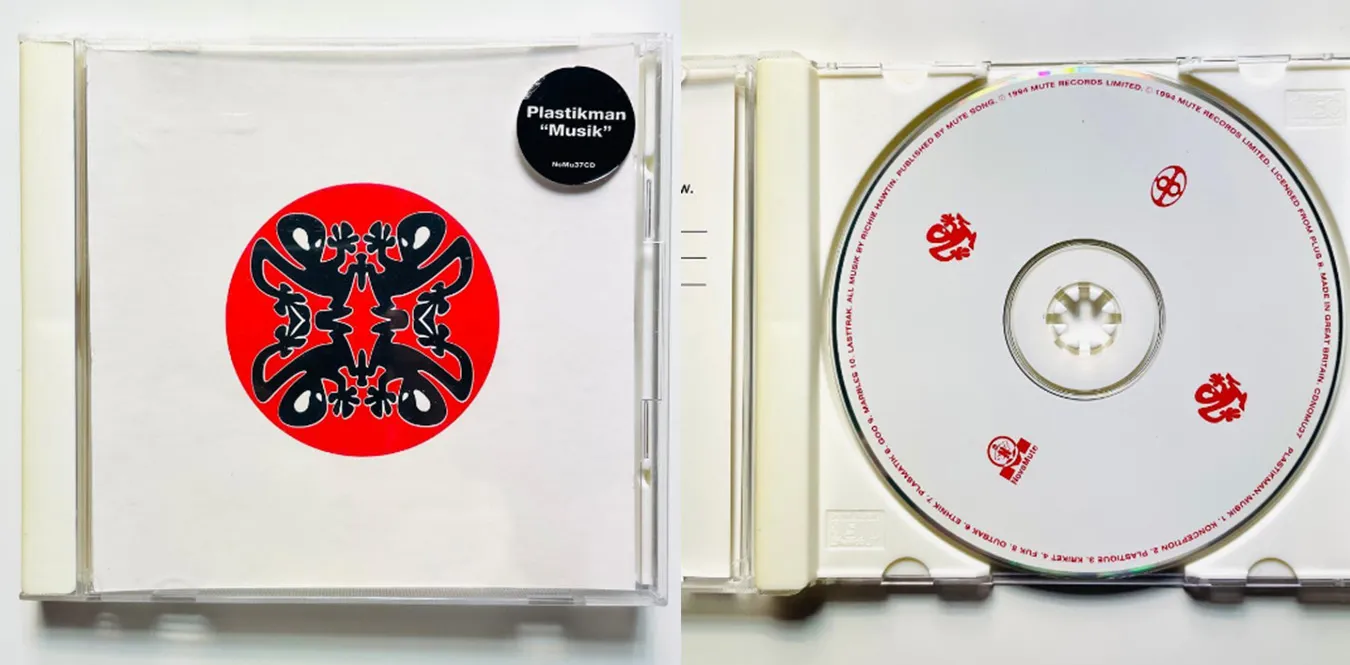
Plastikman – Musik
An album released by Richie Hawtin under the alias Plastikman on the NovaMute label in 1994. This is Richie Hawtin’s third studio album and second under his Plastikman name.
![[Column] From Joy Division to New Order: The evolution of Manchester sound](/../assets/images/column-joy-division-new-order.webp)