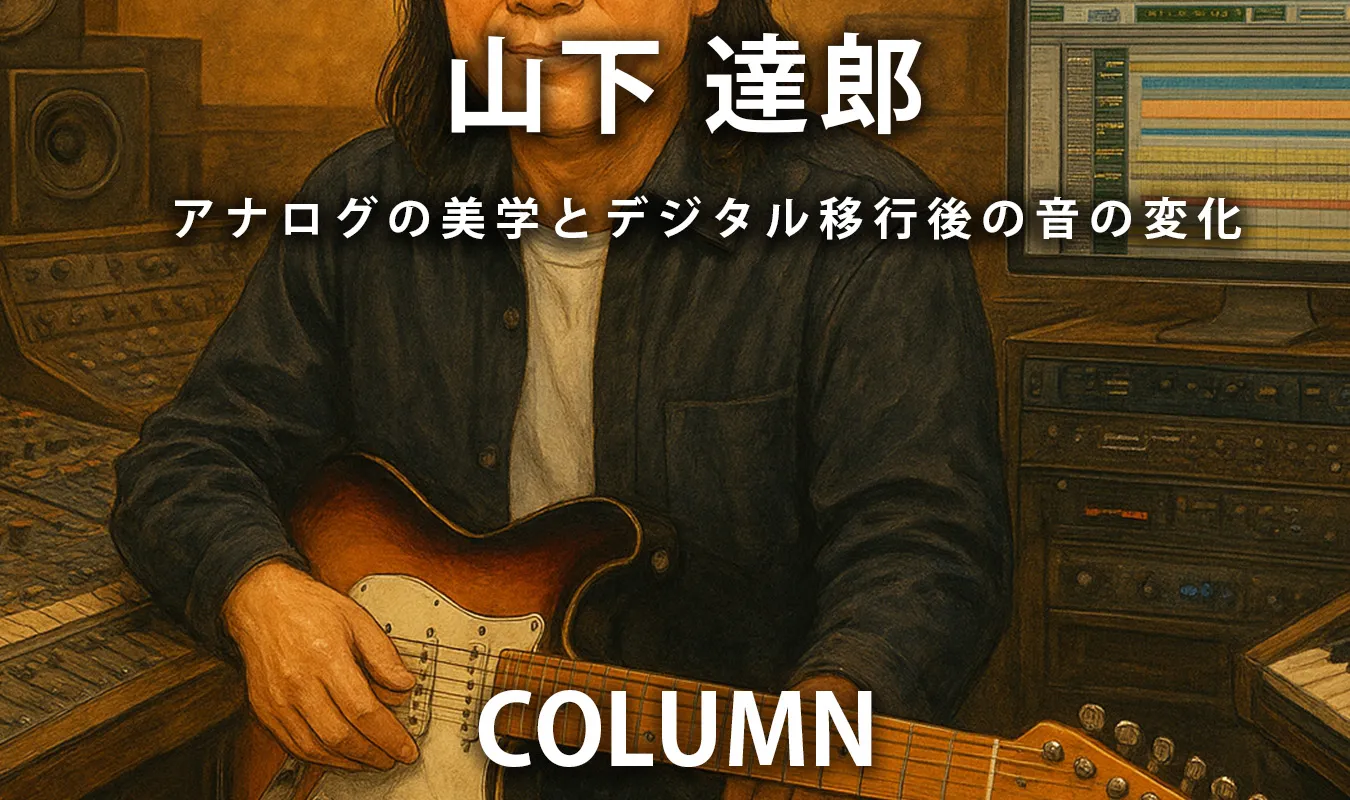
制作環境・機材・録音手法・スタジオ文化・媒体仕様
文:mmr|テーマ:シティポップ時代から最新作まで、「録音の人」が貫いたサウンド哲学について
日本のポップミュージック史において、山下達郎はボーカリスト・作曲家であると同時に、日本屈指の「録音作者」である。
彼のアルバムを貫いているものは、時代によって変化する流行や音楽ジャンル以上に、録音技術、媒体、音響思想である。
特に、
- Thorough sound creation in the analog tape era
- デジタル録音/デジタル機器導入後の慎重な変化と選択
- シティポップ時代のスタジオ文化との関係
- 近年のリマスターにおける哲学の一貫性
これらの変遷は、単なる音質の違いではなく、日本のポピュラー録音史そのものを映し出している。
1. 1970s: The golden age of analog tape and the foundation of Tatsuro Yamashita
■ シュガー・ベイブ(1973–1976)
Tatsuro Yamashita’s musical outlook was formed in the rock/pop analog recording culture of this period.
- 録音媒体:アナログ・マルチトラック・テープ(2インチ、主に16〜24tr)
- スタジオ:日本の黎明期スタジオ(ビクター、日音、CBSソニーなど)
- Musical background: Deep commitment to American recording culture such as Brian Wilson, Phil Spector, Stax, etc.
この時代、達郎はすでに「録音技術こそが音楽の根幹」という思想を固めていたと語っている。
■ Sound characteristics of “SONGS” (1975)
- Self-chorus overdubbing
- ドラムのデッドなルームサウンド
- Live recording of horns/strings
- Analog-specific thick mid-low range
アナログ特性に最適化されたアレンジと録音が、既にここから始まっていた。
2. 1970年代後半:ソロ初期と「アナログ・レイヤー」の完成形
■ “SPACY” (1977), “GO AHEAD!” (1978)
この時期は、達郎がアナログ24トラック録音を使い倒した時代である。
特徴:
- テープによる温度感のあるコンプレッション
- 手弾きの多重録音(ギター、キーボード、パーカッション)
- Dozens of overdubbing vocals
達郎は後年、「アナログは重ねるほどニュアンスが丸く収まる」と語っており、この頃の作品はその理想形である。
3. 1980–1982年:『RIDE ON TIME』『FOR YOU』
■ シティポップ時代の録音技術の頂点
1980年代初頭、日本のスタジオ技術は世界的にも高い水準に到達していた。
その中心にあったのが CBSソニー信濃町スタジオ。
▼ Analog recording peak
- 使用機材:Studer A80/A800 24tr、NEVEコンソール
- Rhythm: Live drums + analog recording
- ギター:コンプレッサーを通した温かいトーン
- Chorus: “Dense layering” unique to analog
- Reverb: EMT 140 plate with Lexicon pre-delay
The sound from this time is often referred to as the ““ideal form of city pop.’’
■ 『FOR YOU』(1982)の録音美学
This work is said to be one of the top of Tatsuro’s works. 音響的特徴:
- アナログ録音の最高峰レベルのクリアさ
- The “thickness” of analog drum recordings
- コーラスの密度と定位の完璧な構築
- The treble side is rounded and feels like an analog ear.
すべてアナログでありながら、モダンな解像度を持った稀有な作品。
4. Late 1980s: Digital adoption period and cautious transition
CD was released in Japan in 1982. In the late 1980s, digital recording equipment (PCM, digital multi, digital reverb) began to spread rapidly.
だが、山下達郎は デジタル化にもっとも慎重だったアーティストの一人である。
■ デジタルの初導入
達郎が本格的にデジタル機材を使用しはじめたのは、
- Introduced digital synths (DX7, etc.)
- デジタルリバーブ(Lexicon 224/480)は限定使用
- 録音そのものは「アナログ・テープ」を強く保持
Specifically, I avoided digital recording itself for the following reasons:
- デジタル録音初期は高域が硬く、奥行きが失われやすい
- I hated losing the “roundness” of analog over-recording.
- Analog was better for building my own chorus.
In fact, Tatsuro says, ““The era when analog 24 tracks became obsolete was a crisis for music.’’
5. 1990s: Entering the digital recording era and new approaches
1990年代に入り、業界は完全にデジタルへ移行する。
▼ Although Tatsuro transitioned to digital recording, he did not change his basic stance.
- デジタル録音採用
- However, increased processing to maintain analog texture
- 楽器の録音は依然として生音を多用
- Continued chorus recording method
■ “ARTISAN” (1991)
- 本格的なデジタル録音時代の代表作
- 高解像度、クリアな中高域
- デジタル機材を使用しつつ、アナログ時代のコーラス技法を維持
- サウンドはシャープだが冷たくない
達郎は「デジタルでも、録り方次第で温度感は出せる」と語っている。
6. 2000年代:デジタル制作成熟期と“アナログ的デジタル”の確立
■ 2000年代の録音哲学
- Production environment is completely digital
- However, focus on microphone selection and room sound during the recording stage.
- 「デジタルであってもアナログ質感を設計する」
Tatsuro also built a high-quality recording environment at home, セルフ・プロデュース+デジタル+生音という独自の融合を達成する。
7. 2010s: Remaster era and “sound revival”
Throughout the 2020s, many analog era works have been remastered.
達郎はリマスターにおいても、音の改変を極端に嫌うスタンスを明確にしている。
▼ リマスターの特徴
- Faithfully reproduces the original tape
- 極端なEQは一切せず
- Do not raise sound pressure unnaturally (reject loudness war)
- オリジナルの意図をそのまま伝える
結果として、近年のアナログ再発は世界的にも高評価を受けている。
8. 2020s: Latest works - era of analog return
Nowadays, the demand for analog records is increasing again. 達郎は、デジタル全盛の中で次のような姿勢を貫く:
- Recording is mainly digital
- But focus on analog release
- ミックスはアナログ的な質感を残す
- Avoid excessive sound pressure
- Maintains roundness of high range and thickness of midrange
In particular, his latest work has a sound that is a high-level fusion of “analog roundness” and “digital information content”.
9. 年表:アナログ〜デジタル移行の流れ
10. アナログ音とデジタル音の技術的比較
――達郎作品を基準に見る音響の違い
| 項目 | アナログ期(〜1980年代) | デジタル期(1990年代〜) |
|---|---|---|
| Recording media | Tape (2 inches) | PCM/ProTools |
| 音の印象 | 温かい、厚い、丸い | クリア、シャープ |
| Chorus | The more you layer, the more it becomes | It tends to become stiff when layered |
| ドラム | 低域が太く自然 | 立ち上がりが速い |
| ノイズ | 少量のテープヒス | ほぼゼロ |
| 達郎の評価 | 「音楽の理想形に近い」 | 「使い方次第」 |
11. City pop and recording culture: Why is the sound of the analog era “special”?
The reason why Tatsuro Yamashita’s masterpieces were reevaluated worldwide as city pop was as follows. It”s not just the charm of the songs, but also the texture of analog recording and Japan”s 1980s studio culture.
ポイント:
- 生ドラムとアナログ録音の相性
- Advanced playing by hand musicians (Tatsuo Hayashi, Hironori Ito, Jun Aoyama, etc.)
- 大型スタジオの音響設計(信濃町、ビクター、オンエアなど)
- Rich mid-low range with NEVE console
- EMTプレートの残響文化
これら“時代に固有の条件”が、アナログ・シティポップの音を唯一無二にしている。
12. Conclusion:
山下達郎の音は「アナログ vs デジタル」ではなく
“録音哲学”の一貫性がすべてである
50年のキャリアを通じて、達郎の音はこうまとめられる:
-
アナログ時代:
素材と機器の限界を使いこなすことで“温度感”を極めた -
デジタル移行後:
技術の進化を受け入れつつ、アナログ的質感を保持し続けた -
リマスター時代:
歴史を塗り替えるのではなく、原音を忠実に再生するという姿勢を貫いた
つまり、
メディアや機材が変わっても、山下達郎の音の本質は変わっていない。
それは「録音技術は音楽そのもの」という、
彼が活動初期から抱き続けてきた信念の反映である。
YouTube Podcast
※このPodcastは英語ですが、自動字幕・翻訳で視聴できます
Explore more like this
![[Column] Kronos Quartet: The trajectory of a string quartet that continues to innovate and take on challenges](/../assets/images/column-kronos-quartet.webp)
【コラム】 Penguin Cafe Orchestra ― アンビエントとフォークロアのあいだで響く架空の楽園
序章:世界のどこにもない“架空のカフェ”の残響
【コラム】 New Age Steppers:ポストパンクとダブの地層を繋ぎ直したアクション・レーベルの革命
Prologue: Destruction and Reconstruction of London in 1979–80

【コラム】 Parliament / Funkadelic:P-Funk革命の全貌 ― 宇宙神話・グルーヴ技法・文化的遺産を読み解く
Prologue:P-Funkとは何か ― “ファンク”を越えた宇宙的文化革命
【コラム】 Toots and the Maytals — ライブが刻んだレゲエの魂
はじめに:レゲエ誕生とライブ文化の原点
【コラム】 Marvin Gaye:愛と痛みの間で ― ソウルの神が見た救済と破滅
モータウンのスターから、孤独な放浪者、そして悲劇的な最期へ

【コラム】 機動戦士ガンダムと音楽の宇宙 ― シンフォニーとしてのモビルスーツ
I. 1960年代の出発点:音楽の制度を超えて

【コラム】 日本の70年代Discoと赤ラーク ― 音楽と煙草が描いた夜の美学
日本の70年代Discoと赤ラーク ― 音楽と煙草が描いた夜の美学
![[Column] Rediscovering City Pop: Why foreign DJs and YouTubers are addicted to it](/../assets/images/column-citypop.webp)
![[Column] From Joy Division to New Order: The evolution of Manchester sound](/../assets/images/column-joy-division-new-order.webp)
[Column] From Joy Division to New Order: The evolution of Manchester sound
Prologue: From Silence to a Sea of Electronics — Manchester Dawn
【コラム】 アンビエント:「聴く音楽」から「感じる音楽」へII
「聴く音楽」から「感じる音楽」へ II