Prologue: Destruction and Reconstruction of London in 1979–80
文:mmr|テーマ:On-U Sound を象徴した“混成チーム”の全史と遺した革新について
In London at the end of the 1970s, even though the punk explosion had subsided, society was still plagued by many rifts such as unemployment, division, strikes, and discrimination against immigrants. The scene seemed like a wasteland, but its crevices became a hotbed of music. パンク後のアーティストたちは、ロックの形式から飛び出し、ダブ、レゲエ、アフリカン・パーカッション、ノイズ、電子音、DIY録音技術へと急速に飛び込んでいった。
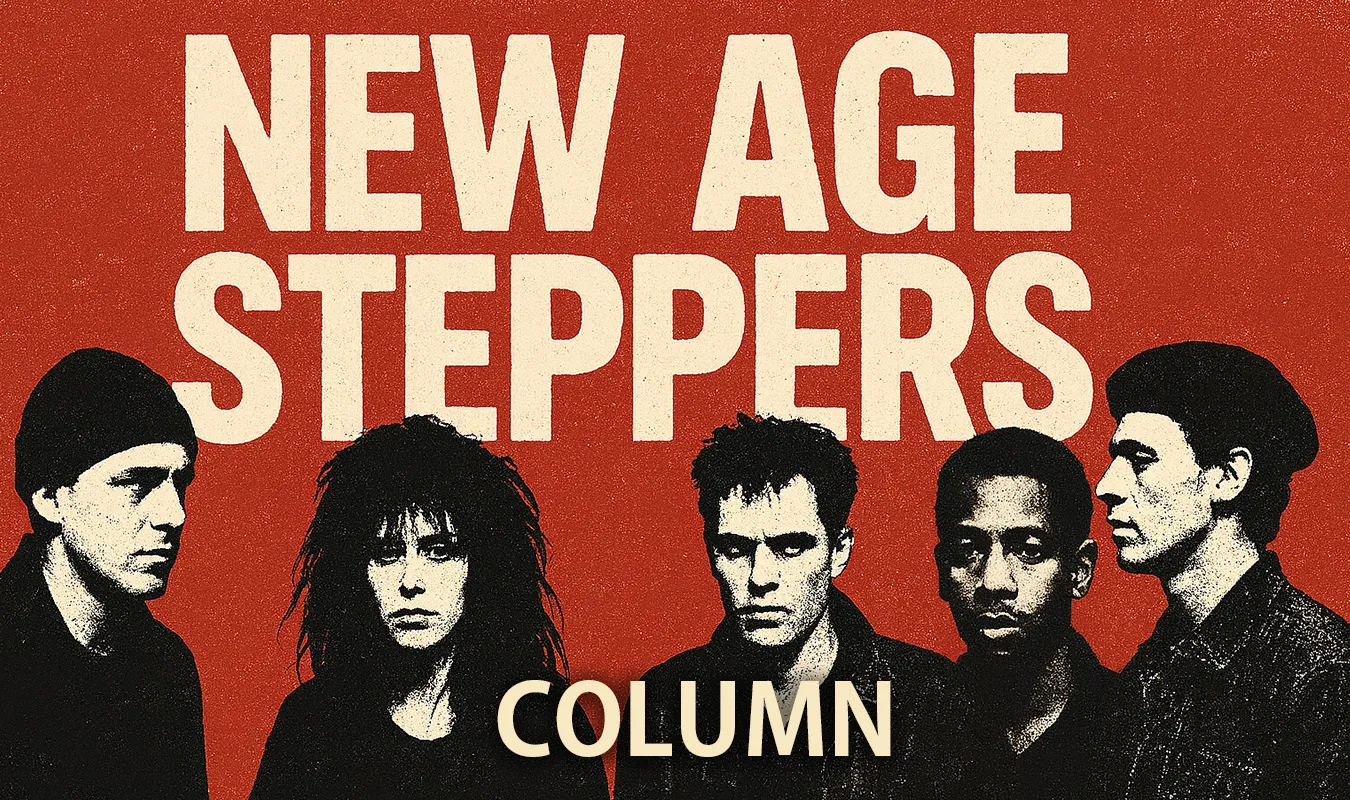
It was precisely during these complex times that a young producer named Adrian Sherwood rose up and began forming the vast network that would become known as On-U Sound. And the earliest ““symbols” and ““thoughts themselves” were none other than New Age Steppers.
Chapter 1 Who were the New Age Steppers?
New Age Steppers (hereinafter referred to as NAS) is not a normal “band”. The members changed with each album, and the style, which was a mix of post-punk and reggae musicians, was almost unheard of at the time.
核となった人物
- Adrian Sherwood: Producer/Director of On-U Sound
- Ari Up (The Slits): Vocals
- Mark Stewart (The Pop Group): Vocals
- George “Bingy Bunny” Valentine (Roots Radics): Guitar
- Style Scott (Roots Radics): Drums
- Bruce Smith (The Pop Group): Drums
- Steve Beresford, Dan Shears, Eskimo Fox and many more
This structure was born from the confluence of ““reggae session culture” and ““post-punk experimentalism.” In other words, what are New Age Steppers?
“ジャンルの交差点としての音楽体=混成プロジェクト”
It was an existence that valued ““variability and contact’’ rather than a fixed identity.
Chapter 2 Adrian Sherwood and the formation of On-U Sound
Sherwood had been involved in reggae labels and distribution since the 1970s, and had deep connections with Jamaican musicians. 同時に、The SlitsやThe Pop Group、The Fall、Alternative TVといったポストパンク勢とも交流を持ち、両者が抱える「既存の音楽体制への不信感」を直感的に理解していた。
In 1979, he started On-U Sound to maximize his experiments. NAS was the earliest symbol of this, establishing the impression that “On-U Sound = a cross-border, DIY sound laboratory.”
Chapter 3: Innovation in Sound: Fusion of Post-Punk x Dub
● ポストパンクの攻撃性
- Rough and minimalistic
- Destroy the structure of the lock
- ノイズ、即興性、政治性
● Jamaican Dub Method
- Rhythm-centered
- Spatial processing (echo/delay)
- Track “deconstruction and re-editing”
NASの録音は、シャーウッドによる卓上ダブミックスが核心であり、演奏した音をそのまま使わず、録音後に再配置し空間処理することで新たな生命を与えていた。 In particular, the tight grooves of the Roots Radics group and the rough and wild energy of the post-punk side create a ““sway and tension’’.
This fusion was shocking even for Britain at the time. This is because there was a deep cultural gap between the Jamaican immigrant community and the white punk/avant-garde crowd in London, and there were very few musical projects that directly interacted with each other.
NAS is recorded as an early example of straddling that gap and creating a space for co-production.
Chapter 4 Ari Up and “weapon called voice”
The face of NAS is Ari Up, a member of The Slits. Her vocals were a unique blend of Jamaican toast, post-punk screams, and girlish abandon.
Ari has been deeply into reggae since his teens, so joining NAS was a natural progression. 彼女の声はしばしば原初的で、揺れ、破れ、裂け、踊る。それは“社会に対する抵抗のエネルギー”として作品全体に流れ込む。
カバー曲 “Fade Away” のヴァージョンは、ポストパンク史の中でも強烈な再解釈として知られている。
Chapter 5 Changes by album (1981–2012)
■ 『New Age Steppers』(1981)
A debut work that most symbolizes the spirit of NAS. Ari Up”s presence, Roots Radics’ performance, and Sherwood”s tabletop dubs all came together to set the standard for hybrid music.
Representative song
- Fade Away
- My Love
- Love Forever
■ 『Action Battlefield』(1981)
It’s more aggressive and has a strong post-punk vibe. Mark Stewart’s participation strengthened the agitation.
■ “Foundation Steppers” (1983)
It’s the most “reggae-like” song of NAS, with a more stable sense of groove. This work also has strong socio-political themes.
■ 『Love Forever』(2012)
Ari Upの死後、シャーウッドが未発表録音などをまとめて発表した追悼作。 Ariの最後期のエネルギーを閉じ込めた非常に重要なドキュメント。
Chapter 6 Place in music history: Why are New Age Steppers important?
1. Pioneering project that transcends genre boundaries
ポストパンクとダブを同じテーブルに置き、「実験」を中心に据える構造はNASが先頭を切った。
2. The core of On-U Sound
Without NAS, subsequent On-U projects such as African Head Charge, Dub Syndicate, and Tackhead would not have been born.
3. Popularization of the concept of “mixed membership system”
The ““collective philosophy,’’ which does not limit music to fixed band members or genres, was inherited by the later Bristol scene, Trip Hop, and the world’s underground.
4. Symbol of cross-border culture
移民コミュニティと白人ポストパンク勢の実際的なコラボレーションという点でも、英国文化史において象徴的である。
Chapter 7 Recording technology and studio aesthetics
Sherwood’s studio method is “録音後に作品の約半分が作られる” というほどダブ的で、エンジニアリングそのものが作曲行為だった。
Key technologies
*Roland Space Echo
- Spring Reverb
- 4-track to 8-track analog processing
- ドラム/ベースの分離強調
- Cut and paste live recording material
- Dub method that turns fader operations into performances
This aesthetic continues in current electronic music/ambient/bass music.
Chapter 8 Social and Cultural Background: Connections with UK Immigration History
NAS was more than just a musical project; it became serious in the UK in the 1970s and 1980s.
- Youth unemployment
- Immigration discrimination
- スキンヘッドの暴力
- Brixton暴動
- Cuts in public services
It has a background of social issues such as.
Ari Upはジャマイカ移民コミュニティと長く交流し、Mark Stewartは反資本主義的な姿勢を取っていた。 Even if NAS did not directly post political lyrics, ““making music as an experiment’’ in a multicultural society was itself a political practice.
Chapter 9 Dissipation and expansion of influence
After 1983’s “Foundation Steppers,” works under the NAS name ceased. But its influence spread far and wide.
● 影響を受けた領域
- Bristol’s Massive Attack, Tricky, Smith & Mighty
- UK Dub, Digital Dub
- Experimental / Post-Industrial
- Alternative Dance
- DIYレーベル文化
“ジャンル横断”を当たり前にした点で、NASは極めて現代的なモデルと言える。
Chapter 10 Re-evaluation and the death of Ari Up (2010)
Ari Upは2010年に死去する。 シャーウッドは深い衝撃を受け、未発表テイクや過去録音を整理し、2012年『Love Forever』として世に送り出した。
This work not only concluded the history of NAS, but also reaffirmed the importance of Ari.
Chapter 11 “Thoughts” left behind by New Age Steppers
NASが根底に置いたのは、 “音楽を国籍・ジャンルの線で分けない” This is the idea.
そしてこの思想は
- Multicultural coexistence
- Anti-authoritarianism
- DIY spirit
- Ethics of collaboration It is still deeply alive today in the form of
The prototype of ““genre-crossing creation’’ that 21st century musicians routinely engage in is surprisingly close to what NAS did.
Chronology
1979 Adrian Sherwood begins preparations to launch On-U Sound
1980 Recording of New Age Steppers begins (Ari Up, Mark Stewart, Roots Radics participate)
1981 『New Age Steppers』リリース
1981 “Action Battlefield” released
1983 『Foundation Steppers』リリース
1984-2000 NAS activities virtually ceased
2010 Ari Up passed away
2012 『Love Forever』リリース(未発表音源を含む追悼作)
Structure map of New Age Steppers
Producer] --> B[Ari Up
The Slits] A --> C[Mark Stewart
The Pop Group] A --> D[Roots Radics
Session Musicians] D --> D1[Style Scott
Drums] D --> D2[Bingy Bunny
Guitar] B --> E[New Age Steppers
1981-2012] C --> E D1 --> E D2 --> E E --> F[On-U Sound
Experimental Dub] F --> G[African Head Charge] F --> H[Dub Syndicate] F --> I[Tackhead]
Conclusion: New Age Steppers is “current” music
Although the work was made over 40 years ago, the sound of New Age Steppers still sounds new today. This is the premise of music production after the Internet.
- Collaboration across borders
- ジャンルのハイブリッド化
- 制作とエンジニアリングの融合
- DIYスタジオ文化
NAS, which pioneered these trends in the early 1980s, can be said to be the prototype of modern music.
The sound they left behind was intense, rough, swinging, bouncing, and sometimes destructive, but at its core, it was about being free. その自由は今も、On-U Soundの作品や、世界中のアンダーグラウンドシーンに脈々と受け継がれている。
YouTube Podcast
*This podcast is in English, but you can watch it with automatic subtitles and translation.
Explore more like this
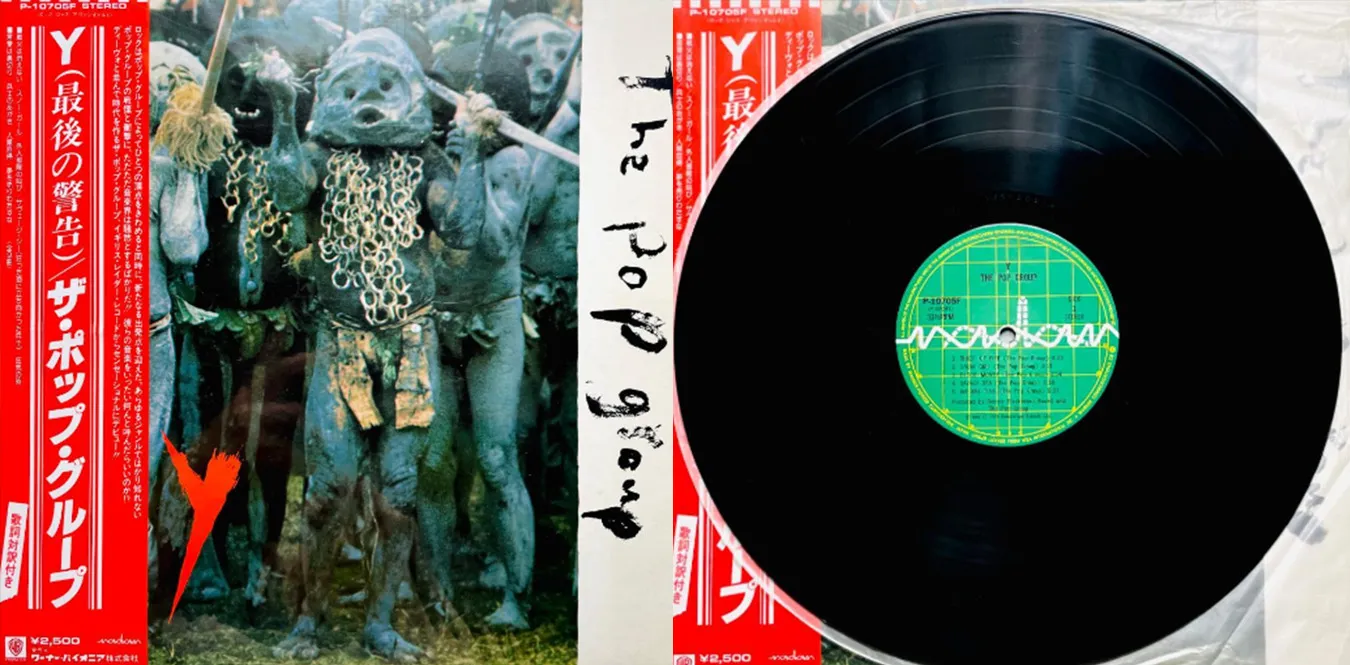
The Pop Group = ザ•ポップ•グループ – Y = Y (最後の警告)
The Pop Group は、1977年に結成されたイギリス・ブリストル出身のPost-punk (ポストパンク)バンド。
【コラム】 山下達郎:アナログの美学とデジタル移行後の音の変化
制作環境・機材・録音手法・スタジオ文化・媒体仕様
![[Column] Kronos Quartet: The trajectory of a string quartet that continues to innovate and take on challenges](/../assets/images/column-kronos-quartet.webp)
![[Column] James Chance and the Contortions: No Wave pioneers and their musical analysis](/../assets/images/column-james-chance-and-the-contortions.webp)
【コラム】 Penguin Cafe Orchestra ― アンビエントとフォークロアのあいだで響く架空の楽園
序章:世界のどこにもない“架空のカフェ”の残響

【コラム】 Parliament / Funkadelic:P-Funk革命の全貌 ― 宇宙神話・グルーヴ技法・文化的遺産を読み解く
Prologue:P-Funkとは何か ― “ファンク”を越えた宇宙的文化革命
【コラム】 Toots and the Maytals — ライブが刻んだレゲエの魂
はじめに:レゲエ誕生とライブ文化の原点
【コラム】 Marvin Gaye:愛と痛みの間で ― ソウルの神が見た救済と破滅
モータウンのスターから、孤独な放浪者、そして悲劇的な最期へ

【コラム】 機動戦士ガンダムと音楽の宇宙 ― シンフォニーとしてのモビルスーツ
I. 1960年代の出発点:音楽の制度を超えて
【コラム】 The Pop Group ― ブリストルが生んだ反逆のサウンドと時代背景
序章:時代が孕んだ爆発の種
![[Column] From Joy Division to New Order: The evolution of Manchester sound](/../assets/images/column-joy-division-new-order.webp)
[Column] From Joy Division to New Order: The evolution of Manchester sound
Prologue: From Silence to a Sea of Electronics — Manchester Dawn