[Column] Kendrick Lamar: The structure and thinking that expanded hip-hop into epic poetry
Column en Hiphop Narrative Rap![[Column] Kendrick Lamar: The structure and thinking that expanded hip-hop into epic poetry](/../assets/images/column-kendrick-lamar.webp)
Prologue: The moment when hip-hop becomes a story
Text: mmr|Theme: About Kendrick Lamar, who expanded hip-hop from fragmentary self-expression to a long narrative art.
Kendrick Lamar’s body of work is not a collection of songs, but has a structure closer to a full-length novel or a classic epic poem. His albums go beyond the concept of “song order” and overlap personal and social history while manipulating time, perspective, and narrator. There is no chance or improvisation, but a carefully designed narrative structure.
Hip-hop originally developed as an expression that captures the emotions and reality of the moment. Every battle, every block party, every song on the radio had value in its ephemerality. But Kendrick offered a way to use the format to tell long-distance stories. The structure, which can only be seen in its entirety by listening to the album as a whole, requires listeners to actively read it.
Furthermore, his story cannot be reduced to self-praise or success stories. Rather, by actively placing failure, fear, regret, and contradiction at the center of the story, he visualizes the ““weakness” and ““silence” that hip-hop has avoided. This overlaps with the history of epic poems, which depict not only the glory of heroes but also their trials and sufferings.
Kendrick Lamar stands at the tip of hip-hop’s transition from momentary expression to long-distance narrative.
The epic stage of Compton
Geography and reality
Kendrick Lamar Duckworth was born in 1987 in Compton, California. This city has been a symbol of West Coast gangsta rap since N.W.A. It was a space where violence, poverty, police power, and racial issues were embedded in everyday life. Kendrick’s narrative never departs from this concrete sense of place.
Compton is more than just a backdrop; it has the power to define the story. Concrete details such as travel routes, intersections, residential areas, and fast food restaurants appear repeatedly and resist abstraction. The city itself functions as a character, like a city-state or a battlefield in an epic poem.
Narrator’s position
He speaks not as a ““commentator looking in from the outside,” but as ““a person who lives on the inside.” The narrator is not fixed throughout, but changes from boy to observer to perpetrator to victim to prophet. The fluctuation of perspective rejects the simple dualism of good and evil and preserves the complexity of reality as it is.
This multi-view structure is similar to the back and forth between gods and humans, heroes and storytellers seen in classical epic poetry. Kendrick places himself in the lead role, yet maintains a distance from which he does not identify completely.
Kendrick’s story includes moments where Compton itself becomes the storyteller.
Section.80: The story of generations divided into chapters
The theme of generations
2011’s ““Section.80” is structured around the generation born during the Reagan administration. The album title itself functions like a chapter number, ““Section.80,” which depicts the impact of social policy, drugs, and educational inequality on the lives of young people.
Structure of short story series
Although each song seems to be an independent short story, they are connected by a single line of generational criticism. There is still no clear protagonist here, and multiple figures are arranged in a sketchy manner.
The story first spreads across generations before concentrating on the individual.
good kid, m.A.A.d city: complete epic album
The entire album is a story of one night
2012”s Good Kid, m.A.A.d City was the first time Kendrick Lamar”s epic structure came to full fruition. The entire album is structured as one day spent in Compton.
Narrative device called skit
Skits such as voicemails from parents, gunshots, and conversations with friends serve to clarify scene changes and the passage of time. This function is similar to the narrator’s vignettes and choruses in classical epic poetry.
Transformation of the protagonist
Although Kendrick himself is a ““good kid,” the process of being swallowed up by ““m.A.A.d city” is depicted as a series of trials in a heroic story.
This album has one of the clearest narrative structures in hip-hop history.
To Pimp a Butterfly: A fusion of myth and politics
Abstract narrative
In 2015’s To Pimp a Butterfly, the story becomes abstract all at once. Personal history expands into black history and American history, and the narrative becomes allegorical.
Repetitive structure of poetry
The poems presented in fragments throughout the album come together at the end of the story. This repetition and retrieval has the same structure as foreshadowing retrieval in epic poetry.
Conversation with Tupac Shakur
The dialogue with Tupac in the final track evokes the mythical motif of a conversation with a ghostly being.
At the point where individual success and communal suffering collide, the story becomes a myth.
DAMN.: Tragic structure that goes backwards in time
A two-way story
2017’s DAMN. is designed to have different meanings when played in reverse order. This is a tragic structure that moves backwards through time, questioning the relationship between choice and outcome.
Seven Emotions
Each song symbolically deals with human emotions and sins, and takes on a religious allegory.
This album’s theme is the cause and effect relationships in the story itself.
Mr. Morale & the Big Steppers: Inward Descent
From public narrative to private confession
In this 2022 film, the story dives deep from society to the inner world of the individual. Themes of trauma, family, and healing come to the fore.
Meaning of two-part structure
The dichotomy of Big Steppers and Mr. Morale separates the outward role from the introspective self.
Here the epic ceases to be a heroic tale and transforms into a human confession.
Chronology: Kendrick Lamar Major Works and Narrative Evolution
- 1987: Born in Compton
- 2011: Section.80 announced
- 2012: good kid, m.A.A.d city announced
- 2015: To Pimp a Butterfly announced
- 2017: DAMN. Announcement
- 2022: Mr. Morale & the Big Steppers announced
As time passes, the focus of the story shifts from the outside world to the inside.
Conclusion: The reach of the hip-hop epic
Kendrick Lamar pushed hip-hop from piecemeal self-expression to extended narrative art. Each of his albums is an independent epic, and at the same time one long life story.
His body of work has become the new standard for epic poetry in the 21st century.
Explore more like this
【コラム】 Ambient × Rap 瞑想プレイリストの音空間を読み解く
AmbientとRapの融合──瞑想音楽としての可能性
![[Column] Early hip-hop culture before Bambaataa: A chain of expressions that naturally arose from the scene in the Bronx](/../assets/images/column-early-hiphop.webp)
[Column] Early hip-hop culture before Bambaataa: A chain of expressions that naturally arose from the scene in the Bronx
Prologue: Hip-hop started ‘before it was defined’

【コラム】 歌詞翻訳と文化移入問題──言葉が音楽を越境するとき
序章 歌詞は「意味」だけを運んでいない
![[Column] DMX: Howling Soul - Between violence and prayer](/../assets/images/column-dmx.webp)
[Column] DMX: Howling Soul - Between violence and prayer
DMX: Howling Soul - Between Violence and Prayer
[Column] DMX: Howling Soul - Between violence and prayer
DMX: Howling Soul - Between Violence and Prayer
![[Column] A brief history of East Coast hip-hop — from the Bronx to Brooklyn to the world](/../assets/images/column-eastcoast-hiphop-history.webp)
[Column] A brief history of East Coast hip-hop — from the Bronx to Brooklyn to the world
East Coast hip-hop was born from the block parties of New York in the 1970s.
![[Column] Deep dive into trip hop: Massive Attack / Portishead / DJ Shadow / DJ Krush](/../assets/images/column-triphop.webp)
[Column] Deep dive into trip hop: Massive Attack / Portishead / DJ Shadow / DJ Krush
##Trihop Recommendations by age, anecdotes, and documentaries.”
![[Column] Overview of West Coast hip-hop — from its origins to the underground](/../assets/images/column-westcoast-hiphop-history.webp)
[Column] Overview of West Coast hip-hop — from its origins to the underground
West Coast hip-hop was born out of Los Angeles street culture in the late 1970s.
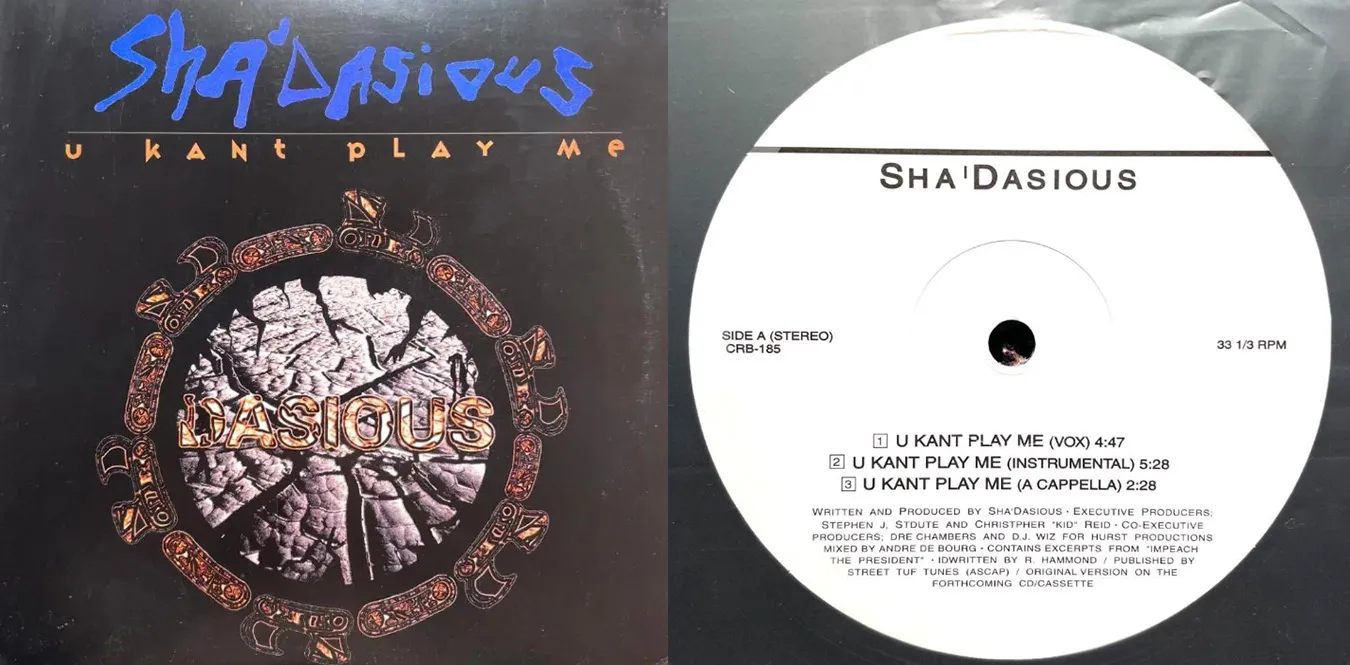
Sha'dasious – U Kant Play Me
Sha’dasious – U Kant Play Me / Phunk Wucha Heard Shadacious
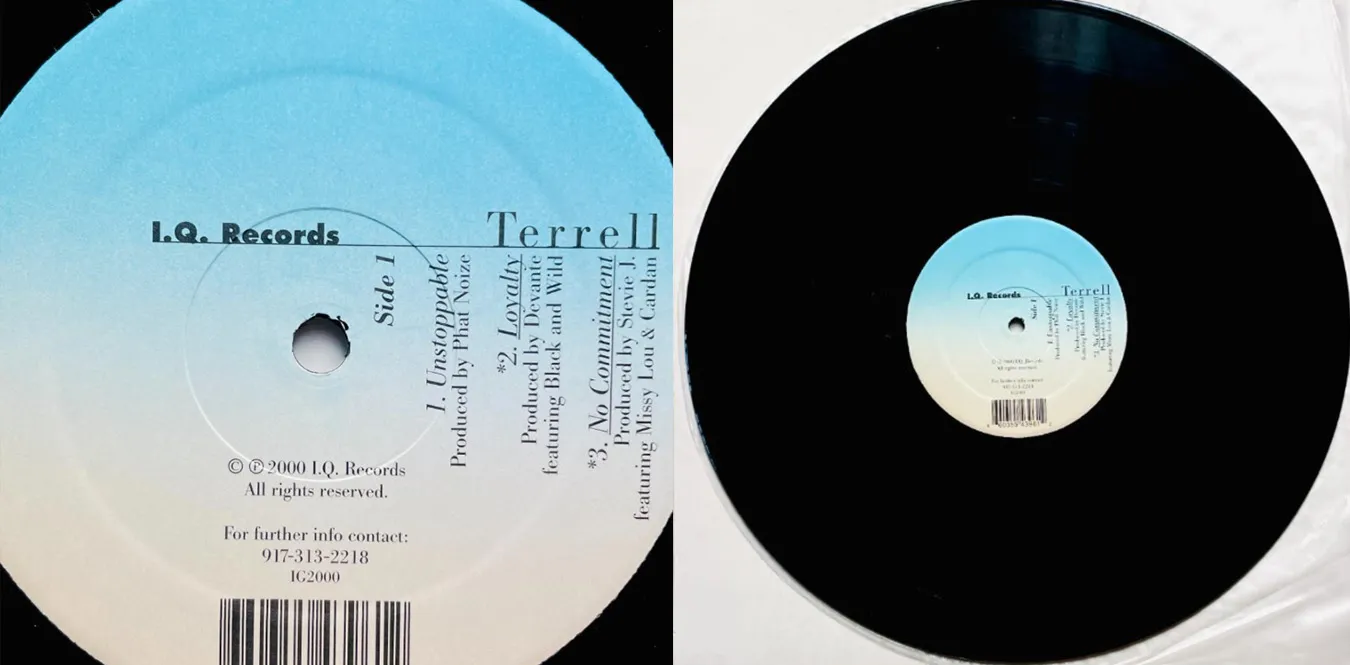
Terrell – Unstoppable
A hip-hop track released by rapper Terrell in 2000 on the label I.Q. Records.
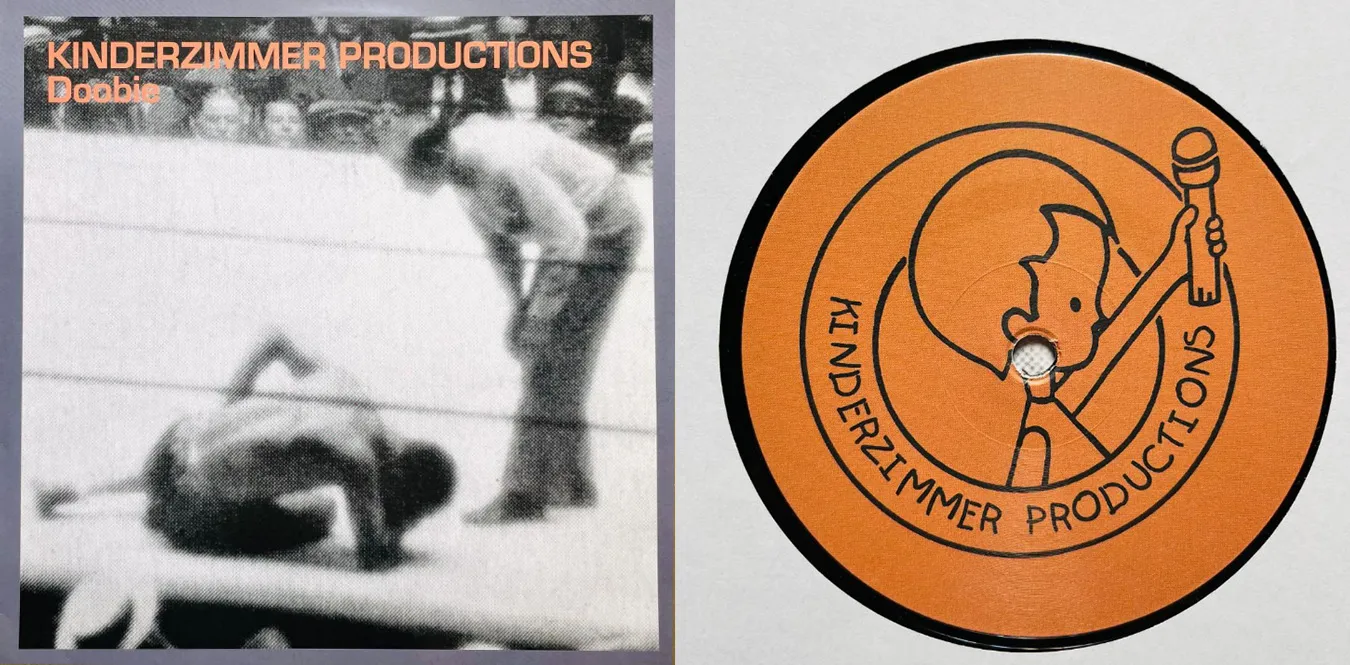
Kinderzimmer Productions – Doobie
Kinderzimmer Productions is a hip-hop band formed in the mid-1990s by Quasi Modo (Sascha Klammt, DJ) and Textor (Henrik von Holtum, MC) from Ulm, Germany.