![[Column] World history of the girl band scene](/../assets/images/column-girls-band-history.webp)
Prologue: The expression form of girl band
Text: mmr|Theme: How women have updated music history in the form of bands
In the history of rock and pop, girl bands have long been considered an anomaly. However, in reality, all-female bands have always been in conflict with the systems, technology, and social norms of the times, while building up their own unique expressions. Girls bands are not simply categorized by gender, but are a collection of practices surrounding production, performance, and self-determination.
Even before the development of the music industry, women have performed in ensembles at home and in local communities. In the 20th century, with the establishment of the record industry and live house culture, the very presence of women in public as a band began to take on social meaning. This paper reconstructs these trends as world history.
The history of girl bands is both musical history and social history.
1950–60s: The eve of rock and the emergence of women’s ensembles
In the 1950s, rock and roll was born in the United States, and the band form became the center of youth culture. On the other hand, female musicians at the time were often in the forefront as singers, and the performance was generally performed by men. One group that emerged as an exception was an all-female group that played musical instruments.
The Shirelles and the Ronettes, which appeared in 1964, were technically vocal groups, but as a female-dominated collective they had a strong influence on their successors. Eventually, in the late 1960s, women began to be seen picking up guitars and drums on the West Coast of the United States and the United Kingdom.
In this era, the very fact that a woman owned a musical instrument was a turning point.
1970s: The intersection of rock and feminism
In the 1970s, with the rise of second-wave feminism, women began to assert their rights as subjects of expression. In America, Fanny signed a major contract, demonstrating that an all-female rock band could be commercially viable.
Around the same time, in the UK, the number of bands including women increased in the context of pub rock and glam rock. Although Suzy Quatro is a solo artist, she is important as someone who established the image of a rock woman with a bass. Although girl bands were still in the minority, the conditions for participation in the rock format began to loosen.
The 1970s was a time when the qualifications for participation themselves were rewritten.
1980s: Punk, DIY, expansion of girl bands
Punk emphasized attitude over technique and promoted the idea that anyone could start a band. This idea was extremely important to women. In the UK, bands such as The Slits and the Raincoats appeared, presenting sounds and visuals that rejected conventional notions of women.
In the United States, the number of female bands is increasing in the LA and NY punk scenes, and networks are being formed through DIY labels and fanzines. The poor performance was not seen as a flaw, but as a part of the artist’s expression.
Punk turned girl bands from the exception to the option.
1990s: Riot Grrrl and the politics of self-expression
In the early 1990s, the Riot Grrrl movement arose in the American northwest. This trend, exemplified by Bikini Kill and Bratmobile, directly linked music and feminism. Lyrics and zines dealt with themes such as sexual violence, the body, and power, and live spaces were redefined as safe spaces.
Although this movement distanced itself from commercial music, it made the significance of girl bands’ existence visible worldwide. It also had an ideological influence on Europe and Japan, establishing the legitimacy of women speaking in their own voices.
Riot Grrrl turned music into a political language.
2000s: Indie and globalization
In the 2000s, with the rise of indie rock and the spread of the Internet, girl bands became known across borders. Female-dominated bands such as The Donnas and Warpaint appeared at festivals and in the media, and we entered a stage where gender was treated as a characteristic.
In Japan, Shonen Knife and Chatmonchy toured overseas, connecting the local context to the global market. Girl bands began to be understood not as a genre but as a form of expression.
Globalization has brought about comparison and diversification at the same time.
2010s and beyond: diversity and redefinition
Since the 2010s, streaming and SNS have become mainstream, and the visibility of girl bands has increased dramatically. Genres, nationalities, and gender expressions are diversifying, and traditional classifications are losing meaning.
Female bands are emerging in South Korea, Southeast Asia, and South America, and are disseminating music that reflects their respective social conditions. The term “girl band” itself has been reconsidered, and it has come to be treated as a term that only indicates historical context.
History continues to update its definition itself.
Chronology: Girls band scene main topics
1960s: The emergence of female performers becomes visible 1970s: Commercial success for female rock bands 1980s: Punk and DIY expansion 1990s: Riot Grrrl movement 2000s: Indie and internationalization 2010s: Diversity and Redefinition
Chronology is just a signpost showing the flow, and individual practices have shaped history.
Final chapter: Girl bands as history
The world history of girl bands is not a linear progression, but a series of intermittent trials and errors. They are blocked by the system, forgotten, and yet they reappear. That repetition can be said to be the essence of this scene.
Future girl bands may build on the past and be called by different names. However, as long as women continue to make music in the form of bands, this history will continue to be updated.
The history of girl bands is a never-ending present tense.
Regional expansion: North American scene details
The history of girl bands in North America has been shaped by the tension between commercial music and the underground. Its development has been gradual, from vocal group culture in the 1960s, to entry into the rock industry in the 1970s, to DIY networks since the 1980s.
In America, there has long been a sense of social discomfort towards women owning musical instruments. As a result, early female bands were susceptible to strong interference from management and producers, and it took time for them to gain the right to self-determination. On the other hand, female bands proliferated in university towns and regional cities, unrelated to commercial success.
During the alternative rock era of the 1990s, girl bands became genre-crossing entities, moving freely between rock, punk, and indie. As a result, all-female bands began to be recognized as one of many types of bands, rather than as something special.
The North American scene was a testing ground where the two extremes of commercial and DIY coexisted.
Regional expansion: European uniqueness
The European girl band scene has a different cultural background than America’s. In Britain, class society and youth culture were closely linked, and for women to form a band was an expression of their social position.
The post-punk era of the late 1970s and 1980s saw an increase in bands based in art schools and school networks, combining musical experimentation with political awareness. Within this context, female bands became a presence that played a role in the musical avant-garde and social critique.
In continental Europe, a scene is forming around Berlin and Paris where the boundaries between art and music are blurred. Female bands developed their own unique expressions while intersecting with club culture and performance art.
In Europe, girl bands were part of a cultural movement.
Regional development: History of Japanese girl bands
The history of girl bands in Japan developed in a media environment and industrial structure different from those in Europe and America. During the group sounds era of the 1960s, there were almost no female bands, and popular songs and rock were clearly separated.
From the late 1970s to the 1980s, with the spread of amateur band culture and live music venues, all-female bands gradually appeared. Since the late 1980s, with the expansion of indie culture, female bands have formed their own scene.
Since the 1990s, Japanese girl bands have become connected not only to the domestic market but also to the world through overseas tours and international recognition. During this process, Japan’s unique pop sensibilities and DIY spirit were reevaluated.
The history of Japanese girl bands has been a back-and-forth movement between the local and global.
Perspective by genre: Developments other than rock
Girl bands are not limited to rock music. Female bands have been active in a variety of genres, including jazz, funk, electronica, and metal.
Especially since the 1980s, the spread of electronic musical instruments has brought freedom from physical conditions and existing technology. Women’s bands using synthesizers and drum machines presented a new model of music production.
Their cross-genre activities have the power to constantly update the concept of an all-girl band, rather than fixing it.
The diversification of genres has expanded the scope of girl bands.
Media and representation
The history of girl bands is also closely related to changes in media representation. In the early days, the emphasis was on rarity and appearance, and musicality was often treated as secondary.
As the media changes, from music magazines to television to the internet, female bands are able to control their own image. In the age of SNS, self-production has become possible, and external regulations have become relative.
Changes in representation have expanded the freedom of expression.
Role of education/community
Education and community were essential for the increase in girl bands. Promoting music education, workshops, and women-only events have created new participants.
Especially since the 1990s, networks among women have promoted the sharing of knowledge and experiences and supported the formation of a sustained scene.
Community is a device that allows history to continue.
Supplementary Chronology: Detailed Version
1950s: Female vocal groups were the norm 1960s: Emergence of female performers 1970s: Commercial establishment of female rock bands 1980s: Punk and DIY expansion 1990s: Riot Grrrl movement 2000s: Indie and internationalization 2010s: Diversity and Redefinition
Explore more like this
![[Column] 50 years of history of burger shops and music - The culture of fast food and sound branding -](/../assets/images/column-burgers-beats.webp)
[Column] 50 years of history of burger shops and music - The culture of fast food and sound branding -
Prologue: The era of burgers that can be enjoyed with the ears
VA – Cinema Beer Nuts
Hardcore Punk Compilation: Hopeless Records Cinema Beer Series

【コラム】 不完全さの美学 ─ 不完全の時代を生きるポップの新しい美学
Indie Sleazeが呼び戻した、汚れた快楽の時代
![[Column] 10-inch temptation: The aesthetics of sound told by the format](/../assets/images/column-10-inch-vinyl.webp)
[Column] 10-inch temptation: The aesthetics of sound told by the format
“Intermediate format” of 10 inches
![[Column] 10-inch record technology supplement: The truth about groove width, rotation speed, and mastering](/../assets/images/column-10-inch-vinyl-tech.webp)
[Column] 10-inch record technology supplement: The truth about groove width, rotation speed, and mastering
10-inch design concept: precision in the medium of format
![[Column] The Mekons — A path of rebellion and reinvention](/../assets/images/column-the-mekons.webp)
[Column] The Mekons — A path of rebellion and reinvention
The Rebellion Begins at Leeds Art School
The Peacocks – Touch And Go
The Peacocks are a rockabilly band formed in Switzerland in 1990. They have toured not only in Europe but also all over the world, including the United States, Canada, and...
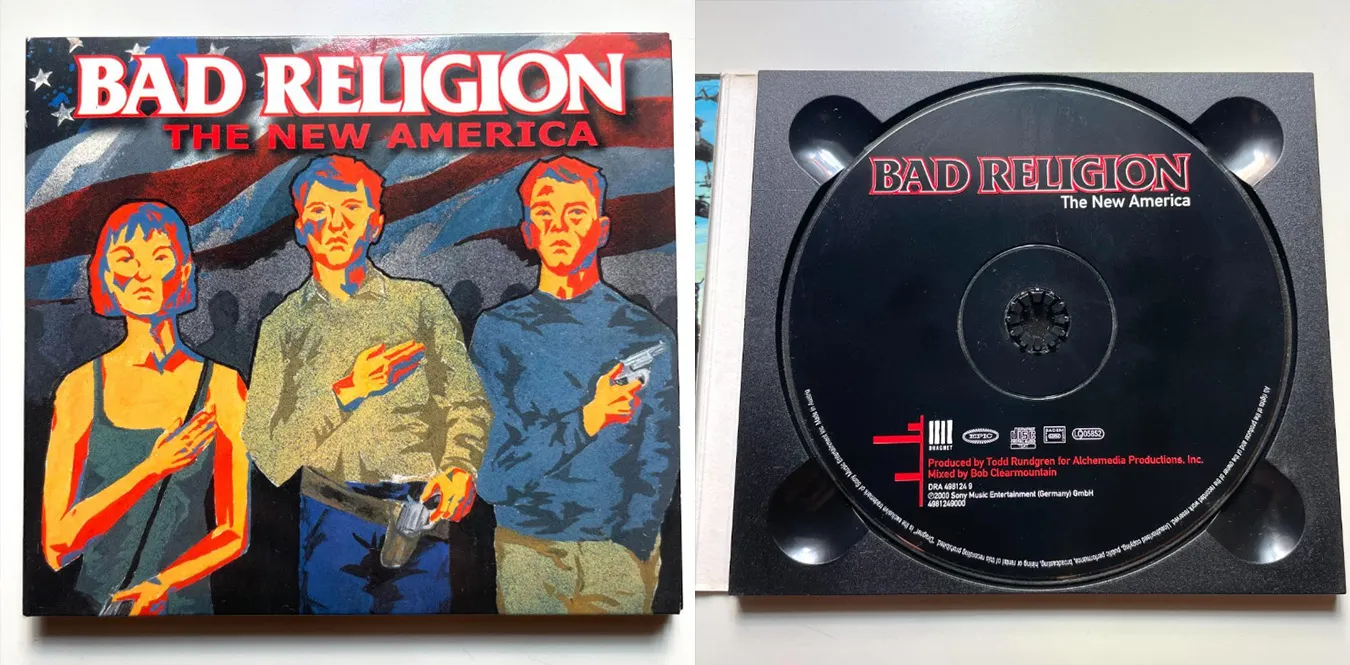
Bad Religion – The New America
Bad Religion is a punk rock band formed in Los Angeles, and is a leading figure in modern punk rock, known as one of the groups that created the melodic...

Speed – Kiss On -Live At Shinjuku Loft On 12th October 1985-
Speed was a Japanese rock band formed in 1976 by Shinichi Aoki, a former member of Hachibu no Mura, and active until the late 1980s.
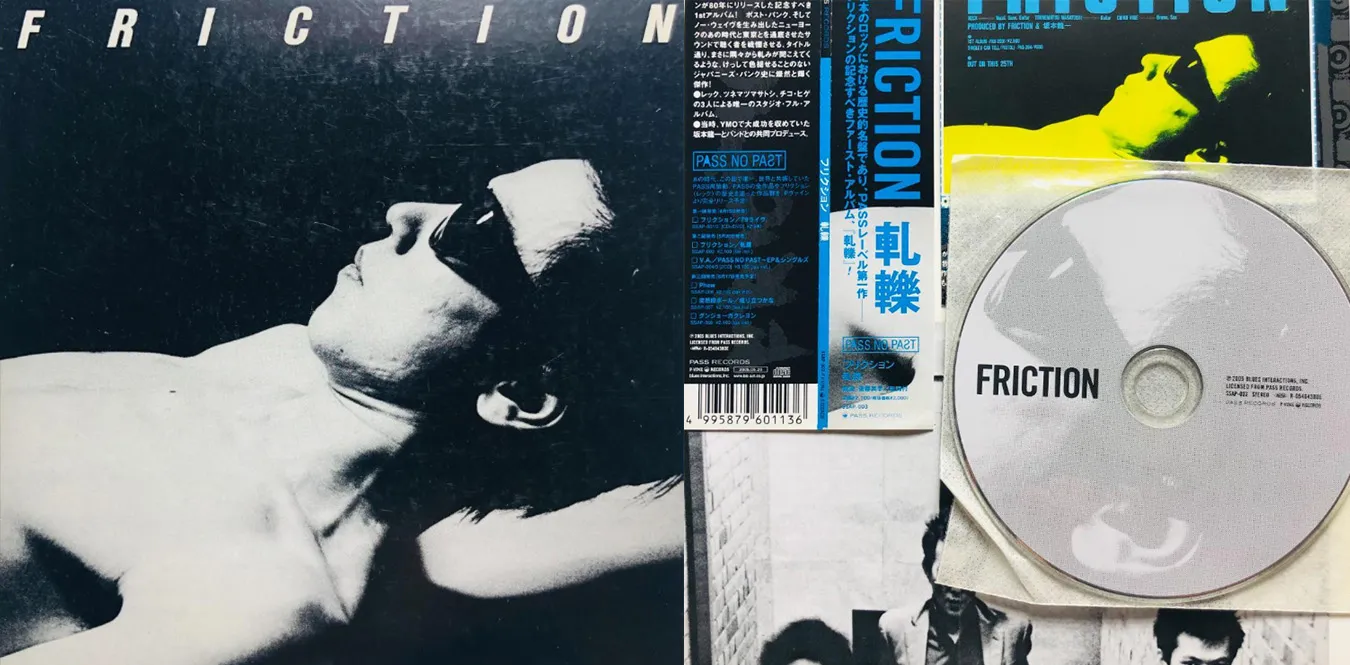
Friction – friction
“Friction” is the first full studio album by Japanese punk rock band Friction, released in 1980. The producer and engineer is Ryuichi Sakamoto. This album is a reissue from 2005....
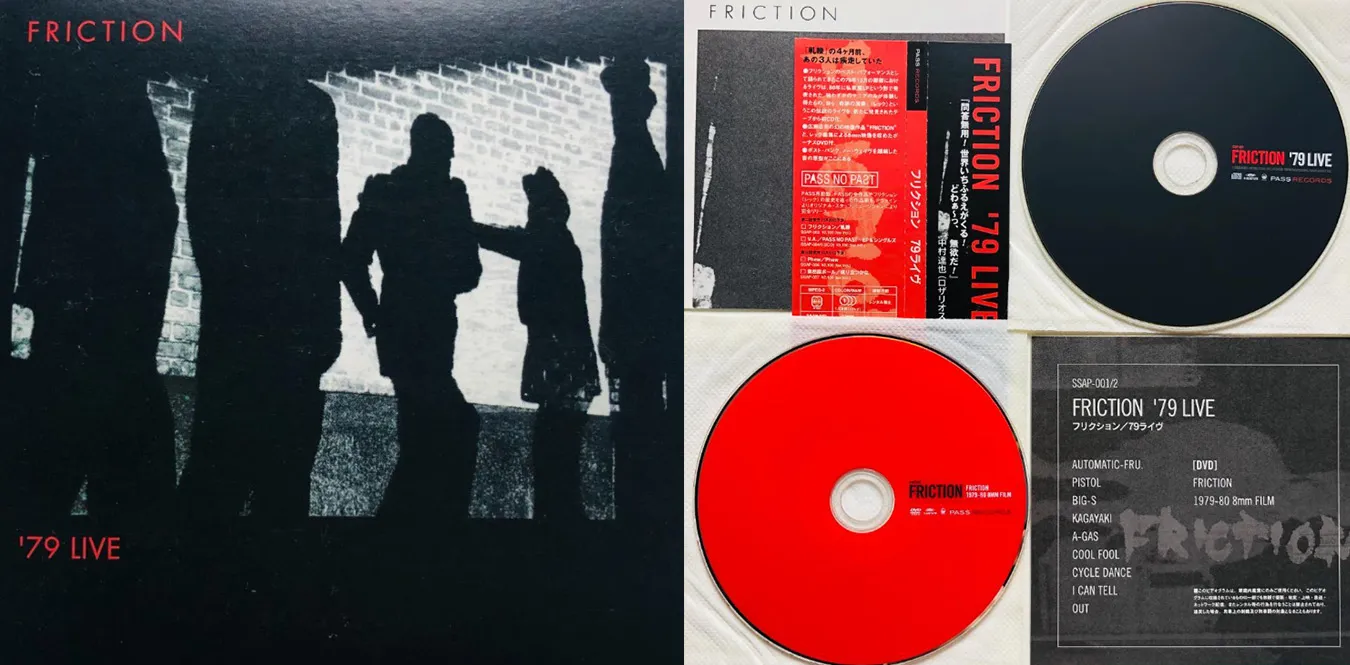
Friction – '79 Live
Friction was a Japanese punk rock band that was at the center of the “Tokyo Rockers” movement in the late 1970s.