[Column] The world of Modular Techno: Fusion of modular synth and techno
Column en Berlin Detroit Industrial Modular Techno![[Column] The world of Modular Techno: Fusion of modular synth and techno](/../assets/images/column-modular-techno.webp)
What is Modular Techno?
Text: mmr|Theme: About the Modular Techno scene
Modular Techno is an electronic music genre that combines sound design centered on modular synthesizers with the rhythm structure of techno. Particularly in live performances, it is characterized by the artist’s ability to improvise sounds and rhythms by patching synth modules and operating CV/Gate in real time.
Although its origins as a genre date back to the early 2000s, its foundational elements are deeply rooted in the emergence of analog modular synths in the 1970s and the formation of Detroit techno in the 1980s. Due to the high degree of freedom of modular synths, it is often possible to develop unique sounds that emphasize the texture and spatial expanse of the sound, rather than simply playing techno tracks.
In his live set, he manipulates rhythm, bass line, percussion, and noise effects in each module to create an improvised musical space that changes. As a result, listeners can experience an experience that is more like ““experiencing a performance” than ““listening to a track.”
Historical background and origin
Early techno and analog synth
In the 1970s, modular synthesizers developed by Robert Moog, ARP, and others offered new possibilities for music production. These synths were groundbreaking in that they allowed individual connection of sound source modules, filters, LFOs, envelope generators, etc., and the ability to freely construct sonic structures.
In the early 1980s, Juan Atkins, Derrick May, Kevin Saunderson and others established the electronic music called “techno” in Detroit. Early Detroit Techno was mainly based on sequencers and rhythm machines, but the warm tones and complex sequencing techniques unique to analog synths became a bridge to later Modular Techno.
Evolution of modular synths
In the 1990s, analog/digital hybrid modules from Roland, Korg, Doepfer, and others appeared, lowering the barrier to using modular synths and allowing many artists to create experimental sounds in their home studios or small clubs.
Especially since 1995, the Eurorack standard proposed by Doepfer has made modules compatible and compact, making it easier for individuals to build modular sets. This directly leads to the expansion of the Modular Techno scene from the 2000s onwards.
Connection point to scene
In the early 2000s, artists who made full use of modular synths began to attract attention in the club scene mainly in Berlin. Surgeon, Ø [Phase], SNTS, and others created unique textures with their live sets that combined analog modules, providing an experience different from traditional techno clubs. Performances at Berlin clubs such as Berghain and Sisyphos are recognized as emblematic events for Modular Techno.
In addition, the publication of performance videos on online communities, forums, and YouTube greatly contributed to the worldwide spread. This led to an active exchange of information on modular synth technology and setups, accelerating the maturation of the scene as a whole.
Representative artists and works
When talking about the Modular Techno genre, what is especially important is who uses modular synths, how they are used, and what kind of works and performances they have used to shape the scene. Here, we will focus on representative artists who are internationally recognized, and organize their styles and live approaches based on facts.
Surgeon (Anthony Child)
British-born Surgeon is known as one of the first artists to introduce modular synths in the techno-industrial trend. Since the 2010s, his live sets have been built around Eurorack modules, establishing a style characterized by “completely improvised sound generation” rather than track playback. His live compositions progress through a combination of tonal changes through patching changes and rhythm generation using a sequencer, allowing the audience to experience physical changes in rhythm and noise in real time.
Ø [Phase]
Ø [Phase], whose work focuses on a minimal and stoic sonic aesthetic within techno, actively utilizes modular synths in both studio and live production. It is particularly characterized by its complex phase modulation approach and the introduction of drone-like elements that utilize feedback loops, and has been praised for giving organic movement to minimal techno.
Richie Hawtin
Richie Hawtin, who has been deeply involved in both Detroit techno and minimal techno, has also incorporated modular synths into his performances since the 2010s. His set is a composite of mixers, effects, computers, and Eurorack modules, and by finely manipulating the sonic dynamics, he creates a more fluid structure than traditional minimal techno.
SNTS
SNTS, known as a highly anonymous artist, has a strong presence in the areas of dark techno and industrial techno. In his live set, he makes full use of analog saturation, distortion modules, noise sources, etc. to create a three-dimensional and violent acoustic space. That sound gained many followers and had a strong influence on the texture of bass lines and kicks.
Artist and equipment mapping
Technical aspects (junction between modular synth and techno)
The technical background of Modular Techno is a mechanism that controls each module using CV (Control Voltage), the flexibility of the patch structure, and an attitude that actively incorporates the “instability” unique to modular into sound. In this chapter, we will summarize how the unique elements of modular influence the production and performance of techno.
Basic structure of modular synth
Modular synths generate sound by combining modules with functions such as sound sources, filters, envelopes, LFOs, VCFs, and VCAs, and connecting them with cables. The acoustic structure is completely up to the user’s design and there are no fixed presets. This point goes well with the approach of techno, which emphasizes improvisation.
A major feature of the Eurorack standard is that modules from various manufacturers can be freely combined by standardizing the 3U size, module width HP, and power supply specifications. This has been a factor in the expansion of modular synth culture on a global scale since the 2000s.
Role of sequencer and CV/Gate
Rhythm and groove play a central role in techno. A modular sequencer controls changes in pitch and filtering by changing the CV value for each step, and also plays the role of a rhythm machine. Furthermore, by synchronizing multiple modules using CV/Gate, it is possible to generate beats that include complex polyrhythms and randomness.
In particular, Modular Techno makes heavy use of the sequencer’s randomization function and stochastic sequence generation. This creates an organic rhythm that is constantly undergoing subtle changes, rather than a fixed loop.
Utilize filters, effects, and noise modules
Modular synths have a wide variety of filters and envelopes, which greatly contribute to the tonal design of techno. Effect modules such as a VCF with sour resonance, a wavefolder that creates a complex overtone structure, distortion and a bit crusher support the unique texture of Modular Techno.
Noise sources and random generators are also used in techno to strengthen the attack component and create ambient sound textures, creating accidental fluctuations in the rhythm.
Construction and operation in a live set
Modular Techno’s live sets are very different from regular DJ sets or computer-based live shows. Preparation and improvisation go hand in hand, as it requires continuous physical manipulation of the modules.
A typical configuration example for a live set would look like this:
- Percussion sound source (sine wave, noise, analog kick module)
- Baseline sequencer + VCO
- Effect chain (delay, reverb, distortion)
- Mixer module (real-time adjustment of multiple sound source balances)
- Clock module (overall tempo control)
This real-time nature is at the heart of Modular Techno’s appeal.
Scene and Culture
The development of the Modular Techno scene is not only influenced by musical factors, but also by club culture, the DIY spirit, and the development of the equipment community. Particularly since the 2000s, in electronic music cities such as Berlin, London, and Barcelona, performance events and workshops centering on modular synths have been held frequently, allowing artists and audiences to share techniques and aesthetics with the same enthusiasm.
Connection with club culture centered around Berlin
Berlin has served not only as an international hub for techno, but also as a testing ground for modular synth culture. Clubs such as Berghain, Tresor and Griessmuehle introduced a new performance format into the context of club culture, featuring modular artists in the framework of ““electroacoustic live’’, which differed from DJ sets.
Additionally, Superbooth (a synthesizer exhibition held annually in Berlin) plays a decisive role in the development of modular culture. By bringing together numerous manufacturers, artists, and creators and directly sharing technical information and sound creation know-how, Modular Techno’s sonic sophistication progressed rapidly.
Spread of DIY/maker culture
The spread of the Eurorack standard has created an environment in which the number of manufacturers has increased and a variety of sound source and effect modules have been developed. A number of cutting-edge manufacturers have emerged, including Mutable Instruments, Make Noise, Intellijel, and ALM Busy Circuits, allowing artists to build systems that suit their musical needs.
This “build-your-own culture” matches the DIY spirit of techno, and is a factor in the formation of completely different sonic aesthetics for each artist.
Musical characteristics and analysis
Modular Techno exhibits several common acoustic and structural characteristics. Below, we will classify the typical elements and explain what functions they play within the techno framework.
1. Rhythm “fluctuations” and stochastic changes
Traditional techno is centered around a steady 4/4 beat. On the other hand, modular synths often use stochastic sequencers that change values at each step.
- A slightly different hi-hat every time
- Randomized base attack
- Modulation that deviates from the rhythm grid This adds an element of ““shaking.’’
This instability is a big part of Modular Techno’s appeal, giving its mechanical rhythmic loops a freshness while still having a human feel.
2. Active use of noise and texture
The use of noise sources, random voltages, saturation, and FM modulation to create sonic surfaces (textures) is especially important in Modular Techno.
- gritty noise
- metallic resonance
- Irregular overtones due to inter-module feedback
By mixing these with the kick and bass line, a strong sense of density and substance is created.
3. “Fluidity” of structure
Modular Techno often takes an approach closer to “sound sculpture,” in which the state of the sound continues to change slowly, rather than the traditional 16-bar development.
The layers of rhythm → texture → noise → bass transition smoothly over time. This structure also enhances connectivity with Ambient Techno, Drone, and Industrial.
Chronology (details)
Below is a chronology of the development of Modular Techno organized from both the modular and techno perspectives.
Criticism/Media Reception
In the early days, Modular Techno was considered too experimental and not suitable for clubs, but in the late 2010s, mainstream media and critics began to pay attention to its sonic sophistication.
- In reviews, modular’s unique complex and three-dimensional sound image received high praise.
- In the live report, the improvisational and physical performance was highlighted.
- From a producer’s perspective, it attracted a lot of interest as a new production method, and the number of teaching materials and courses increased.
The shift from ““track reproduction” to ““sound generation” has also influenced the performance theory of electronic music.
Future prospects
Modular Techno is expected to continue to evolve, and several directions are expected.
1. Sophistication of digital module
Advances in DSP technology have led to an increase in digital modules equipped with physical modeling, particle synthesis, and complex FM algorithms. This makes it possible to handle acoustic expressions that were previously impossible in real time.
2. Generalization of hybrid live
The configuration of modular + PC (Ableton, Bitwig) + drum machine will become even more common, and the boundaries between traditional club sets and live performances will become blurred.
3. Deepening community culture
The community is maturing both online and offline, with module sharing, live patch releases, and an increase in educational content.
summary
Modular Techno is an extremely unique and innovative genre formed by the intersection of the freedom of modular synths and the rhythmic structure of techno. Technology, culture, sound, and performance are intertwined in a complex manner, and it continues to evolve and expand around the world. At the root of this is the most fundamental joy in electronic music: ““manipulating the moment when a sound is created live.’’
Detailed equipment list (Modular Techno frequently used modules)
The following is a compilation of equipment categories often used by actual Modular Techno artists, with a focus on Eurorack.
VCO (Oscillator)
- Make Noise – DPO
- Intellijel – Dixie II / Rubicon
- Mutable Instruments – Plaits
- Erica Synths – Graphic VCO
- Verbos Electronics – Complex Oscillator
- Tiptop Audio – Z3000
VCF (filter)
- Doepfer – A-124 Wasp Filter
- XAOC Devices – Belgrad
- Mutable Instruments – Ripples
- Make Noise – QPAS
- Erica Synths – Black VCF
Sequencer
- Make Noise – René
- Intellijel – Metropolis / Metropolix
- XAOC Devices – Moskwa II
- Winter Modular – Eloquencer
- Five12 – Vector Sequencer
Envelope / Modulation / Random
- Make Noise – Maths
- Mutable Instruments – Stages
- WMD – Javelin
- Intellijel – Quadrax
- Noise Engineering – Mimetic Digitalis (Random CV)
Drum & Percussion module
- Erica Synths – Bassline / Drum Series
- Noise Engineering – Basimilus Iteritas Alter (BIA)
- Tiptop Audio – 808 / 909 Drum Series
- Jomox – ModBase 09
Effects (Delay / Reverb / Distortion)
- Strymon – Magneto
- Erica Synths – Black Hole DSP
- Noise Engineering – Desmodus Versio
- Make Noise – Mimeophon
- Industrial Music Electronics – Bionic Lester (digital filter/distortion system)
Utility (mixer/VCAs/clock/switch)
- ALM Busy Circuits – Pamela”s New Workout (Clock)
- Intellijel – Mixup / Quad VCA
- Mutable Instruments – Links / Kinks
- Doepfer – A-151 Sequential Switch
Artist introduction
Blawan
British techno artist Blawan uses Eurorack modules to combine raw sonic shaping into his hard, thick techno sounds. He says that, especially in his production style since the 2010s, the distortion of modular synths and percussion-like processing have become major characteristics of his work.
Karenn (Blawan & Pariah)
A hardware-based live unit that performs by combining drum machines and modular equipment. Although not completely modular-based, it shares an aesthetic similar to Modular Techno in that it incorporates CV-controlled drum/analog modules into its live performance.
Surgeon & Daniel Bean (Live)
Surgeon’s duo live performance with Daniel Bean is characterized by an approach in which the two construct a large-scale modular system that continues to generate sound in real time. Their live set, which combines techno rhythm with improvisation, is considered a typical example of modular live performance.
Ancient Methods
While developing techno with a strong industrial/EBM tone, he also introduces distortion and noise processing using analog modules at live performances. Modularity is often used as a source of hard textures.
Rødhåd
Known as a techno artist from Berlin, he has revealed in public interviews that he makes extensive use of modular synths in his studio production. Especially when creating the textures of deep techno/dub techno, he emphasizes the randomness and texture of analog modules.
Typical Modular Techno patch example
Below is an example visualizing the patch structure of a typical Modular Techno liveset. This is a patch diagram constructed with 4 layers: rhythm, baseline, noise, and FX.
Patch example 1: Kick + baseline generation patch
Patch example 2: Rhythm generation with random elements
Patch example 3: Noise + industrial texture generation
Explore more like this
![[Column] Industrial Techno / Hard Experimental Techno](/../assets/images/column-industrial-techno-hard-experimental-techno.webp)
[Column] Industrial Techno / Hard Experimental Techno
Introduction: Techno as structured violence
![[Column] German techno and the pandemic in the 2020s: Cultural transformation brought about by lockdown and revitalization](/../assets/images/column-2020s-german-techno-pandemic.webp)
[Column] German techno and the pandemic in the 2020s: Cultural transformation brought about by lockdown and revitalization
Pandemic: A true history of everything from lockdown to reopening to redefining music
[Column] German techno and the pandemic in the 2020s: Cultural transformation brought about by lockdown and revitalization
Pandemic: A true history of everything from lockdown to reopening to redefining music
![[Column] Buchla and Serge: Another genealogy of electronic acoustics](/../assets/images/column-buchla-serge.webp)
[Column] Buchla and Serge: Another genealogy of electronic acoustics
“Introduction — What is modular?”
![[Column] Blawan: Pleasure of Steel and the Body Deep in the Night — Echoes of the Dreams of UK Techno](/../assets/images/column-blawan.webp)
[Column] Blawan: Pleasure of Steel and the Body Deep in the Night — Echoes of the Dreams of UK Techno
Prologue Rhythm that grew in the shadow of factories—from the lingering scent of industry
![[Column] Changes in the Eurorack modular synthesizer and its influence on the music scene](/../assets/images/column-eurorack-module.webp)
[Column] Changes in the Eurorack modular synthesizer and its influence on the music scene
“Lego blocks with infinite sound”
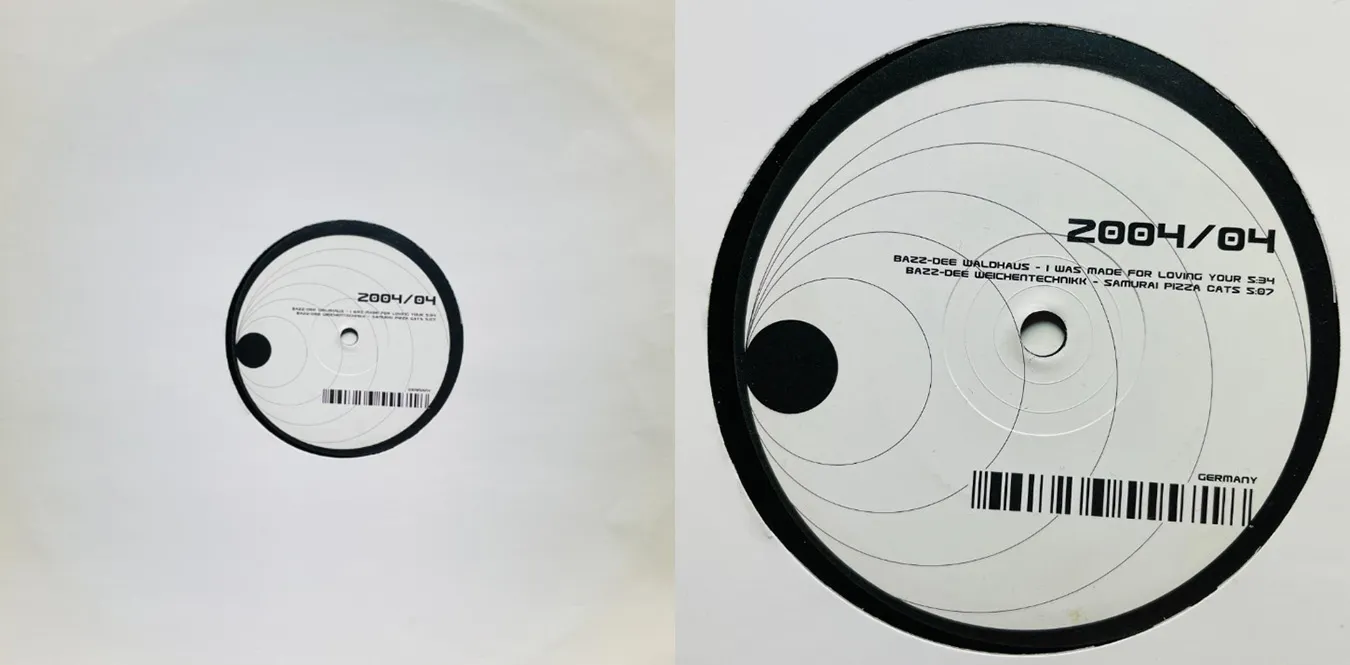
Bazz-Dee & Waldhaus Weichentechnikk – Brachial 200404
The first track on side A is a techno track that samples KISS’s “I Was Made For Loving You” by Waldhaus and Bazz-Dee (Bastian Schubert), who are considered to be...