[Column] Lyrics translation and cultural transfer issues: When words cross the border of music
Column en Hiphop Lyric Rap![[Column] Lyrics translation and cultural transfer issues: When words cross the border of music](/../assets/images/column-lyric-translation.webp)
Prologue Lyrics don’t just convey “meaning”
Text: mmr|Theme: Why does lyrics translation carry culture? About the history of misreading, transformation, and establishment
In popular music, lyrics are not just a means of conveying information. It is a text with extremely high cultural density, encompassing pronunciation, prosody, metaphor, social assumptions, religious views, class sense, and even the atmosphere of the time.
Translating lyrics is not a process of replacing languages, but rather an act of transplanting a culture to another environment. This transplant is not always successful. Rather, they are often distorted, missing, and sometimes take on a meaning different from the original.
In this article, we will view lyric translation from the perspective of ““cultural import,’’ and will organize its historical development, theoretical framework, specific examples, and characteristics of its reception in Japan, based only on facts.
Lyric translation allows musical borders to be crossed, but it does not erase cultural borders.
Chapter 1 “Cultural assumptions of lyrics” that exist before translation
Lyrics are based on prerequisite knowledge shared by the speaker and audience. Place names, proper nouns, religious symbols, slang, and references to social institutions are self-explanatory to people in one culture, but lose meaning in another.
Biblical metaphors in blues and gospel, urban codes in hip-hop, and narratives of land and kinship in country music are elements that are easily lost in translation.
What is important at this stage is that untranslatability is due to the ““degree of cultural commonality” rather than ““linguistic structure.” Situations that are grammatically translatable but culturally incomprehensible are commonplace in lyrics translation.
It”s not that the lyrics are difficult, it”s that the world the lyrics assume is different.
Chapter 2: Translation ethics wavering between literal and paraphrase translations
In the field of lyrics translation, the choice between literal translation and literal translation is always an issue. Literal translations are good at preserving meaning, but often lose rhythm and emotion. Parallel translations preserve the sense of hearing and emotion, but tend to deviate from the meaning of the original text.
Particularly in popular music, there are strong restrictions on melody and number of words, and the logic of prose translation does not apply. The addition or subtraction of a single syllable disrupts the entire melody, forcing translators to constantly reduce and reconstruct meaning.
In this process, the translator’s own cultural understanding and value judgments inevitably intervene. The resulting translated lyrics are a compromise between the original song and the translation culture.
Lyrics translation is not about correctness, but a series of choices.
Chapter 3 Translations that can be sung and “translations that cannot be sung”
Lyric translations are divided into translations for reading and translations for singing. In the latter case, ease of pronunciation, vowel sequence, and accent position are important.
Japanese has a simple syllable structure and many vowels, making it difficult to reproduce the consonant sequence and stress structure of English. Therefore, when singing English lyrics in Japanese, the meaning of the words is often simplified or the grammar is rearranged.
These technical constraints, even more than the quality of the translation, determine whether or not it will work as a song. As a result, Japanese lyrics tend to prioritize sound over meaning.
Even if the meaning is correct, the translation of the lyrics will not work unless the song can be sung.
Chapter 4 1950s to 1960s: Period of mass influx of popular music translations
After the war, with the spread of radio and records, a large amount of Western popular music flowed into Japan. During this period, many songs were introduced in their original language or with simple translations.
On the other hand, in many cases it has been adapted as a popular song, with new Japanese lyrics added to the original melody. These are not strictly translations, but cultural re-creations.
The custom of ““Japanese lyrics that are separate from the original songs’’ that was formed during this period had a long-lasting influence.
Lyrics that were not translated also shaped Japan’s musical culture.
Chapter 5: Shift to acceptance of “reading meaning” after Locke
From the late 1960s onwards, with the rise of rock music, emphasis began to be placed on the meaning of the lyrics themselves. Themes such as anti-war, anti-establishment, and the inner self of the individual needed to be understood through translation.
During this period, detailed translations were published in magazines and liner notes, and lyrics began to be consumed as something to read. For the first time, lyric translation became institutionalized as part of the act of appreciation.
However, this bilingual translation was only an aid to understanding, and translations that did not assume singing were the mainstream.
Lyrics have partially changed from something to be heard to something to be read.
Chapter 6 Misreading and reinterpretation as cultural transfer
Misreadings are inevitable in cultural transfer through translation. However, this misreading does not necessarily have only negative consequences.
There are many examples of lyrics that are misunderstood in one culture, acquiring new meaning in another context and forming unique reception histories. The reception of rock and hip-hop in Japan has also been established through this chain of reinterpretations.
The important point is that translation does not completely reproduce the original culture, but that it enables new cultural practices.
Misreading is not a failure of cultural transfer, but the starting point of change.
Chapter 7 Hip-hop and the manifestation of untranslatability
Hip-hop is a genre in which untranslatability is particularly pronounced due to its strong dependence on slang, rhymes, and social context. Wordplay and phonological meaning are largely lost in translation.
As a result, many listeners give up on fully understanding the lyrics and only accept the musical attitude and form of expression. This has made hip-hop a special case of cultural import without any translation.
There are certainly cultures that are passed down without being translated.
Chapter 8: Japanese rap and cultural import in the opposite direction
The establishment of Japanese rap progressed not through the translation of English lyrics, but through the transplantation of form and attitude. Here, the focus is on imitation and reconstruction rather than translation.
In the process of adapting English prosody to Japanese, the unique Japanese sense of rhythm was emphasized and a new system of expression was born. This is not a translation, but a localization of cultural transfer.
Cultural transfer does not necessarily go through language.
Chapter 9 Lyric translation environment in the digital age
With the spread of the Internet, anyone can instantly reference lyrics and translations. There is a mix of official and unofficial translations, and interpretations are diversified.
In this situation, there is no single correct answer, and it is assumed that multiple translations coexist. Translation has ceased to be a fixed artifact and has become a collection of interpretations that are continually updated.
Translation is consumed as a process rather than a finished product.
Chapter 10: What lyrics translation leaves behind
Lyrics translation cannot completely preserve the meaning of the original song. However, it has provided a scaffold for different cultures to connect through music.
Along with things lost through translation, there are also understandings and expressions created through translation. This ambiguity is the essence of the issue of lyrics translation and cultural import.
Lyrics translation is both a bridge and a boundary between cultures.
Chronology: Main aspects of lyric translation and cultural import
Figure: Culture transfer structure in lyrics translation
Explore more like this
![[Column] Deciphering the sound space of the Ambient × Rap meditation playlist](/../assets/images/column-ambient-rap.webp)
[Column] Deciphering the sound space of the Ambient × Rap meditation playlist
Fusion of Ambient and Rap ─ Possibility as meditation music
![[Column] Kendrick Lamar: The structure and thinking that expanded hip-hop into epic poetry](/../assets/images/column-kendrick-lamar.webp)
[Column] Kendrick Lamar: The structure and thinking that expanded hip-hop into epic poetry
Prologue: The moment when hip-hop becomes a story
![[Column] Early hip-hop culture before Bambaataa: A chain of expressions that naturally arose from the scene in the Bronx](/../assets/images/column-early-hiphop.webp)
[Column] Early hip-hop culture before Bambaataa: A chain of expressions that naturally arose from the scene in the Bronx
Prologue: Hip-hop started ‘before it was defined’
![[Column] DMX: Howling Soul - Between violence and prayer](/../assets/images/column-dmx.webp)
[Column] DMX: Howling Soul - Between violence and prayer
DMX: Howling Soul - Between Violence and Prayer
[Column] DMX: Howling Soul - Between violence and prayer
DMX: Howling Soul - Between Violence and Prayer
![[Column] A brief history of East Coast hip-hop — from the Bronx to Brooklyn to the world](/../assets/images/column-eastcoast-hiphop-history.webp)
[Column] A brief history of East Coast hip-hop — from the Bronx to Brooklyn to the world
East Coast hip-hop was born from the block parties of New York in the 1970s.
![[Column] Deep dive into trip hop: Massive Attack / Portishead / DJ Shadow / DJ Krush](/../assets/images/column-triphop.webp)
[Column] Deep dive into trip hop: Massive Attack / Portishead / DJ Shadow / DJ Krush
##Trihop Recommendations by age, anecdotes, and documentaries.”
![[Column] Overview of West Coast hip-hop — from its origins to the underground](/../assets/images/column-westcoast-hiphop-history.webp)
[Column] Overview of West Coast hip-hop — from its origins to the underground
West Coast hip-hop was born out of Los Angeles street culture in the late 1970s.
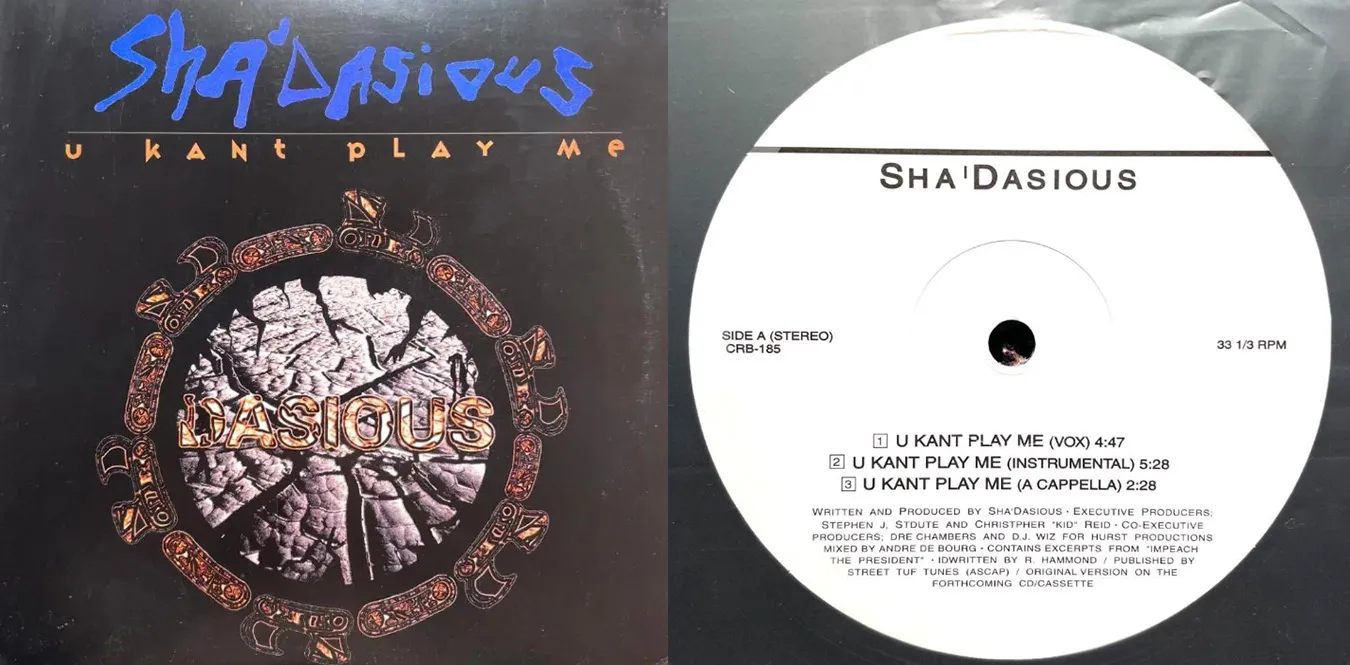
Sha'dasious – U Kant Play Me
Sha’dasious – U Kant Play Me / Phunk Wucha Heard Shadacious
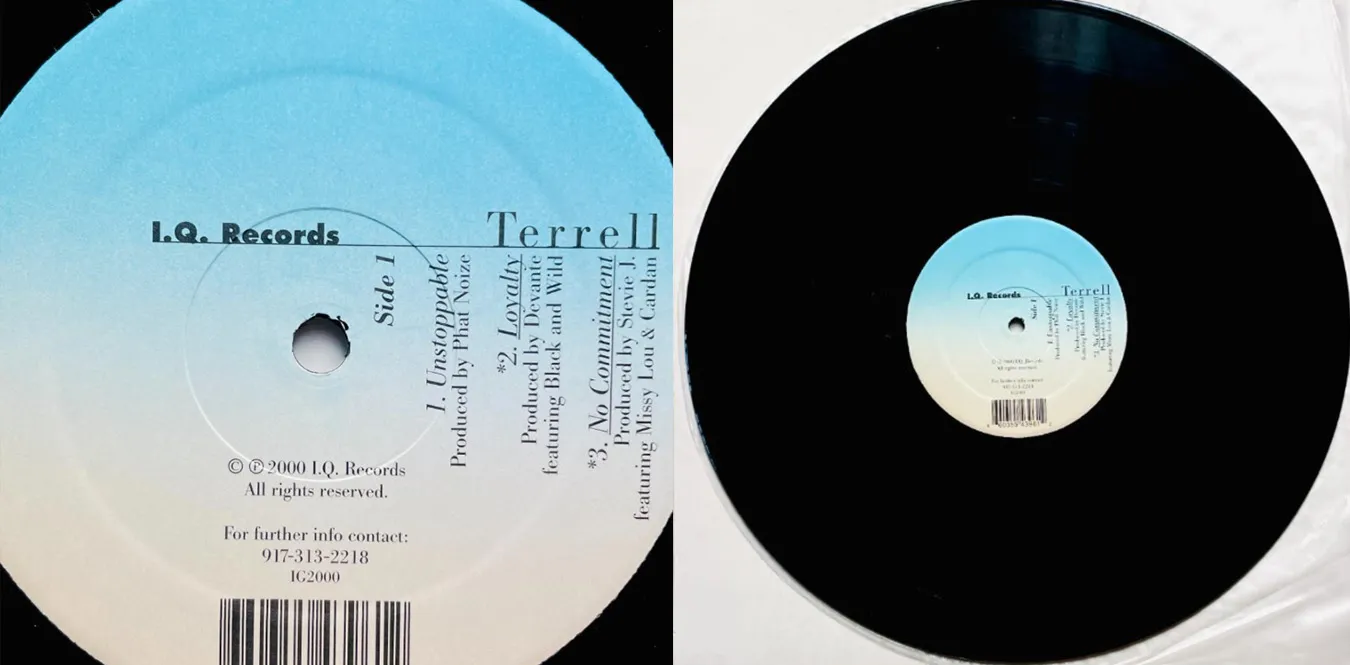
Terrell – Unstoppable
A hip-hop track released by rapper Terrell in 2000 on the label I.Q. Records.
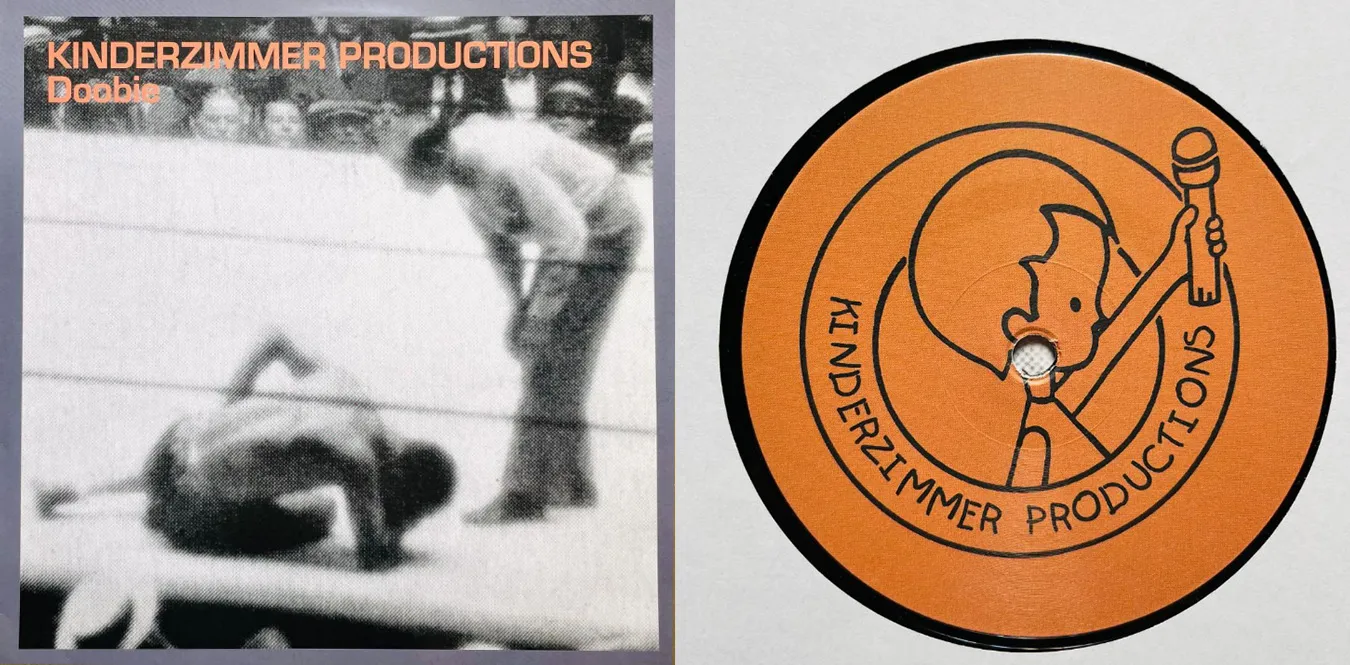
Kinderzimmer Productions – Doobie
Kinderzimmer Productions is a hip-hop band formed in the mid-1990s by Quasi Modo (Sascha Klammt, DJ) and Textor (Henrik von Holtum, MC) from Ulm, Germany.