序章:異形のポップスターはどこから来たのか
文:mmr|テーマ:オペラとニューウェーブの融合によって異形のポップを創出したクラウス・ノミの軌跡
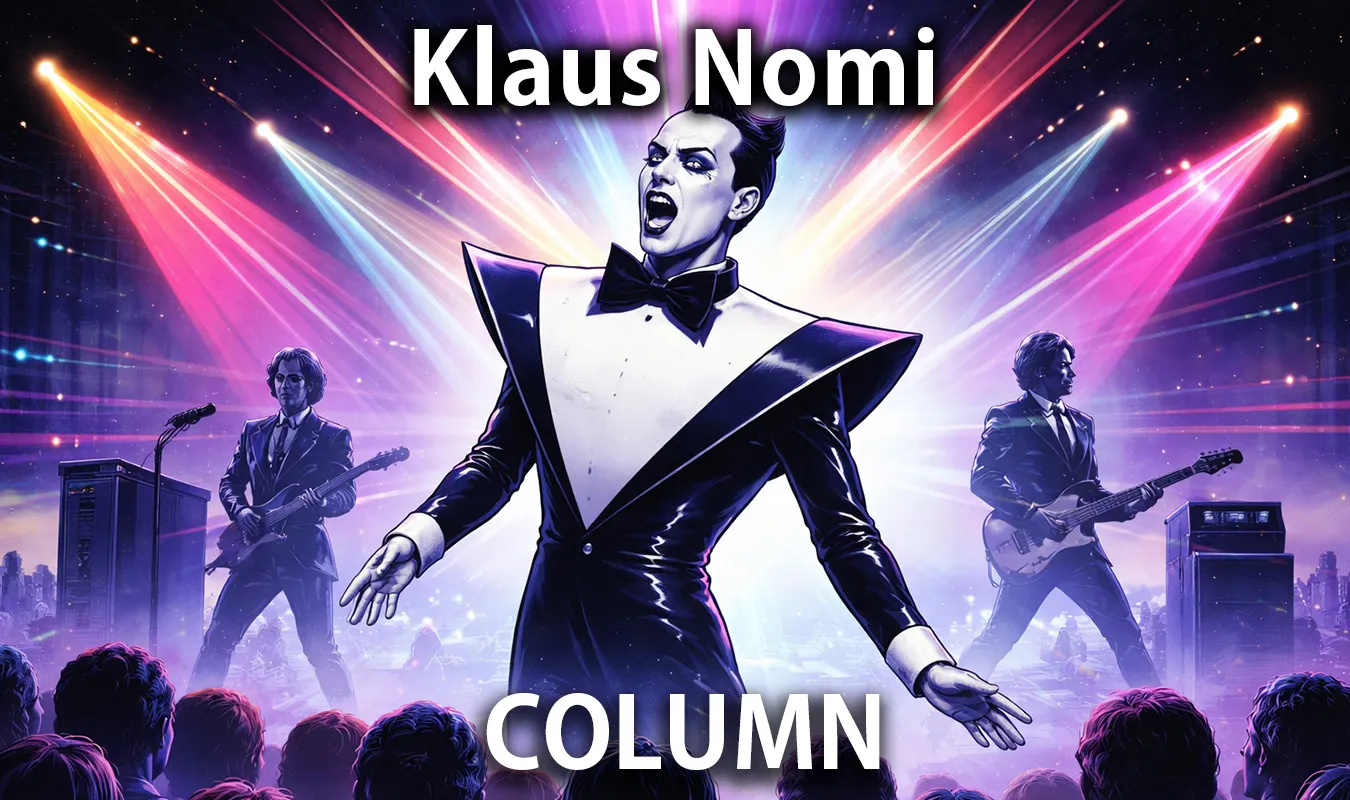
ドイツ出身のカウンターテナー歌手、Klaus Nomiは、1980年代初頭のニューヨークにおいて、他に類を見ない存在として登場した。クラシック音楽の訓練を受けた声と、SF的で幾何学的な衣装、そして機械的とも言える動き。それらは単なる音楽の枠を超え、視覚と聴覚を同時に揺さぶるパフォーマンスとして機能した。
彼の活動期間はわずか数年に過ぎないが、その短い時間の中で築かれた美学は、ニューウェーブ、アートポップ、さらには現代のパフォーマンス文化にまで影響を与えている。
短命でありながら、その存在はポップの定義そのものを拡張した
生い立ちとヨーロッパ的背景
Formative years in Germany
Klaus Nomiは1944年、ドイツに生まれ、本名をクラウス・シュペルベルクといった。戦後のヨーロッパで育ち、幼少期からオペラに強い関心を示した。特にバロック音楽や古典声楽に惹かれ、カウンターテナーとしての発声技術を独学と訓練で身につけていく。
彼はベルリン・ドイツ・オペラで働いた経験を持ち、舞台芸術の裏側にも触れていた。この時期に培われた舞台感覚とクラシックへの深い理解が、後の独自のスタイルの基盤となる。
ニューヨークへの移住
1970年代半ば、彼はアメリカへ渡り、New York Cityに拠点を移す。当時のニューヨークはパンク、ディスコ、アートシーンが交差する混沌の都市であり、彼のような異質な存在にとっては絶好の実験場だった。
He continued his music career while working at a restaurant, and eventually gained attention in the underground scene.
A unique expression was born from the intersection of European tradition and the chaos of New York.
ブレイクの瞬間:パフォーマンスと視覚の革命
New Wave Vaudevilleでの衝撃
1978年、彼はパフォーマンスイベント「New Wave Vaudeville」に出演し、その異様な存在感で観客の視線を独占した。ここでのパフォーマンスは、単なる歌唱ではなく、視覚芸術、演劇、音楽の融合だった。
三角形のスーツ、白塗りの顔、極端に誇張された動き。これらは後のポップカルチャーにおけるビジュアル重視の潮流を先取りしていた。
声の特異性
彼の最大の特徴は、オペラ的な高音域とポップスの構造を融合させた歌唱である。カウンターテナーの声を用いてポップソングを歌うという試みは、当時としては極めて異例だった。
これはクラシックとポップの境界を曖昧にする試みであり、後のクロスオーバー音楽の先駆けとも言える。
Destroyed the existing pop framework both visually and vocally
デヴィッド・ボウイとの接点
Co-starring on Saturday Night Live
1980年、David Bowieはテレビ番組「Saturday Night Live」に出演した際、バックコーラスとしてKlaus Nomiを起用した。この出演は彼にとって最大のメディア露出のひとつとなる。
Bowie himself was an artist who valued transformation and visual expression, and their aesthetics had something in common.
アートとポップの交差
この共演は、アンダーグラウンドとメインストリームの境界が溶け始めた瞬間でもあった。Nomiの存在は、単なる奇抜さではなく、芸術的なコンセプトを持つポップの可能性を提示した。
ボウイとの接点は彼の美学が時代と接続した決定的な瞬間だった
代表作と音楽的特徴
アルバム作品
彼は生前に2枚のスタジオアルバムを発表している。
- Klaus Nomi(1981年)
- Simple Man(1982年)
これらの作品では、ポップソングとクラシックのアリアが混在し、ジャンルの境界を越えた構成が特徴となっている。
代表曲
- 「Total Eclipse」
- 「Cold Song」
- 「Simple Man」
特に「Cold Song」はHenry Purcellの作品を基にしたもので、彼のクラシック的素養とポップ的演出が融合した象徴的な楽曲である。
クラシックの引用とポップの構造が共存することで独自の音楽言語が成立した
視覚表現とファッションの革新性
幾何学的衣装
彼の衣装は、直線と対称性を強調した未来的デザインであり、当時のファッションの中でも異彩を放っていた。これは単なる衣装ではなく、彼の音楽と一体化したビジュアル言語である。
Body production
His movements were both mechanical and theatrical, often giving the impression of being inhuman. This establishes his character as a ““non-human being.’’
Visual expression functioned as an inseparable element from music.
時代背景:ニューウェーブとアートシーン
1980年代初頭のニューヨーク
この時代のニューヨークは、パンク後のニューウェーブが広がり、アートと音楽が密接に結びついていた。クラブ文化、パフォーマンスアート、映像表現が交錯する中で、Klaus Nomiのスタイルは自然に受け入れられた。
アンダーグラウンドからの浮上
彼は商業的成功よりも芸術的表現を優先しており、その姿勢は当時のアンダーグラウンド文化と共鳴していた。
The experimental spirit of the era made his expression possible
代表作の詳細分析:声と異形の結晶
「Total Eclipse」
この楽曲は、Klaus Nomiのポップ的側面が最も明確に現れた作品のひとつである。シンセサイザーを主体としたニューウェーブ的サウンドの上に、彼のカウンターテナーが乗ることで、現実感の希薄な音響空間が生まれている。
歌詞とサウンドの双方において、どこか終末的で冷たい印象を持ち、当時の都市的な不安や孤独を反映していると解釈されることが多い。彼の機械的な身体表現とも相まって、「人間と非人間の境界」を音楽として提示した作品である。
ポップの形式を借りながら異質な感覚を侵入させた代表例となっている
「Cold Song」
この楽曲は、Henry Purcellのオペラ作品を基にしたアリアであり、Nomiのクラシック的ルーツを最も純粋な形で示している。
彼の歌唱は単なる再現ではなく、極端にデフォルメされたビブラートと視覚演出によって、原曲の持つ「寒さ」や「死」のイメージを増幅させている。舞台上での彼の動きや表情は、もはや音楽というよりも彫刻や映像作品に近い。
この楽曲は、クラシックとニューウェーブが融合し得ることを証明した象徴的なパフォーマンスである。
過去の音楽を未来的な身体で再構築した瞬間だった
“Simple Man”
同名アルバムにも収録されたこの楽曲は、彼の感情的側面が強く表れた作品である。他の楽曲に比べて比較的ストレートな構成を持ちながらも、その歌声はやはり非現実的な響きを帯びている。
タイトルが示す「単純な人間」というテーマは、彼の舞台上の「非人間的存在」との対比を強調する役割を果たしている。つまり、この曲は彼自身のアイデンティティの二重性を象徴しているとも言える。
人間性と異形性の間にある緊張が音楽として可視化されている
「Lightning Strikes」
This cover of Lou Christie”s song maintains the pop format, but transforms it into a completely different impression with Nomi”s unique voice.
原曲の持つ軽快さは残しつつも、彼の声によってどこか不穏で浮遊感のある質感が付加される。これは彼の「解釈する力」の高さを示す好例である。
His ability to reconstruct existing pop music with unusual filters stands out.
「Nomi Song」
This song is a self-reference piece that symbolizes his own character and worldview. It has a structure that is completed by combining not only music but also images and performances.
彼の舞台衣装や動きと不可分であり、「Klaus Nomi」という存在そのものを作品化した例と言える。
自身の存在を作品へと昇華したメタ的表現である
代表作に共通する構造
既存の音楽構造を分解し再構築することで独自の様式が成立している
年表:Klaus Nomiの軌跡
わずか数年の活動が長期的な影響を生んだ
構造図:Klaus Nomiの表現構成
音楽と視覚の統合が彼の表現の核心にあった
晩年と死
Klaus Nomi died in 1983. The cause of death was AIDS, making him one of the first notable artists to die from the disease.
当時、この病気に関する理解は極めて限定的であり、彼の死は芸術コミュニティにも大きな衝撃を与えた。
彼の死は一つの時代の終わりと新たな問題の可視化を象徴していた
影響と遺産
Impact on posterity
Klaus Nomiのスタイルは、その後の多くのアーティストに影響を与えた。特に、視覚と音楽の融合という点において、彼は先駆的存在である。
現代的再評価
21世紀に入り、彼の作品は再評価が進み、映像やファッションの分野でも参照されることが増えている。彼の美学は、ジャンルを越えた表現の可能性を示し続けている。
His legacy extends not only to music but also to the form of expression itself.
YouTube Podcast
※このPodcastは英語ですが、自動字幕・翻訳で視聴できます
Explore more like this
【コラム】 シンセポップの二つの進化系統:Depeche ModeとHuman Leagueが描いた80年代電子音楽の分岐と統合
導入:電子音楽が「人間」をどう再定義したか