[Column] Early hip-hop culture before Bambaataa: A chain of expressions that naturally arose from the scene in the Bronx
Column en Hiphop Rap![[Column] Early hip-hop culture before Bambaataa: A chain of expressions that naturally arose from the scene in the Bronx](/../assets/images/column-early-hiphop.webp)
Prologue: Hip-hop started ‘before it was defined’
Text: mmr|Theme: DJs, dance, voices, and street expressions that spontaneously arose in the Bronx in the early 1970s, before hip-hop was talked about as an idea or a movement.
The cultural phenomenon that was occurring in New York’s South Bronx in the early 1970s did not yet have a name, ““hip-hop.’’ There was no unified ideology or awareness of it as a movement.
Young people just gathered together, made music, danced, raised their voices, and left their mark on the city. This series of actions would later be organized as a single culture.
What is important in understanding this era is that the core cultural practices already existed even before Afrika Bambaataa, who would later become an icon.
Hip-hop was not the invention of one person, but a complex phenomenon created by environment and necessity.
Hip-hop was not born from an ideology, but was a culture that was given its name from the accumulation of actions.
Urban conditions of the South Bronx
From the late 1960s to the 1970s, the South Bronx was experiencing rapid urban decline. Partition due to expressway construction, decline in the manufacturing industry, loss of employment, and population outflow progressed simultaneously.
Homes were abandoned, fires and arson were common, and public services were severely degraded. There were few formal cultural activities or recreational opportunities for young people to participate.
Instead, public spaces such as parks, school gymnasiums, community centers, and apartment courtyards were used. These places were loosely managed, had unclear ownership, and were free to use.
This urban blank space became a fertile ground for allowing unique expressions that differed from the existing music industry and club culture.
Hip-hop’s starting point was not music, but the void created by the city.
Birth of the role of DJ
DJs played the most central role in early hip-hop culture. However, DJs at this stage were more like event organizers than the musicians and artists they are today.
The DJ was responsible for preparing the sound equipment, securing power, bringing in records, and making the party happen. In addition to ““selecting” the music, it was also necessary to ““create the space.”
The act of extracting rhythmic parts from funk and soul records and repeating them while observing the audience’s reaction became spontaneous and sophisticated.
At this stage, DJs were less creators than time controllers.
The DJ’s role was not to play music, but to control the energy of the group.
Discovery and establishment of breakbeats
Funk and soul records often had short interludes that consisted of only instrumental music. At this moment, the DJ notices that the dancers’ movements are at their most intense.
By using two copies of the same record and playing parts of them alternately, a technique was created to intentionally lengthen the rhythm. This became the prototype of the structure that would later be called a breakbeat.
What is important is that this method was not a theoretical invention, but was created as a result of observing audience reactions. The musical structure was reorganized by bodily responses.
Blake was given meaning by being danced, not discovered.
Formation of dance culture
The repetition of breakbeats greatly changed the dancers’ physical expression. Movements closer to the floor, rotations, sudden stops and restarts develop rather than vertical movements.
These movements were not choreographed, but impromptu reactions. In a circle surrounded by the audience and the DJ, the dancers made their presence known with their bodies.
This dance culture later came to be called breakdance, but at first there was no clear name or system for it.
Dance was not a technique to show, but an immediate response to sound.
Role of voice before MC
The use of voice in early parties was practical rather than poetic. Voices were used to stir up the crowd, command attention, and keep the party flowing.
Short phrases, rhyming phrases, and repeated calls emerge naturally and gradually connect with rhythm.
At this stage there was little personal narrative or social commentary, and the goal was to maintain the energy of the space.
Rap was a technique for maintaining a group before it was an expression.
Graffiti and urban surfaces
Around the same time, graffiti on subways and buildings was also deeply connected to early hip-hop culture.
The act of writing one”s name, leaving a trace, and carving one”s presence in the moving urban space was a means of self-expression, just like music and dance.
DJs occupied the space with sound, dancers occupied the floor with their bodies, and graffiti occupied the city visually.
Hip-hop was a comprehensive expression that used the city as a canvas.
Group before Bambaataa
Before Afrika Bambaataa’s cultural integration and idealization, there were already many unknown practitioners in the field.
Although many of them are unrecorded and often omitted in later narratives, it was these collective practices that formed the basis of culture.
Hip-hop was not an individual invention, but a collection of acts that responded to the environment.
The essence of hip-hop was not in the heroes, but in the scene.
Chronology: Early hip-hop culture before Bambaataa
| Years | Main movements |
|---|---|
| Late 1960s | Urban decline in the South Bronx continues |
| Around 1970 | Increase in informal parties in public spaces |
| 1971–72 | DJ techniques that extend breaks become established |
| 1972–73 | MC role becomes common |
| Before 1973 | Parallel development of dance graffiti |
Chronology shows the accumulation of actions, not events.
Final chapter: The strength of culture before it has a name
The culture that would later be called hip-hop was initially unorganized, but it was flexible and strong to that extent.
Before ideas and definitions were given, sounds were making sounds, bodies were moving, and cities were being used. Culture was done first and then talked about.
Understanding this early stage leads to a reconception of hip-hop as a cultural device that responds to circumstances rather than a fixed genre.
Hip-hop’s essence lies in the time it was created, rather than the moment it was completed.
Explore more like this
![[Column] Deciphering the sound space of the Ambient × Rap meditation playlist](/../assets/images/column-ambient-rap.webp)
[Column] Deciphering the sound space of the Ambient × Rap meditation playlist
Fusion of Ambient and Rap ─ Possibility as meditation music
![[Column] Kendrick Lamar: The structure and thinking that expanded hip-hop into epic poetry](/../assets/images/column-kendrick-lamar.webp)
[Column] Kendrick Lamar: The structure and thinking that expanded hip-hop into epic poetry
Prologue: The moment when hip-hop becomes a story
![[Column] Lyrics translation and cultural transfer issues: When words cross the border of music](/../assets/images/column-lyric-translation.webp)
[Column] Lyrics translation and cultural transfer issues: When words cross the border of music
Prologue Lyrics don’t just convey “meaning”
![[Column] DMX: Howling Soul - Between violence and prayer](/../assets/images/column-dmx.webp)
[Column] DMX: Howling Soul - Between violence and prayer
DMX: Howling Soul - Between Violence and Prayer
[Column] DMX: Howling Soul - Between violence and prayer
DMX: Howling Soul - Between Violence and Prayer
![[Column] A brief history of East Coast hip-hop — from the Bronx to Brooklyn to the world](/../assets/images/column-eastcoast-hiphop-history.webp)
[Column] A brief history of East Coast hip-hop — from the Bronx to Brooklyn to the world
East Coast hip-hop was born from the block parties of New York in the 1970s.
![[Column] Deep dive into trip hop: Massive Attack / Portishead / DJ Shadow / DJ Krush](/../assets/images/column-triphop.webp)
[Column] Deep dive into trip hop: Massive Attack / Portishead / DJ Shadow / DJ Krush
##Trihop Recommendations by age, anecdotes, and documentaries.”
![[Column] Overview of West Coast hip-hop — from its origins to the underground](/../assets/images/column-westcoast-hiphop-history.webp)
[Column] Overview of West Coast hip-hop — from its origins to the underground
West Coast hip-hop was born out of Los Angeles street culture in the late 1970s.
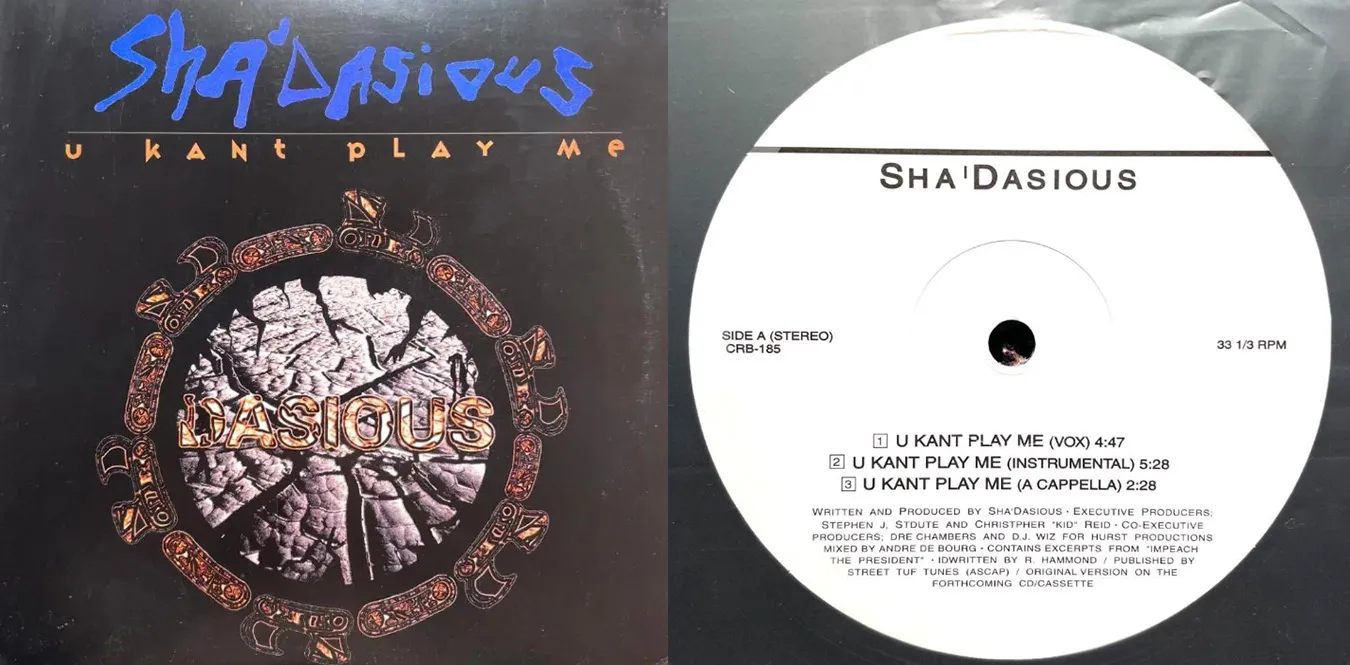
Sha'dasious – U Kant Play Me
Sha’dasious – U Kant Play Me / Phunk Wucha Heard Shadacious
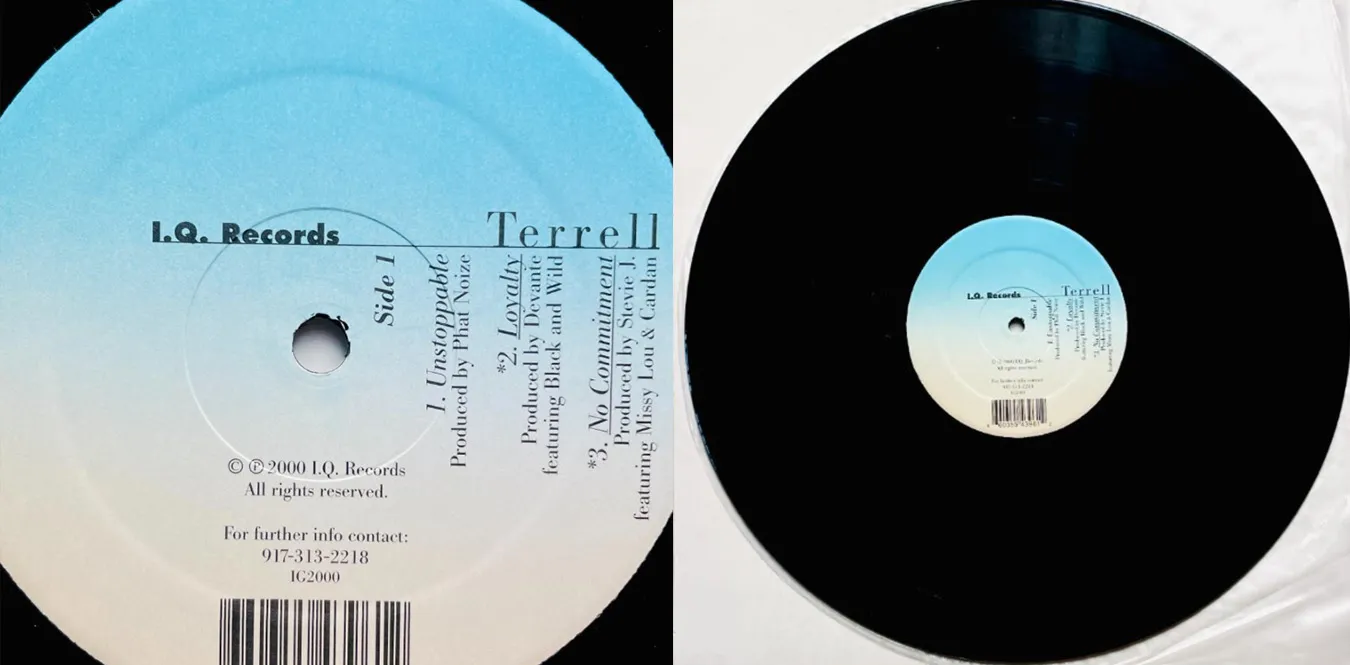
Terrell – Unstoppable
A hip-hop track released by rapper Terrell in 2000 on the label I.Q. Records.
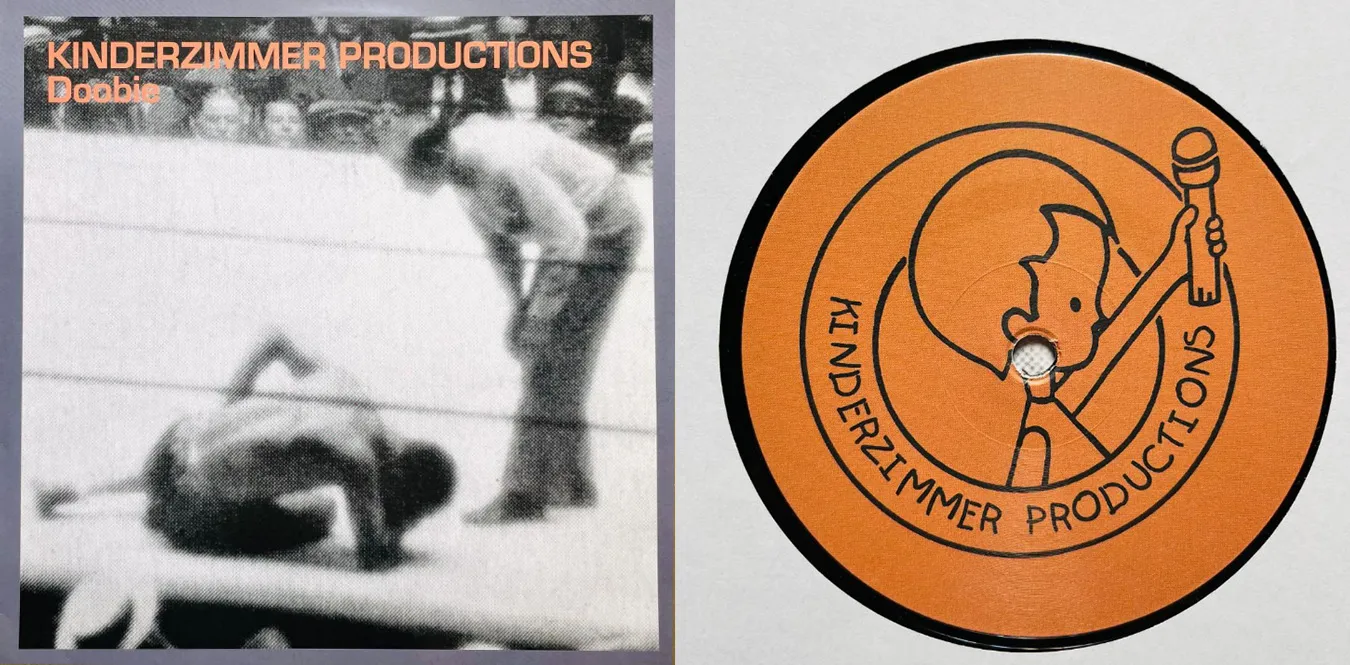
Kinderzimmer Productions – Doobie
Kinderzimmer Productions is a hip-hop band formed in the mid-1990s by Quasi Modo (Sascha Klammt, DJ) and Textor (Henrik von Holtum, MC) from Ulm, Germany.