![[Column] Ambient Techno / Deep Ambient](/../assets/images/column-ambient-techno-deep-ambient.webp)
1. Concepts and terminology
Text: mmr|Theme: Rather than separating the two as genre names, we are talking about the common design philosophy of “sinking time,” “space that makes you feel pressure,” and “a state in which sound continues to exist.”
Ambient Techno is a field of electronic music that was established in the early 1990s, and is a musical style that combines the repetitive rhythmic structure of techno with the spatiality and sustainability of ambient music. Its distinctive feature is that it retains the sense of time of club music while also functioning as music for appreciation.
Deep Ambient (so-called deep-sea ambient) has a higher level of abstraction and does not require the presence of beats. The main focus is on extremely deep sound images, sustained sounds centered on low frequency bands, and compositions that obscure the contours of time.
2. Prehistory: Divergence and approach of ambient and techno
Ambient music, which was formed in the 1970s, embraced the idea of music functioning as part of the environment. What is important is that the acoustics were designed to dominate space and time, minimizing melodies and dramatic developments.
On the other hand, techno, which was established in the late 1980s, has developed as a music that induces physical movement, with repetitive beats and mechanical precision at its core. Although these two trends seem to be polar opposites at first glance, they share common elements of ““persistence,” ““repetition,” and ““non-narrative.’’
From the late 1980s to the early 1990s, as club culture matured, there was a need for music that could function outside the dance floor, or music that could support non-peak hours, and the two became closer in practical terms.
3. The Orb and the establishment of ambient techno
The Orb integrates the spatial processing of ambient, techno, and dub, presenting an acoustic structure that can withstand long-term playback. In their works, there is little clear beginning, development, development, and conclusion, and the sounds float, circulate, and slowly transform.
What is noteworthy is that even in scenes where rhythm is in the foreground, he never shows off his driving force. The beat is not a device that directs movement, but rather serves as a reference point for measuring depth.
This design philosophy became the basis of Ambient Techno, and had a decisive influence on the subsequent Deep Ambient and deep-sea techno expressions.
4. Metaphor of deep sea sensation
The word “deep sea” is not a musical genre, but an aural metaphor. The core of deep-sea ambient is an attempt to recreate, through sound, an environment where light does not reach, the sense of distance is lost, and the sense of direction is ambiguous.
This metaphor is no coincidence. In deep water, high frequencies are attenuated and low frequencies propagate over long distances. The location of the sound source becomes unclear, and the sound is perceived as layers rather than points. Deep sea ambient uses this physical condition in its acoustic design.
5. Technical chapter: Low frequency design and frequency distribution
In deep-sea acoustics, low frequencies exist not just for the sake of power. The band around 20Hz to 80Hz does not play a melodic role, but is used to represent the pressure and mass of space.
Sub-bass often doesn’t have a clear attack, rising slowly and decaying slowly. As a result, the listener is placed in a state where the listener does not “hear” the sound, but “feels” it as sound pressure.
From the mid-low range to the mid-range, sustained sounds with suppressed overtones are placed, which serves to equalize the density of the sound.
6. Technical chapter: Reverberation and spatial processing
In deep-sea ambient music, reverb is treated not as decoration but as structure itself. Short reverberations are not used, and long reverberations with vague early reflection contours are selected.
What is important is that reverberation functions as an indicator of the passage of time. As the sound continues to disappear, the listener’s sense of time is stretched, and the beginning and ending points of the song lose meaning.
7. Technical chapter: Psychological effects and listening conditions
Sustaining low frequencies, slow changes, and long reverberations work to psychologically lower alertness. This means that music does not arouse emotions, but functions as a device to regulate states of consciousness.
Deep-sea ambient music has a high affinity with concentration, introspection, and a semi-awake state, making it a natural fit for work background music and meditation.
8. Redefining rhythm
Rhythm in Ambient Techno is not a command to move the body. Pulses that appear at regular intervals are the basis for measuring time, like a depth gauge.
In Deep Ambient, even this standard may be removed, but rather than being completely timeless, internal time is maintained through minute fluctuations.
9. Comparison with Dub Techno
Dub Techno is music that incorporates the spatial processing of dub into the structure of techno, emphasizing the back-and-forth movement of rhythm and reverberation. The repetition of chord stabs, the periodicity of delays, and the presence of beats are relatively clear.
The decisive difference from deep-sea ambient music lies in the master-slave relationship of rhythm. In Dub Techno, the rhythm drives the space, but in Deep Ambient, the space embraces the rhythm.
10. Comparison with Deep Techno
Deep Techno is characterized by its minimal structure, slow tempo, and restrained development, and is music that pursues depth while retaining the club context.
While Ambient Techno/Deep Ambient distances itself from the club-like nature, Deep Techno introduces deep-sea sound while retaining the floor function. This difference creates a clear difference in usage and listening posture.
11. Deepening of modern techno
In modern techno production, slow-speed, low-stimulation expressions that differ from peak-time oriented styles are widespread. This is not a decline of the genre, but an expansion of its uses.
Deep-sea acoustics became a common language across clubs, galleries, and private workspaces.
12. Design philosophy as work BGM
What is important when using BGM for work is not to draw attention, but to stabilize attention. Deep-sea ambient music maintains a constant cognitive load by making the acoustic changes extremely gradual.
13. Relationship with meditation/introspection usage
In meditative applications, music is not the object but the background. Deep sea ambient structurally satisfies this condition.
14. Chronology
- 1970s: Formation of the concept of ambient music
- Late 1980s: Establishment of techno
- Early 1990s: The emergence of Ambient Techno
- Mid-1990s: Expansion of expression with The Orb
- Since the 2000s: Deep Ambient sound has become established.
- After 2010s: Popularization of deep-sea techno
15. Structure diagram
16. Summary
Ambient Techno/Deep Ambient redefined music from an event to an environment. Deep sea sounds are a symbol of this, and are the foundation of a sustained listening culture in modern times.
Explore more like this
![[Column] Ambient Techno / Deep Ambient 2](/../assets/images/column-ambient-techno-deep-ambient2.webp)
[Column] Ambient Techno / Deep Ambient 2
1. Sequel theme setting
【コラム】 ダブ(DUB)音楽の誕生と拡張宇宙 ― 音響の再構築から始まった革命
序章:音の「残響」から生まれた革命
![[Column] Recondite and forest bathing - When techno returns to the forest](/../assets/images/column-recondite-forest.webp)
[Column] Recondite and forest bathing - When techno returns to the forest
Prologue: A beat sinking into the forest
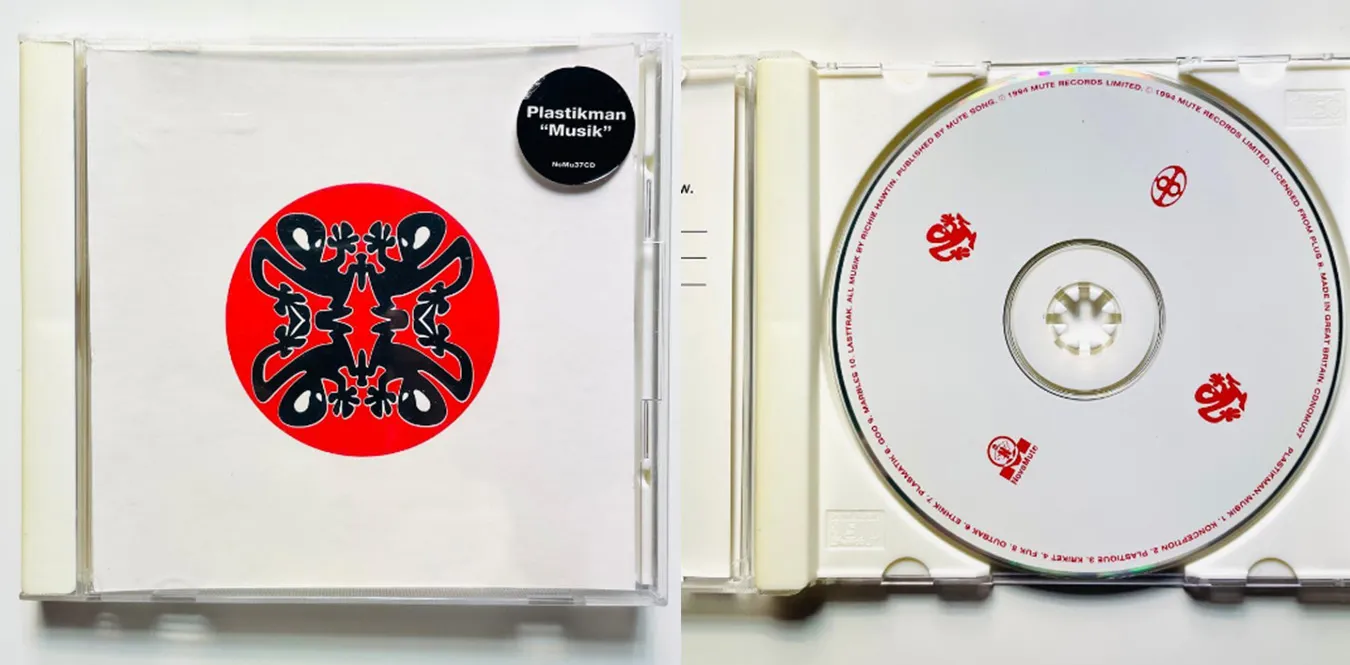
Plastikman – Musik
An album released by Richie Hawtin under the alias Plastikman on the NovaMute label in 1994. This is Richie Hawtin’s third studio album and second under his Plastikman name.
![[Column] Susumu Yokota — A universe in silence: A landscape of the soul drawn by electronic sounds](/../assets/images/column-susumu-yokota.webp)
[Column] Susumu Yokota — A universe in silence: A landscape of the soul drawn by electronic sounds
Chapter 1: Electronic music and Japan — Susumu Yokota’s position
![[Column] Autechre: Beyond structure — Acoustic architecture after techno](/../assets/images/column-autechre.webp)
[Column] Autechre: Beyond structure — Acoustic architecture after techno
Prologue: Organic in the inorganic
![[Column] Haruomi Hosono - Traveler of sound, quiet innovation that transcends the times](/../assets/images/column-haruomi-hosono.webp)
[Column] Haruomi Hosono - Traveler of sound, quiet innovation that transcends the times
Quiet Revolutionary - Haruomi Hosono
![[Column] Changes in the Eurorack modular synthesizer and its influence on the music scene](/../assets/images/column-eurorack-module.webp)
[Column] Changes in the Eurorack modular synthesizer and its influence on the music scene
“Lego blocks with infinite sound”
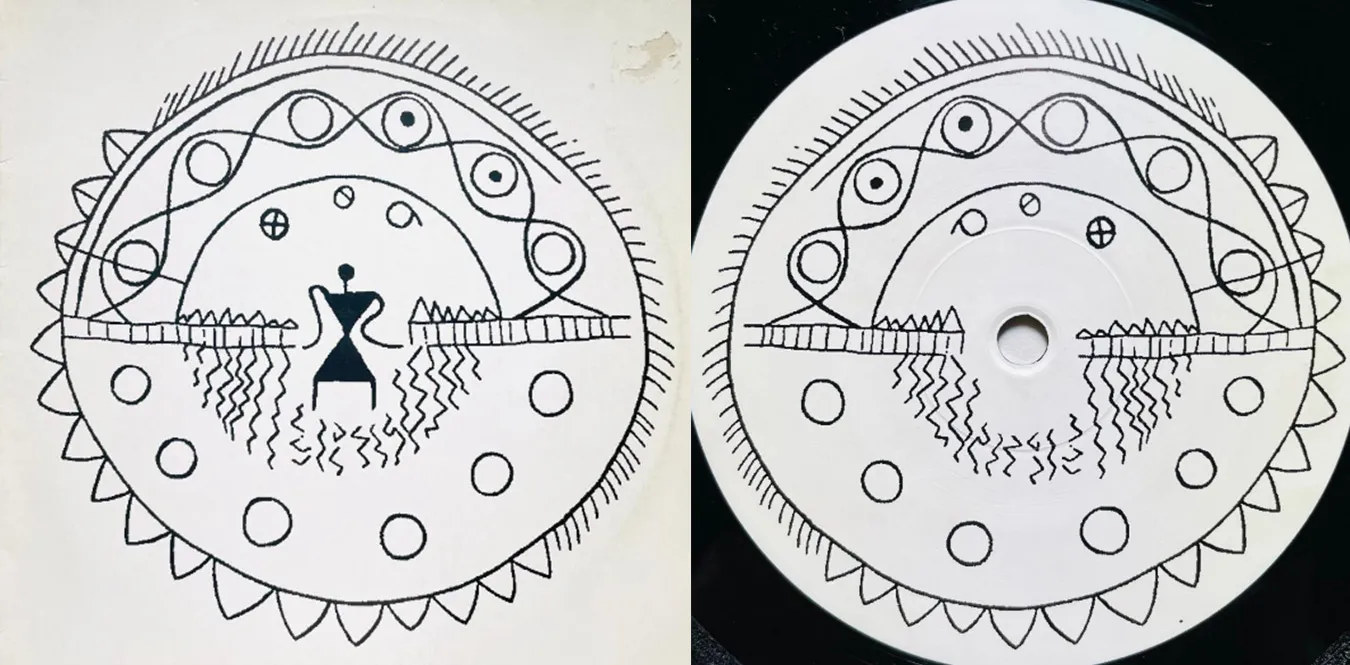
Sanjiva – Secret Rooms Over Flowing Delight
A techno ambient trance track by Charles Reix, also known as Sanjiva. It was released in 1996 on Sanjiva’s own label Ninetysix Sounds. He also worked under the name Charles...
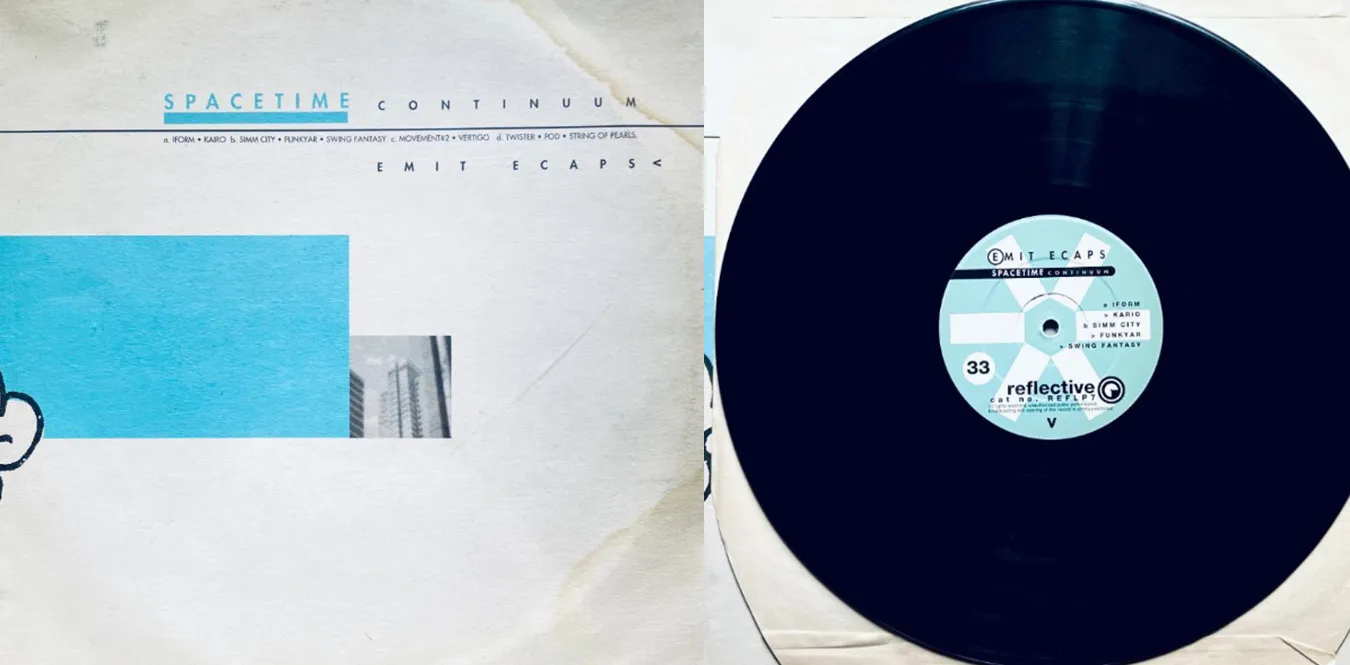
Spacetime Continuum – Emit Ecaps
A double LP set released in 1996 by Jonah Sharp, also known as Spacetime Continuum, a stalwart of the underground techno/ambient/electronica scene of the 90s, on his own label Reflective...
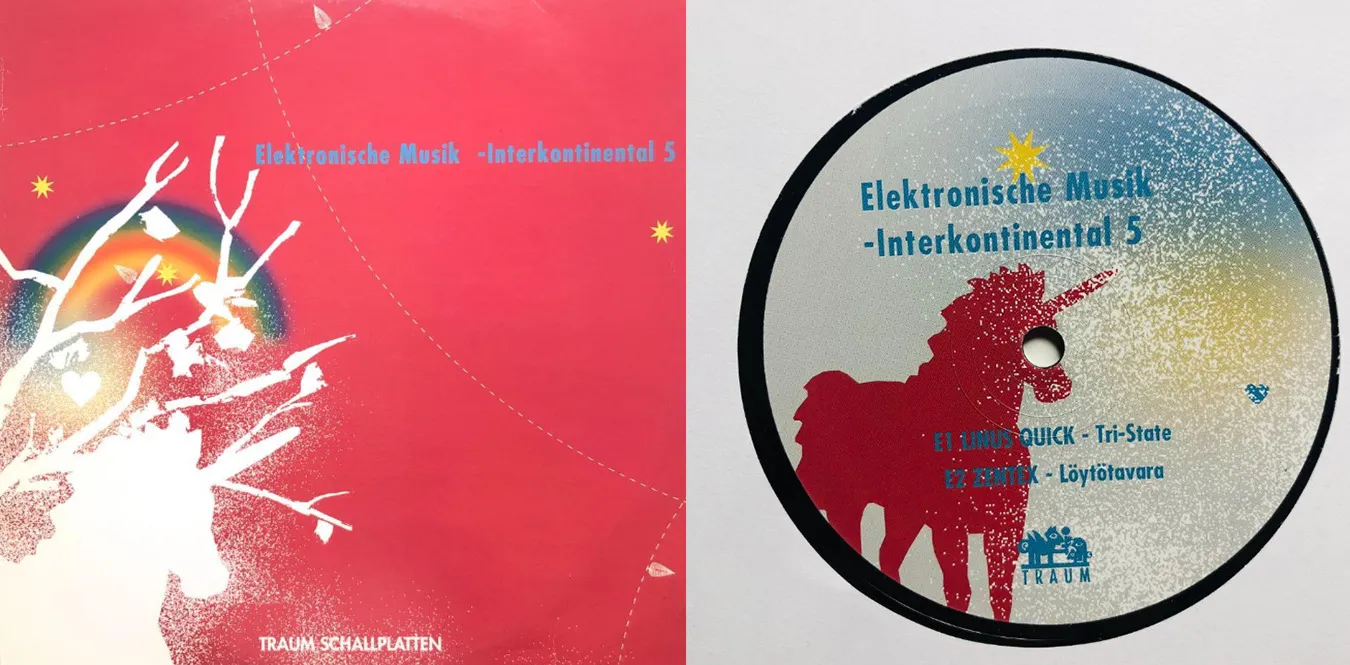
Various – Elektronische Musik -Interkontinental 5
“Various – Elektronische Musik -Interkontinental 5” is This is a 3-disc compilation album released in 2006 by the German label “Traum Schallplatten”.