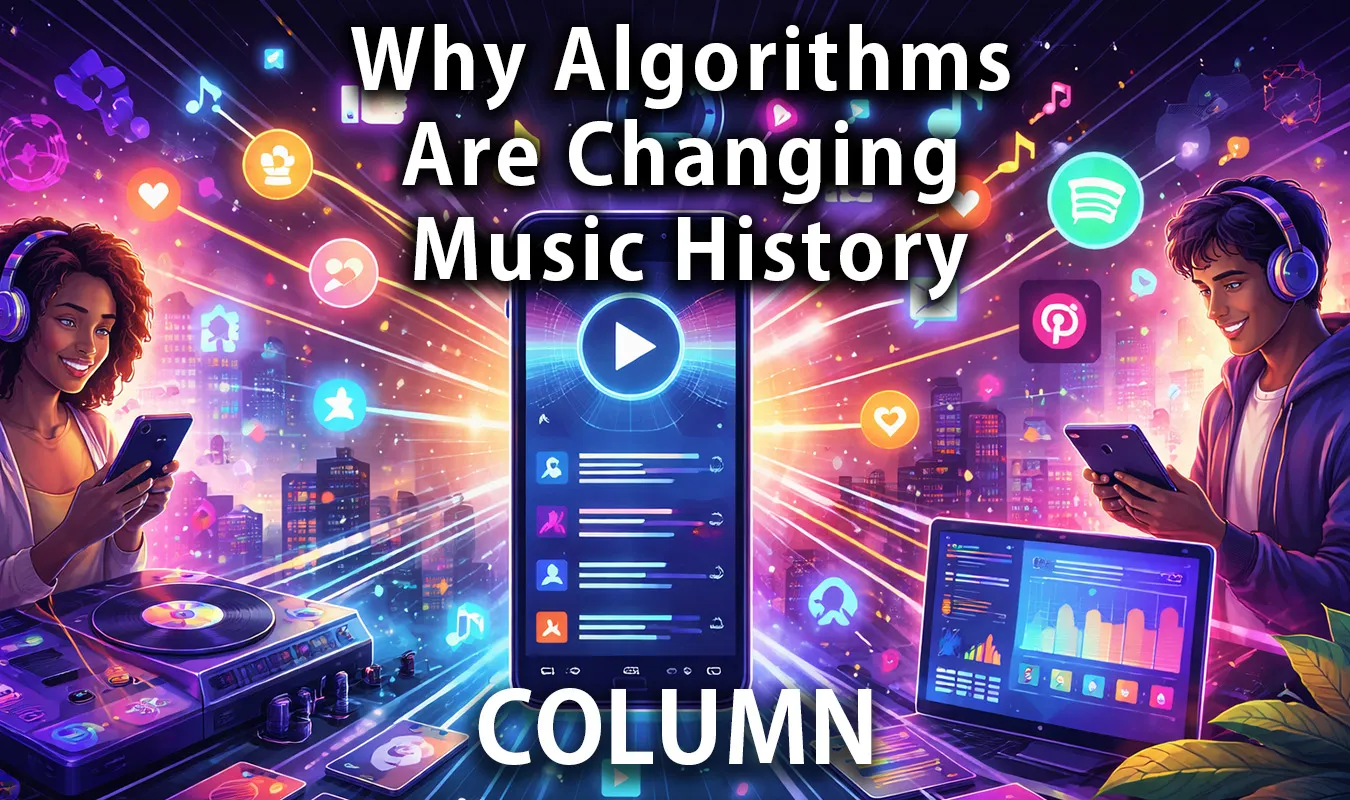
Music history has been rewritten by “technology”
Text: mmr|Theme: Unraveling how algorithms have changed the structure of music hits and the history of genres
Looking back at the history of music, the mechanics of hits have always changed due to technology.
Radio was the first huge medium to bring music into homes in the early 20th century. After that, the recording industry distributed music around the world as a commodity. With the advent of MTV in the 1980s, music transformed into a pop culture that was linked to images.
However, in the 21st century, the distribution structure of music has changed even more. That’s streaming and algorithms.
On distribution services such as Spotify and YouTube, The program recommends songs, not a human DJ.
This change is not just a technological innovation.
The algorithm is
・What will be a hit? ・What genre will be created? ・Which song will go down in history?
It is beginning to have an impact on the history of music itself.
Music history used to be shaped by record companies, radio stations, and critics. But right now, algorithms are at the center of it all.
The new editors of music history are not record companies but algorithms.
Music discovery before streaming
Before algorithms, there were very limited ways to discover music.
The following three are typical.
- Radio
- Music magazine
- Record shop
Radio DJs were the cultural gatekeepers to new music. For example, in the United States, rock and roll in the 1950s, In the UK, broadcasts such as BBC Radio 1 determined music trends.
Record shops were also important places of discovery. Staff recommendations, listening equipment, jacket design, etc. It stimulated listeners’ curiosity.
CD sales reached their peak in the 1990s, The music market becomes a huge industry.
However, there were major constraints on music discovery during this period.
- Physical distribution
- Regional differences
- Media exposure
In other words, much of the world’s music ““I didn’t even have a chance to be heard in the first place.’’
The advent of the Internet suddenly broke down this restriction.
Digitalization has made it possible for music to exist infinitely, but humans cannot search for it all.
A new DJ called Algorithm
In the late 2000s, music distribution services rapidly became popular.
Of particular importance is the streaming recommendation system.
The algorithm mainly uses the following data.
- Play history
- Skip rate
- Number of saves
- Add playlist
- User similarity
Analyze this data and Recommend different songs for each user.
A typical example is Spotify’s Discover Weekly. This feature, introduced in 2015, Generate a new playlist every week for each user.
As a result, many artists without appearing on radio or television It has gained a worldwide audience.
YouTube’s recommendation system is equally important. By presenting videos one after another based on the playback history, The amount of time spent consuming music has increased significantly.
The algorithm is It’s not just about helping people find music.
The listener’s musical experience itself It’s being redesigned.
Today’s listeners do not “search” for music, but are “recommended” to it.
Hit songs created by algorithms
The algorithm also changed the structure of the hits.
Traditional hits are The decision was based on radio frequency, CD sales, and chart ranking.
But in streaming The number of views is the main focus.
Due to this change, even the way music was created changed.
Hit songs in the streaming era have their own characteristics.
- short intro
- Impressive hook in the first 30 seconds
- Repeating structure
- short songs
This has to do with how streaming is measured.
in many services If it is played for about 30 seconds or more Counted as 1 stream.
Therefore, the artist before listener skips It is necessary to present the appeal of the music.
Furthermore, the influence of playlist culture is also significant.
The listener is not the album I started listening to music in playlists.
As a result, Songs need to work on their own.
The algorithm is The song structure itself is starting to change.
In the streaming era, hits are optimized for data, not radio.
Playlist is now the new radio
The biggest feature of the algorithm era is It’s a playlist culture.
On Spotify and Apple Music Official playlists have huge influence.
Typical playlists include the following:
- RapCaviar
- Today’s Top Hits
- Lo-Fi Beats
These playlists are Has tens of millions of followers.
In other words, Posting one playlist Sometimes it becomes a worldwide hit.
Features of playlists This point is based on “mood” rather than genre.
example
- Chill -Focus
- Workout
- Sleep
music is not a genre It became the soundtrack for life scenes.
This is a major change in music history.
Genres once created cultural communities. Examples include punk, hip-hop, and techno.
But now, Many listeners are not conscious of genre listening to music.
The playlist has been rearranged with music centered around “life” rather than genre.
New genres are born from algorithms
The algorithm is It also influences the formation of genres.
for example
- Lo-fi Hip Hop
- Phonk
- Drift Phonk -Hyperpop
Genres such as Proliferated within internet culture and algorithms.
Especially lo-fi hip hop This is a typical example of how it spread through YouTube distribution.
Music optimized for studying and working Good compatibility with algorithms.
long playback time, This is because it is difficult for listeners to skip.
TikTok has also become a new genre of spreading device.
Songs used in short videos It instantly becomes a worldwide hit.
This phenomenon is What is record company marketing? Go at different speeds.
in internet culture Music genres are born and evolve.
Modern genres are born in algorithms, not clubs.
Problems with the algorithm
Algorithms have problems as well as advantages.
The typical ones are
- filter bubble
- Music homogenization
- Dependence on large platforms
What is a filter bubble? This is a phenomenon where only similar music is recommended.
Because listeners only listen to songs that are close to their tastes. It may be difficult to encounter new cultures.
In addition, the songs optimized by the algorithm are They often have similar structures.
It is a short, simple, and repetitive song.
Furthermore, the artist Depends on platform rules.
Playlist posting and recommendations This is because it has a major impact on profits.
In other words, the algorithm While creating new opportunities They are also creating new power structures.
Algorithms have created a free music world, but at the same time they have also become the new gatekeepers.
Music history in the age of algorithms
music history so far It has been talked about by genre and artist.
But now, There is an algorithm behind it.
- Birth of a hit song
- Genre formation
- Listener experience
all of these Influenced by data and recommendation systems.
future music historians You may want to study factors such as:
- Streaming data
- playlist culture
- SNS spread
- Algorithm design
In other words, music history It is also a history of technology.
Records, radio, MTV, the internet. Next came algorithms.
The history of music has always been driven by technology, not sound.
Timeline: History of algorithms and music distribution
Structural changes in music discovery
Why algorithms will change music history
Algorithms are not just a mechanism for distributing music. It is a new cultural apparatus that will determine how music is discovered, shared and remembered.
And its influence will further change the history of music in the future.