![[Column] Progressive Jazz / Fusion](/../assets/images/column-progressive-jazz-fusion.webp)
Introduction: The concept of progressive jazz/fusion
Text: mmr|Theme: Positioning modular drones as an intersection of the history of acoustic technology, history of musical instruments, and compositional thought, and systematically organizing their formation and development.
Progressive jazz/fusion is a developmental trend in jazz that was formed from the late 1960s to the 1970s, and was established as a result of the simultaneous integration of multiple musical idioms such as modal jazz, post-bop, rock, funk, contemporary music, and folk music. ““Progressive’’ here does not simply mean technical sophistication, but refers to the attitude itself that continues to reorganize musical structure, rhythm design, timbre arrangement, and the relationship between improvisation and composition.
Although the term fusion is often understood as a compromise between jazz and rock, the reality is more complex. External conditions such as the standardization of electric instruments, the evolution of PA and studio technology, changes in recording media, and the acceleration of international musical exchange directly influenced performance styles and structural design. In this article, we will examine the underlying logic of progressive jazz/fusion by analyzing the structure, instruments, and performance philosophy of Weather Report and Mahavishnu Orchestra, which form the core of this trend.
Historical background: late 1960s to early 1970s
In the late 1960s, jazz expanded its vocabulary beyond hard bop and gained flexibility in its temporal structure through modal playing and free improvisation. On the other hand, rock music was changing into music that was based on loud volumes and repetitive beats, and was designed for large-scale listening environments. The maturation of electric instruments and amplification technology has expanded the connection between the two on a physical rather than an ideological level.
During this period, many jazz musicians introduced electric pianos, electric basses, and amplified guitars, building ensembles based on volume, sustain, and timbre manipulation that were impossible with traditional acoustic formations. As a result, new forms of performance featuring long structures, circular riffs, complex meters, and repetitive structures took hold, and progressive jazz/fusion came to be recognized as a distinct current.
Weather Report: Collective improvisation and sonic textures
Formation and basic philosophy of the band
Weather Report was formed in 1970 and prioritized the sonic integrity of the entire ensemble over the excellence of individual soloists. The traditional division of roles between theme, accompaniment, and improvisation was intentionally blurred, and the pieces were designed as processes that generate and transform over time rather than fixed forms.
This idea is distinctive in that improvisation is viewed as ““sound production by a group” rather than ““individual expression.” Each instrument moves away from its fixed role as the main melody or accompaniment, and instead functions as an element of timbre, rhythmic density, and spatial arrangement.
Structural features and time design
Weather Report’s song structures often eschew a linear format of thematic presentation and alternation of solos, instead adopting a cyclical and variable structure. Short motifs and chord fragments are repeated, and the rhythm arrangement, range, and timbre change each time, resulting in a gradual transformation of the whole piece.
In this structure, the increase or decrease in acoustic density itself becomes the driving force of the song, rather than a clear climax. The time signature is often not specified, and the drums play a role in controlling the direction of the flow rather than emphasizing the beat.
Instrumentation and division of roles
The keyboard uses an electric piano or synthesizer, and rather than presenting a harmonic progression, he creates a sonic layer of sustained notes and fragmented phrases. The bass doesn’t just support the low notes, it also carries the melodic movement, indicating the direction of the song as a whole. Rather than maintaining a constant beat, the drums drive the whole thing through texture, accent placement, and density adjustment.
Mahavishnu Orchestra: Built Complexity and Speed
Formation and aesthetics of the band
The Mahavishnu Orchestra began operations in the early 1970s and was characterized by extremely fast tempos, complex time signature structures, and strictly composed unison. While Weather Report emphasized fluid generation, Mahavishnu Orchestra contrasts with its emphasis on constructability and reproducibility.
The improvisation here develops within a composed framework rather than in complete freedom. Each performer is required to perform within highly technical constraints, and the ensemble as a whole has the integrity of a precision machine.
Rhythmic structure and form
Mahavishnu Orchestra’s compositions use irregular time signatures and frequent changes in time signature. These are not mere esotericities, but structural means for clearly controlling tension and release. The theme is often presented in unison for all instruments, followed by solos and variations.
Instrument composition and performance techniques
The electric guitar is accompanied by distortion and continuously develops high-speed scales and arpeggios. The violin was introduced as a melodic instrument in rock formations, and has the same volume and maneuverability as the guitar. The keyboard is responsible for supporting sustained notes and harmonies, and supports the overall thickness.
Structural comparison: two directions
Weather Report and the Mahavishnu Orchestra were active at the same time, but their structural orientations were very different. One pursues fluid generation and sonic texture, the other pursues rigorous compositional structure and speed.
| Perspective | Weather Report | Mahavishnu Orchestra |
|---|---|---|
| Improvisation | Collective | Individual solo focus |
| Structure | Cyclic/variable | Segmental/fixed |
| Sound | Emphasis on texture | Emphasis on rhythm and speed |
Chronology: Development of progressive jazz/fusion
Instrument technology and studio technology
The spread of electric instruments had a direct impact not only on performance techniques but also on recording methods. Multi-track recording made it possible to create sound arrangements that would not be possible with simultaneous performance, and effect processing and localization promoted the awareness of constructing the ensemble as a single sonic sculpture.
Impact on subsequent generations
Progressive jazz/fusion left a legacy of thinking that linked structural design and timbre-centrism in subsequent contemporary jazz, experimental rock, and electronic music. The attitude of treating improvisation and composition as a continuum, rather than as opposing concepts, has been inherited as a creative attitude that cuts across genres.
Conclusion
Progressive Jazz/Fusion was more a methodology than a style, a collection of practices aimed at redesigning musical structure. The collective sonic production of Weather Report and the architectural complexity of Mahavishnu Orchestra represent the opposite ends of this trend. By understanding the two side by side, the essence of progressive jazz/fusion emerges more three-dimensionally.
Explore more like this
![[Column] IDM × Jazz / Electronic Jazz Fusion](/../assets/images/column-idm-jazz-electronic-jazz-fusion.webp)
[Column] IDM × Jazz / Electronic Jazz Fusion
Introduction: The intersection of IDM and jazz

【コラム】 Gong伝説:時代・神話・サウンドと共同体
1. 導入:科学者としての音楽家
![[Column] Teo Macero and Miles Davis —— The moment when editing surpasses creativity](/../assets/images/column-macero-miles.webp)
[Column] Teo Macero and Miles Davis —— The moment when editing surpasses creativity
Prologue: “Another instrument” called the recording room
![[Column] Planet of Bass: Cultural History of Bassists in the World and Japan ---Sounds Under the Earth's Surface](/../assets/images/column-bassists.webp)
[Column] Planet of Bass: Cultural History of Bassists in the World and Japan ---Sounds Under the Earth's Surface
“The soul of music is in the bass.”
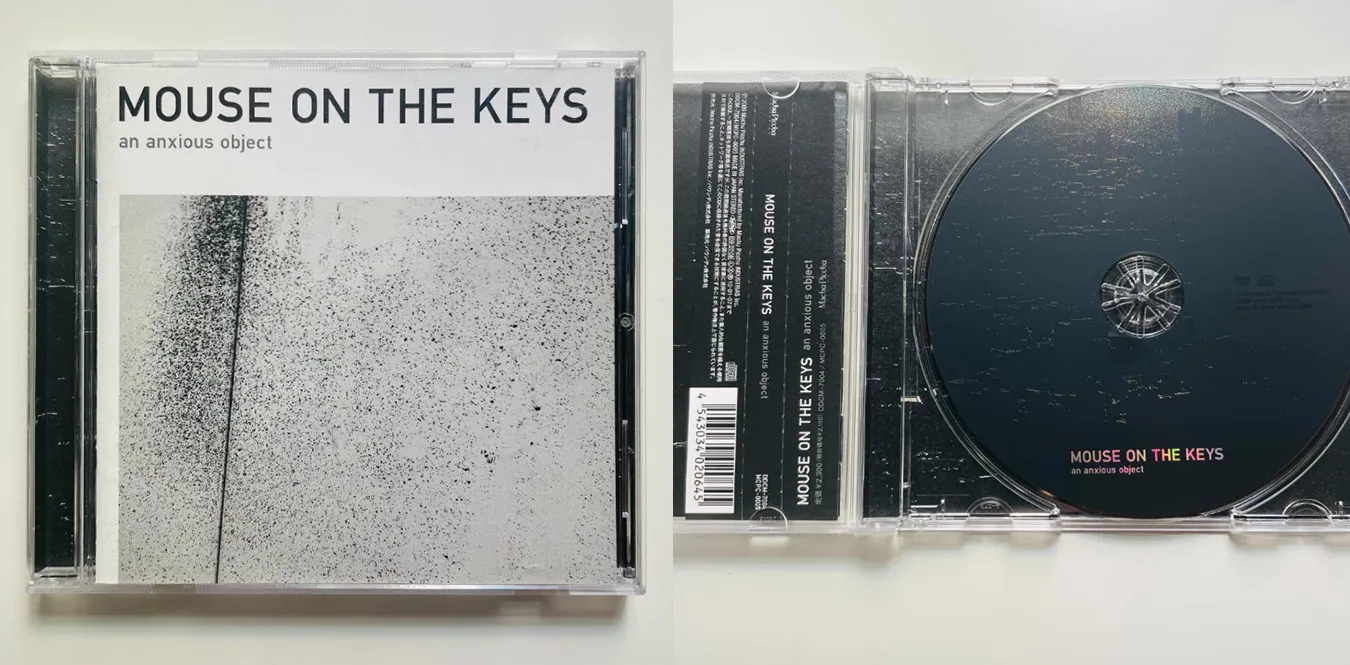
Mouse On The Keys – An Anxious Object
Mouse On The Keys was formed in 2006 by former members of the post-hardcore/post-rock band Nine Days Wonder, Akira Kawasaki (drums, piano) and Atsushi Kiyota (piano, keyboards), and became a...
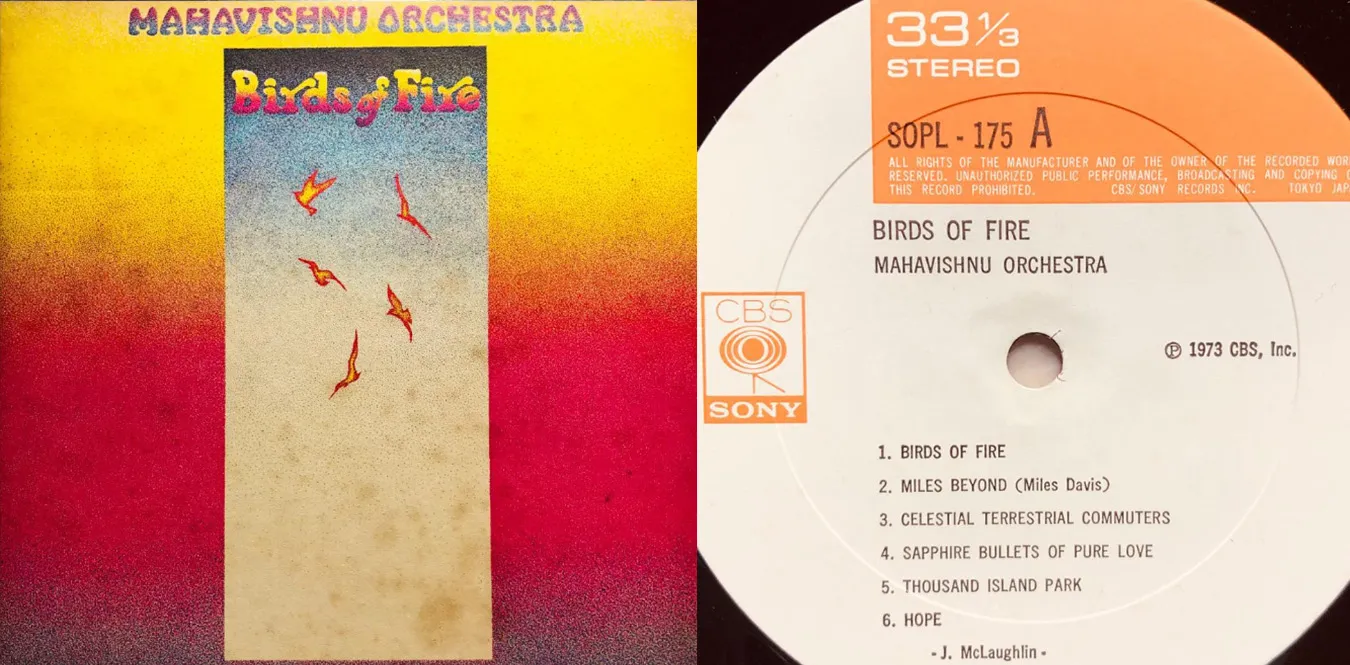
Mahavishnu Orchestra – Birds Of Fire
Mahavishnu Orchestra(マハヴィシュヌ・オーケストラ)は、1970年にイギリス人ギタリストJohn McLaughlin(ジョン・マクラフリン)によって結成されたフュージョン・ジャズ・ロックの草分け的バンド。
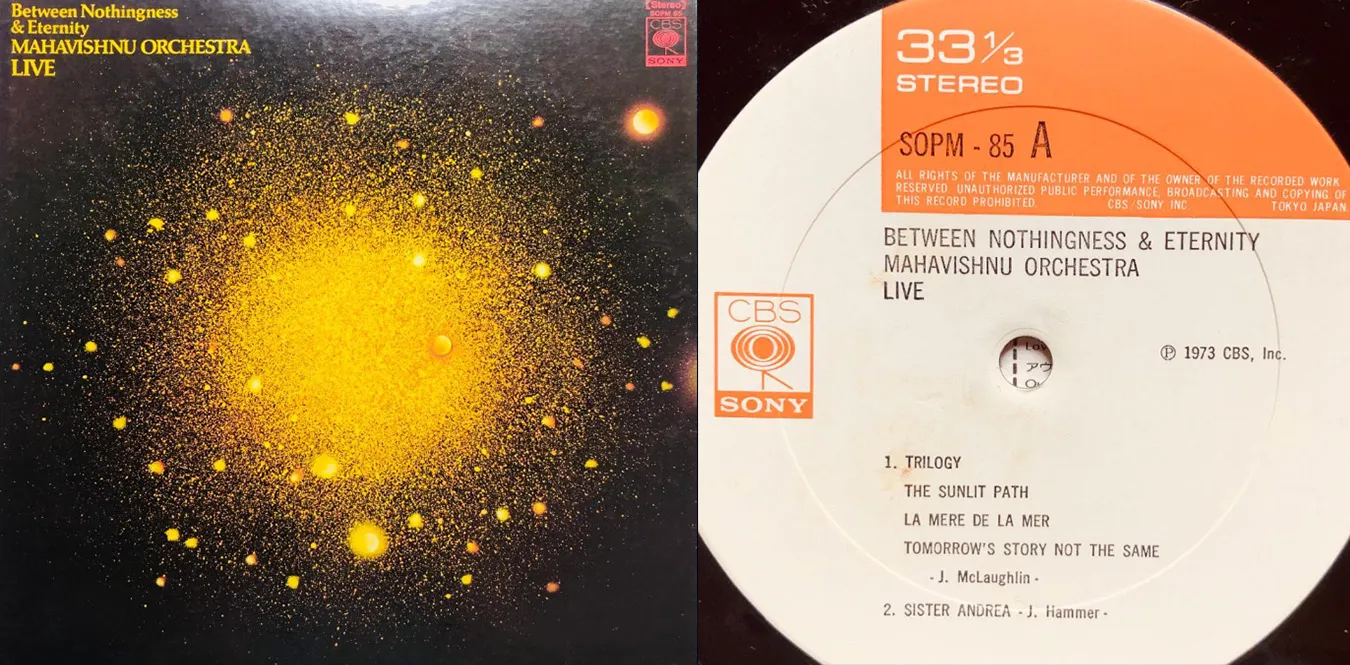
Mahavishnu Orchestra – Between Nothingness & Eternity
Between Nothingness & Eternity, released in 1973, was the Mahavishnu Orchestra’s first live album.
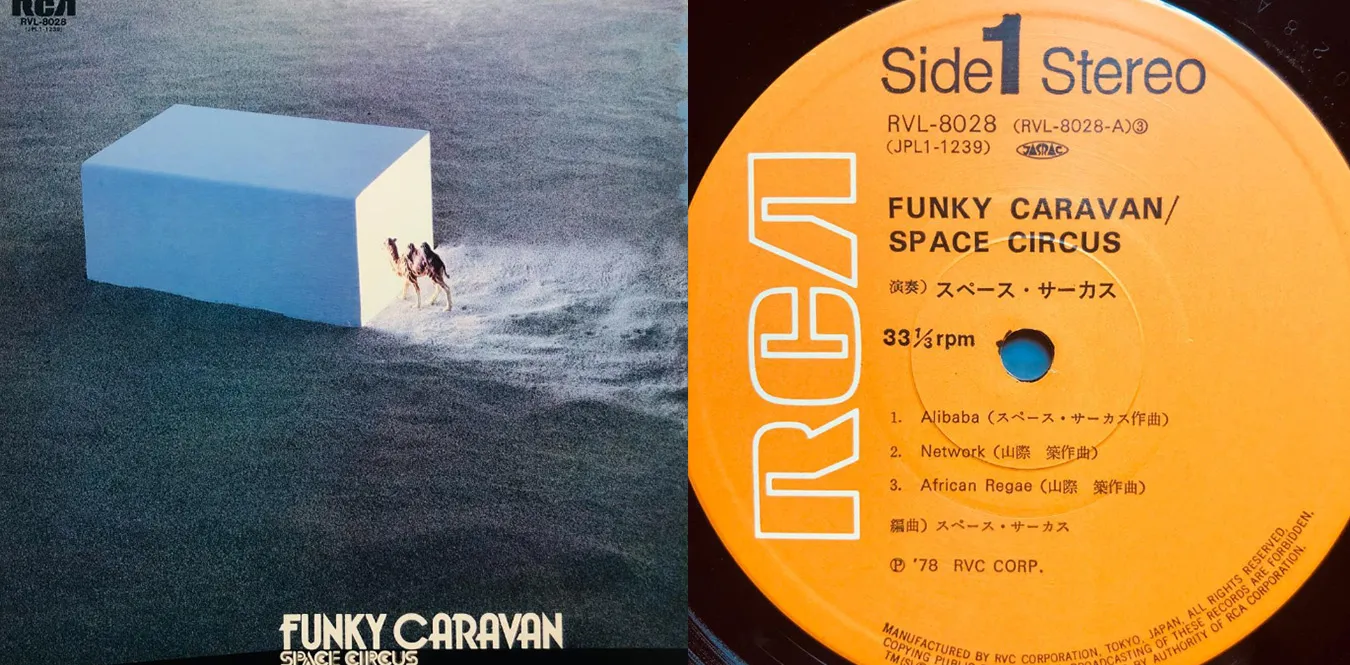
Space Circus – Funky Caravan
“Funky Caravan” is the debut album by Space Circus, a Japanese progressive rock and fusion band active in the late 1970s. Bassist Hajime Okano is a music producer and has...