[Column] Physical media and collector culture: Archive history of ownership, rarity, and memory
Column en CD Cassette Physical Media Vinyl
Prologue: Why “things” don”t disappear
Text: mmr|Theme: The dynamics of ownership and cultural capital generated by physical media
Even in an age where music and videos can be delivered instantly via streaming, physical media such as records, cassettes, CDs, and Blu-rays have not disappeared. Rather, it continues to be re-evaluated with great enthusiasm among a certain group of people.
Possession is a different experience than mere access. The feel, the weight, the smell of the jacket, the type in the liner notes, the scratches on the disc. There is time carved into it. Data is updated, but things fade. The paradox that weathering creates value lies at the heart of collector culture.
Since the 20th century, media have changed with the development of recording technology. However, with each change, “old media” did not disappear, but remained, taking on a different meaning. Gramophone records have become antiques, LPs have become audio hobbies, cassettes have become a DIY culture, and CDs have been reevaluated.
Physical media is more than just a recording device. It is a medium of social relations, a visualization device for cultural capital, and an archive of memory.
Physical media is both a consumer product and a time storage device.
1. Birth and expansion of physical media
The era of phonographs and discs
In 1877, Thomas Edison invented the phonograph, making it possible to record sounds. Initially, it was a wax tube, but later it changed to a disk shape. Commercial recording began in the 1890s, and music became a commercial product that could be reproduced for the first time.
At the beginning of the 20th century, 78-rpm SP discs became the standard, and record companies promoted industrialization around the world. Music has changed from being something that is played to something that is purchased.
The appearance of LP and the album concept
In 1948, Columbia Records released the 33 1/3 RPM LP. It became possible to record for long periods of time, and the album format was established. The restriction of around 20 minutes per side affected the song structure and narrative.
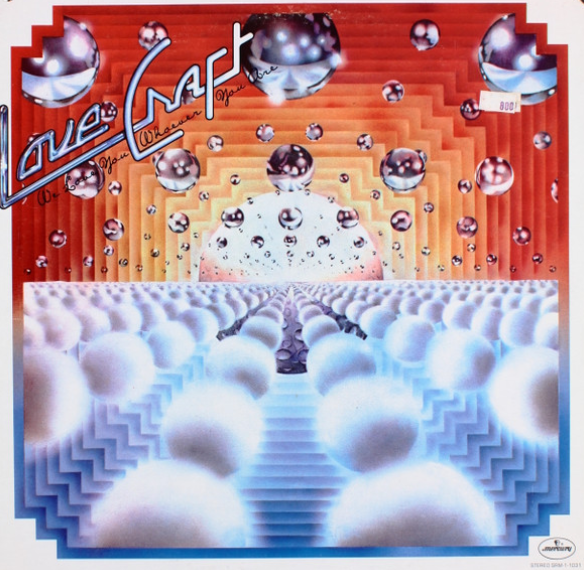
In the late 1960s, The Beatles” ““Sgt. Pepper”s Lonely Hearts Club Band’’ was a prime example of presenting the album as a unit of work. The jacket art and liner became part of the world of the work, increasing its value as a collectible object.
Cassettes and portability
In 1963, Philips introduced the compact cassette. Recording is becoming more democratized. Then, in 1979, Sony released the Walkman, transforming music into a portable experience.
The arrival of CD and digital
In 1982, the compact disc jointly developed by Sony and Philips was introduced to the market. It became popular in the 1990s due to its durability, low noise, and ease of cueing.
Technological innovation always reorganizes the roles of traditional media rather than eliminating them.
2. Formation of collector culture
Social history of record collecting
After World War II, enthusiasts began to search for special edition jazz and blues records in Europe and America. Rare records are traded in specialized magazines and at fairs, forming market prices. In the 1960s, with the addition of the rock generation, interest in first editions and promo editions increased.
In the late 1970s, with the rise of punk and indie, limited presses and self-produced albums increased. The condition of limited distribution created value.
DJ culture and digging
In New York, the birthplace of hip-hop, a culture of “digging” in search of breakbeats was formed. The act of finding undiscovered sound sources from used records was both a musical exploration and a social competition.
Auction and price visualization
Founded in 1995, eBay has given international visibility to prices in the collector’s market. The winning bids for rare records will be converted into data, accelerating market price formation.
Similarly, Discogs, founded in 2000, combined a music database and marketplace to enable global buying and selling.
Collector culture has gone beyond the realm of hobby and has been institutionalized by markets and information networks.
3. Paradox of the digital age
In the early 2000s, physical media rapidly shrunk due to the proliferation of MP3s and the expansion of file sharing. However, since the 2010s, sales of analog records have been on the rise again.
In the United States, statistics from the Recording Industry Association of America report that there will be years in the 2020s when record sales exceed those of CDs. This is a phenomenon that cannot be explained by nostalgia alone.
The number of younger buyers is increasing, and physical features such as jacket art, limited edition color editions, and heavy editions are appealing. Beyond the sound quality controversy, the value of the experience is the reason for selection.
The more digitalization progresses, the more the meaning of the media we interact with will be strengthened.
4. Ownership as cultural capital
Sociologist Pierre Bourdieu proposed the concept of cultural capital. This is the theory that specific knowledge and hobbies create social differences.
Owning a rare edition or first pressing is not just a collection, but also proof of knowledge, experience, and network. Knowledge of which presses have better sound quality and which labels are more important is evaluated within the community.
Furthermore, the strategy of limited production artificially creates scarcity. Events like Record Store Day combined store culture with exclusive distribution and reinvigorated communities.
Possession is both a physical and a symbolic act.
5. Timeline of media changes
Technological innovation in each era always gave rise to the next cultural reinterpretation.
6. Media and market structure
Mass production leads to oversupply, which eventually leads to discontinuation and scarcity. Scarcity leads to reappraisal and revitalizes the market. This cycle has been repeated throughout the 20th century.
Markets move in cycles, not in straight lines.
7. Archive as a storage device
National libraries and music archives continue to preserve sound sources. Although physical media has the issue of preservation, it guarantees evidence in a way different from digital.
Wear on the disc surface, writing, and bent bands. These are traces of previous owners and part of history. The collection is both personal history and cultural history at the same time.
Physical media is a deposit of time before it is a recording medium.
Epilogue: The future of ownership
Subscriptions offer maximum convenience. But access does not replace ownership. Algorithms present infinite options, but hundreds of records on shelves visualize a selective history.
Physical media may shrink. But it will not disappear. This is because it is not just a music playback device, but an object imbued with cultural meaning.
The sounds that can be touched will continue to remain with human memories.