Moinとは何か:ロンドン発の曖昧なバンド像
文:mmr|テーマ:ロンドン発のバンドMoinを軸に、ポストジャンル以後の音楽表現、身体性、リズムの崩壊と再構築をたどる
境界線を拒否するバンドという存在
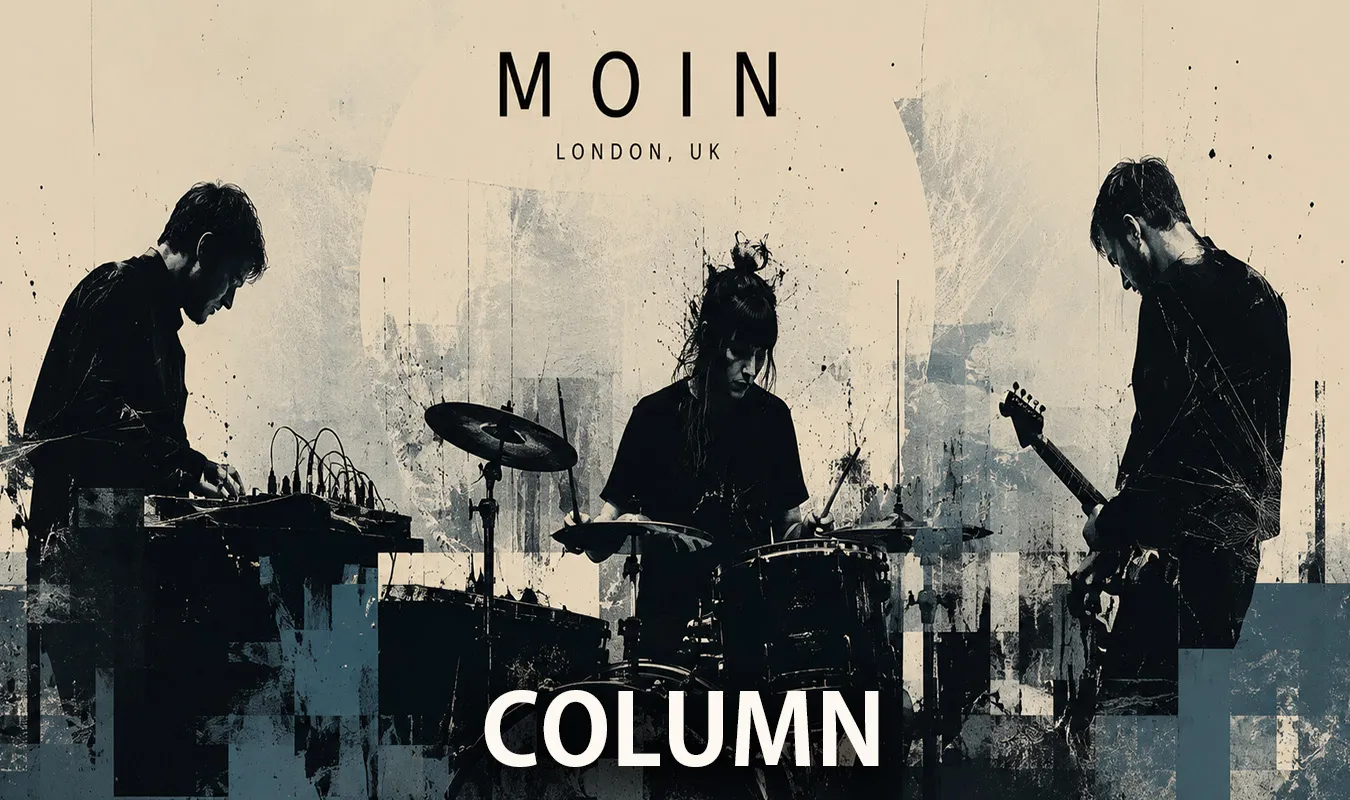
Moinはイギリス・ロンドンを拠点に活動する実験的プロジェクトであり、一般的な意味での「バンド」という枠組みを意図的に曖昧化しているユニットである。メンバーはJoe Andrews、Tom Halstead(いずれもRaimeとしても知られる)と、イタリア出身のドラマーValentina Magalettiの三名で構成される。
この編成自体が象徴的で、エレクトロニック・デュオとして始まったRaimeの文脈と、アコースティックかつ即興的な打楽器表現を軸に持つMagalettiの身体性が交差する地点にMoinは成立している。
ジャンルで言えばポストパンク、実験音楽、ポストハードコア、ミニマルテクノなど複数の要素が混在するが、それらは統合されることなく、むしろ意図的に分解された状態で提示される。
その結果として生まれるのは「音楽ジャンル」ではなく「振る舞いとしての音」である。
Moinはジャンルの集合ではなく、ジャンルが崩れた後に残る運動そのものとして立ち上がる
RaimeからMoinへ:崩壊するエレクトロニックの文法
低音と空間の美学からの転換
Moinを理解する上で重要なのが、メンバーであるJoe AndrewsとTom Halsteadの前身プロジェクトRaimeの存在である。Raimeは2010年代初頭、ダブテクノやインダストリアルの影響を受けた重厚なサウンドスケープで知られていた。
しかしMoinではその構造が意図的に解体される。シンセサイザーやドローン的持続音の代わりに、ギター、ドラム、断片的なリズムが前面に出る。
この変化は単なる楽器編成の変更ではない。むしろ「電子音による空間構築」から「物理的衝突による時間構築」への転換である。
音は広がるのではなく、ぶつかる。伸びるのではなく、途切れる。その断続性こそがMoinの中心にある。
解体されたポストテクノ的構造
Raime時代にあったミニマル・テクノ的構造は、Moinにおいて「残響」としてのみ存在する。ビートは明確に刻まれず、代わりに断片化された衝撃として現れる。
その結果、リスナーはグルーヴではなく「予測不能な間」に意識を向けることになる。
Raimeの空間はMoinの断片へと分解され、音楽は構築物から現象へと変質する
パーカッションの革命:Valentina Magalettiの存在
ドラムを超えた構造装置
Moinの中心にあるのはValentina Magalettiのドラムであるが、それは単なるリズム楽器ではない。彼女の演奏は構造そのものを生成する行為として機能している。
不均等な拍、意図的なズレ、ミクロな強弱の変化が、楽曲全体の骨格を形成する。従来のロックやテクノにおける「ビートの安定性」はここでは重要ではない。
むしろ不安定性そのものがグルーヴとして成立する。
即興と設計のあいだ
Magalettiの特徴は、完全な即興でも完全な作曲でもない中間領域にある。反復は存在するが、それは機械的ではなく有機的である。
この曖昧な制御状態が、Moin全体の音像を支配している。
ドラムはリズムを刻むのではなく、時間そのものの揺らぎを可視化する装置として機能する
サウンドの特徴:ギターの脱構築とリズムの断片化
ギターは旋律ではなく衝突である
Moinにおけるギターは、メロディ楽器ではない。コード進行もほとんど意識されず、代わりにノイズ的なテクスチャや短いフレーズの断片が配置される。
このアプローチはポストパンク的でもあり、同時にノイズロック的でもあるが、どちらにも完全には属さない。
ギターは「意味を持つ音」ではなく「意味を生成しない音」として扱われる。
リズムの非同期化
ドラムとギターは同期しない。むしろ互いにズレ続けることで、偶発的なグルーヴが生まれる。
この非同期性はデジタル音楽のクオンタイズ文化への明確なアンチテーゼでもある。
Moinのサウンドは一致ではなくズレによって成立する関係性の音楽である
作品年表:EPからアルバムへ
時系列で見る構造の変化
| 年 | 作品 | 特徴 |
|---|---|---|
| 2020 | Moin EP | 初期断片的構造、ポストパンクの影響が強い |
| 2022 | Paste | リズムの実験性が強化され、音響的空間が拡張 |
| 2024 | You Never End | 構造の完成形、ジャンル崩壊後のバンド像 |
初期作品ではまだポストパンク的な輪郭が残っているが、時間が進むにつれてその輪郭は溶解していく。
In particular, with “You Never End,” it is important that the album as a whole functions as a continuum, rather than the structure of individual songs.
Although each track is independent, they simultaneously erode each other.
The chronology is not just a record, but a trajectory that shows how Moin “lost its form”
ライブと現場性:身体が音に戻る瞬間
再現ではなく再構築
Moinのライブはスタジオ作品の再現ではない。むしろその場で再構築される即興的なプロセスである。
ギターとドラムの配置は固定されているようでいて、演奏ごとにバランスが変化する。音量の関係性も一定ではない。
この不安定性は観客の身体感覚を直接揺さぶる。
身体性の回帰
電子音楽以降の文脈において、身体性はしばしば希薄化してきた。しかしMoinはその流れに逆行するように、身体の存在を強く前景化する。
ドラムの衝撃、ギターのノイズ、空気の揺れ。それらはすべて物理的現象として知覚される。
Moin’s live performance is not about music, but about the phenomenon of sound touching the body.
UK underground context
ポスト・クラブ以後の断片文化
Moin”s emergence is an extension of the UK underground”s post-club culture. It is a point where the fragmented rhythmic sensibilities of post-bass music, the post-punk DIY spirit, and the structural deconstruction of experimental electronic music intersect.
この文脈では、完成された楽曲よりもプロセスそのものが重要視される。
コミュニティではなくネットワーク
従来の音楽シーンにあった「コミュニティ」的構造は希薄化し、代わりに緩やかなネットワークが形成されている。
Moinもまた特定のジャンルシーンに属するのではなく、複数のシーンを横断するノードとして機能している。
UKアンダーグラウンドとは統一された文化ではなく、分岐し続ける接続の地図である
Moinが示した未来:バンドという形式の再定義
バンドは固定構造ではない
Moinの最も重要な点は「バンド」という形式そのものを再定義している点にある。
Fixed roles, stable genres, and reproducible song structures. All of them are relativized.
代わりに現れるのは「関係性としての演奏」である。
音楽の未来としての不安定性
Moinが提示する未来は明確な答えではない。むしろ不安定性そのものを肯定する態度である。
音楽は完成物ではなく、常に崩れ続けるプロセスになる。
Moinは完成された未来ではなく、崩壊し続ける現在そのものを音楽として提示している
![[Column] The repeating device that made the universe ring: Hawkwind's trajectory and expanding musical consciousness](/../assets/images/column-hawkwind.webp)