「Jérôme 50」という名前が現れた瞬間
文:mmr|テーマ:ケベックの若者文化、言語感覚、地方性、労働者感覚をユーモアと詩情で接続したJérôme 50の軌跡を辿り、現代ケベック音楽における「民衆性」の意味を考察する
2010年代後半のケベック音楽シーンでは、都市型インディー・ポップやアート志向の強いフランコフォン音楽が大きな存在感を持っていた。その一方で、地方都市や労働者文化、若者スラング、酒場感覚を前面に押し出したアーティストは決して多くなかった。
そんな中で現れたのが Jérôme 50 だった。
本名は Jérôme Charette-Pépin。ケベック市郊外のL’Ancienne-Lorette出身。幼少期から作詞を始め、10代後半には旧市街のRue Saint-Jeanでストリート演奏を行っていた。後にラヴァル大学で言語学を学び、若者言語やケベック口語表現にも強い関心を持つようになる。
つまり彼は、単なるフォークシンガーではない。
言葉を研究対象として扱う学究的な視点と、路上音楽家としての身体感覚が同居している存在だった。
Moreover, he did not confine himself to an academic position.
むしろ「酔っぱらい」「労働者」「地方都市」「若者スラング」「チル文化」といった、知識人社会から軽視されがちな領域へ積極的に接近していったのである。
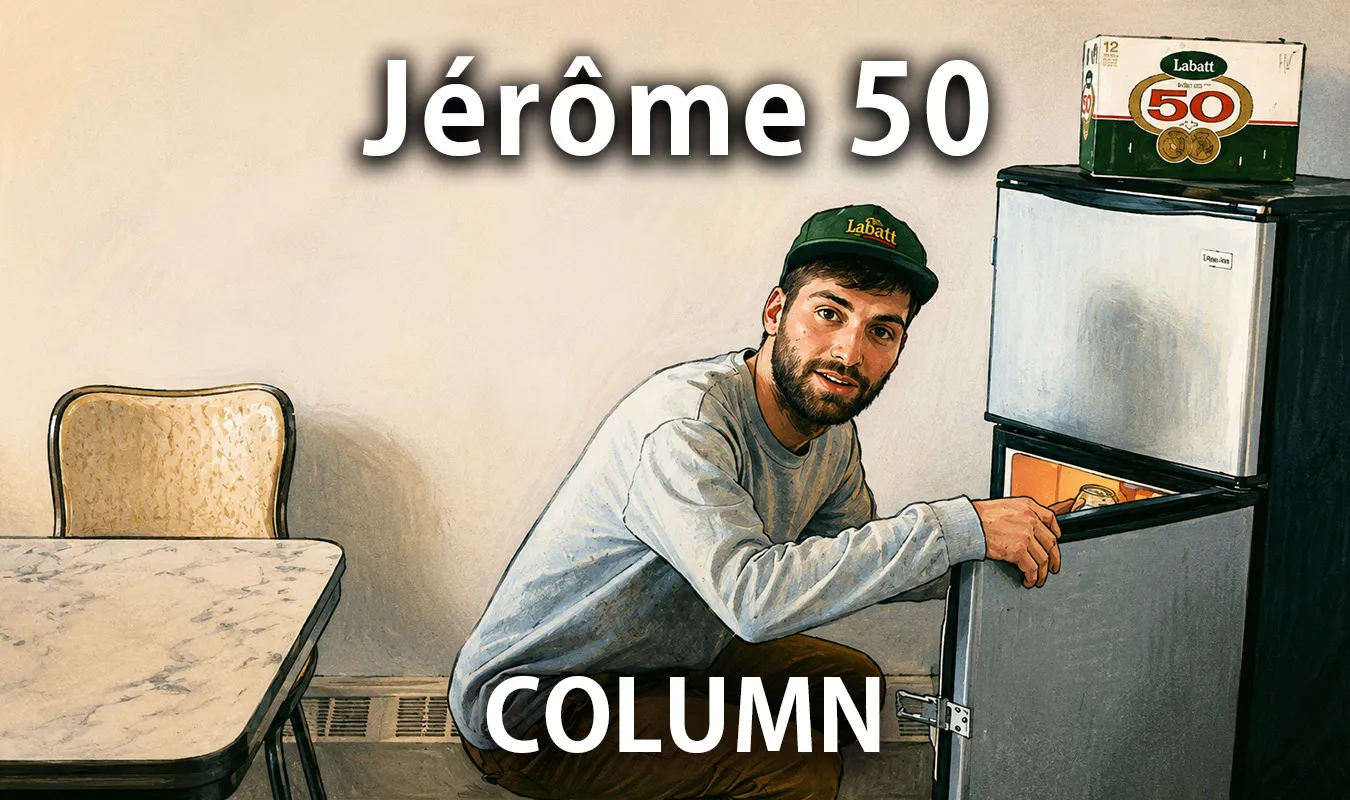
彼の芸名「Jérôme 50」は、ケベックで長年親しまれてきたビール「Labatt 50」に由来するとされる。
この時点ですでに、彼の美学は明確だった。
高尚さより親しみ。 洗練より会話性。 知識人よりも、そこらの居酒屋にいる人々。
その感覚は、後の作品群を通じてさらに鮮明になっていく。
Jérôme 50 was a rare Quebecois musician who tried to connect intellectual culture and popular culture without separating them.
「La hiérarchill」― “何もしない革命”
2018年、Jérôme 50はアルバム『La hiérarchill』を発表する。
この作品によって彼は、一気にケベックのインディー・シーンで注目される存在となった。
「hiérarchill」という造語は、「hierarchy(階層)」と「chill(だらける)」を掛け合わせた言葉であり、彼自身が提唱した独特な概念だった。
それは単なる怠惰礼賛ではない。
むしろ、新自由主義的な成果主義に対する若者世代の消極的抵抗として語られている。
Work. 成功しろ。 生産的であれ。
In response to such pressure, it feels like the very attitude of ““doing nothing’’ is being weaponized.
彼はこれを半分冗談のように語りながら、同時に本気で提示していた。
アルバムの音楽性はフォークを基盤にしながら、オルタナティヴ・カントリー、ローファイ・ポップ、シャンソン的語り口が混在していた。
とりわけ重要なのは、「社会批評」が説教臭くないことだった。
He avoids the high-level view typical of intellectuals and always looks at society through laughter.
This feeling remains consistent even in his later works.
The album was also nominated for ““Alternative Album of the Year” by ADISQ, and Jérôme 50 himself selected it as ““Révélation de l’année”.
His penetrating power was unusual for a young, independent artist.
「La hiérarchill」は、ケベック若者文化の倦怠感をユーモアへ変換した重要作だった。
言語学とスラングへの執着
Jérôme 50を語るうえで外せないのが、「言葉」への異常なまでの執着である。
He studied linguistics at Laval University and had a particular interest in the languages of young people and the changes in Québec French.
This perspective is not just an intellectual hobby.
彼の歌詞世界そのものを形成している。
Quebec French is very different from Standard French in France. It is rich in colloquial expressions mixed with English and unique slang, and is closely tied to class and regional characteristics.
Jérôme 50 did not treat it as a “broken French” to be ashamed of.
むしろ文化そのものとして肯定した。
彼は後に『Dictionnaire du chilleur』という若者言語辞典にも関与している。
This was a highly symbolic event.
Usually, a dictionary is a device that fixes the ““correct words”. However, he instead focused on recording ““fluid and miscellaneous colloquial language.”
This attitude is also directly connected to the issue of identity in Quebec culture.
In Quebec society, which maintains a French culture within English-speaking North America, “language” is not just a means of communication, but also politics itself.
Jérôme 50 expressed the problem not as extreme nationalism, but as an affirmation of a “living language.”
彼の歌詞に漂う親密さは、ここから来ている。
For Jérôme 50, language lived on the street corner, not in the dictionary.
「Tokébakicitte」という社会現象
彼のキャリアを決定づけたのは、2021年発表の「Tokébakicitte」だった。
This song was a big hit on Quebec radio and was selected as one of SOCAN’s most popular songs.
But the important thing is that it wasn’t just a hit song.
「Tokébakicitte」は、COVID-19パンデミック期のケベック社会を背景に広がっていった。
タイトル自体がケベック訛りを強調した口語表現であり、地方感覚や庶民性を強烈に帯びている。
歌詞は、環境意識の高い都市部リベラル層も、差別的警察文化も、同時に茶化す構造になっていた。
In other words, he did not fully support either the left or the right.
その結果、この曲は想定外の広がりを見せる。
It reached not only intellectuals but also truck drivers, rural workers, and conservative listeners.
彼自身も後年、「トラック運転手の集会で流れていたと聞いて驚いた」と語っている。
ここで見えてくるのは、Jérôme 50の「民衆性」である。
彼はインディー・カルチャー出身でありながら、「知的優越感」に閉じこもることを嫌っていた。
He later criticized the elitism that exists within the Quebec leftist cultural sphere.
人気を持つアーティストを「大衆的すぎる」と見下す態度への違和感だった。
This awareness of issues is similar in some ways to Les Cowboys Fringants and the Québec Redneck Bluegrass Project.
In other words, he was seriously aiming for ““music that connects with the people.’’
"”Tokébakicitte’’ was the turning point that lifted Jérôme 50 from the underground scene to the whole of Quebec.
「Antigéographiquement」― 地域分断への眼差し
2023年発表の『Antigéographiquement』は、彼の思想がさらに広がった作品だった。
タイトルからして独特である。
It is a coined word that has the nuance of ““contrary to geography,’’ and is strongly conscious of the disconnect between urban and rural areas, differences in cultural areas, and issues of regional identity.
このアルバムでは、
- 缶集めをする人々
- Hipsters who moved to rural areas
- ポルノ消費
- 死
- 地方文化
- ケベック人の自己像
など、多様なテーマが扱われた。
Jérôme 50 does not depict local communities as simple nostalgia.
彼は地方文化の粗野さも、都市知識人の傲慢さも、両方を観察対象としていた。
音楽面でもジャンル横断性が強まった。
ディスコ。 スカ。 アコースティック。 ポップ。 fork.
一曲ごとに世界観を変える構成は、彼自身が「それぞれの曲に独自宇宙を持たせたい」と語る通りだった。
そしてこのアルバムで、彼は「自由な精神」を強く押し出す。
イデオロギー的純粋性ではなく、矛盾を抱えたまま存在する人間への関心。
それこそが彼の作風の核になっている。
"”Antigéographiquement’’ was an album depicting the divided Quebec society as an observer.
パンク、スカ、そして「Anarcolique」
2025年、Jérôme 50は3作目『Anarcolique』を発表する。
ここで彼は大きく方向転換した。
それまでのフォーク中心路線から、スカ・パンク、ポップパンク、酒場系フォーク、トラッシュ感覚を大胆に導入したのである。
He himself cites the following as his influences:
- NOFX
- Les Cowboys Fringants
- Québec Redneck Bluegrass Project
など。
つまり「民衆性」と「パンク精神」の融合だった。
More importantly, in this work he began to openly talk about his alcohol and drug problems.
“Y”a pu d”poude dans poude” 『Chéri arrête de boeeere』 “Le king de la consommation”
など、タイトルからして露骨である。
だがそこには悲壮感だけではなく、自虐と笑いも混ざっている。
彼は2025年時点で禁酒生活について語り、「24時間ずつ積み重ねるしかない」と述べている。
This realism gave his music a new depth.
単なる陽気なシンガーではなく、「消耗する身体」を抱えた人間として、自分自身を歌うようになったのである。
『Anarcolique』は、祝祭と自己破壊が同居するJérôme 50最大の転機だった。
ケベック文化の継承者として
Jérôme 50はしばしば、
- Georges Brassens
- Richard Desjardins
- Jean Leloup
- Dédé Fortin
などの系譜と比較される。
This is not just a matter of musicality.
「言葉の芸術」としてのシャンソン文化を継承している点が重要なのである。
彼は幼少期からカントリー音楽やLes Cowboys Fringantsを聴いて育ち、さらにポップパンクやエモにも影響を受けている。
つまり、
ケベック伝統歌謡
↓
フォーク
↓
punk
↓
Internet generation sense
という流れが彼の中で自然に混ざっている。
Moreover, he does not treat local culture as ““old-fashioned.’’
むしろ現代ケベック文化の重要な一部として再配置している。
これは非常に大きい。
In a Quebec music scene that tends to be Montreal-centric, he dealt squarely with provincial and worker culture.
それでいて排外主義には向かわない。
そこに彼の独特なバランス感覚がある。
Jérôme 50は、現代ケベック文化を地方から再定義しようとしている。
年表
| 年 | 出来事 |
|---|---|
| 幼少期 | 作詞を始める |
| 10代後半 | ケベック旧市街でストリート演奏 |
| 2013 | 初期EPを自主制作 |
| 2014 | Francouvertes参加 |
| 2018 | 『La hiérarchill』発表 |
| 2019 | 『Le camp de vacances de Jérôme 49』発表 |
| 2019 | ADISQでRévélation de l’annéeノミネート |
| 2021 | 「Tokébakicitte」発表 |
| 2023 | 『Antigéographiquement』発表 |
| 2024 | 『Dictionnaire du chilleur』関連活動 |
| 2025 | 『Anarcolique』発表 |
ディスコグラフィ
スタジオ・アルバム
| 年 | タイトル |
|---|---|
| 2018 | La hiérarchill |
| 2023 | Antigéographiquement |
| 2025 | Anarcolique |
EP / 特殊作品
| 年 | タイトル |
|---|---|
| 2019 | Le camp de vacances de Jérôme 49 (version campeurs) |
| 2019 | Le camp de vacances de Jérôme 49 (version moniteurs) |
なぜJérôme 50は特異なのか
彼は単なるインディー歌手ではない。
単なるフォーク歌手でもない。
単なる左派アーティストでもない。
彼は、
- 言語学研究者
- ストリート演奏家
- パンク好き
- ケベック文化愛好家
- 民衆文化観察者
I have all of these things at the same time.
しかも、そのどれか一つに回収されない。
だからこそ彼の音楽は、「知識人向けの風刺」にも、「単純な大衆音楽」にもならない。
常に矛盾を抱えたまま進んでいく。
そこにJérôme 50という存在の魅力がある。
ケベック音楽史の中で彼は、おそらく「地方性」「民衆性」「若者言語」を21世紀的に更新した人物として記憶されていくはずだ。
Jérôme 50は、ケベックの“生活の言葉”を音楽へ変換し続ける存在なのである。
YouTube Podcast
※このPodcastは英語ですが、自動字幕・翻訳で視聴できます
Explore more like this