![[Column] Industrial Techno / Hard Experimental Techno](/../assets/images/column-industrial-techno-hard-experimental-techno.webp)
Introduction: Techno as structured violence
Text: mmr|Theme: Industrial techno/hard experimental structure, history, and acoustic technology
Industrial Techno / Hard Experimental Techno is a musical form that extremely foregrounds acoustic materials, sound pressure, distortion, and noise while retaining the repetitive temporal structure of techno. This genre differs from a musical perspective centered on emotional expression and melody, and has been built around the physical properties of sound itself and the control of time through repetition.
This trend is not just “intense club music.” It was created as a result of adapting the ideas of material orientation, impersonality, and structural superiority that have been cultivated over many years in industrial music, EBM, noise, and experimental electronic music to the strictly functional space of the dance floor.
1. Historical Prehistory: The Junction of Industrial Music and Techno
The industrial music that emerged from the late 1970s intentionally destroyed the modern musical premise of musical tones, melodies, and harmony, and treated non-musical materials such as metal sounds, noise, mechanical sounds, and tape loops as structural units. This idea of ”“turning the material itself into music’’ became the foundation of the later sound design of Industrial Techno.
On the other hand, techno, which was established in the 1980s, is characterized by repetition, synchronization, and gridded time, and has developed in the direction of eliminating human fluctuations. Industrial Techno was born by directly combining the time structure of techno with the material orientation of industrial music.
2. Formation of early industrial techno
In the early 1990s, a group of tracks with an emphasis on industrial textures appeared at the intersection of hard techno, EBM techno, and dark techno. These are characterized by an emphasis on hardness of tone, density of distortion, and inorganic repetition rather than high speed or radical development.
The rhythm is linear, and swing and funk are extremely restrained. Sustained pressure and homogeneous propulsion were prioritized over human spirit.
3. Redefinition after 2010s
In the 2010s, Industrial Techno once again gained a strong presence. The sonic sophistication of post-minimal techno and industrial violence were fused and redefined in a more controlled manner.
A characteristic of this era is that distortion and noise are not placed randomly, but are incorporated after strictly controlling band, phase, and dynamics. Destructibility was a design objective and optimized for the club playing environment.
4. Mathematical rhythm analysis
Industrial Techno’s rhythm may appear to be a simple 4/4 repetition on the surface, but underneath there is a precise time design. If the time axis is t and the time of kick appearance is K_i, the fundamental period T_K is expressed as follows.
K_{i+1} - K_i = T_K
At 120 BPM, T_K is approximately 0.5 seconds. Snare and impulse sounds have a phase φ with respect to this period.
S_j = K_i + φ_S
High-frequency noise and hi-hat are based on the period division T_H = T_K / n, and a small intentional deviation ε is added.
H_k = K_i + k · T_H + ε_k
This ε_k is controlled in milliseconds and creates minute tensions within a complete mechanical repetition. As a result, the rhythm density D(t) can be defined as follows.
D(t) = Σδ(t-K_i) + Σδ(t-S_j) + Σδ(t-H_k)
This change in density affects the sense of pressure and immersion within the song.
5. Equipment specialization chapter: TR drum machine
The Roland TR series has played a central role in rhythm design in Industrial Techno.
The TR-909’s kick has a sharp attack and sustained low end, and pairs well with distortion processing. Industrial Techno amplifies the pressure by layering sub-bass and noise layers based on this kick.
The TR-606 features a hard, short snare and hi-hat that serve to define the repetitive structure. Modern models such as the TR-8 have made it easier to construct polyrhythms using non-integer division steps.
6. Equipment Specialization Chapter: Modular Synths and Noise Generation
Modular synths function as devices for generating layers of noise and instability in Industrial Techno.
The oscillator uses a square wave or sawtooth wave, limits the band with a filter, and creates an impulse-like sound with an extremely short envelope. These are synchronized with the drum trigger and incorporated as part of the rhythm.
In a modular environment, noise serves not as a melody or decoration, but as a reinforcement of the rhythmic structure itself.
7. Artist Analysis: Perc
Perc’s track epitomizes the ““controlled violence’’ of industrial techno. The kick has a clear center, and the distortion is concentrated in the midrange. The low range is not destroyed and physical stability is ensured when playing the club.
The development is minimal, and the structure is formed by changing the texture of distortion and adjusting the noise density rather than increasing or decreasing the number of sounds. Rhythmic phasing is minimal and loyalty to the grid is maintained.
8. Artist Analysis: Ancient Methods
The works of Ancient Methods present Industrial Techno as a ritual structure. Repetition is extremely restrained and development is sustained over long periods of time.
The kicks are heavy, evenly spaced, and the noise and reverberations occupy the entire space. Spatial density and reverberant tails play a more important role here than rhythmic changes.
The industrial techno in Ancient Methods is dance music, but it functions as a device that transforms the listening experience itself.
9. Mixing and sound pressure design
Industrial Techno’s mixing prioritizes pressure over clarity. However, indiscriminate saturation of all bands can be avoided.
The low range is limited to kick and bass, the midrange is the main battlefield for distorted materials, and the high range is dominated by noise and reverberation. This band division allows for both extreme sound pressure and structural stability.
10. Floor function and physicality
Industrial Techno has radical acoustics without sacrificing functionality on the club floor. This is because the rhythm structure is conservative.
The body is given over to predictable beats, and the hearing is exposed to unpredictable sounds. This dual structure creates a sense of immersion and sustained tension.
11. Chronology
| Years | Events |
|---|---|
| 1970s | Industrial music establishes material-oriented structure |
| 1980s | Techno establishes a repetitive time structure |
| 1990s | Fusion of hard techno and industrial |
| 2010s | Redefining modern industrial techno |
| 2020s | Integrating precision acoustic design and physicality |
Conclusion
Industrial Techno / Hard Experimental Techno is not chaotic noise, but extremely controlled structure. There, violence, distortion, and even pressure become objects of design.
Practices such as Perc and Ancient Methods push the boundaries of the techno form, transforming music into a device that reorganizes bodies and spaces. This genre will continue to deepen in terms of both structure and sonics.
Explore more like this
Dibu-Z – X...Y...Zet EP
Curan Stoneは、Green Velvet名義で知られるアメリカのHouse DJ/プロデューサー Curtis Alan Jones。Cajmere, Geo Vogt, Half Pint, Gino Vittori名義でも活動している。
Dave Tarrida – Zombie Driver EP
Dave Tarridaはスコットランド出身のプロデューサー。Steve Glencrossと共にSativae Recordingsを運営していた。
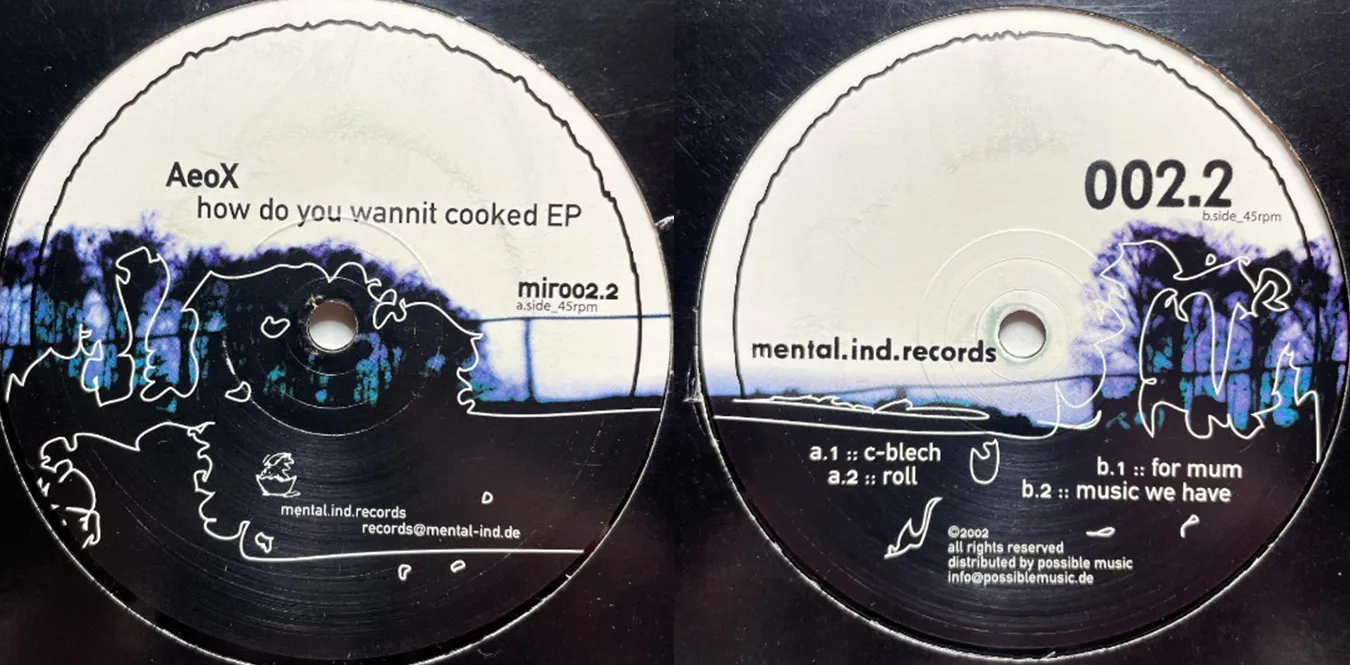
AeoX – How Do You Wannit Cooked EP
AeoXは、1999年から活動するベルリンのテクノパンクバンド。レーベル Null records や Mental Industriesから多数リリースしている。メンバーのHanno Hinkelbeinは、Bill YoungmanとのデュオFurfriendとしても活動している。
![[Column] The world of Modular Techno: Fusion of modular synth and techno](/../assets/images/column-modular-techno.webp)
[Column] The world of Modular Techno: Fusion of modular synth and techno
What is Modular Techno?
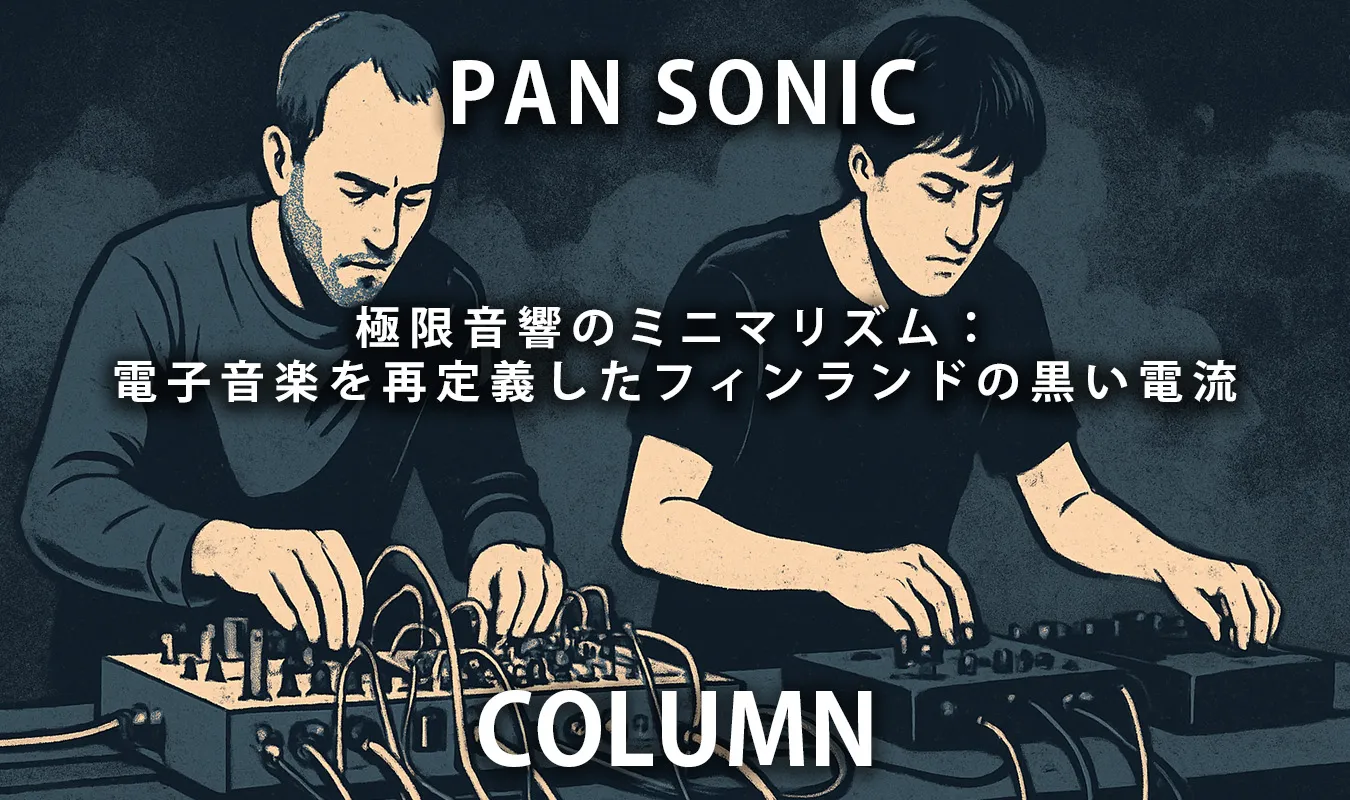
【コラム】 Pan Sonic ― 極限音響のミニマリズム:電子音楽を再定義したフィンランドの黒い電流
序章:北方の沈黙から放たれた「黒い電子」
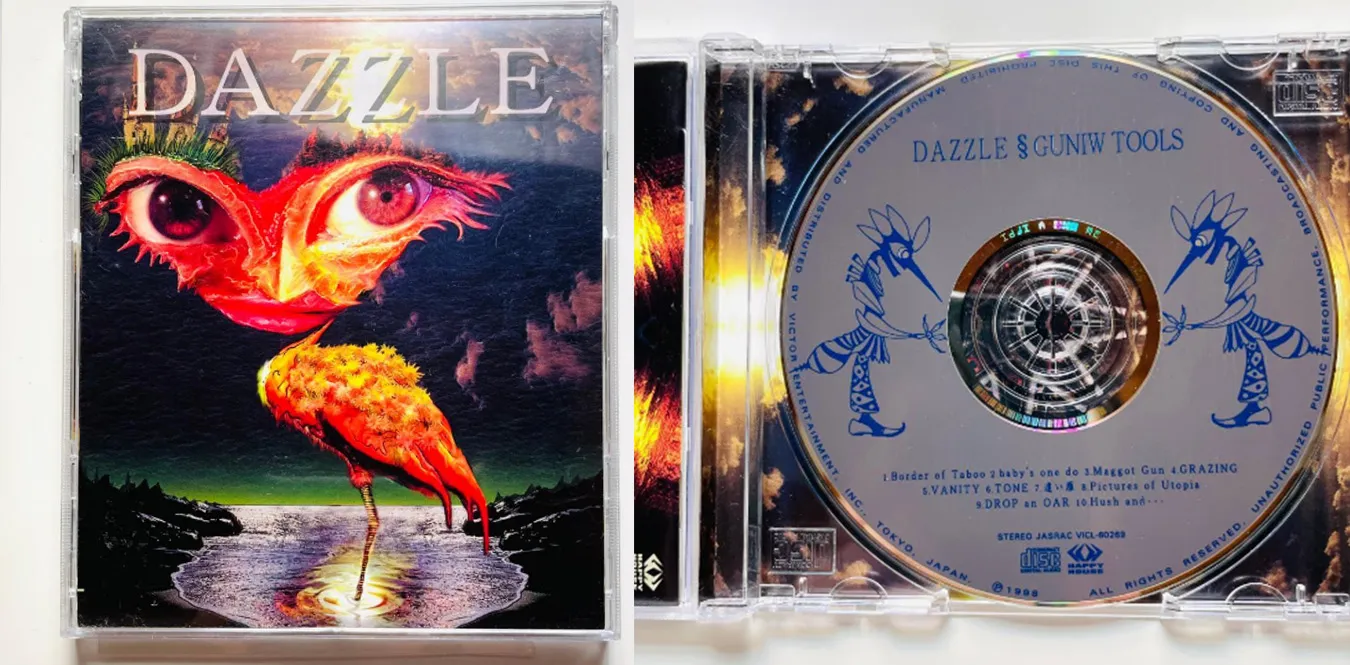
Guniw Tools – Dazzle
Guniw Tools(グニュウ ツール)は、1990年代初頭から活動するバンド。小道具、撮影、編集等などを自ら行い、全てのアルバムを映像化するという視覚と聴覚で世界観を表現するスタイルが特徴。
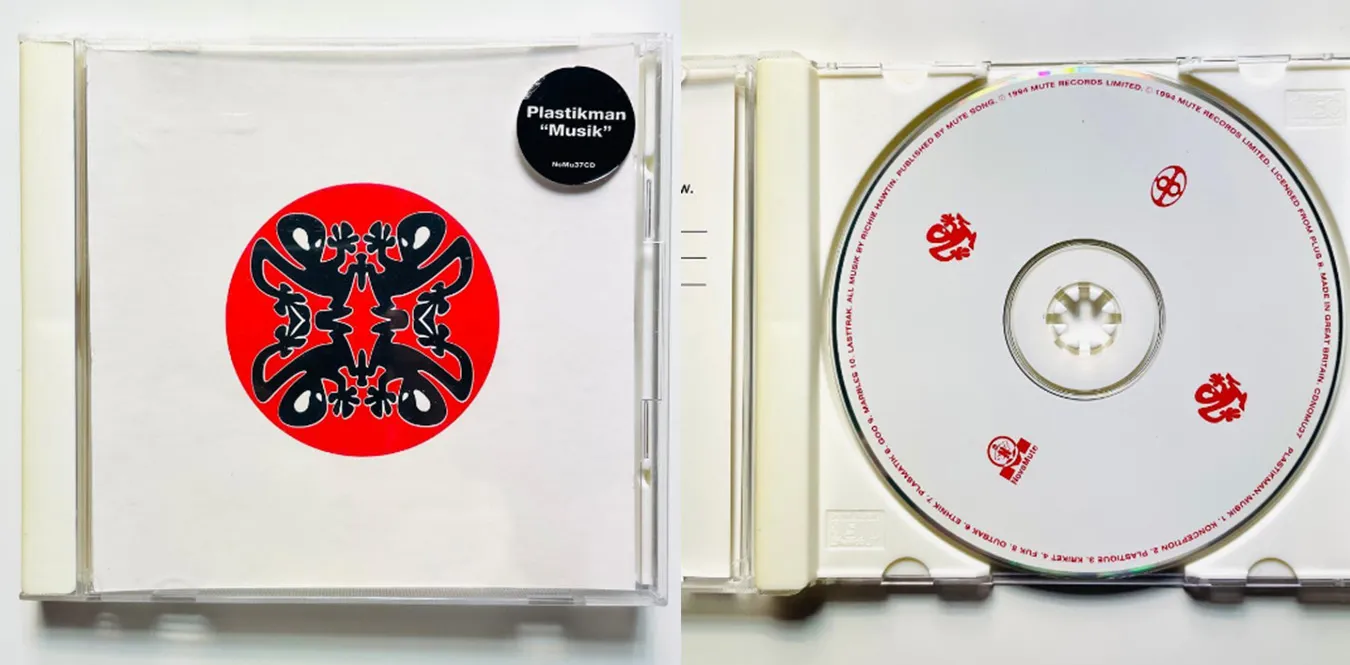
Plastikman – Musik
An album released by Richie Hawtin under the alias Plastikman on the NovaMute label in 1994. This is Richie Hawtin’s third studio album and second under his Plastikman name.
【コラム】 Blawan:鋼鉄の快楽と、夜の奥の肉体 — UKテクノが見た夢の残響
序章 工場の影に育ったリズム——産業の残り香から
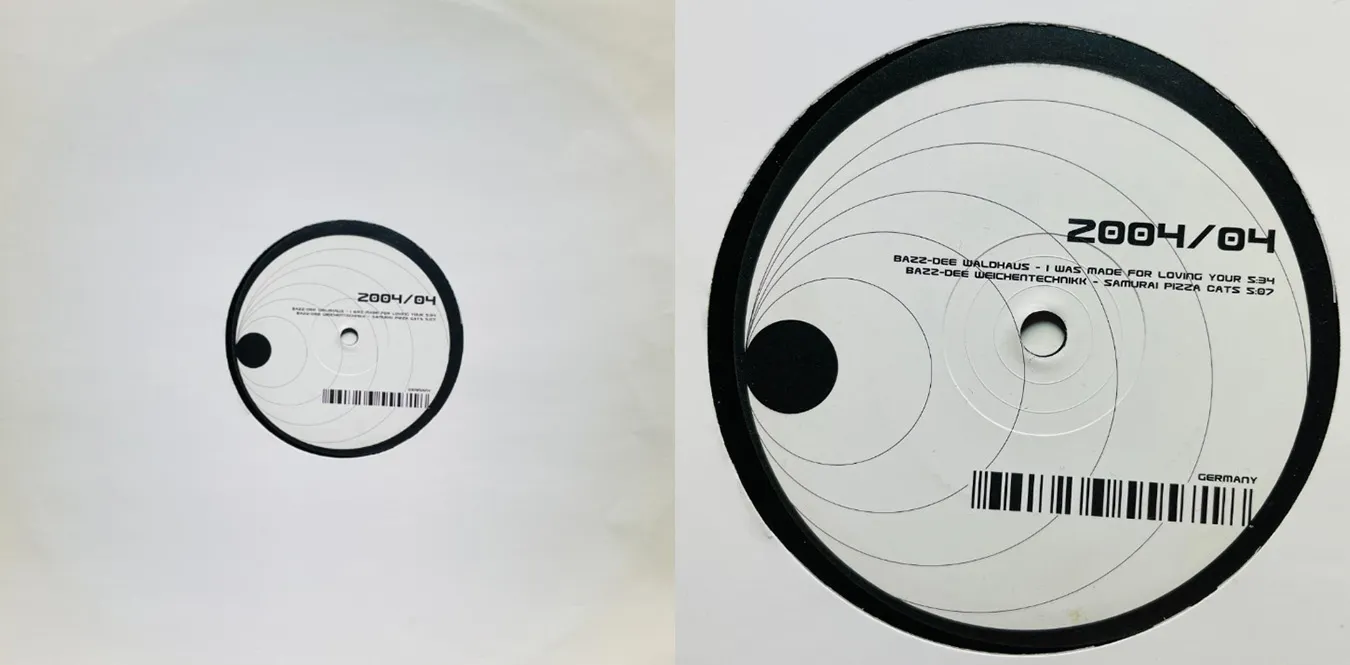
Bazz-Dee & Waldhaus Weichentechnikk – Brachial 200404
A面1曲目は、ハードテクノとインダストリアルハードコアを大胆に組み合わせたスタイルで、ハードテクノサウンドのイノベーターの1 人とされるWaldhaus(ヴァルトハウス)とBazz-Dee(Bastian Schubert)による、KISS の「I Was Made For Loving You」をサンプルリングしたテクノトラック。