[Column] Carlos Gardel -- The birth of the "voice" that brought tango to the world
Column en Argentina Latin Tango
Before Tango: The heat of the immigrant city of Buenos Aires
| Text: mmr | Theme: Why did tango, which was born in the port city of Buenos Aires in the early 20th century, become a world music? At the center of this was the “voice” of Carlos Gardel. |
From the end of the 19th century to the beginning of the 20th century, Argentina was one of the world’s leading immigrant nations. A large number of immigrants poured in from Spain, Italy, France, and Eastern Europe, and the capital, Buenos Aires, rapidly transformed into a gigantic city.
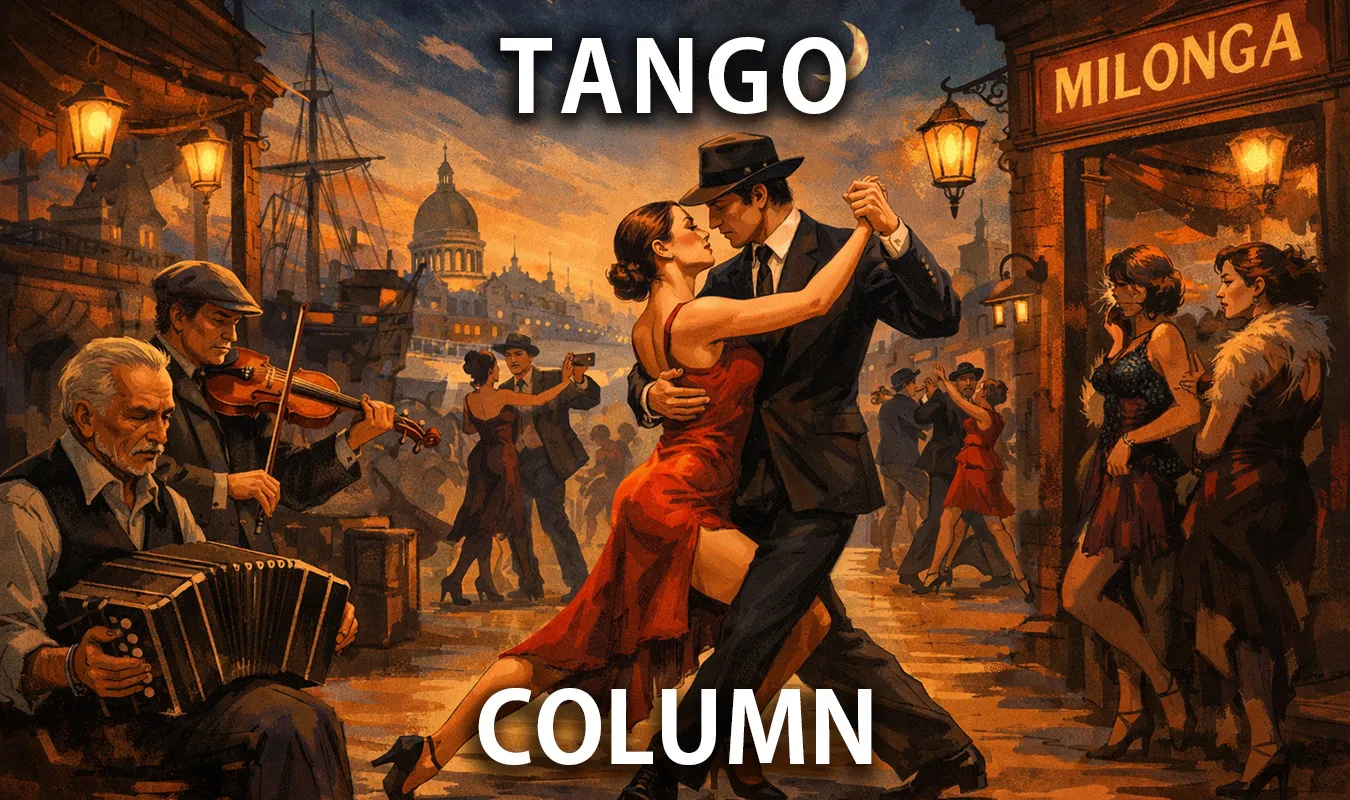
Longshoremen, sailors, taverns, brothels, cafes, dance halls. The mixed emotions of people on the periphery of the city gave birth to new music. That was tango.
Initially, tango was a music that was looked down upon by the upper classes. Crude, dangerous, downtown. However, its melancholy and sensuality strongly stimulated the emotions of people who were burdened by the loneliness of urbanization.
Out of this chaotic urban space, a man later known as the “King of Tango” emerges.
The mystery of Carlos Gardel’s birth
Carlos Gardel’s birth has been debated for many years.
It is generally believed that he was born in Toulouse, France, on December 11, 1890. His birth name was Charles Romual Gardes. However, there is a strong belief that he was born in Uruguay.
His mother, Berta Gardés, moved to Buenos Aires with young Gardel in 1893. He grew up there, speaking Spanish, and spending his youth in Argentine culture.
In other words, Gardel was an Argentine, not so much because of his birth but because of the place where he was formed.
Cities and Songs
The young Gardel is said to have sang in bars, markets, and around theaters. There was always music in the city.
Buenos Aires at the time was a mix of Creole music, milongas, habaneras, and European dances. Tango was also not yet a perfect form.
While absorbing this miscellaneous musical environment, Gardel eventually acquired a unique singing style.
Before Gardel became a ““tango singer,’’ he was someone who breathed the atmosphere of an immigrant city itself.
Duo Era - From folk singer to popular figure
In the late 1900s, Gardel began his career as a singer of regional and Creole music.
His first big break came when he formed a duo with Jose Lasano.
Gardel-Lazano
Around 1911, Carlos Gardel and José Lasano started working as a duo.
They became popular in theaters, cafes, and on local tours. At this time, tango was still mainly instrumental, and ““singing tango’’ was not as common as it is today.
However, Gardel’s deep, smooth voice begins to give the tango a “story.”
The impact of “Mi Noche Triste”
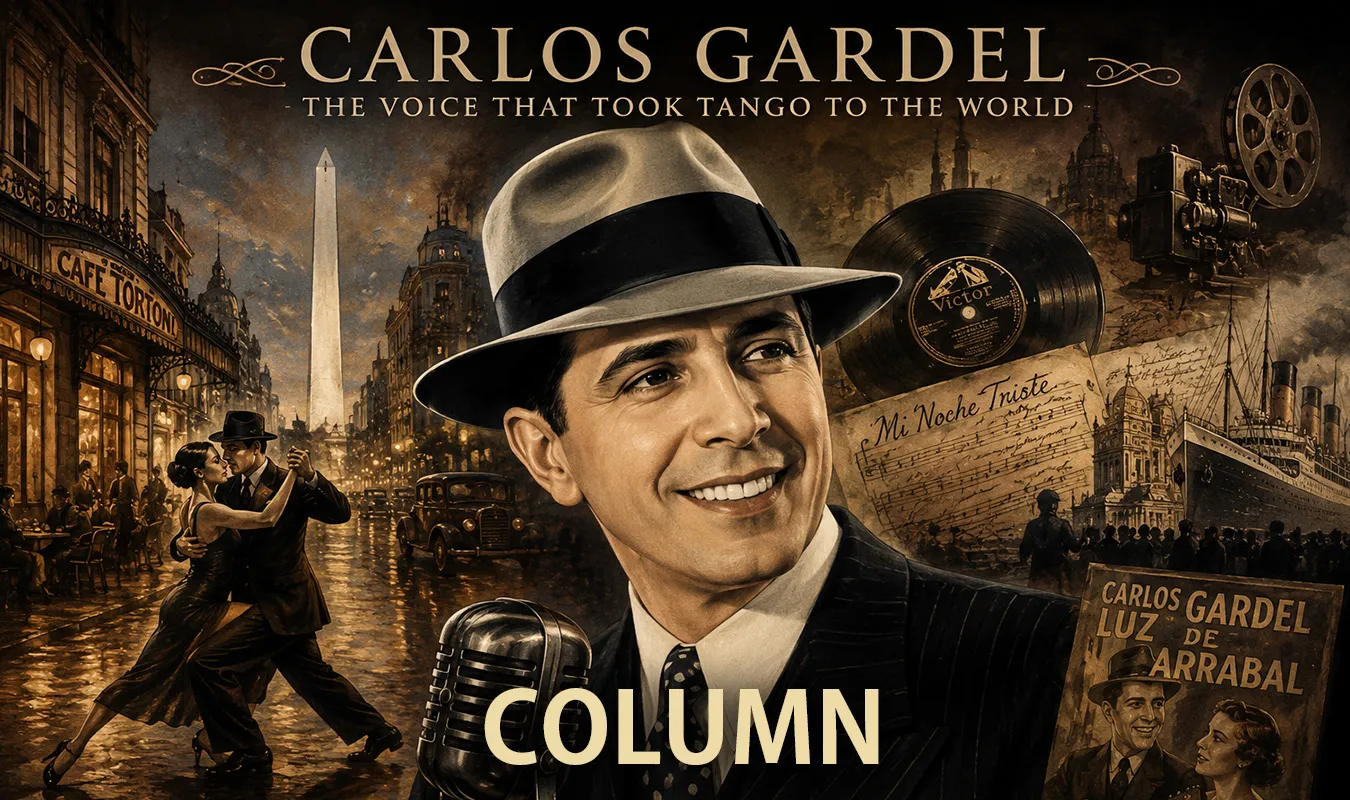
In 1917, Gardel records “Mi Noche Triste”.
This work is considered to be a huge turning point in the history of tango.
Until then, tango had been popular as music for dancing. However, this song’s lyrics depict heartbreak, loneliness, and the sadness of city life.
In other words, tango changed into ““music to listen to.’’
Gardel does not over-explode his emotions. Rather, his restrained singing style highlighted his inner melancholy.
This style became the basis for later tango singing.
Lyrics paint a city
Bars, breakups, unemployment, night walks, betrayal, and nostalgia frequently appear in Gardel’s songs.
This was exactly the feeling of the immigrant city at the time.
Those who came with dreams of success often faced loneliness and poverty. Tango expressed this reality romantically and poetically.
Gardel was not just a singer, but a ““translator of urban emotions.’’
"”Mi Noche Triste” transformed tango from dance music to ““urban lyricism”.
King of Tango: Absolutely popular in the 1920s
In the 1920s, Carlos Gardel became one of Argentina’s biggest stars.
Records, radio, stage, touring. With the expansion of new media, his popularity spread throughout South America.
Record industry and Gardel
The early 20th century was a time of rapid development in recording technology.
Gardel was an artist who took advantage of this change very well.
His recordings are widely distributed, and have spread not only to Buenos Aires but also to Uruguay, Chile, Brazil, Spain, and other countries.
With records, tango was no longer an ““ad hoc’’ music.
Fashion and stardom
Gardel wasn’t just a good singer.
Sophisticated suits, smiles, politeness, and an urban atmosphere. He gained popularity as the very image of a modern man.
Gardel was a major factor in the penetration of tango from downtown culture to the middle class.
He transformed tango from dangerous port music into an elegant art form.
“Volver” and nostalgia
One of Gardel’s signature songs, ““Volver,’’ is known for its theme of returning home and the passage of time.
This song deeply expresses the emotions unique to immigrant communities.
For those who have left their homeland, the concept of ““returning’’ has always been associated with fantasy.
Gardel expressed these emotions in a very natural way.
His voice isn”t too dramatic. That”s why it feels real.
Expansion throughout Latin America
By the late 1920s, Gardel was gaining immense popularity throughout South America.
Theaters around the country are filled to capacity, and newspapers treat him as a star.
Around this time, tango began to be recognized overseas as a ““symbol of Argentine culture.’’
And the person who became that face was Carlos Gardel.
Gardel didn’t just sing tango, he created the image of tango itself.
Transformation into a movie star
In the 1930s, talkie films rapidly became popular around the world.
Gardel also branched out into this new medium.
Contract with Paramount
Gardel signed a contract with the American film company Paramount and began filming in France and the United States.
His films were in the musical format, combining music and story.
Gardel gained overwhelming popularity, especially in Spanish-speaking countries, and became one of Latin America’s earliest international film stars.
Voice acting
The transition from the silent film era to talkies was difficult for many actors.
However, Gardel originally gained popularity for his “voice.”
His singing voice and speaking style were directly connected to his movie star status.
In particular, his soft pronunciation and friendly smile attracted many viewers.
New York and Latin Market
In the United States in the 1930s, the Spanish-speaking film market was growing.
Gardel’s films were an important group of films aimed at that huge market.
He also worked in New York and came to be treated as a symbolic figure in the Latin cultural area.
This was also the moment when tango changed from a ““regional music” to an ““international product.”
Gardel was a rare star who adapted not only to the recording era but also to the film era.
1935–Sudden Death
On June 24, 1935, a plane crash occurred in Medellin, Colombia.
Gardel was on tour.
The planes collided with each other during takeoff and burst into flames. Many passengers, including Gardel, died.
He was 44 years old.
Impact
This news sent shockwaves throughout Latin America.
Newspapers ran daily special features, and memorial gatherings were held in various locations.
Gardel died at the height of his popularity, so his image was forever fixed as a “young star.”
“Sing a little better every day”
Argentina has a famous saying.
“Gardel sings a little better every day.”
This is an expression that means that his presence continues to increase even after his death.
Gardel became more than just a singer, he became a cultural myth.
Eternalization through death
In 20th century popular culture, there are many examples of ““early death’’ leading to deification.
Gardel was a typical example.
If he had lived a long life, I don’t know if he would have become so mythical.
His life came to a halt in 1935, and he will forever be remembered as a symbol of the golden age of tango.
Gardel”s death changed tango”s biggest star from “history” to “myth”.
After Gardel: Influence on tango culture
Carlos Gardel’s influence goes beyond just being a popular singer.
He determined the direction of tango itself.
Completion of “Singing Tango”
Before Gardel, tango was primarily dance music.
However, his success led to the establishment of a tango culture centered around lyrics.
Later tango singers came more or less under Gardel’s influence.
Internationalization of tango
Paris, New York, Madrid. Tango is expanding into cities around the world.
Gardel was the most important figure in that internationalization.
Without him, it is highly likely that tango would not have become such a worldwide genre.
Succession to modern times
To this day, Gardel’s recordings are still heard all over the world.
He has been referenced by many Latin musicians as well as tango singers.
It is also frequently featured in movies, literature, plays, documentaries, etc.
He remains an “eternal voice” in Argentine culture.
Gardel became more than just a singer, he became a symbol of the culture of tango itself.
Chronology
| Year | Events |
|---|---|
| 1890 | Born in Toulouse, France (common theory) |
| 1893 | Moves to Buenos Aires with mother |
| Around 1911 | Formed a duo with Jose Lasano |
| 1917 | “Mi Noche Triste” recording |
| 1920s | Became one of the biggest stars in South America |
| 1930s | Start of movie appearances |
| 1935 | Died in Medellin plane crash |
Why Carlos Gardel remains special
Gardel’s appeal is not just because he is a ““famous singer from the past.’’
His songs encapsulate 20th century emotions: urbanization, immigration, loneliness, dreams of success, and nostalgia.
And he doesn’t overly dramatize it.
Sing quietly.
That’s why it has remained timeless.
Tango is often called “music of sadness.” However, Gardel’s songs are not just about tragedy; they also have an elegance about how humans can survive in the city.
He was one of the biggest stars born in the immigrant city of Buenos Aires, and one of the earliest global icons in the history of 20th century popular music.
And even now, his voice continues to resonate, not as a memory of the past, but as an ongoing memory.
Carlos Gardel was the moment when tango became a world language.