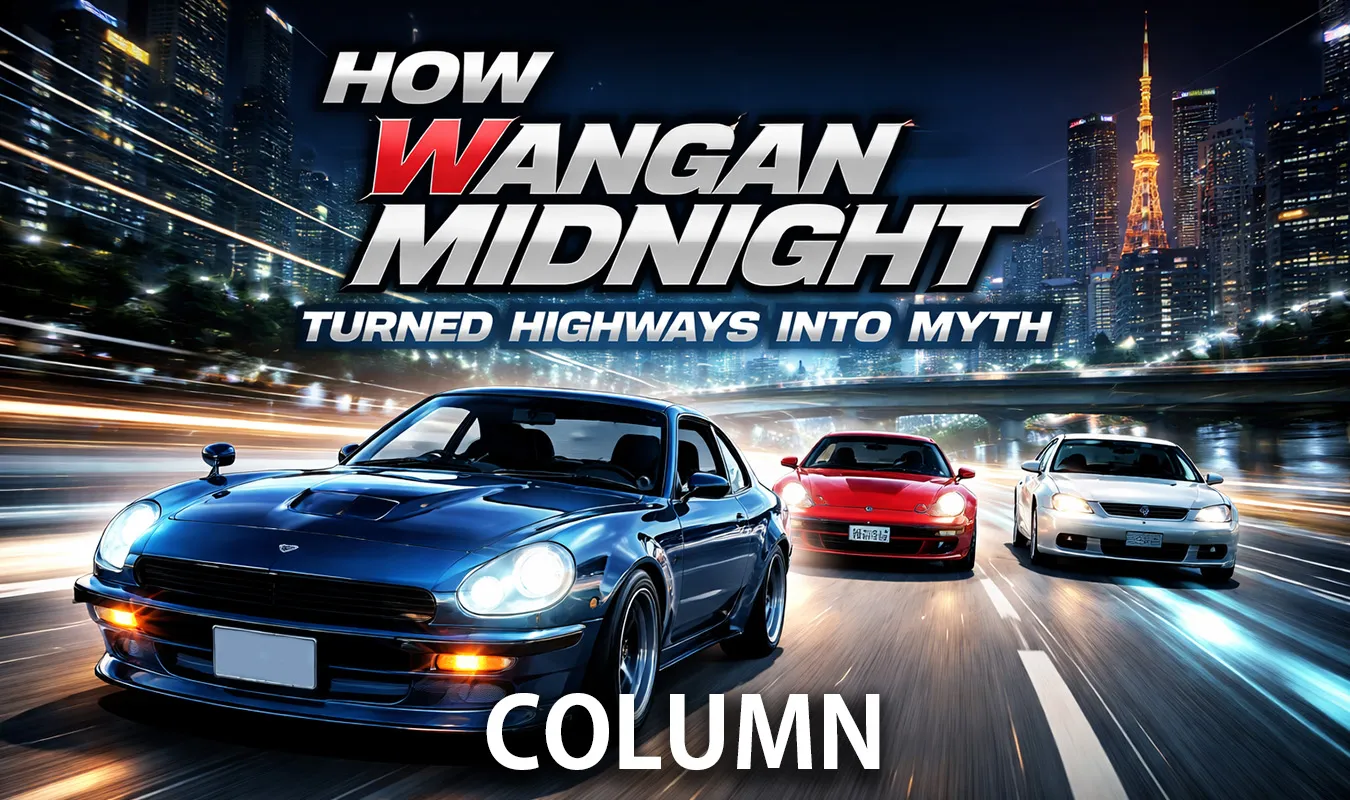
なぜ高速道路は“神話”になるのか?
文:mmr|テーマ:都市高速という無機質な空間が、なぜ神話へと変貌するのかを解き明かす
東京の高速道路は、ただのインフラではない。昼間は物流を支える合理的な機構でありながら、夜になるとまったく別の顔を見せる。光は断片化し、速度は意味を持ち始め、そこにいる人間の内面がむき出しになる。
湾岸線は特に異質だ。直線が長く、視界は開け、都市の光が海に反射する。その空間は「終わりのない滑走路」のようであり、現実の都市でありながら現実離れした感覚を生む。
People find stories there. This is because even though it is a controlled space, there is always the possibility of deviation. Speeding, driving at the limit, machine limits, and human limits. The place where everything is tested at the same time is more than just a road.
湾岸ミッドナイトが描いたのは、この“境界”である。日常と非日常、現実と幻想、理性と衝動。その境界に立ったとき、人は意味を求める。そして意味が繰り返されるとき、それは神話になる。
Expressways turn into myths not because of their speed but because of their meaning.
湾岸ミッドナイトとは何か
『湾岸ミッドナイト』は、1990年に連載が開始された漫画であり、日本のストリートレース文化を描いた作品の中でも特異な位置にある。単なるバトル漫画ではなく、車と人間の関係性を深く掘り下げた作品だ。
The centerpiece is the Nissan Fairlady Z (S30), also known as the “Devil’s Z.” This car, which has had many accidents in the past and chooses its rider, is depicted as having a will even though it is a machine.
主人公・朝倉アキオは、このZに引き寄せられるようにして乗り手となる。だが彼は“選ばれた存在”ではない。むしろ不完全で、未熟で、だからこそ車との関係が成立する。
この作品の特徴は、勝敗の単純な構造に依存していない点にある。レースは結果よりも過程が重要であり、その過程の中で登場人物たちは自分自身と向き合う。
また、登場する車両はすべて実在するモデルであり、チューニングやメカニズムも現実に基づいている。フィクションでありながら、極めてリアルな基盤の上に構築されている。
そのリアリティがあるからこそ、物語は“都市伝説”のような質感を帯びる。実際にありそうで、しかし決して触れられない世界。それが湾岸ミッドナイトの魅力である。
湾岸ミッドナイトは、速度の物語ではなく“関係性”の物語である。
夜・都市・孤独
In this work, “night” is not just a time period. It is a stage set and a state of mind itself.
夜の都市は匿名性を持つ。誰もが誰でもなくなり、日中の社会的役割から解放される。肩書きも、職業も、過去も、すべてが一時的に無効化される。
その中で、唯一残るのが“自分”である。
Driving on a highway is extremely lonely. Even if someone is in the passenger seat, you are essentially alone. All decisions are left to you, and you are responsible for the results.
The characters in Wangan Midnight do not avoid this loneliness. Rather, they try to confirm their own existence within it. Speed is not an escape, but a means of dialogue.
都市の光は美しいが、同時に冷たい。その光の中で走るということは、世界との距離を感じることでもある。だからこそ、その中で得られる一瞬の一体感は強烈だ。
この「孤独と一体感の往復」が、作品全体のトーンを決定づけている。
夜の高速道路は、他者から切り離されることで自分と向き合う場所になる。
The role of music ─ Differences from Eurobeat
同じ走りをテーマにした作品でも、音楽の使い方によって体験は大きく変わる。
『頭文字D』におけるユーロビートは、リズムとテンポによって“速度感”を強調する装置だ。観る者の感覚を加速させ、視覚と聴覚を同期させることで、レースをエンターテインメントとして成立させている。
一方で、湾岸ミッドナイトにおける音は、より抑制的である。エンジン音、風切り音、タイヤの接地感。これらが主役であり、音楽はそれを補完する存在に留まる。
ここで重要なのは、“音楽が前に出ない”という選択だ。
This creates a more introspective experience for the viewer. Instead of being pulled by the music, you will feel the speed with your own senses.
Additionally, the overall tempo of the piece is relaxed. There are few extreme productions or excessive cuts, and the flow of time itself feels like it is ““stretching’’.
この違いは、単なるスタイルの差ではない。作品が目指しているものの違いを明確に示している。
湾岸ミッドナイトは、興奮ではなく“没入”を求めている。
音楽が主張しないことで、速度そのものが内面へと沈み込む。
Speed = Philosophy
この作品におけるスピードは、単なる物理量ではない。それは問いであり、選択であり、時に信仰に近いものでもある。
なぜ速く走るのか。
その問いに対して、明確な答えは提示されない。登場人物たちはそれぞれの理由を持ち、それぞれのやり方で走る。
ある者にとっては過去からの逃避であり、ある者にとっては自己証明であり、またある者にとっては純粋な快楽である。
重要なのは、そのすべてが否定されないという点だ。
速度にはリスクが伴う。事故、故障、死。そのすべてが現実として存在する。それでもなお走るという選択は、合理性だけでは説明できない。
ここでスピードは“哲学”へと変わる。
どこまで踏み込むのか。どこで引くのか。その判断は、その人間の価値観そのものを反映する。
湾岸ミッドナイトは、その選択の連続を描いている。
スピードとは、外に向かう力ではなく内面を測る尺度である。
ストリート文化との接続
湾岸ミッドナイトは、単なるフィクションではなく、実在のストリート文化と密接に結びついている。
1980年代後半から1990年代にかけて、日本の都市部では高速道路を舞台にした非公式なレース文化が存在していた。特に首都高速湾岸線は、その中心的な場所の一つだった。
この文化は、メディアによって大きく取り上げられることは少なかったが、確実に存在し、多くの若者を引きつけていた。
Tuning shops, parts manufacturers, and drivers. They each had their own roles and formed an ecosystem.
湾岸ミッドナイトは、この現実をベースにしながら、それを物語として再構築している。
重要なのは、美化しすぎない点である。危険性やリスクも含めて描かれており、単なる憧れで終わらせないバランスが取られている。
その結果として、作品はリアリティと神話性を同時に持つことになった。
The story functions as a myth because of the reality of the street.
Chronology
時代の積み重ねが、作品を単なる物語から文化へと押し上げた。
アニメ版サウンドトラック
『Wangan Midnight Original Soundtrack』
A soundtrack containing songs used in the anime version (2007).
特徴はとにかく“抑制”。 シンセ主体でありながら派手さはなく、淡々とした反復と低音のグルーヴで構築されている。
・テンポは速すぎない ・メロディは最小限 ・空間(リバーブ)が広い
これによって、“疾走”ではなく“滑走”の感覚が生まれる。 音楽が感情を煽るのではなく、都市と速度の温度をそのまま提示する設計。
音楽が主役にならないことで、世界観が前に出る。
代表的なトラック
Get Over
アニメのオープニングテーマ。
ロック寄りの構成でありながら、過剰に熱くならないバランスが特徴。 “戦い”というより“運命に引き寄せられる感覚”を表現している。
Lost Highway
A song that embodies the symbolic tone of the work.
・Repetitive beat ・Low-slung synth ・余白の多い構成
この曲は「走っている」というより「漂っている」感覚に近い。 都市の中で自分が溶けていくような、独特の没入感を生む。
Speed of S30
悪魔のZ(S30)を象徴するトラック。
Characterized by mechanical rhythms and unstable sound images, it expresses “danger” through sound. 安定したグルーヴではなく、どこか崩れそうなバランス。
This is consistent with the essence of the existence of Z.
ゲーム版サウンド(湾岸ミッドナイト Maximum Tune)
アーケードゲームシリーズでは、音楽はやや方向性が変わる。
『Maximum Tune Original Soundtrack』
コンポーザーは古代祐三。 Here, there is a shift to more “music for running.”
Features:
・4つ打ち中心 ・明確なビルドアップ ・An uplifting chord progression
ただし、それでもユーロビートほど派手ではない。 あくまで“都市高速の速度”に最適化されている。
代表曲
Maximum Tune
シリーズの核となるテーマ。
シンプルな構造ながら、速度と集中力を引き出す設計。 プレイヤーの操作と完全に同期するタイプの楽曲。
Black Phoenix
よりダークで攻撃的なトラック。
夜の湾岸線というより、“内面の加速”を描く音。 精神的なテンションを一段引き上げる役割を持つ。
ユーロビートとの決定的な違い
比較対象として避けられないのが『頭文字D』のユーロビート。
違いは明確:
| Element | Wangan Midnight | Initial D |
|---|---|---|
| 役割 | 空間を作る | 感情を煽る |
| テンポ | 中速〜高速 | 高速固定 |
| 主体 | エンジン音+環境音 | 音楽 |
| 体験 | 内省 | 高揚 |
ユーロビートは“速度を感じさせる音楽”。 湾岸の音は“速度の中にいる状態”。
結論:高速道路はなぜ神話になるのか
What Wangan Midnight showed was not the place itself, but the way the people gathered there.
高速道路は変わらない。アスファルト、ガードレール、照明。それらはただの構造物に過ぎない。
しかし、そこに意味を与えるのは人間だ。
夜という時間、孤独という状態、速度という行為。それらが重なったとき、空間は別のものへと変わる。
それは宗教的な意味での神話ではない。だが、繰り返され、語り継がれ、共有されることで、確かに“神話的”な性質を帯びる。
湾岸ミッドナイトは、その瞬間を捉えた作品である。
そして今もなお、どこかの夜の高速道路で、同じような物語が生まれている。
神話とは遠い過去の話ではなく、今この瞬間にも生成され続けている。
YouTube Podcast
※このPodcastは英語ですが、自動字幕・翻訳で視聴できます
Explore more like this