![[Column] Space Jazz / Cosmic Jazz's cosmic genealogy and transformation](/../assets/images/column-space-jazz-cosmic-jazz.webp)
Space Jazz / Cosmic Jazz: Birth and evolution of space-oriented music
Text: mmr|Theme: Space Jazz / History of Cosmic Jazz
In the latter half of the 20th century, jazz began to focus not only on the excitement of city nights and clubs, but also on the vast realm of space. At the center of this were artists including Sun Ra and Pharoah Sanders. They not only innovated musical styles, but also treated ““space’’ as a comprehensive art that included visual presentation, thought, and philosophy.
1. Origin: Sun Ra and the formation of Afrofuturism
From the late 1950s to the 1960s, Sun Ra developed a sound and ideology that significantly deviated from traditional jazz forms. He described himself as ““a being from Saturn,’’ and developed a thorough cosmic worldview. The costume has metallic luster robes, helmets, and abstract geometric patterns. On stage, a performance reminiscent of an extradimensional ritual or a futuristic city unfolded, completely integrating music and visual expression.
In terms of performance, the band was full of very cutting-edge experiments at the time, such as collective improvisation through an orchestral formation, use of electric instruments, and early synthesizers. In particular, Sun Ra Arkestra created a sound that was largely free from conventional harmonics and song structure, moving between free jazz-like chaos and cosmic silence.
2. Pharoah Sanders and the expansion of the spiritual world
In the late 1960s and 1970s, Pharoah Sanders expanded his music to include a broader cosmology, building on his spiritual jazz roots. Introducing folk instruments, long drones, repetitive rituals, and expansive soundscapes. Rather than depicting the physical universe, they moved toward depicting the ““cosmos within the mind.’’
One of his masterpieces, ““The Creator Has a Master Plan,’’ is characterized by a repetitive structure that invites you into a trance-like state, and has a cosmic meditative quality. Although Pharoah Sanders” music differs from Sun Ra”s outer-cosmic worldview, it similarly had a grand spiritual scale that directed the “universe.”
3. Cosmic visual expression: costumes, design, stage art
The characteristics of Space Jazz / Cosmic Jazz cannot be expressed only in music. Visual expression has played an important role in the formation of genres.
● Sun Ra’s space suit costume
Metallic robes, headpieces and geometric pattern decoration. Designs that fuse ancient Egyptian and alien civilizations formed the basis of Afrofuturism.
● Symbolism of Album Art
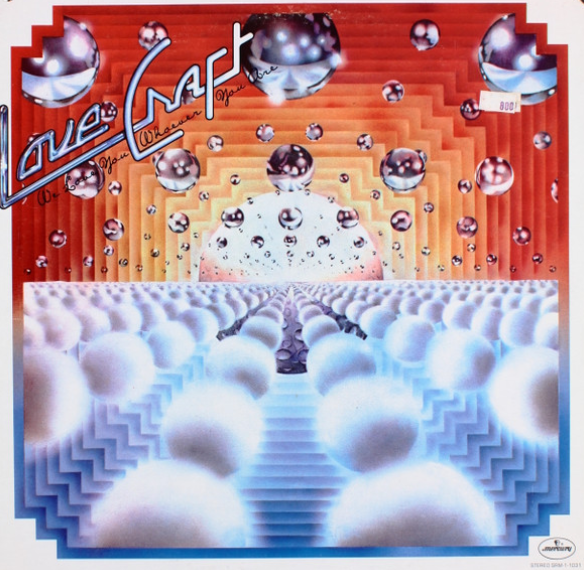
Many pieces of space-themed artwork were created, including spaceships, planets, galaxies, and abstract shapes. Visual concepts are strongly shared not only in Sun Ra’s body of work, but throughout the Cosmic Jazz lineage.
● Ritualistic nature of live performance
A comprehensive musical and visual experience was created, including lighting, costumes, dancers, and an astronaut-style production. Many performances use images and light patterns that symbolize the universe.
4. Technological development: Evolution of electroacoustics and space orientation
Since the 1960s, new electronic musical instruments have appeared, creating an environment in which cosmic sounds can be produced.
- Synthesizer (Moog, ARP, etc.)
- Electric piano (Fender Rhodes)
- Tape Echo
- Analog effects (ring modulator, etc.)
Sun Ra’s early introduction to synthesizers is noteworthy. He explored the physical limits of sound and pioneered new forms of cosmic expression. On the other hand, although electronic equipment was limited in Pharoah Sanders’ work, he created a ““cosmic expanse’’ using reverberation, spatial processing, and the acoustic characteristics of ethnic instruments.
5. Development of Cosmic Jazz: 1970s-1990s
● Alice Coltrane
He is known for constructing a spiritual cosmology using the harp and organ. Works such as ““Journey in Satchidananda’’ are representative works that have both meditative and cosmic qualities.
● Lonnie Liston Smith
A fusion of electric jazz and spirituality. “Expansions” is famous as a song that symbolizes the feeling of floating in space.
● Continuation of Sun Ra Arkestra
Even after Sun Ra’s death, Arkestra continued its activities and inherited its cosmic worldview to this day.
● Re-evaluation of the 1990s
Cosmic Jazz continues to influence contemporary Afrofuturism due to its re-emergence boom and advances in research.
6. Cosmic Rebirth in the 21st Century
● Kamasi Washington
With his magnificent orchestration and cosmic spirituality, he has become an important figure in modern Cosmic Jazz.
● Shabaka Hutchings
A fusion of ethnic and ritual elements and cosmology. We are redefining Spiritual/Cosmic Jazz.
● Connection with Electronic / Ambient scene
In recent years, fusion with electronica and ambient music has progressed, and Cosmic Jazz has expanded into more abstract areas of expression.
Chronology: Main trends of Space Jazz / Cosmic Jazz
summary
Space Jazz / Cosmic Jazz is not simply music with a theme of “space”, but an art movement that comprehensively integrates ideology, vision, culture, and technology. Sun Ra”s radical cosmology, Pharoah Sanders’ spiritual cosmology, Alice Coltrane”s meditative aesthetic, and contemporary artists’ reimaginings. These are intertwined in multiple layers, and it is a genre that continues to evolve.
Explore more like this
![[Column] Dego & Kaidi and Sound Signature](/../assets/images/column-dego-kaidi-so-we-gwarn.webp)
[Column] Dego & Kaidi and Sound Signature
Introduction — Birth and context of Broken Beat
[Column] Dego & Kaidi and Sound Signature
Introduction — Birth and context of Broken Beat