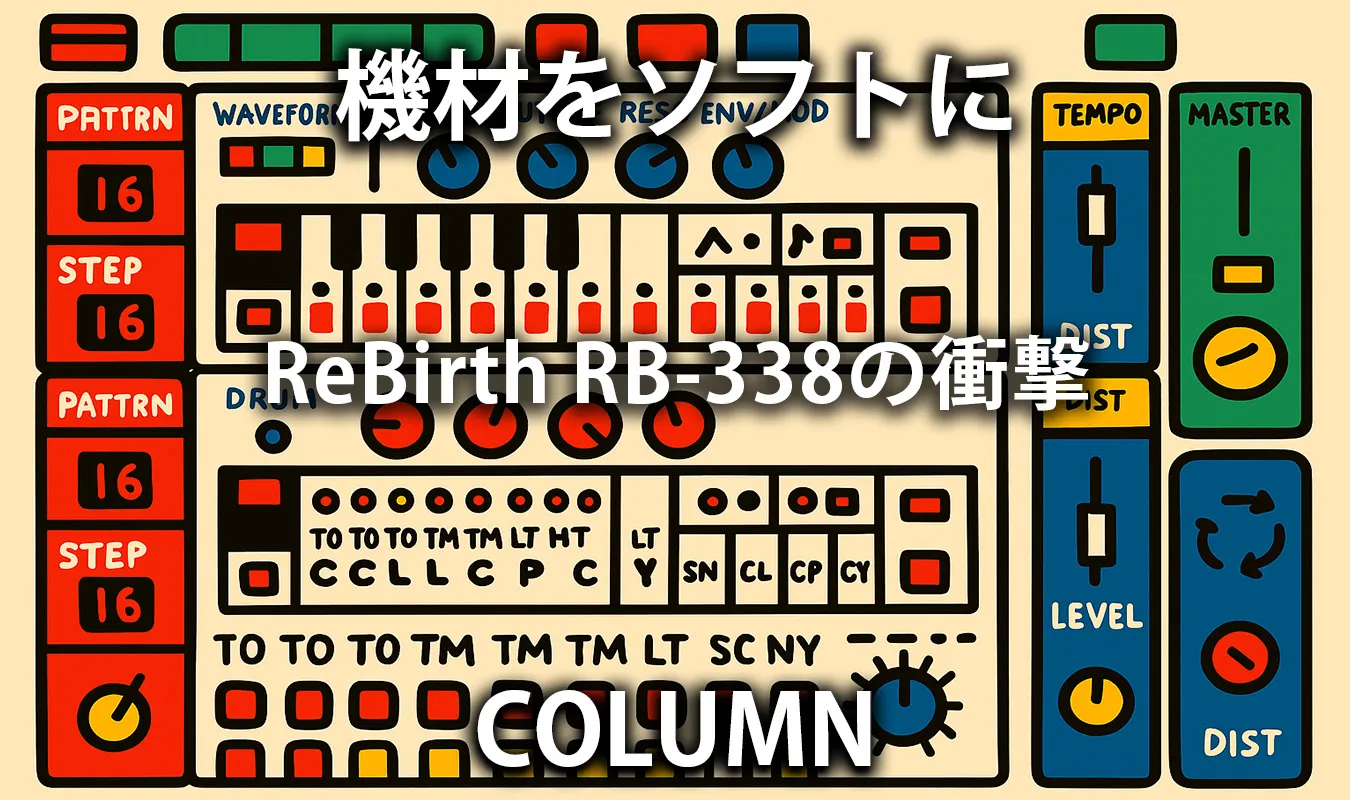
はじめに:なぜReBirthが“衝撃”だったのか
文:mmr|テーマ:ReBirthを「道具(ツール)としての革新」だけでなく、「文化/表現/産業構造の変化」の契機として捉え直し、前史から開発背景、技術的特徴、音楽カルチャーへの波及、産業的意味、転換期と終焉、そして今日的なレガシーまで
1990年代後半、電子音楽制作のフロンティアには、ひとつの鮮やかな変化が訪れていました。ハードウェア・シンセサイザーやドラムマシンを使ったアナログ/機材ベースの制作が当たり前だった中で、ひとつのソフトウェアがその“当たり前”を揺さぶったのです。それが、スウェーデン発のソフトウェア/音楽制作ツール・メーカー Propellerhead Software によるReBirthRB‑338。
このソフトウェアが提示したのは、「あの伝説の機材(Roland TB‑303、Roland TR‑808、Roland TR‑909)を、手元のパソコンで使えるようにする」という可能性でした。
ハードウェアを手に入れるハードル、維持するコスト、持ち運び・操作の難しさ──これらを回避して、「ソフトウェア化による民主化」の風を吹き込んだのがReBirthであり、それゆえに“衝撃”とも呼びうる出来事だったのです。
前史:アナログ機器/ハードウェア・シンセ時代の文脈
電子音楽/クラブ・ミュージックの現場を振り返ると、1980年代から1990年代半ばにかけて、多くの名機が“機材”として重要な位置を占めていました。中でも、RolandTB‑303(ベースライン・シンセ)、TR‑808/TR‑909(ドラムマシン)は、音色・演奏スタイル・カルチャーを変えるきっかけとなりました。
TB‑303と“アシッド”の誕生
TB‑303は1981年頃に発売されたベース・ライン・シンセサイザーでした。元々「ベース演奏を模する機材」として設計されたものの、初期ではその目的を果たせず市場的には失敗機となり、廉価で中古流通するようになっていました。 しかしながら、1980年代後半、クラブ・ハウス/アシッド・ハウスの文脈で、TB‑303の“歪んだフィルター”、“グリグリと変化するベースライン”という音色が再発見され、たとえば Acid Tracks(Phuture)などに代表されるように、アシッド・ハウスを象徴するサウンドとなりました。
とは言え、TB‑303を扱うにはノート数・アクセント・スライドの設定・ステップ・シーケンサー操作という、独特の癖と熟練が要求されました。さらに流通数も少なく、価格も高騰していたため、誰でも簡単に扱える機材ではありませんでした。
TR‑808/TR‑909 and standard rhythm equipment
同時期、TR‑808(1980年代初頭)およびTR‑909(1980年代中期)は、リズム・マシンとして評価を高めていました。特に808の“ボンボン”というキック音、スナップ、ハイハットの鋭さ、909のパンチあるキックとシンバル音は、ハウス/テクノ/ヒップホップにおいて定番の音色となりました。
しかしながら、これらの機材もまた問題を抱えており、保守・修理・音の安定・運搬といった実務面で制約があり、使用にはハードルがありました。
Signs of changes in the production environment
In the 1990s, the performance of personal computers (PC/Mac) gradually improved, and MIDI/sequencer software/samplers began to become popular. As a result, an environment in which ““creating music on a computer’’ was gradually becoming established. However, the culture of “owning the equipment” and “operating the hardware” was still the focus, and a production environment that consisted solely of software was not yet common. In this context, the bottleneck of ““the cost and effort of owning hardware and equipment’’ became a barrier to production for creators who did not own or could not afford the equipment.
開発背景と登場:Propellerhead Softwareの挑戦
1994年にスウェーデンで設立されたPropellerhead Softwareは、当初からコンピューター/ソフトウェアを用いた音楽制作環境に注力していました。彼らは、1996年10月にMacOS向けにReBirthのアルファ版を公開し、1997年に正式版をリリースしました。 ReBirth rebuilt two TB‑303s, one TR‑808 in software, and later added TR‑909 in version 2.0.
The approach that Propellerhead chose was to ““reinterpret the sound, operability, and experience on a computer” rather than ““copying the hardware as is”. In other words, we transform the TB-303 and TR-808/909 “equipment” into “software tools” in response to changes in the times and environment. It can be said that this idea itself shook up the traditional production style that centered around owning equipment.
さらに、ReBirthは単なる音源ソフトではなく、シーケンサー・パターン切り替え機能、MIDI入出力、他ソフトウェアとの同期(後のReWire対応)など、制作ワークフロー全体に効く可能性を持っていました。 このように、ReBirthの登場は「ソフトウェアによる機材再構築」のモデルケースとなり、電子音楽制作の“入り口”を大きく広げる契機となったのです。
技術革新としてのReBirth(機能・操作性・ユーザー体験)
ReBirthが持っていた特徴を少し整理してみましょう。
Main features
- TB‑303 × 2、TR‑808 × 1(初版)、および後にTR‑909 × 1を搭載。
- A “pattern selector” is included with each emulated device. This allows you to quickly switch between different patterns, avoiding the trouble of reprogramming to play a different pattern, which was a hassle with the original hardware.
- Integrated mixer, effects (delay, distortion, compressor) and pattern sequencer functions. Users were able to experience the flow of “construction → performance → output” within one software.
- MIDI/シンク機能、他ソフトとの連携(後年のReWire対応)による拡張性。
- 価格・動作環境が比較的低めだったため、ハード機材を所有できないクリエイターにも手が届きやすかったこと。
ユーザー体験と操作性の“民主化”
これらの機能が意味したのは、“機材を所有していなくても、機材と似たサウンドを手に入れ、プログラミングし、発信できる”ということであり、言い換えれば「音楽制作の入口が広がった」ということです。
当時、多くのクリエイターやプロデューサーにとって、TB‑303やTR‑808/909を入手・維持・操作することは大きなハードルでした。しかし、ReBirthを使えばパソコン環境さえあれば“それっぽい”サウンドを生成でき、また“パターン切り替え”“シーケンサー構成”といった操作性も随分と手軽になりました。
例えば、あるユーザーは次のように語っています(Redditより):
“The 303s are definitely software synths… The 808 and 909 were definitely samples and not synth emulations. I spent a ridiculous amount of time using Rebirth and many, many of its mods.”
このような“モッズ(ユーザー改変)文化”が生まれたのも興味深い点です。ReBirthには「スキン変更」「サウンド変更(ユーザー・モッズ)」という機能もあり、ユーザー自らがインターフェースやサウンドを改変・共有して楽しむカルチャーが育ちました。
技術的限界と巧みな回避
なお、ReBirthも万能ではありませんでした。PCの処理能力、サウンドカードの性能、レイテンシー(遅延)、音のリアリティ(アナログ回路の物理的特性)は、ハード機材に比べれば劣る部分がありました。たとえば、“本物のTB‑303のノイズ/癖/歪み”を完全に再現したわけではないという批判も存在します。 しかし、ReBirthは「十分に使える」クオリティを提供しつつ、「安価・手軽・一体化されたソフト環境」という観点で、その時点で最良のバランスを実現していました。実際、レビューでは “a considerable software success story of 1997” と評価されています。
このように、ReBirthは“技術的革新”としてだけでなく、“ユーザー体験を変えた”ツールだったと言えるでしょう。
音楽カルチャーへの影響:テクノ/アシッド/PC音楽制作の視点から
ReBirthがもたらしたインパクトは、単に“ソフトウェア・シンセサイザーのひとつ”に留まりません。むしろ、電子音楽・クラブ・テクノ・DIY制作という文化領域において、“アクセスと表現の可能性”を再構築した点が重要です。
アシッド・テクノ再び:TB‑303サウンドの普及
The TB-303’s tone was a symbolic element of the acid house/acid techno genre, but by the mid-1990s, the equipment had become rarer and the sound had become more “maniacal.” Then, a software called ReBirth realized a ““TB-303-like bassline + TR-808/909-like drums” on the software, opening the door for ““acid/techno music to be made without the need to own any equipment.”
This challenged the preconceived notion that “hardware ownership = production style” and served as an opportunity to expand the creator base.
Expansion of “Bedroom Production”
ReBirth has become an “entrance” for creators/producers who don’t have the equipment. The concept of “home/individual production” has become more concrete as the environment has become a reality where anyone can start producing with just a computer. This would later lead to the spread of DAWs (digital audio workstations) and production environments based on software plug-ins. さらに、ユーザー改変(モッズ)・パターン交換・コミュニティ共有という活動も盛んで、「ツールを使う」だけでなく「ツール/音色を改変して共有する」という文化も育ちました。こうしたDIY精神は、電子音楽のクリエイティブ・エコシステムを豊かにしました。
Diversification of music genres/sound design
ReBirthにより「アシッドなベース+テクノ的ドラム」という定形サウンドへのアクセスが容易になったことで、アシッド・ハウス・テクノに限らず、エレクトロニック・ミュージック全体において“機材的な壁”が下がりました。結果として、トランス、ドラムンベース、ブレイクビーツといったジャンルでもTB‑303/TR‑808的な音色が拡散し、サウンドデザインの多様化に寄与しました。
このように、ReBirthは“音色・操作性・価格”という3つの鍵を通じて、制作シーンに変化をもたらしたのです。
Changes in industry, software, and ecosystems (ReWire, VST, plug-ins)
ReBirthの登場は、ひとつのソフトウェア・シンセサイザーの成功だけではなく、音楽制作環境そのものの構造変化を促しました。
制作ツールの“モジュール化”と連携
ReBirthは、単体のソフトウェアとして完結するだけでなく、MIDI対応、シーケンサー連携、後年のReWireプロトコルによる他ソフトとの同期といった“連携機能”を持っていました。例えば、ReWireは複数アプリケーション間でオーディオ/MIDIをやり取りできる技術で、ReBirth時代からその種の拡張性を見せていました。 In this way, the direction of ““using a combination of software/modules” rather than ““complete with a single software” naturally emerged during the ReBirth era.
Accelerating the spread of plug-ins/VST/software synths
From the late 1990s to the 2000s, plug-in formats such as VST (Virtual Studio Technology) and AU (AudioUnits) spread. It can be said that ReBirth “practicalized” the software synth genre and laid the foundation for the transition from a production environment centered on hardware equipment to one centered on software. The phrase “the first soft-synth emulation” is also used in the review.
These industrial changes were also a turning point where music production software was positioned as ““equal to, or even better than, equipment.’’ As a result, the software instrument/effects market has expanded and many companies have entered the market.
制作プロセス/ワークフローの再構築
さらに重要なのは、制作ワークフローそのものが変化した点です。かつては「機材を揃えてセッティングして演奏・録音」という流れが中心だったところ、ReBirth以降は「ソフトを起動して→パターンを組んで→MIDIやオーディオを同期して→出力」という“コンピュータ内完結”型の流れが現実化しました。
This change was especially significant in the context of the “home/personal studio.” By creating an environment in which space, equipment, and effort can be saved to some extent, the range of creators has expanded.
転換期と終焉:デスクトップからモバイルへ、ReBirthの開発終了まで
ReBirthは、その登場から数年で広く普及した一方で、時間とともに“転換期”を迎え、最終的には開発終了という道を辿ります。その軌跡を辿ることで、音楽制作環境の移り変わりをより客観的に捉えることができます。
主なマイルストーン
- 1996年10月:MacOS向けアルファ版公開。
- 1997: Official release.
- November 1998: Version 2.0 (TR‑909 added) released.
- 2005年9月1日:デスクトップ版公式サポート終了。
- April 2010: iOS (iPhone/iPad) version released.
- 2017年6月15日:AppStoreからiOS版削除。
デスクトップ→モバイルへの流れと意味
ReBirthのサポート終了後、その思想・機能は他のソフトウェアやモバイルアプリへと継承されました。iOS版リリースはその象徴です。スマートフォン/タブレットというプラットフォームで「機材的な体験をソフト化する」流れが、本格化し始めたのです。
On the other hand, several years after the mobile version was released, it was also removed from the App Store due to IP rights/trademark issues. This incident once again demonstrated that software-based equipment touches the “boundary of intellectual property.”
“終焉”とその読み取り
Although the software called ReBirth did not continue to expand in its current form, its “death” itself has multiple layers of meaning.
- ひとつには、機材→ソフトという潮流が一定の成熟を得て、“次の段階”へ移行したこと。
- また、知的財産・エミュレーション・所有とアクセスの問題が予想以上に顕在化したこと。
- そして、個人制作/ソフトウェア中心の環境が当たり前になる中で、“ハード機材をソフトで再現する”というテーマが再び問い直されるようになったこと。
したがって、ReBirthの“終わり”を単なるサービス終了と捉えるのではなく、制作環境の“変化点”として捉えることが有意義です。
レガシーと問い直し:今日的な意味・復刻・ハード/ソフト再解釈
Although ReBirth is now a tool of the past, its influence and legacy remains strong in today’s music production and technology environment. Here, we will “reexamine” this question from several perspectives.
手軽さとアクセスの再定義
What ReBirth demonstrated was the concept that ““you can express yourself without any equipment” and ““you can create sound with your own computer.” This truly means “democratization of production access,” and it also applies to the current cloud/mobile/plugin environment. For example, apps that make it easy to use synths on smartphones and subscription-based software musical instruments are an extension of this context. ReBirthを振り返ることで、いま一度「誰でも始められる/持たざる者にも表現の道を」という思想を思い起こすことができます。
From “ownership” to “access”, from hardware to software
Before ReBirth, it can be said that the model of production equipment = ownership was strong. Having the equipment was also a status, and it was also the first condition for the production environment. ReBirth has rewritten this into the form of “software purchase” and created a background where “ownership” itself becomes relativized. 今日、サブスクリプション/クラウド共有/レンタル型の音楽ツールが当たり前となっています。ReBirthが開いた扉は、こうした流れの中で“起点”として捉えうるものです。
ハード機材の“味・癖”の再評価
一方で、ソフトウェア化が進む中で失われがちなもの――それが、ハード機材固有の「物理的癖」「ノイズ」「歪み」「操作感」などです。実際、ReBirthのエミュレーションには「本物のTB‑303の歪みやクセを完全には再現できない」という批判もあります。
こうした視点からすると、ReBirthを通じてハード機材とソフト機材の差異・魅力・限界が可視化されたと言えます。そして現在、ハード+ソフトのハイブリッド機材(コントローラー+ソフト音源)や、モジュラー・シンセ復興の潮流も、これらの問いを受け継いでいます。
再解釈/レトロ回帰とモディフィケーション文化
ReBirth had a “mod” culture that allowed users to modify skins and sounds. This fostered a creator-like attitude of not only using production tools, but also modifying, sharing, and rebuilding them. These trends have contributed in no small part to the spread of open source/custom sound source/sample exchange culture today. Furthermore, there are reports of a project to turn ReBirth into a hard controller/module around 2023. This can also be said to be an extension of the ““free possibility of modification’’ brought about by software.
Chronology: Major Milestones
以下に、ReBirthおよびそれを取り巻く技術/文化動向の主要な年表をまとめます。投稿の際には表をMarkdown形式でそのまま挿入可能です。
| 年 | 出来事 |
|---|---|
| 1982頃 | Roland TR‑808 ドラムマシン発売。ハウス/ヒップホップに影響を与える。 |
| 1983頃 | Roland TB‑303 ベースライン・シンセ発売。後にアシッド・ハウスの鍵となる。 |
| 1994 | Propellerhead Software 設立(スウェーデン) |
| 1996‑10 | ReBirth RB‑338 アルファ版(MacOS向け)公開 |
| 1997 | ReBirth 正式リリース |
| 1998‑11 | ReBirthv2.0.1 リリース(TR‑909追加) |
| 2005‑09‑01 | デスクトップ版ReBirth サポート終了、無料ダウンロードへ移行 |
| 2010‑04 | iOS version of ReBirth released (iPhone/iPad) |
| 2017‑06‑15 | AppStoreからReBirth削除(知的財産権問題) |
結びにかえて:ReBirthが示した“可能性”と、これからの音楽/技術の潮流
振り返ると、ReBirthは単なる“ソフトウェア・シンセサイザー”のひとつではなく、音楽制作の在り方そのものを変えた出来事でした。
それは「機材所有・物理的制約・高コスト」といった構図を問い直し、「ソフトウェアでアクセス可能な音作り+手軽な操作性+クリエイターの拠点(PC)」という新しい地平を提示しました。
今日、私たちはクラウド/サブスクリプション・プラグイン/モバイル音源といった環境を、「そういうものだ」として受け入れています。しかし、その“当たり前”が成り立つ背景には、ReBirthのような“先駆け”があったという事実を忘れてはなりません。
同時に、ReBirthから学び直すべきことがあります。それは、手軽さとアクセス性が高まる一方で、機材の“癖”“物理的感覚”“操作性”といったアナログ機材ならではの価値が軽視されがちになった点です。ReBirthは、まさにそのギャップを体現していたツールでもあります。
そしてこれからも、「どこまで手軽に/どこまでクリエイティブに」という問いが続いていくでしょう。ReBirthが提示した“扉”は、まだ閉じていません。むしろ、次の世代、次の制作環境を開いていくための導火線だったと言えるでしょう。
最後に、もしこのコラムをご覧になったあなたが、旧機材のサウンドに憧れつつ、手元のPC/ソフトで音を作ってみたいと感じたなら、それ自体がReBirthの精神を受け継いでいる証拠かもしれません。
今こそ、レトロとモダンの境界が揺らいだ時代を思い返し、「ソフトウェア化された機材」の可能性に改めて向き合ってみるのも良いでしょう。