[Column] Pan Sonic - Extreme acoustic minimalism: Finland's black current that redefined electronic music
Column en Electronic Experimental Industrial Minimal![[Column] Pan Sonic - Extreme acoustic minimalism: Finland's black current that redefined electronic music](/../assets/images/column-pan-sonic.webp)
Prologue: “Black electrons” emitted from the silence of the north
Text: mmr|Theme: Background of Pan Sonic’s formation, acoustic approach, characteristics of their works, impact of live performances, influence on electronic music history
When talking about the history of electronic music since the 1990s, there are few artists who have changed the very materiality of sound as much as Pan Sonic (formerly Panasonic). The Helsinki-based duo of Mika Vainio and Ilpo Väisänen has thoroughly dismantled the boundaries between techno, industrial, noise, and minimalism, creating works of highly pure electronic vibrations that can be described as ““the rawness of electricity’’.
In particular, their activities from the mid-to-late 1990s resonated with Berlin”s minimal techno crowd, the electronic sound scene of Warp Records in the UK, and Japanese noise culture, greatly expanding the horizons of experimental sound. Pan Sonic”s distinctive feature is that he does not rely on general synthesizers or computers, but uses homemade analog equipment, modified electronics, and minimal step sequences to create sound sculptures with thorough structural beauty.
1. Formation and initial activities: The origin of minimalism in cold regions
Geographical conditions of Finland
When Pan Sonic was formed in Finland in the early 90s, the electronic music scene wasn”t that huge, and club culture was limited. However, Helsinki”s underground formed its own cultural sphere, a mix of industrial, noise, and DIY sounds. Mika Vainio was originally active in the industrial/noise genre, and in the early 1990s he turned to electrical sound experiments. Ilpo Vaisanen similarly moved between the realms of DIY electronics and performance art.
Debut under the name Panasonic
Around 1993, the two began collaborating under the name Panasonic, and released their first sound source in 1994. Much of the equipment consisted of modified analog circuits, feedback systems, and oscillators, and the main component was ““physical electronic vibrations’’ that were completely different from existing forms of club music. In the music scene of the time, there were few who presented electroacoustic minimalism in such a pure form.
Name issue with Matsushita Electric
In 1998, the unit name was changed to Pan Sonic because it conflicted with Panasonic’s trademark. Although this name change did not have a major impact on their activities, it was certainly one of the turning points in their work becoming widely known internationally.
2. Acoustic characteristics: Making electronic roughness into music as it is
Pan Sonic’s acoustics consistently have the following characteristics.
2-1. Homemade analog equipment
He rarely uses commercially available synthesizers, instead focusing on the following devices:
- Analog oscillator
- Homemade noise generator
- Modified rhythm box
- Voltage control circuit
- Physical materials such as amplifiers, metal pieces, magnetic coils, etc.
As a result, Pan Sonic’s sound has a rawness that sounds like a recording of the exact moment an electronic component operates. The sound is harsh, the particles are large, and it is overwhelmingly physical.
2-2. Minimal structure
Although the sonic material is extremely simple, the song has a detailed structure.
- repeating pulses
- Finely fluctuating frequency
- Extremely limited number of notes
- Low frequency fluctuations varying by a few Hz
The combination of these creates ““electronic music that is not artificial, but rather feels like a natural phenomenon.’‘**
2-3. Infra-sound and physicality
Many of his works include extremely low sounds, around 20Hz, which often caused the audience”s very bodies to shake during live performances. Pan Sonic”s live performance is more like a physical experience of sound pressure than ““listening to music’’, where feedback control and low frequency generation play an important role.
3. Main works and their characteristics
Below, representative works will be explained based on facts.
3-1. Vakio (1995)
This debut work is a monumental piece of minimal electronic sound. Characterized by extreme repetition, inorganic pulses, and low-frequency drones, this is the prototype for his later work.
3-2. Kulma (1997)
The sound is more aggressive and industrial. Metallic noises, compressed pulses, and mechanical rhythms come to the fore.
3-3. Aaltopiiri (2001)
A work that mixes noise and ambient. The harshness of electronic noise coexists with Scandinavian tranquility, presenting a deeper acoustic world.
3-4. Kesto (234.48:4) (2004)
A 4-disc, 234-minute masterpiece. It can be said to be the culmination of all the acoustic techniques that have been developed up until now.
- Disc 1: Minimal Beat
- Disc 2: Noise/Industrial
- Disc 3: Silence and Drone
- Disc 4: Long Ambient
This is the work that most clearly demonstrates Pan Sonic’s “time” and “structure.”
3-5. Gravitoni (2010)
A late masterpiece with a deeper electronic texture and minimalist structure. This is essentially the last work before going on hiatus, and it has a gravity-like pressure to it.
4. Live impact and performance
Pan Sonic’s live performances have been described as an even more powerful experience than their recorded works.
- Extremely low frequencies make the air tremble
- Minimal yet brutal
- Feeling as if the sound is transforming the “space” itself
- Impromptu feedback operations
There is little visual presentation and minimal lighting. Rather, the audience is confronted with the materiality of sound. During the live performance, he concentrated on his hands as he operated the electronic circuits, and the changes in the sound itself became a performance.
5. International influences: from minimal techno to noise culture
Pan Sonic’s influence goes beyond a specific genre.
5-1. Minimal Techno
Berlin”s minimalists (Basic Channel, Thomas Brinkmann, etc.) resonated with Pan Sonic”s sonic structure. Its purity of repetition marked a new path for club music.
5-2. Experimental/Noise
They have often collaborated with Japanese noise artists (especially Merzbow, etc.), and they have enhanced each other’s experimentalism.
5-3. Contemporary acoustics/sound art
This approach of treating electronic sound as a “phenomenon” was inherited by later electronic sound artists.
5-4. Mika Vainio’s solo activities
Mika Vainio has released numerous works under the solo name Ø (Zero). He shared the same attitude as Pan Sonic in exploring the smallest unit of electronic sound.
6. Suspension and end of activities, what is left behind
Around 2010, Pan Sonic went on hiatus, and Mika Vainio passed away in 2017. This ended Pan Sonic’s activities, but the remaining works continue to influence electronic musicians around the world.
Pan Sonic’s greatest achievement was extracting the charm of electronic sound itself to the utmost and clearly presenting its vibrations as music.
7. Timeline
8. Diagram of acoustic structure
Conclusion: The existence that made electronic music a “substance”
Pan Sonic was a unique figure in electronic music who expanded the world by “striping down the sound.” The sound is cold, hard, and at the same time pulses like a living thing. The minimalism they presented was not just a matter of simplification, but an act of confronting the vibration of electronic circuits, which is the root of sound.
The works and thoughts they left behind will continue to resonate as the backbone of electronic music.
Explore more like this
![[Column] Throbbing Gristle and the birth of industrial—the moment when music collapses and is rebuilt](/../assets/images/column-throbbing-gristle.webp)
[Column] Throbbing Gristle and the birth of industrial—the moment when music collapses and is rebuilt
Introduction: Where does music break down?
![[Column] Experimental Electronic Pop / Art Pop](/../assets/images/column-experimental-electronic-pop-art-pop.webp)
[Column] Experimental Electronic Pop / Art Pop
1. Reorganization of genre concepts
![[Column] Industrial Techno / Hard Experimental Techno](/../assets/images/column-industrial-techno-hard-experimental-techno.webp)
[Column] Industrial Techno / Hard Experimental Techno
Introduction: Techno as structured violence

Guniw Tools – Dazzle
Guniw Tools is a band that has been active since the early 1990s. His distinctive style is to create visuals and images of all his albums, using props, photography, editing,...
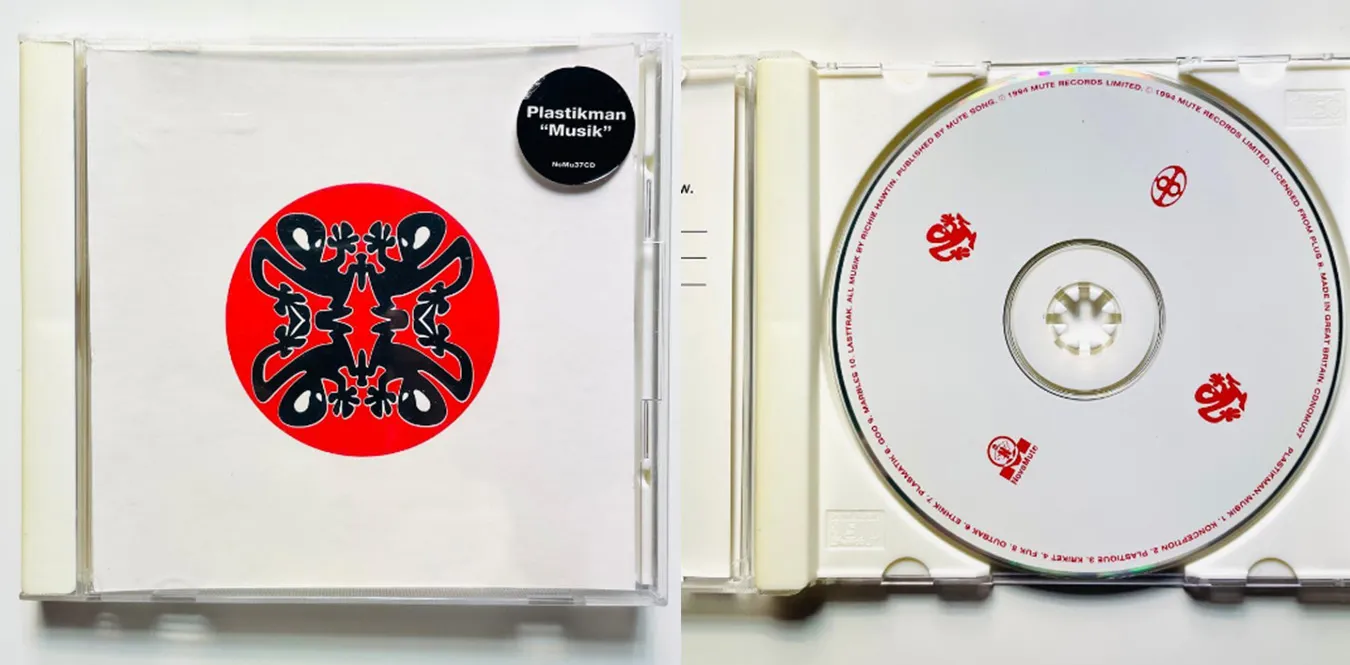
Plastikman – Musik
An album released by Richie Hawtin under the alias Plastikman on the NovaMute label in 1994. This is Richie Hawtin’s third studio album and second under his Plastikman name.
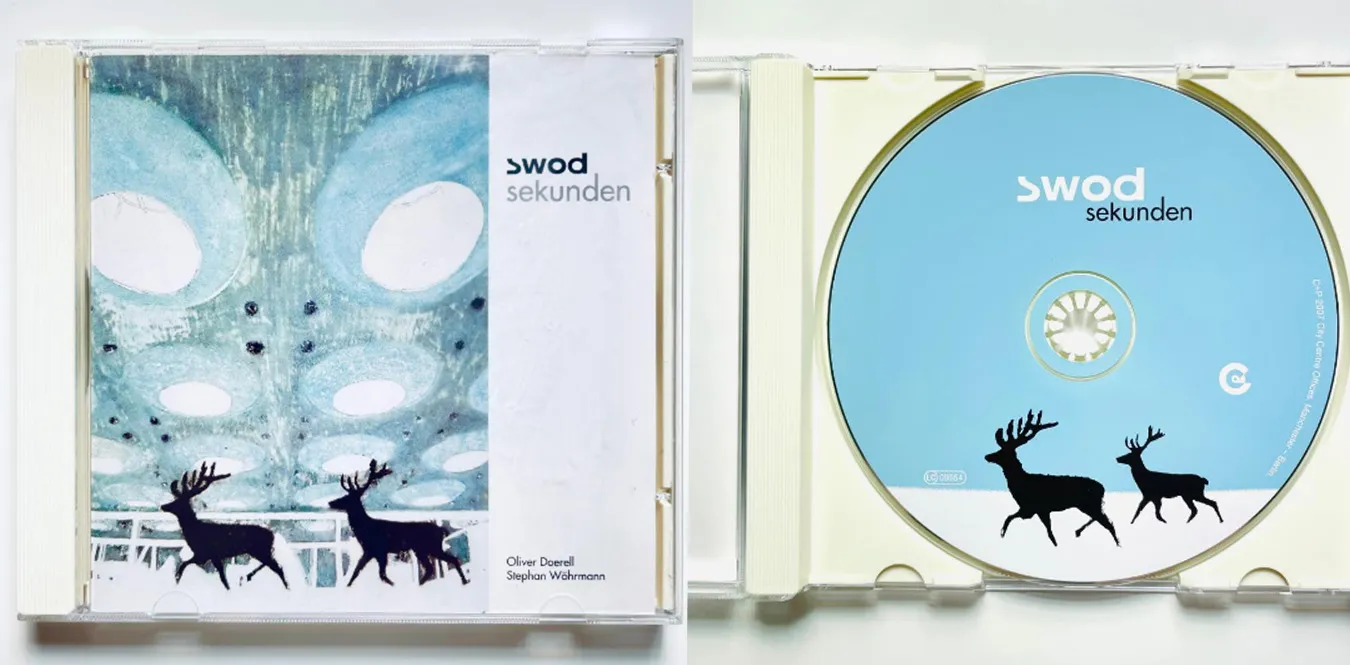
Swod – Sekunden
Swod is a recording project by musicians Oliver Doerell and Stephan Wöhrmann.