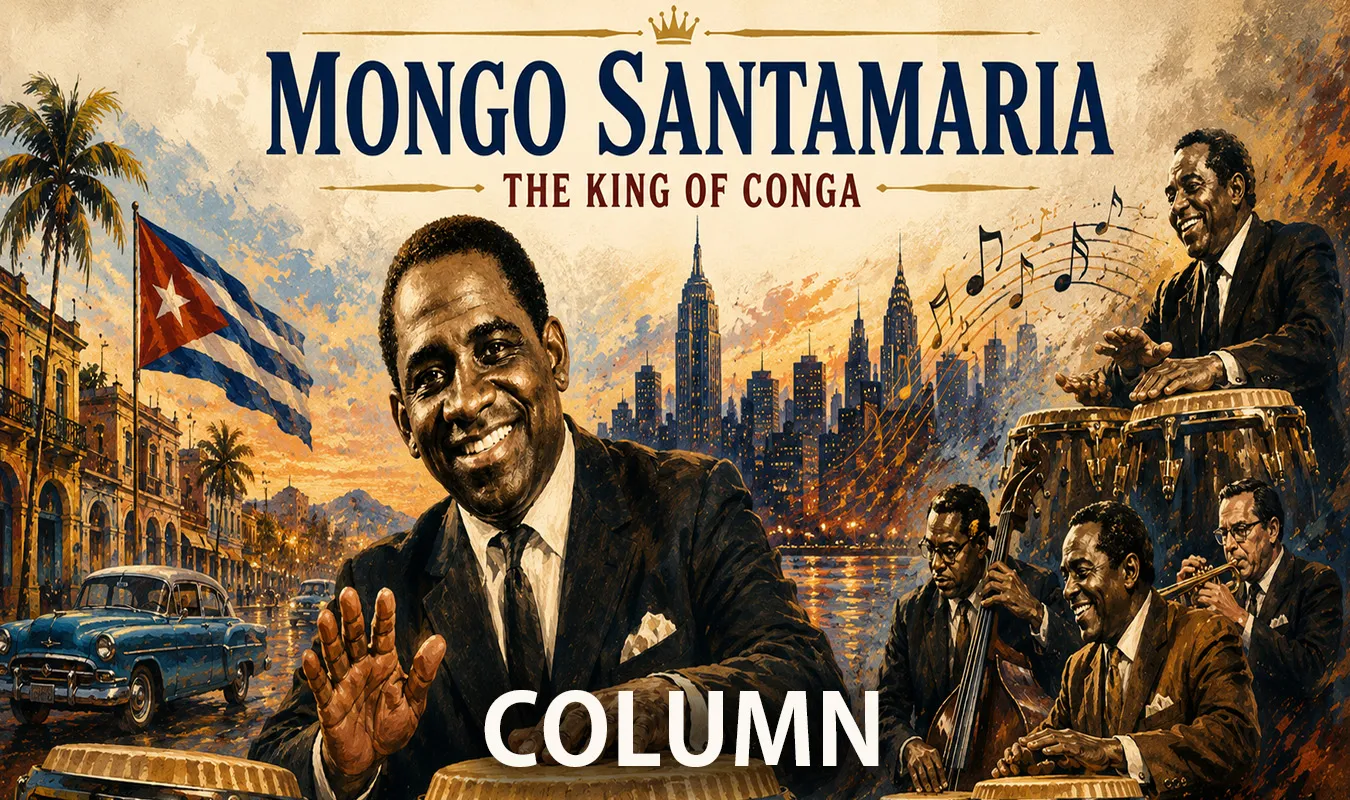
モンゴ・サンタマリア──ラテン音楽を変えた男
Text: mmr|Theme: Following in the footsteps of Mongo Santamaria, who moved to New York with traditional Afro-Cuban rhythms and pioneered everything from Latin jazz to boogaloo and the eve of salsa.
ジャズの歴史を振り返ると、注目されるのは多くの場合メロディを奏でる演奏家たちだ。
トランペット。 サックス。 ピアノ。
しかし20世紀の音楽史には、打楽器だけで世界を変えた人物がいる。
This is Mongo Santamaria.
彼はコンガ奏者だった。
それも単なる名人ではない。
He made a major contribution to the development of Latin jazz and bridged Afro-Cuban music with American popular music.
さらに1963年には「Watermelon Man」を大ヒットさせ、ラテン音楽をアメリカの一般層へ届けることにも成功する。
後のサルサ。 Latin soul. ブーガルー。
その源流を辿ると、必ずモンゴ・サンタマリアの姿が見えてくる。
モンゴ・サンタマリアは単なるコンガ奏者ではなく、20世紀ラテン音楽の流れそのものを動かした存在だった。
ハバナで生まれたリズムの申し子
アフロ・キューバ文化の中で育つ
1917年4月7日。
ラモン・サンタマリア・ロドリゲスはキューバの首都ハバナで生まれた。
He was later nicknamed ““Mongo’’ all over the world.
当時のハバナは文化の交差点だった。
スペイン文化。
African culture.
カリブ海文化。
それらが混ざり合いながら独自の音楽文化を形成していた。
特にアフリカ系住民が多く暮らしていた地区では、ルンバや宗教音楽が日常的に鳴り響いていた。
モンゴもその環境の中で育つ。
学校で音楽を学んだわけではない。
街で学んだ。
祭りで学んだ。
人々の踊りから学んだ。
リズムは知識ではなく生活そのものだった。
コンガとの出会い
少年時代のモンゴは近所の演奏家たちを観察しながら技術を身につけていった。
当時のキューバ音楽では打楽器が非常に重要だった。
特にコンガは音楽の心臓部だった。
単なる拍子ではない。
演奏者同士が会話するための言語だった。
モンゴは若いうちから卓越したリズム感を示した。
その才能はやがて地元の音楽家たちの間で知られるようになる。
キューバ音楽黄金期の始まり
1930年代から1940年代にかけて、キューバ音楽は急速な発展を遂げていた。
ソン。
ルンバ。
ダンソン。
マンボ。
数多くのスタイルが誕生し、海外でも人気を集め始める。
モンゴはそうした時代の中心で活動を始めた。
様々な楽団で経験を積みながら、コンガ奏者としての地位を確立していく。
モンゴの才能は個人の努力だけでなく、音楽が街にあふれていたハバナという環境によって育まれた。
キューバ音楽が世界へ向かう時代
ダンスホールの熱狂
1940年代のキューバではダンス文化が大きく発展していた。
人々は毎晩のようにクラブへ集まった。
そこで演奏されたのがアフロ・キューバ音楽だった。
観客はリズムに合わせて踊り続ける。
演奏家たちはその熱狂をさらに煽る。
モンゴはその現場で実践的な演奏技術を磨いた。
観客を踊らせるとは何か。
どのタイミングでリズムを変えるべきか。
どこで緊張感を生むべきか。
彼は理論ではなく現場から学んでいった。
プロとしての成長
若きモンゴは様々な楽団を渡り歩いた。
当時のキューバでは優秀な打楽器奏者への需要が高かった。
そのため彼は演奏経験を積む機会に恵まれた。
この頃に培われた柔軟性は後年の大きな武器になる。
ジャズとも共演できる。
ダンス音楽にも対応できる。
宗教音楽の要素も理解している。
その幅広さが後の成功につながっていく。
海外進出への期待
第二次世界大戦後、アメリカではラテン音楽への関心が高まっていた。
特にニューヨークではキューバ音楽が急速に人気を獲得していた。
America was a big market for musicians.
モンゴもまた、その波に乗ることになる。
ハバナで培った経験は、後にニューヨークで花開くための土台となった。
ニューヨーク上陸
Turning point in 1950
1950年。
モンゴはニューヨークへ移住する。
これは彼の人生最大の転機だった。
当時のニューヨークはジャズの首都だった。
さらにプエルトリコ系やキューバ系移民が増加し、ラテン文化の中心地にもなっていた。
街中で英語とスペイン語が飛び交う。
ジャズクラブとラテンクラブが隣り合う。
It was truly a place where new music was born.
ラテン音楽ブーム
1940年代後半から1950年代にかけて、アメリカではラテン音楽ブームが起きていた。
マンボ人気が急上昇していたのである。
ダンスホールには毎晩数千人規模の観客が集まった。
Musicians tried new rhythms one after another.
その中心にいた人物の一人がティト・プエンテだった。
モンゴはその楽団へ参加することになる。
ティト・プエンテ楽団
ティト・プエンテ楽団は当時のラテン音楽界における最重要グループの一つだった。
モンゴはそこで強烈な存在感を示す。
彼のコンガ演奏は非常に力強かった。
しかし同時に繊細でもあった。
ただ大きな音を出すだけではない。
楽曲全体の流れを理解しながら演奏する。
That was the difference between him and other players.
ニューヨークへの移住はモンゴを地域的な名演奏家から国際的な音楽家へ変える第一歩となった。
ラテン・ジャズ誕生の現場
アフロ・キューバ音楽とジャズの融合
1950年代のニューヨークでは大きな変化が起きていた。
ジャズとラテン音楽の融合である。
ディジー・ガレスピーとチャノ・ポソによって始まった流れは、さらに広がり続けていた。
モンゴはその最前線で演奏する。
He expanded the possibilities of Afro-Cuban music while collaborating with jazz musicians.
リズムの革新
Traditional jazz centered around a swing feel.
しかしアフロ・キューバ音楽には別の時間感覚が存在した。
複数のリズムが同時進行する。
緊張と解放が繰り返される。
この独特の構造は多くのジャズ演奏家を魅了した。
モンゴはその魅力を最も分かりやすく伝えられる演奏家の一人だった。
ソロイストとしての評価
この頃になるとモンゴは単なる伴奏者ではなくなっていた。
コンガ奏者そのものがスターになり始めていたのである。
観客は彼のソロを待ち望むようになる。
打楽器だけで会場を熱狂させる。
それは当時としては極めて珍しいことだった。
モンゴはラテン・ジャズという新しい言語を生み出す現場の中心に立っていた。
カル・ジェイダーとの運命的な出会い
西海岸への展開
1957年。
モンゴはヴィブラフォン奏者カル・ジェイダーのグループへ参加する。
この出会いは彼の音楽人生をさらに進化させた。
Cal Tjader was a major contributor to the development of Latin jazz.
ジャズとラテン音楽を高いレベルで融合させていた。
新しい音楽的挑戦
カル・ジェイダーとの共演によって、モンゴはより自由な表現を獲得する。
Improvisation.
複雑なアレンジ。
高度なアンサンブル。
それらを経験しながら、自らの作曲能力も高めていった。
「Afro Blue」誕生前夜
1950年代後半。
モンゴは音楽家として大きな成熟期を迎えていた。
Skills as a conga player.
ジャズへの理解。
In-depth knowledge of Afro-Cuban culture.
そのすべてが結びつき始めていた。
やがて彼は自身の代表作を生み出す。
その作品こそ「Afro Blue」である。
Mongo Santamaria went on to make his mark in history not only as a performer but also as a composer.
Afro Blue──A song that changed the history of Latin jazz
作曲家としての飛躍
1959年、モンゴ・サンタマリアは自身の代表作となる「Afro Blue」を発表する。
この作品は単なるヒット曲ではなかった。
後のジャズ史そのものに影響を与える重要作品だった。
当時のラテン音楽はダンス音楽としての側面が強かった。
しかし「Afro Blue」は違った。
It’s not just for dancing.
It was also music to be listened to.
アフリカ由来のリズム構造を前面に押し出しながら、ジャズ的な発展性を持たせていたのである。
Reconnecting with Africa
At the root of Cuban music is the culture of people brought from Africa.
だが20世紀中頃の商業音楽の中では、その起源が十分に意識されることは少なかった。
「Afro Blue」は違った。
タイトルそのものがアフリカへの敬意を示している。
この楽曲はアフリカ、キューバ、アメリカを一本の線で結んだ。
ジャズ界への影響
「Afro Blue」は後に多くのジャズミュージシャンによって演奏される。
The performance by John Coltrane is especially famous.
モーダル・ジャズとの相性も良く、多くの即興演奏家に愛された。
This work established Mongo’s reputation as a composer.
「Afro Blue」はラテン・ジャズの名曲であるだけでなく、アフリカ系音楽の歴史を再認識させた重要作品だった。
Form your own band
バンドリーダーへの転身
1960年代に入ると、モンゴは自らのグループを率いるようになる。
これは重要な転換点だった。
これまでは優れたサイドマンとして知られていた。
しかし今後は自ら方向性を決定する立場になる。
バンドリーダーとなったことで、より自由な実験が可能になった。
ジャズとダンスの両立
当時のラテン音楽家には二つの道があった。
芸術性を追求するか。
ダンス音楽として成功するか。
モンゴはその両方を目指した。
高度な音楽性を持ちながらも、観客を踊らせる力を失わない。
その絶妙なバランス感覚が彼の大きな特徴だった。
ニューヨークの変化
In New York in the early 1960s, a new generation was emerging.
アフリカ系アメリカ人。
Puerto Rican residents.
キューバ移民。
彼らは既存のジャンルに縛られない音楽を求めていた。
Mongo was sensitive to the zeitgeist.
Mongo, who became a band leader, built his own unique music while absorbing the changes of the times.
Watermelon Manの奇跡
ハービー・ハンコック作品との出会い
1963.
モンゴは一曲のカバーを録音する。
それが「Watermelon Man」だった。
原曲は若きハービー・ハンコックが作曲したジャズ作品である。
しかしモンゴ版は大きく異なっていた。
ジャズというよりダンス音楽だった。
強烈なグルーヴ。
分厚いパーカッション。
親しみやすいメロディ。
誰もが楽しめる音楽へと変貌していた。
全米ヒット
結果は驚異的だった。
“Watermelon Man” becomes a huge hit on the US charts.
コンガ奏者がポップチャートを席巻するという前例の少ない出来事だった。
この成功によってモンゴの名は一気に全米へ広がった。
ラテン音楽の大衆化
重要なのは売上だけではない。
This hit helped spread Latin music to the general public.
それまでラテン音楽は専門的なジャンルとして見られることも多かった。
But Mongo broke through that wall.
He transformed Latin jazz into music that everyone could enjoy.
「Watermelon Man」の成功は、ラテン音楽がアメリカの主流文化へ入り込む歴史的瞬間だった。
ラテン・ソウルの誕生
Approaching soul music
1960年代半ば、アメリカ音楽界は大きく変化していた。
ソウルミュージックの時代である。
レイ・チャールズ。
サム・クック。
ジェームス・ブラウン。
彼らの音楽は若者文化を席巻していた。
モンゴもその流れに反応する。
リズムの融合
彼はアフロ・キューバ音楽とソウルを組み合わせた。
結果として生まれたのがラテン・ソウルである。
このスタイルは後のニューヨーク・ラテン文化へ大きな影響を与えた。
Point of contact with the new generation
若い観客はジャズよりもソウルに親近感を持っていた。
モンゴはその感覚を理解していた。
難解な音楽を押し付けるのではない。
楽しめる音楽を作る。
His flexibility allowed him to stay on the front lines for a long time.
モンゴは伝統を守るだけでなく、常に現代の音楽と結び付けることができた。
Boogaloo Revolution
新しいラテン音楽の誕生
1960年代半ばから後半にかけて、ニューヨークでは新しいスタイルが生まれる。
ブーガルーである。
これは英語とスペイン語が混ざり合う若い世代の文化から生まれた。
Unlike traditional Latin music, it had strong influences from soul and R&B.
モンゴの役割
モンゴはブーガルーの発明者ではない。
However, he was one of the people who made a major contribution to development.
彼の音楽は既にラテンとソウルの融合を実現していた。
そのため若い世代から支持を受けやすかった。
文化的意義
ブーガルーは単なる流行ではなかった。
移民二世たちのアイデンティティ表現だった。
英語も話す。
スペイン語も話す。
アメリカ文化も知っている。
ラテン文化も知っている。
This complex position was expressed through music.
ブーガルーの登場によってラテン音楽は新世代の都市文化へと進化した。
1960年代後半の成功
幅広い活動
モンゴはライブ、録音、ツアーを精力的に行った。
ジャズファン。
ラテン音楽ファン。
ソウルファン。
It attracted a diverse audience.
これは当時としては珍しいことだった。
国際的評価
His fame was not limited to America.
Europe.
中南米。
日本。
世界各地でラテン・ジャズへの関心が高まる。
その中心人物としてモンゴの名前が語られるようになる。
Improving the status of conga players
彼の成功は打楽器奏者全体にも影響を与えた。
それまでパーカッショニストは裏方として扱われることも多かった。
しかしモンゴは違った。
コンガ奏者が主役になれることを証明したのである。
Mongo’s success not only boosted the social reputation of Latin music, but also percussionists.
サルサ前夜
新しい時代の到来
1960年代末になると、ニューヨークのラテン音楽は再び変化し始める。
サルサの時代が近づいていた。
Young musicians were trying to form a larger Latin culture.
モンゴの位置
Mongo was older than the salsa generation.
However, the music was definitely passed down to the next generation.
アフロ・キューバ音楽。
jazz.
Soul.
それらを結び付けた経験は大きな財産となった。
次なる章へ
In the 1970s, the Latin music world entered a new phase.
Faniaを中心とするサルサ運動が急拡大するのである。
モンゴはその歴史を見届けながら、自身も進化を続けていく。
In the 1960s, Mongo Santamaria had grown from a master Latin jazz performer to a representative of Latin culture as a whole.
サルサ時代の到来
1970年代のラテン音楽革命
1970年代に入ると、ニューヨークのラテン音楽は大きな転換点を迎える。
サルサの時代である。
プエルトリコ系移民を中心に発展したこの新しいスタイルは、やがて世界的なムーブメントへと成長していく。
ラテン音楽はもはや地域文化ではなかった。
世界市場を持つ巨大な音楽ジャンルへ変貌しつつあった。
先駆者としての存在
サルサという言葉が一般化する以前から、モンゴ・サンタマリアはアフロ・キューバ音楽を広めていた。
若い世代の演奏家たちは彼の演奏を聴いて育った。
そのためサルサの歴史を語る際にも、モンゴの存在は欠かせない。
世代を超える活動
1970年代以降もモンゴは精力的に録音とライブを続けた。
時代ごとの流行に迎合するのではなく、自らのスタイルを維持しながら新しい要素を取り込んでいく。
Its flexibility was also the reason for its longevity.
モンゴはサルサの中心人物ではなかったが、サルサが成立するための土壌を築いた重要人物だった。
A musician who kept changing
一つのジャンルに留まらない
モンゴを特徴づける最大の要素は柔軟性だった。
アフロ・キューバ音楽だけではない。
ジャズ。
ソウル。
R&B。
Funk.
He absorbed various musical elements.
Why did it continue to be supported?
多くの音楽家は時代の変化とともに忘れられる。
しかしモンゴは違った。
The reason is clear.
彼が守っていたのはジャンルではなくリズムだった。
音楽の表面が変化しても、根底にあるグルーヴへの理解は変わらなかった。
伝統と革新
保守的になりすぎない。
かといって流行だけを追わない。
その絶妙な立ち位置が長年にわたる支持につながった。
モンゴ・サンタマリアは伝統音楽家でありながら、同時に革新者でもあった。
モンゴのコンガは何が特別だったのか
打楽器を歌わせる技術
モンゴの演奏を聴くと、多くの人が共通の印象を持つ。
コンガが歌っている。
単なるリズムではない。
旋律的に聞こえるのである。
Dynamics skill
彼は強弱の使い方に優れていた。
大音量で圧倒するだけではない。
静かな音も効果的に使う。
そのため演奏全体に物語性が生まれる。
会話するリズム
アフロ・キューバ音楽では打楽器同士が対話する。
Mongo had a deep understanding of that tradition.
His solo performance is not a monologue.
常に他の演奏家との会話だった。
Physical music
モンゴの演奏を聴くと、まず身体が反応する。
I want to dance before I can reason.
それは彼がダンス文化の中で育ったからである。
Mongo’s congas were not just technical, but had the physical power to move people.
主要作品解説
Afro Blue(1959)
モンゴを代表するオリジナル作品。
アフリカ系リズムを前面に押し出した革新的な楽曲。
後に多くのジャズミュージシャンが演奏するスタンダードとなった。
Watermelon Man (1963)
最大の商業的成功作。
ハービー・ハンコック作品を大胆に再解釈した。
This is a historic recording that brought Latin music to general listeners.
El Pussycat(1964)
1960年代中期を代表する人気作品。
ラテン・ジャズとポップ感覚が見事に融合している。
Sofrito(1976)
A masterpiece from later years.
This work is known for its connections with the salsa era.
Mongo Introduces La Lupe
歌手ラ・ルーペとの共演作。
ラテン音楽史上重要なボーカル作品の一つとして評価されている。
Mongo’s body of work records the development process not only of Latin jazz but of Latin music as a whole.
詳細年表
| 年 | 出来事 |
|---|---|
| 1917 | Born in Havana |
| 1930年代 | 地元楽団で活動開始 |
| 1940s | Increased reputation within Cuba |
| 1950 | ニューヨークへ移住 |
| 1950年代前半 | ティト・プエンテ楽団に参加 |
| 1957 | Started working with Cal Tjader |
| 1959 | 「Afro Blue」発表 |
| 1960 | 自身のグループを本格始動 |
| 1963 | 「Watermelon Man」大ヒット |
| 1964 | 「El Pussycat」発表 |
| 1960年代後半 | ブーガルー時代に活躍 |
| 1970s | Continued activities during the salsa era |
| 1980年代 | 世界各地で公演 |
| 1990年代 | ベテランとして高い評価を受ける |
| 2003 | 死去 |
Mongo’s life overlaps with the history of Cuban music, Latin jazz, and the eve of salsa.
Mongo Santamaria influence relationship
モンゴは単独で歴史を作ったのではなく、複数の文化を結び付ける接点として機能した。
なぜ今も語り継がれるのか
ジャンルを越えた影響力
モンゴはラテン音楽家として知られる。
しかし彼の影響はラテン音楽に留まらない。
jazz.
Funk.
Soul.
ワールドミュージック。
多くの分野に広がっている。
アフロ・キューバ文化の伝達者
He wasn’t just a performer.
He was a carrier of culture.
From Africa to Cuba.
キューバからニューヨークへ。
From New York to the world.
その流れを音楽で体現した。
現代への継承
When you listen to today’s Latin jazz and salsa, you can still hear many of the elements pioneered by Mongo.
コンガの役割。
Use of polyrhythms.
ジャズとの融合。
それらはすでに当たり前になった。
だからこそ彼の功績は見落とされがちである。
しかし歴史を辿ると、その源流には必ずモンゴの姿がある。
モンゴ・サンタマリアは目立たない場所で歴史を動かした、20世紀音楽史の重要人物の一人だった。
総括
Mongo Santamaria was a conga player.
However, his achievements go beyond the world of percussion instruments.
彼はアフロ・キューバ音楽をアメリカへ持ち込み、ジャズと結び付けた。
「Afro Blue」によってラテン・ジャズの可能性を広げた。
"”Watermelon Man’’ brought Latin music to the masses.
さらにラテン・ソウルやブーガルーの発展にも貢献し、サルサ時代への橋渡し役となった。
彼の人生は文化の移動そのものだった。
Memories of Africa.
Cuban tradition.
ニューヨークの多様性。
それらが一人のコンガ奏者の中で融合し、新しい音楽を生み出したのである。
ジャズ史の主役として語られることは少ないかもしれない。
しかし20世紀の音楽地図を書き換えた人物を挙げるなら、モンゴ・サンタマリアは間違いなくその一人に数えられる。
モンゴ・サンタマリアが残した最大の遺産は、リズムが国境や言語を超えて人々を結び付ける力を持つことを証明したことである。