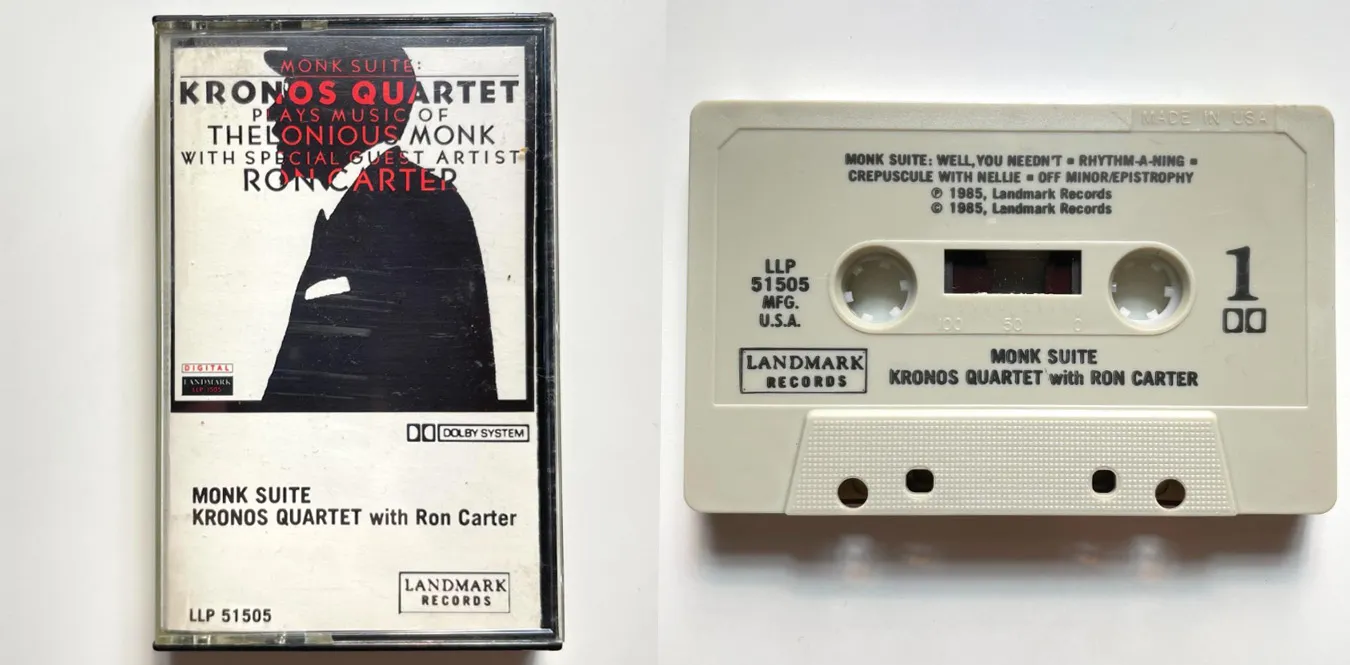
![[Column] Microtonal Jazz / Quarter-Tone Jazz](/../assets/images/column-microtonal-jazz-quarter-tone-jazz.webp)
Introduction: Jazz and the expansion of pitch concepts
Text: mmr|Theme: Analysis of the theory, performance, and education system of microtonal jazz/quartertone jazz centered on Joe Maneri and Jacob Collier
Since its inception, jazz has been a music that relativizes a fixed pitch system. Historically, there have been practices that do not fit within the framework of 12 equal temperament, such as the variability of thirds and sevenths represented by the Blue Note, embouchure operation on wind instruments, and portamento on string instruments. The trend known as microtonal jazz or quarter-tone jazz is characterized by extending these conventions theoretically and structurally, and explicitly placing ““microtonal intervals’’ at the core of the sonic organization.
In this article, we will organize the theoretical background and performance practices of microtonal jazz, which was formed from the late 20th century to the 21st century, and analyze it from the perspectives of composition, improvisation, and ensemble operation, with a particular focus on the efforts of Joe Maneri and Jacob Collier. Furthermore, he explains the deepening of this genre through the educational system for the disciple generation, acoustic analysis, and modern approaches.
Chapter 1: Microtones and the Prehistory of Jazz
1-1 Historical position of microtonal intervals
Microtonal intervals have existed in Western music since before the 20th century. The comma difference in the Pythagorean temperament and just intonation of the Middle Ages and Renaissance period includes an interval difference of less than a semitone. However, with the establishment of 12-equal temperament for the purpose of simplifying music notation and teaching, these ideas receded into a theoretical background.
In the early 20th century, composers began to intentionally use microtonal intervals, and systems using 24 equal temperament (quarter-tone) and higher divisions were developed. This trend is evident in contemporary music, but jazz has incorporated microtonality in a more practical manner through improvisation and physical manipulation.
1-2 Blues and pitch ambiguity
Blues thirds, fifths, and sevenths are theoretically described as minor thirds, diminished fifths, and minor sevenths, but in actual performances, intermediate values are often used. This ambiguity can be seen as a primitive form of microtonal sensation. Jazz players had a culture of treating pitch as a ““region’’ rather than a fixed value, and allowing it to vary from phrase to phrase.
Chapter 2: The Concept of Quarter-Tone Jazz
2-1 Definition of quarter tone system
Quarter tone often refers to 24 equal temperament, which is 12 semitones further divided into two. By dividing one octave into 24 equal parts, new pitches are inserted between semitones. Theoretically, finer pitch divisions are possible, but for practical purposes in performance and education, the quarter tone has become a reference point.
2-2 Reason for adoption in jazz context
The reasons why the quartertone system has attracted attention in jazz can be summarized as follows.
- Blue Note Refinement
- Subdivision of tension in harmonic progression
- Expansion of melodic freedom in improvisational expression
Particularly in improvisational performances, intervals that were treated as “external tones” in the 12-equal temperament system are redefined as internal constituent tones in the quarter-tone system.
Chapter 3: Joe Maneri’s Theory and Practice
3-1 Background and positioning
Joe Maneri is a person who developed his own microtonal theory while active as a saxophonist and clarinetist. Although he was based on 24-equal temperament, he also emphasized the sense of just intonation, and was an educator who closely linked theory and practice.
3-2 Structure of microtonal theory
Maneri’s theory consists of the following elements:
- Understanding all intervals of the 24-tone scale
- A perspective that considers pitch as a distance rather than a function
- Structure that emphasizes melodic movement rather than harmony
3-3 Performance analysis: Microtonal manipulation in wind instruments
Maneri’s playing uses a combination of fingering and embouchure to achieve extremely precise pitch manipulation. The pitches are treated as smooth curves rather than steps, and the entire phrase is constructed as a set of continuous changes.
In improvisation, tension and release are created by increasing and decreasing pitch density while keeping a specific tonal center ambiguous. This method gives listeners a different sense of time than traditional tonal jazz.
3-4 Disciple generation and education system
Maneri conducted educational activities mainly in Boston and trained many disciples. His educational system has the following characteristics.
- Emphasis on auditory training of microtonal sense
- Sequence continuum analysis for improvisational performance
- Understanding relative pitch through resonance experiences among disciples
His students are developing Maneri’s methodology and applying it to larger ensembles and recording projects. As a result, the technical foundations of microtonal jazz continue to be inherited and expanded.
Chapter 4: Jacob Collier and the Modern Microtone Sense
4-1 Polyphonic/polytonal thinking
Jacob Collier, known for his complex harmonic structures and polyphonic approach, deals with microtones as part of his theoretical explorations. In his case, microtonality is introduced as an extension of harmonic necessity rather than an avant-garde experiment.
4-2 Microtonal Harmony
Collier places emphasis on pitch relationships based on just intonation, and reflects minute pitch differences derived from harmonic series in the actual harmonic progression. As a result, the beat and dissonance that occur in 12-equal temperament are reconstructed with a different kind of stability.
4-3 Performance/Arrangement Analysis
In Collier’s approach, individual voices may have different tonal assumptions. As a result, while the whole is microtonal, each part maintains logical consistency. This is more like a highly designed ensemble operation than improvisation.
Chapter 5: Microtone operation in improvisation
5-1 Phrase construction
In microtonal jazz improvisation, the direction of pitch transition is more important than scale selection. The angle of rise and fall, and the expansion and contraction of pitch intervals determine the meaning of the phrase.
5-2 Relationship with rhythm
By subdividing the pitch, the role of rhythm also changes. A method of presenting minute pitch differences using long note values, and a method of increasing pitch density by creating a series of short note values are used in combination.
5-3 Deepening acoustic analysis
For improvisational performances using microtonality, acoustic evaluation using Fourier analysis and spectrograms is possible. in particular:
- Fine peak distribution on the frequency spectrum *Changes in overtone structure and continuity of timbre
- Evaluation of psychological tension according to pitch density
This allows microtonal expression to be quantitatively analyzed as an auditory effect.
Chapter 6: Ensemble and notation problems
6-1 Notation
Extended quarter notes and accidentals are used, but complete notation is difficult, and much depends on the performer’s auditory understanding. This point has an affinity with the oral nature of jazz.
6-2 Adjustment in ensemble
In microtonal ensembles, sharing relative pitches is more important than absolute pitches. A common method is to check the harmonic relationships during the rehearsal stage and adjust the pitch based on resonance.
Chapter 7: Chronology: Development of Microtonal Jazz
Chapter 8: Educational developments and modern impact
Joe Maneri’s disciples provide microtonal education at jazz educational institutions in the United States and abroad, and develop their own research and performance projects. They have influence in the following areas:
- Pitch sense training in advanced improvisational education
- Practical application in small and large ensembles
- Microtonal jazz recording and publishing activities
This educational network, often recognized as the Manneri school, forms the cutting edge of contemporary jazz improvisation and composition education.
Final Chapter: The Significance of Microtonal Jazz
Microtonal jazz is not simply an expansion of pitch, but an attempt to reconceive music as a continuum. Joe Maneri built a theory from the physicality of improvisation and developed an educational system through generations of disciples, and Jacob Collier presented its possibilities in a modern way through the refinement of harmony and structure.
This trend has simultaneously deepened the improvisational spirit and theoretical exploration of jazz, and continues to have an impact on the fields of acoustic analysis, performance techniques, education, and composition. For Monumental Movement Records, I was conscious of the sentence structure and vocabulary that integrates practical musical interpretation and critical perspective, and presents the multi-layered appeal of microtonal jazz to the reader.
Explore more like this
![[Column] Squarepusher: A fusion of breakbeats, jazz, and electronic music](/../assets/images/column-squarepusher-history.webp)
![[Column] Rhythm revolutionaries: The rhythm front lines of drummers who connect Japan and the world](/../assets/images/column-drummers.webp)
[Column] Rhythm revolutionaries: The rhythm front lines of drummers who connect Japan and the world
The heartbeat of the world and Japan: Rhythms that connect the aboveground and underground — between silence and impulse, tradition and experimentation —
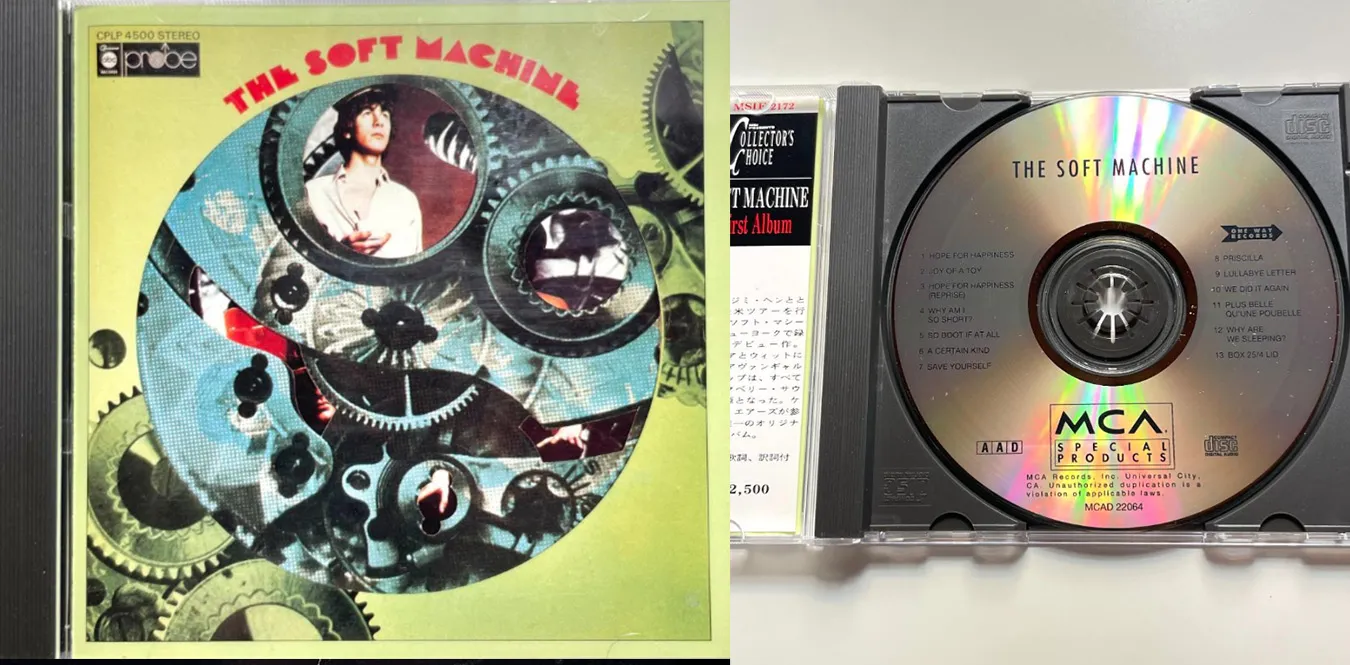
The Soft Machine – The Soft Machine
The Soft Machine is a British progressive jazz-rock band from Canterbury formed in mid-1966 by Mike Rutledge, Robert Wyatt, Kevin Ayers, David Allen, and Larry Nowlin. The band was named...