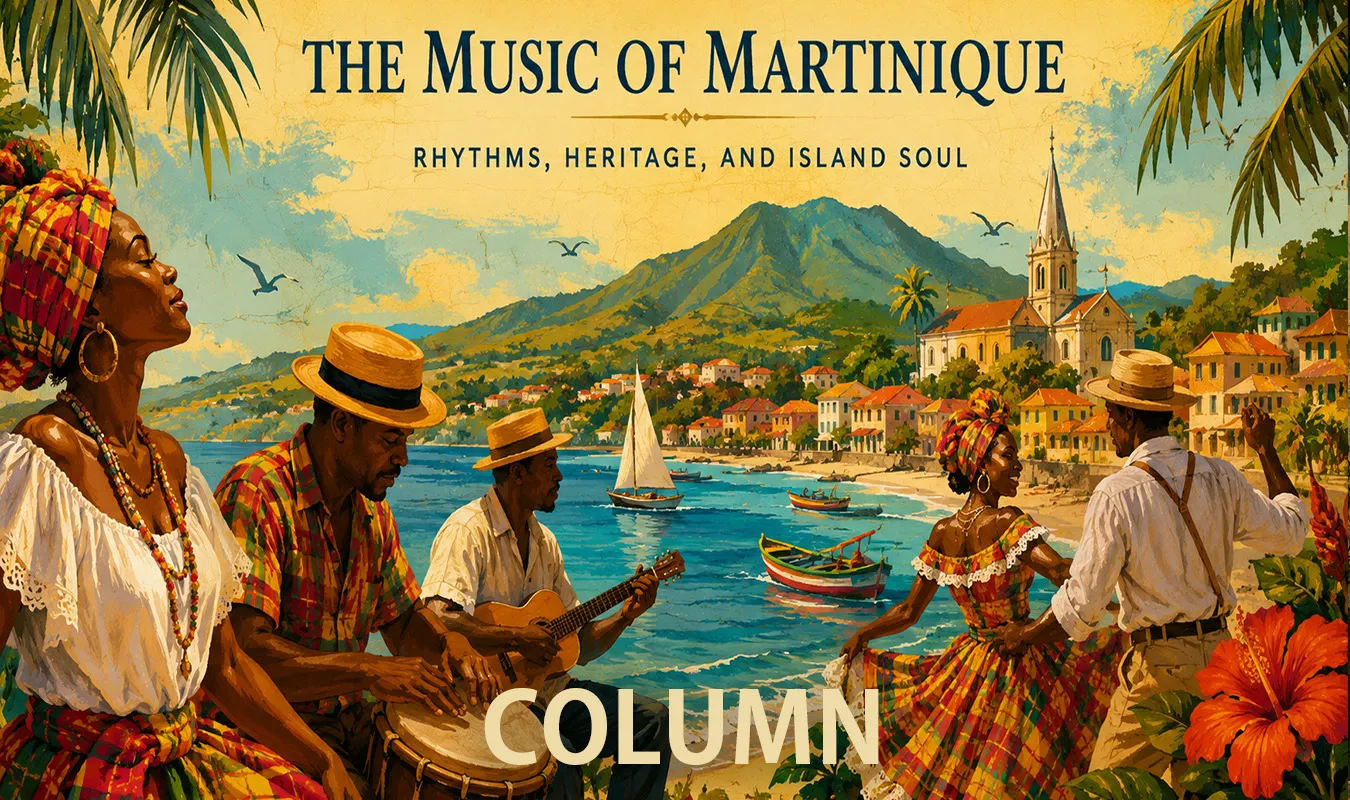
カリブ海に浮かぶ「音楽の交差点」
文:mmr|テーマ:フランス文化とアフリカ由来のリズムが交差する島、マルティニーク。その音楽は、カリブ海の歴史そのものを鳴らしている
島の歴史が音楽を形づくった
マルティニークはカリブ海の小アンティル諸島に位置するフランス海外県である。現在もフランス共和国の一部として扱われており、行政や教育制度、通貨などはフランス本土と共通している。しかし、文化的にはヨーロッパだけでなく、アフリカ、西インド諸島、南米の影響が複雑に混ざり合っている。
17世紀以降、フランスによる植民地化が進む中で、サトウキビ農園ではアフリカから連れてこられた奴隷たちが労働を強いられた。彼らは言語や宗教だけでなく、リズム感覚、歌唱法、踊り、打楽器文化も持ち込んだ。
その後、ヨーロッパ由来の舞曲や軍楽、教会音楽と、アフリカ由来のポリリズムが混ざり合い、独自のクレオール文化が形成されていく。この「混ざり方」こそが、マルティニーク音楽の最大の特徴である。
島の音楽は単純な伝統音楽ではない。植民地支配、奴隷制、移民、都市化、観光、フランス本土との関係、ディアスポラ文化など、複数の歴史層が折り重なっている。
ヨーロッパの和声感覚とアフリカ系のリズムがぶつかることで、マルティニーク独特の揺れが生まれた。そこには「きれいに整理されないグルーヴ」がある。
音楽は常に社会と結びついていた。祝祭、労働、政治運動、宗教儀礼、カーニヴァル、ダンスホール。どの場面でも音楽は中心に存在していたのである。
クレオール文化とは何か
マルティニークを語る上で欠かせないのが「クレオール」という概念である。
Creole is not just a mixed-race culture, but a new cultural system that was created through contact between different cultures. Martinique speaks a Creole language that is based on French but has a unique variation, and Creole sensibilities permeate its cuisine, festivals, literature, and music.
音楽面では、ヨーロッパ的なメロディにアフリカ的リズムを重ねる手法が多く見られる。また、歌詞では社会風刺、恋愛、共同体意識、植民地経験などが描かれてきた。
この文化的混交は、後のズーク誕生にも大きく影響する。
マルティニーク音楽は、単一文化ではなく、歴史そのものが混ざり合うことで形成されたクレオール音楽だった。
Bere and drum culture
農園社会の中で生まれたリズム
マルティニークの伝統音楽を語る上で、まず重要になるのが「ベレ」である。
ベレは歌、太鼓、踊りが一体化した伝統芸能であり、アフリカ由来の文化的要素を強く残している。特に打楽器の役割が大きく、巨大なドラムがリズムの核となる。
ベレは農園労働後の共同体活動として演奏されることが多かった。そこでは単なる娯楽ではなく、共同体の記憶や抵抗意識も共有されていた。
During the era of slavery, rulers tried to suppress African culture, but music and dance never completely disappeared. Rather, it was passed down like an underground water vein.
In bere, a call-and-response format is often used. This is a common form of African music, and is a structure in which the singer and the community interact.
Dancing is also important. The dancers engage in improvisational tactics, and the music and bodies are closely linked.
太鼓は言葉だった
マルティニークでは打楽器は単なる伴奏ではなかった。
Drums shared emotions, brought communities together, and sometimes became a symbol of resistance. Rhythm contained more meaning than words.
植民地社会では文字教育を受けられない人も多かったが、音楽は口承文化として継承された。リズムは歴史を保存する役割も担っていたのである。
ベレ文化は20世紀になると一時的に衰退するが、その後の文化復興運動の中で再評価される。現在ではマルティニーク文化の象徴として扱われている。
ベレは単なる民俗芸能ではなく、抑圧の歴史を生き延びた共同体の記憶装置だった。
ビギン誕生と都市文化
フランス舞曲とカリブ海リズムの融合
In the late 19th and early 20th centuries, a type of music called ““beguine’’ developed in Martinique.
ビギンはヨーロッパ舞曲の影響を受けながら、カリブ海特有のリズムを取り込んだダンス音楽である。クラリネット、トロンボーン、ピアノ、打楽器などが使われ、軽快で洗練されたサウンドが特徴だった。
特に都市部ではダンスホール文化が発達し、ビギンは社交音楽として人気を集めた。
ビギンはジャズとも比較されることが多い。即興性やリズム感覚に共通点があり、1930年代以降にはフランス本土でも人気を獲得した。
パリではカリブ系ミュージシャンたちが活躍し、植民地出身者コミュニティの文化的拠点を形成していく。
アレクサンドル・ステリオの存在
ビギンの発展で重要な人物として知られるのがアレクサンドル・ステリオである。
He gained popularity as a clarinetist and played a role in spreading Beguine to mainland France. With its sophisticated arrangement and dance-friendly rhythm, it captivated many audiences.
During this period, Martinique music changed from “local music” to “cross-border music.”
パリに移住したカリブ系ミュージシャンたちは、ジャズやシャンソンとも交流しながら、新しい都市型カリブ音楽を形成した。
Begin was the first urban Caribbean sound to bring island music to the world.
カーニヴァルとストリート音楽
Festivals in Martinique society
Carnival culture is extremely important in Martinique.
During Carnival, which is held every year, the entire city transforms into a gigantic music space. A mix of costumes, parades, percussion corps, dance, and political satire, the music reflects society itself.
カーニヴァルはヨーロッパ由来の祝祭文化と、アフリカ系共同体の身体文化が結びついて成立した。
There, the class order is temporarily overturned. Voices that are normally suppressed become expressive during the festival.
この構造はブラジルやトリニダード・トバゴのカーニヴァルとも共通している。
Percussion instruments and street culture
Brass bands and drum corps play an important role in the carnival.
特に路上で演奏されるリズムは非常に強力で、参加者の身体を直接動かす力を持っている。
マルティニーク音楽では「聴くこと」と「踊ること」が分離していない。身体的体験こそが中心なのである。
この文化は後のズークにも直結する。巨大な低音、反復するリズム、集団的熱狂は、ストリート文化の延長線上にある。
Martinique’s Carnival was a huge device that translated social tension and joy into music.
ズーク革命
1980年代の衝撃
In the 1980s, a genre emerged that brought French Caribbean music to the global stage. That is “zouk”.
Zouk is a dance music that developed mainly in Guadeloupe and Martinique and featured electronic instruments, synthesizers, and powerful rhythm sections.
Rather than simply preserving traditional music, it was groundbreaking in its bold fusion of disco, funk, soul, and Afro-Caribbean music.
この新しいサウンドを世界へ広めた中心的グループがカッサヴである。
カッサヴの登場
1979年に結成されたカッサヴは、ズークを国際的ジャンルへ押し上げた。
彼らはスタジオ技術を積極的に導入し、巨大なダンスサウンドを作り上げた。複雑なパーカッションとシンセサイザー、コーラスワーク、ベースラインが融合し、独特の高揚感を生み出した。
Particularly important was the emphasis on the Creole language.
当時、フランス語中心の文化構造の中で、クレオール語をポップ音楽の主役にすることは文化的な意味を持っていた。
Zouk was not just dance music, it was also an expression of cultural identity.
世界への拡散
ズークはアフリカ、ヨーロッパ、南米でも大きな人気を獲得した。
特にフランス語圏アフリカでは大ヒットし、多くのアーティストが影響を受けた。
さらにポルトガル語圏では「ズーク・ラブ」へ発展し、後のダンス文化にも影響を与える。
Zouk was not just a genre of Caribbean music, but functioned as global pop.
ズークは伝統音楽の保存ではなく、クレオール文化を未来へ更新するプロジェクトだった。
Deep relationship with jazz
カリブ海とジャズの接点
マルティニーク音楽はジャズとも深い関係を持っている。
The closeness between New Orleans jazz and Caribbean rhythms has long been noted. In fact, syncopation and polyrhythm have a lot in common.
20世紀中盤以降、多くのカリブ系ミュージシャンがフランス本土へ移住し、ジャズシーンに参加した。
Musicians from Martinique retained a Caribbean sense of rhythm, even as they absorbed bebop and modern jazz.
フレンチ・ジャズとの融合
フランスでは戦後ジャズ文化が急速に発展した。
その中でカリブ系ミュージシャンたちは重要な役割を果たす。特に打楽器やリズムセクション面で大きな影響を与えた。
また、カリブ海由来のダンス感覚は、ヨーロッパ的ジャズに新しい身体性を持ち込んだ。
The relationship between jazz and Martinique music is not unidirectional. They developed while influencing each other.
Martinique music was not absorbed into jazz, but changed jazz itself.
フランス本土との距離感
Same country but different cultures
マルティニークは現在もフランス共和国の一部である。しかし文化的には独特の距離感が存在してきた。
教育制度や行政はフランス本土に強く結びついている一方、言語、生活文化、音楽感覚には明確な差異がある。
Music was an important area to visualize these differences.
クレオール語による歌唱やカーニヴァル文化は、フランス中心主義への対抗意識とも結びついた。
特に1960年代以降、脱植民地主義的な文化運動が高まる中で、マルティニーク独自文化の再評価が進む。
Aimé Césaire and cultural consciousness
Martinique-born thinker Aimé Césaire is known as an important figure in the Négritude movement.
He advocated the need to reevaluate black culture that had been denied by colonialism and regain cultural independence.
この思想は音楽文化にも影響を与えた。
ベレの復興やクレオール語の再評価、伝統文化への関心の高まりは、単なるノスタルジーではなかった。文化的自立をめぐる運動でもあったのである。
マルティニーク音楽は、楽しさの背後で常に文化的主体性を問い続けてきた。
ダンスと身体性
音楽は「聴くもの」ではない
マルティニーク音楽の特徴として、身体性の強さが挙げられる。
西洋クラシック音楽では「静かに聴く」ことが重視される場面が多いが、マルティニークの伝統音楽では踊りが不可欠だった。
リズムは身体を動かすために存在する。
ベレでもズークでも、観客と演奏者の境界は曖昧である。参加者全体が音楽空間を作り上げていく。
この身体性はカリブ海文化全体に共通する特徴でもある。
リズムの反復とトランス感覚
ズークや伝統打楽器音楽では、反復が重要な役割を果たす。
By repeating the same rhythm with small changes, a sense of collective elation is created.
これはアフリカ系音楽に広く見られる特徴であり、後のハウス、テクノ、クラブミュージックとも接続可能である。
実際、多くのDJやプロデューサーがカリブ海音楽から影響を受けている。
It has many things in common with modern club culture, such as the bass-oriented sound, the body-centered structure, and the communal nature of the dance space.
マルティニーク音楽では、身体そのものが楽器の一部として機能している。
Music that crosses borders with the diaspora
Immigration and Music Network
20世紀後半以降、多くのマルティニーク出身者がフランス本土へ移住した。
A large Caribbean community formed in Paris, and musical culture also migrated.
Through clubs, radio, record stores, and live music venues, French Caribbean music became part of urban culture.
同時に、アフリカ音楽や北アフリカ音楽とも接触し、新しい混交が進んでいく。
Martinique music in the digital age
インターネット以降、マルティニーク音楽はさらに広範囲へ流通するようになった。
ストリーミングによって地域的制約が弱まり、ズークやカリブ系ダンスミュージックは世界中で聴かれるようになる。
また、若い世代のアーティストはヒップホップ、レゲトン、アフロビーツ、電子音楽などとも積極的に融合を進めている。
マルティニーク音楽は固定化された伝統ではなく、常に更新される運動体なのである。
The music of the island changes every time it crosses the ocean, creating a new Creole culture.
Contemporary scene and inheritance
Tradition preservation and modernization
In Martinique today, traditional music preservation and modernization are progressing in parallel.
While bere workshops and cultural education are held, young artists are also experimenting with fusion with electronic music.
What is important is that it is not just ““preservation of the old style.’’
Martinique music has historically been mixed. In other words, change itself was tradition.
そのため、新世代による実験もまた、マルティニーク音楽の本質に沿っていると言える。
Creole culture in the global era
In modern times, the boundaries between “local” and “global” have become blurred.
しかし、マルティニーク音楽はその状況をかなり早い段階から体現していた。
フランス、アフリカ、カリブ海、アメリカ音楽、電子音楽。それらを自由に混ぜ合わせながら独自のアイデンティティを形成してきたからである。
Creole culture may not be about fixed purity, but about flexibility to accept change.
マルティニーク音楽は、過去を保存するのではなく、過去を未来へ変換し続けている。
Chronology
History of Martinique music
| 年代 | 出来事 |
|---|---|
| 17th century | French colonization progresses |
| 18世紀 | 奴隷制度下でアフリカ系音楽文化が形成 |
| 19世紀後半 | ビギンの原型が発展 |
| 1900年代初頭 | 都市型ダンス音楽としてビギン普及 |
| 1930年代 | パリでカリブ音楽人気拡大 |
| 1960s | Cultural revival movement becomes active |
| 1979年 | カッサヴ結成 |
| 1980年代 | ズークが世界的成功 |
| Since the 2000s | Progressive fusion with electronic music and hip-hop |
マルティニーク音楽の歴史は、植民地史と文化創造が同時進行してきた歴史でもあった。
Why Martinique music is special
境界を超え続ける音楽
マルティニーク音楽の魅力は、単一ジャンルへ固定できない点にある。
それは伝統音楽でありながら都市音楽でもあり、ダンスミュージックでありながら歴史の記録でもある。
The Caribbean Sea has always been a place of movement for people and cultures.
Martinique music can be said to be a culture that embodies that mobility into sound.
リズムの背後には植民地支配の歴史があり、祝祭の背後には共同体の抵抗があり、ダンスの背後には文化的アイデンティティが存在する。
それでも音楽は重苦しいだけではない。
むしろ圧倒的に踊れて、開放的で、身体的で、喜びに満ちている。
Perhaps the depth of Martinique music lies in the simultaneous existence of suffering and celebration.
現代音楽への影響
現在のクラブミュージックやグローバル・ポップを聴くと、マルティニーク音楽との共通点は多い。
低音を重視する感覚、リズム主体の構造、共同体的ダンス空間、ジャンル横断的姿勢など、多くの要素が現代音楽にも引き継がれている。
The spirit of Zouk, as well as Bere and Begin, lives on in various forms.
マルティニーク音楽は小さな島のローカル文化ではない。
むしろ世界音楽史の中で、もっと重要視されるべき巨大な交差点なのである。
マルティニーク音楽は、境界線の上で生まれ、境界線そのものを揺さぶり続けてきた。