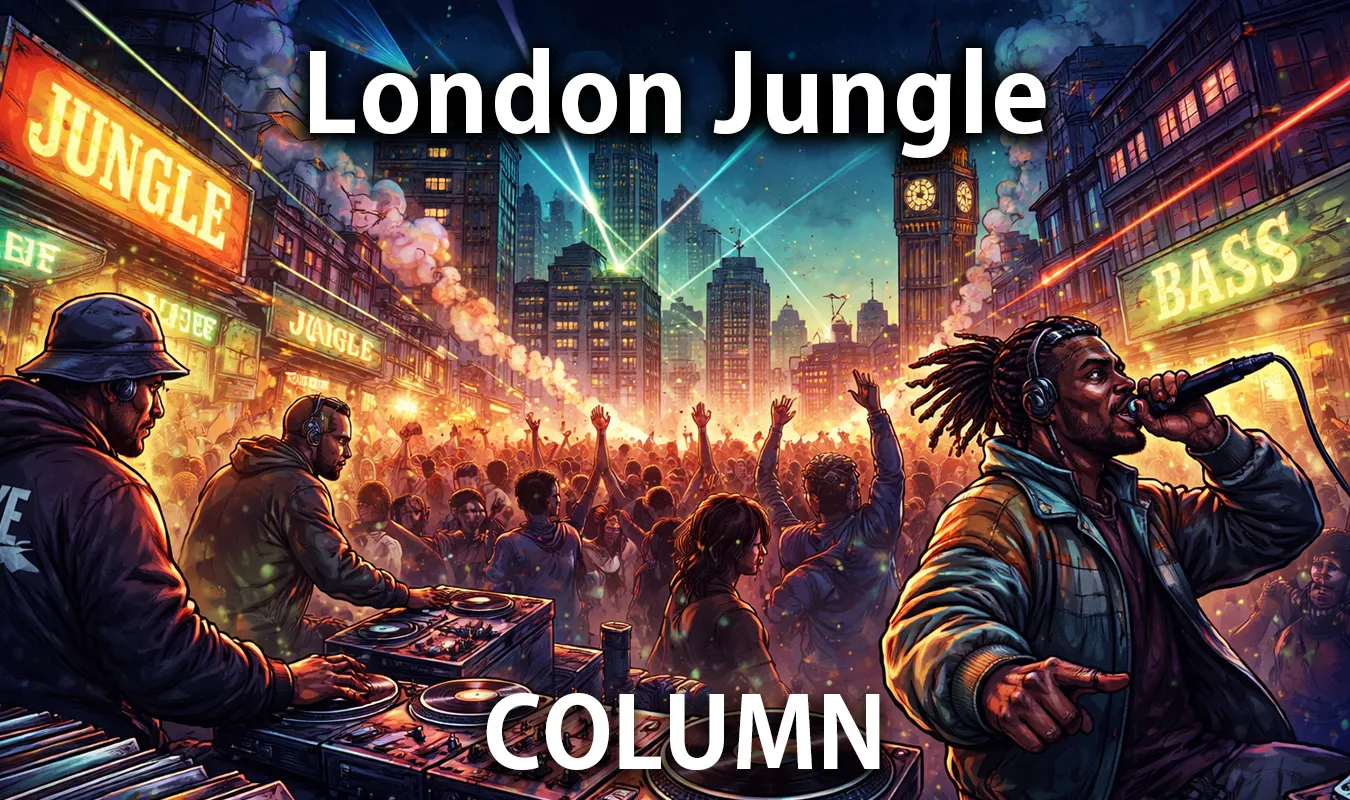
[Column] Sounds of the jungle: London's urban tensions

Column en Drum n Bass Jungle UK Culture
[Column] Sounds of the jungle: London's urban tensions

The moment when urban pressure becomes sound

Text: mmr|Theme: Jungle sounds and people created by London’s urban tension, and their reality

London in the early 1990s. Redevelopment, rising unemployment, expanding immigrant communities, and increased police regulation. A combination of these complex factors had quietly built up pressure on the city.

Jungle is the direct translation of this pressure into sound. It was more than just club music, it was a culture that presented the tension and disconnection of the city as it was in the form of acoustics.

The sound is extremely fast, fragmented, and heavy. Breakbeat fragmentation, sub-bass vibrations, and dancehall-derived voices. They directly reflect London’s multilayered cultural structure.

This music was not planned. It was born as a result of the DJs and producers at the scene updating the sound while responding to the atmosphere of the place.

Jungle is not a musical genre, but a sonic structure that visualizes the pressures of the city.


Divergence from rave culture

The rave culture that has been going on since the late 1980s was the parent body of the jungle. Starting with acid house, huge illegal parties were being held all over the place.

However, in 1994, the situation changed completely with the Criminal Justice and Public Order Act. This law cracked down on music events with “repetitive beats,” and rave culture was dealt a major blow.

This regulation accelerates the evolution of music. Moving away from the simple four-on-the-floor structure, more complex and divided rhythms were sought.

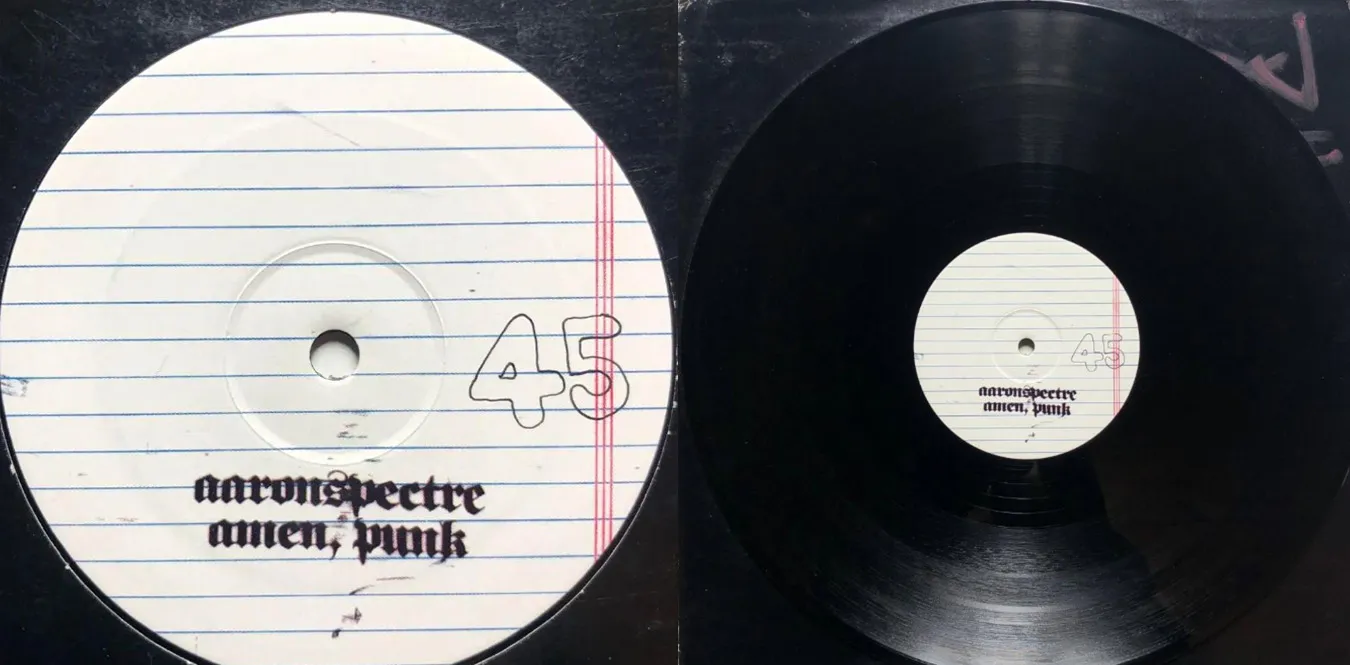
The important thing here is “Amen break”. This short drum phrase was chopped up and reassembled countless times, transforming it into the core rhythm of jungle.

At the same time, the place of activity shifted from clubs to pirate radio, and music spread in a more local and underground manner.

The end of rave was the beginning of jungle, and regulation accelerated creativity.


Structure of sound: fragmentation and reconstruction

The structure of the jungle sound itself was innovative. It is characterized not only by speed, but also by a rhythm design that breaks down time itself.

graph TD A[breakbeats] --> B[subdivision] B --> C[Relocation] C --> D[complex rhythm] E[sub bass] --> D F[dancehall elements] --> D

The tempo is 160-170BPM. However, the perceived speed is faster than that. This is because the “density of time” changes depending on the placement of the breakbeats.

The sub-bass that is added to this is an extension of reggae/dub culture. Sound changes from something you hear to something you feel with your body.

Furthermore, with the addition of the Raga MC’s voice and Patois phrases, the sounds have a cultural context.

The essence of the jungle is not speed, but the reconstruction of divided time.


Representative artists and tracks

Jungle was formed by countless producers, but there are some artists and songs that are especially iconic.

Goldie — “Inner City Life” (1994)

A representative figure who brought jungle to the world stage. Goldie was originally a graffiti artist and brought that visual sensibility to his music.

“Inner City Life” is a song that depicts the loneliness and hope of city life at the same time, and is an important work that shows the lyricism of jungle.

A well-known anecdote is that when Goldie created this song, he was conscious of a different direction from the traditional “raga-based jungle.” As a result, it became a bridge to later drum and bass.

Shy FX — “Original Nuttah” (1994)

An iconic track from Raga Jungle. Created with UK Apache MCs, it exploded in clubs and radio.

The success of this song is said to have brought jungle closer to the mainstream.

Although the production was carried out using relatively simple equipment, the roughness of the work turned out to be a source of energy, and it gained overwhelming support on-site.

LTJ Bukem — “Horizons” (1995)

He is a person who has established a style that is especially called “intelligent” even in the jungle. His sound emphasizes floating rather than aggression.

“Horizons” showed that jungle can be more than just dance music, it can also be listened to.

It is said that Bukem gradually adjusted the tempo and spatiality while observing the reaction of the audience at the club.

Remarc — “R.I.P.” (1994)

One of the most innovative figures in the reinvention of breakbeats. Remarc’s tracks are characterized by extremely detailed rhythms.

He took advantage of the limitations of his equipment and created his own unique grooves by cutting samples to their limits.

General Levy — “Incredible” (1994)

This song also symbolizes the commercialization of jungle. It became a big hit with its strong MC and catchy hook.

However, it was criticized by some in the scene as being ““too commercial’’ and was temporarily banned from BBC radio. This event symbolizes the conflict of values ​​within the jungle.

Jungle is not the work of an individual, but was formed through the intersection of the energy of the scene and the characters.


Pirate radio and changes in distribution

Pirate radio played a decisive role in the spread of the jungle. In London, illegal radio waves were being broadcast on a daily basis, and the latest tracks were being shared in real time.

This allows distribution without going through a record company. Trucks are evaluated through clubs and radio and then weeded out on the spot.

DJs were not just players, but curators and editors. The work was always in a state of flux, as tracks changed meaning in the mix.

Jungle is not a work, but a process generated by distribution and the site.


Transitioning to drum and bass

In the mid-1990s, jungle gradually evolved into drum and bass.

Goldie’s album Timeless was a landmark work, presenting the elements of jungle in a more sophisticated form.

Raga elements diminished, and more abstract and minimal sounds became mainstream. This change is a result of being conscious of listening not only at clubs but also at home.

However, the structure of the breakbeat and the importance of the bass remain intact.

Drum and bass is a refined form of jungle, and its core remains unchanged.


Chronology: Formation of the London Jungle

Year Events
1988 Acid house and the expansion of rave culture
1992 Jungle sound diverges from hardcore
1994 Criminal Justice Act enforcement
1994 “Original Nuttah” hit
1994 “Inner City Life” appears
1995 Development of an intelligent jungle
1996 The name drum & bass becomes established

Jungles formed rapidly over several years and evolved in sync with urban changes.


Interaction between city and music

The jungle is a microcosm of the city of London. Multiculturalism, class, and tension all manifest in sound.

Immigrant culture, sound systems, raves, pirate radio. When they intersect, new music is born.

This structure was inherited by later grime and UK garage.

The jungle is a microcosm of London, a sonic expression of the city itself.


Conclusion: Pressure as sound

Jungle is not created by a specific artist. It was born as a result of the intersection of urban conditions and people’s activities.

However, the trucks and people born there certainly shaped the era.

Fast beats, fragmented rhythms, and deep bass. They are all expressions of urban pressure.

And that pressure continues to exist today in various forms of music.

Jungle is not music, but a record of the pressures exerted by the city.


Monumental Movement Records

Monumental Movement Records