序章:コードがステージに上がった日
文:mmr|テーマ:コードを演奏する文化と、AIによる生成音楽。その交差点で起きている創造の変化を探る
クラブの暗闇、スクリーンに浮かぶのは音符ではなく「コード」。
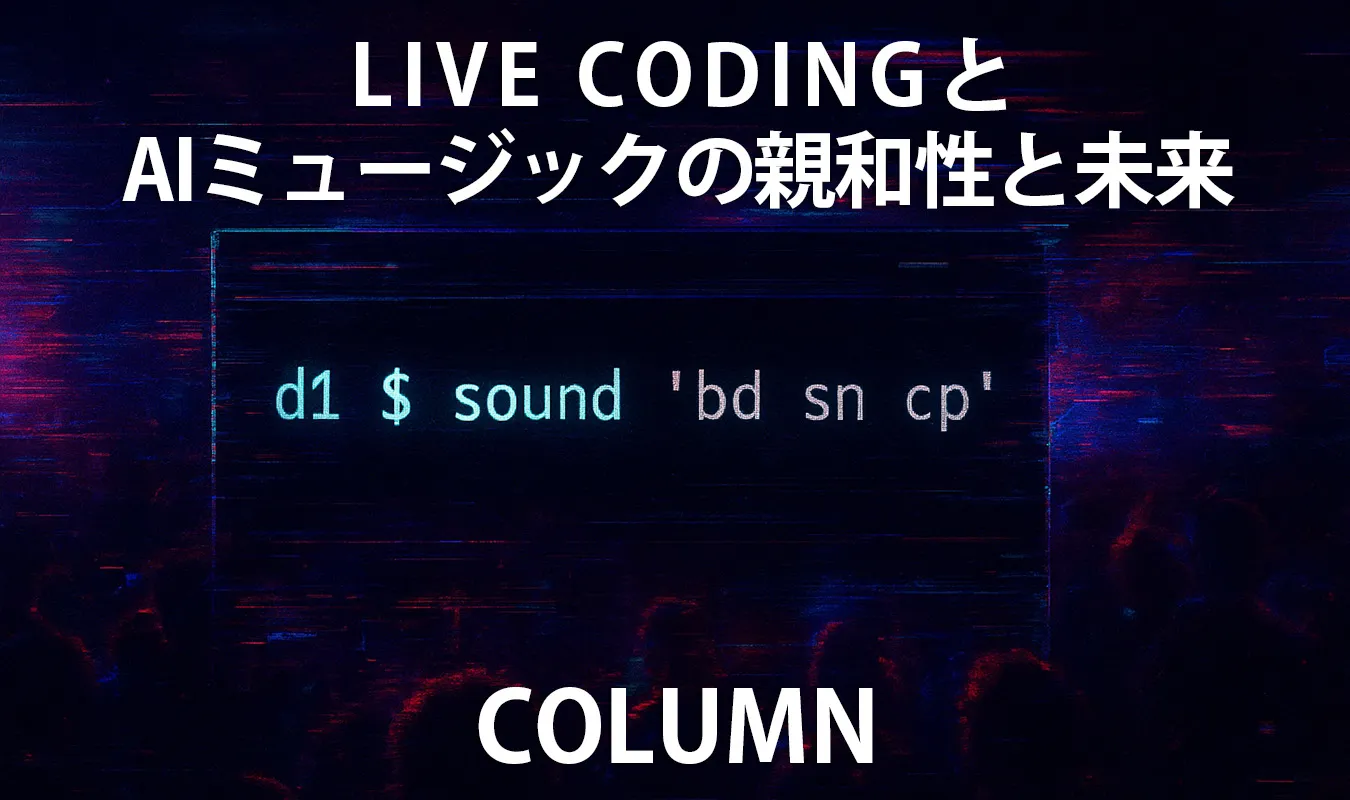
d1 $ sound "bd sn [hh*2]"──それは楽譜ではなく、即興のアルゴリズムだった。
This culture called “Live Coding” was born in Sheffield, England in the early 2000s.
アーティストたちはステージ上でリアルタイムにプログラムを書き、即座に音として出力する。
音楽とコーディング、クラブカルチャーとアルゴリズムの融合。
この新しい表現は、のちにAIミュージックと深く共鳴していくことになる。
Chapter 1: Birth of a culture of “playing” chords
The origins of Live Coding lie in Algorithmic Composition. The earliest examples include automatic composition experiments by Lejaren Hiller and Iannis Xenakis in the 1950s. それを21世紀に引き継ぎ、身体性とリアルタイム性を取り戻したのがLive Codingである。
In 2004, the community “TOPLAP” was proposed by Alex McLean and Nick Collins.
The slogan was ““Show us your screens!’’
音を出す過程(コード)を観客と共有することで、
生成過程そのものをパフォーマンス化するという理念だった。
Environments such as TidalCycles, SuperCollider, and Sonic Pi are Making it possible to improvise the act of “writing sounds by hand”, 電子音楽に新しいライブ性をもたらした。
Chapter 2: Transformation of generation brought about by AI
AIミュージックの文脈では、2010年代後半にディープラーニングによる音楽生成が大きく進展した。
Representative examples include OpenAI”s “Jukebox,” Google”s “Magenta,” and “Riffusion.”
AIはコードを書かない。
代わりに、大量のデータからパターンを学び、生成規則を“内在化”する。
つまり、AIはLive Codingの「外」にあるアルゴリズム的知能だ。
だが近年、その境界は急速に曖昧になっている。
たとえばTidalCyclesユーザーがGPTを利用してリアルタイムにコードを提案させたり、
AIがライブの反応を解析して次のリズムを予測する事例も現れ始めている。
こうした融合は、「AIがLive Codingの共演者になる」未来を指し示している。
Chapter 3: Differences between human improvisation and machine “improvisation”
人間のLive Coderは、エラーや偶然を味方にする。
予期せぬ出音や、思考のズレが音楽を推進する。
In contrast, AI improvisation is “reconstruction” based on past data,
Essentially it remains within the bounds of probability.
だが、この違いこそが創造の源泉でもある。
AIは無限の組み合わせを提供し、人間はそこに意味を見出す。
The relationship between the two is not one of ““dominance and subordination,’’ but is moving toward a mutually complementary creative relationship.
Chapter 4: Evolution and comparison of major tools
| ツール名 | 開発者/団体 | 特徴 | AI連携の可能性 |
|---|---|---|---|
| TidalCycles | Alex McLean | パターン記述に特化したHaskellベースのLive Coding環境 | ChatGPT連携でリアルタイムコード生成が可能 |
| SuperCollider | James McCartney | サウンド合成とアルゴリズム作曲の老舗環境 | AIモデルによるサウンドパラメータ制御が進行中 |
| Sonic Pi | Sam Aaron | 教育・パフォーマンス両面を意識したRubyベース | 教育現場でAI補助コード例が活用 |
| Riffusion | Seth Forsgrenら | スペクトログラムを生成する拡散モデル | AIそのものが音を直接生成 |
第5章:AIとLive Codingの協演例
-
AI-DJ実験(2023, Berlin CTM Festival)
A human Live Coder plays on TidalCycles, and AI analyzes the BPM, harmony, and spatial arrangement. リアルタイムで応答的ミックスを生成。
結果、“人間のノリ”にAIが追随する形での共演が成立。 -
Algorave × GPT Jam(2024, Tokyo)
複数のLive CoderがステージでGPTベースのコード提案を受け取り、
その場で修正しながら演奏。観客からのチャットが入力データに。
An attempt was made to have AI read the ““atmosphere of the place.’’ -
Riffusion+Tidal Loop
AIが生成した断片的サウンドをTidalCyclesがランダム再配置し、
AIが“素材”、人間が“構造”を担当する新しい制作形式。
第6章:倫理と創造性 ― オートメーション時代の“演奏者”とは
Who owns the copyright when AI writes code? 即興的生成に“オリジナル”という概念は成立するのか?
These questions are closely related to the philosophy of Live Coding.
TOPLAP’s philosophy of “opening up the process” is
透明性=創造性の民主化を意味していた。
AIがこの文化に加わるとき、
我々は“ブラックボックス”に抗う必要がある。
生成AIがコードを提案するなら、その学習過程や判断基準も公開されるべきだ。
それが、アルゴリズム音楽の未来を開く鍵となる。
第7章:未来展望 ― “アルゴリズムが奏でる共演”へ
2030年代、音楽制作の現場では「AIセッション」が一般化するだろう。
AIは単なるツールではなく、共演者=Co-Performerとして位置づけられる。
人間はコンセプトや感情の方向性を指示し、
AIは即興的に数百パターンの音を提示。
そこから選び・編集する行為自体が“演奏”になる。
さらに、Live Coding環境がAIと統合されることで、
There is also a possibility that it will become a “prompt = performance interface.”
No longer need a mouse or MIDI.
The era when language and thoughts themselves become sounds is coming.
図版:Live Coding × AIの進化年表
相関図:Live CoderとAIの協働構造
結論:創造の新しい民主化
Live Codingは「コードによる即興表現」を通じて、 音楽を誰もが生成できる行為へと開いた。 AIはその民主化をさらに推し進め、 We are trying to create a culture of sharing the “intelligence of performing”.
アルゴリズムと人間、機械と感情。 その境界が溶ける場所に、 新しい音楽の地平が立ち上がる。
コードは譜面を超え、AIは即興を学ぶ。 Music is no longer a “human exclusive patent”; 共創の知能(Co-Creative Intelligence)なのだ。