はじめに
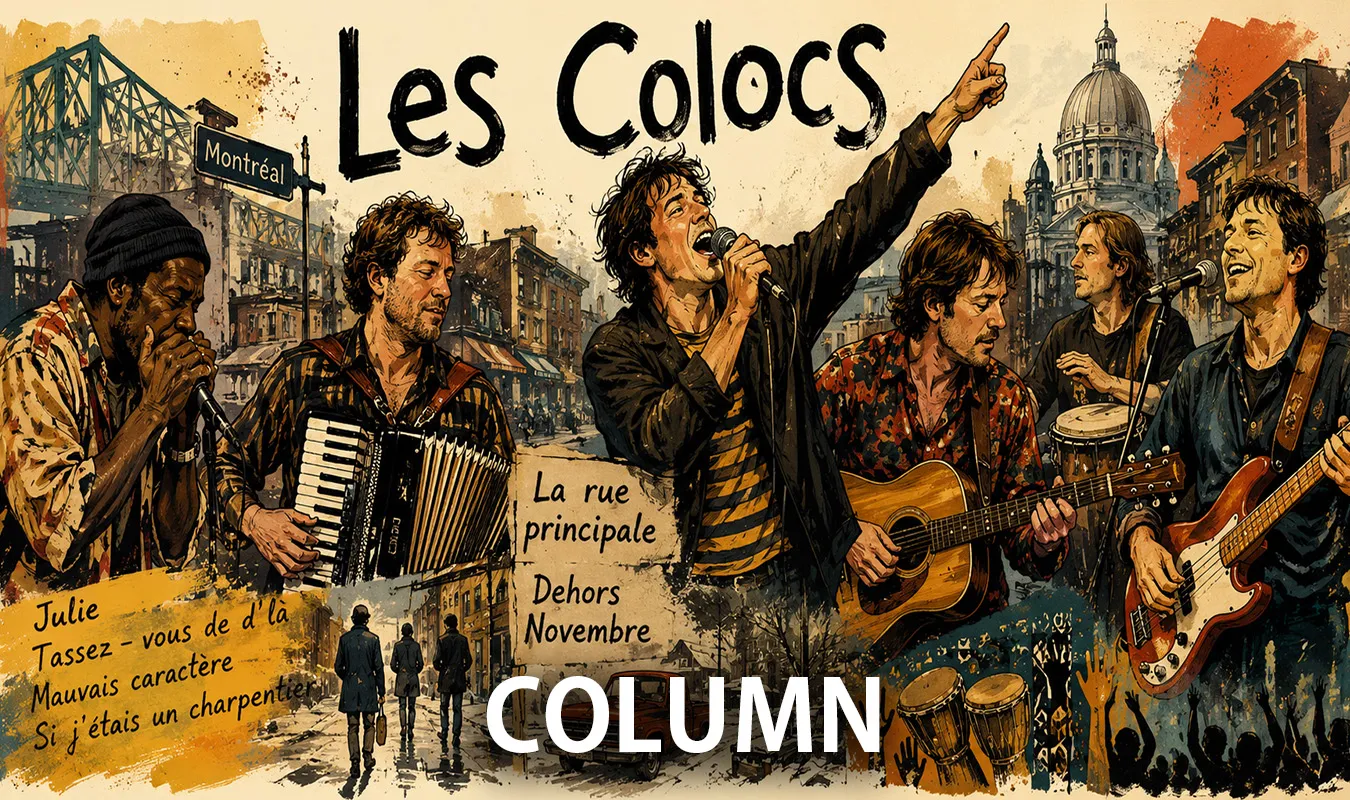
文:mmr|テーマ:1990年代ケベックで爆発的支持を得たバンド Les Colocsの歴史、社会背景、音楽性、メンバー変遷、文化的影響をたどる
1990年代のカナダ・ケベック州。 フランス語圏の若者文化は、大きな転換期を迎えていた。
MTV文化の拡大。 グランジの流行。 アメリカ的ポップカルチャーの浸透。 その一方で、ケベック独自の言語感覚や地域文化をどう守るかという問題も、常に存在していた。
そんな時代に現れたのが Les Colocs だった。
彼らは単なるロックバンドではない。
ストリートの匂いを持ち、 フォークの物語性を持ち、 アフリカ音楽のリズムを取り込み、 移民文化を吸収し、 ケベック社会の痛みを歌った。
しかも、それを説教臭くなく、 ユーモアと熱狂と祝祭感の中で鳴らした。
Les Colocs の音楽には、「バンド」というより「共同生活」の空気がある。
実際、バンド名の “Colocs” は「ルームメイト」を意味するケベック・フランス語の俗語である。
彼らの作品には、 都市の孤独、 貧困、 依存症、 労働者文化、 多民族社会、 言語アイデンティティ、 そして生き延びること自体への執念が刻まれている。
それでも音楽は暗く終わらない。
踊れる。 笑える。 叫べる。 一緒に歌える。
Les Colocs は、「社会問題を抱えた人々の音楽」ではなく、「社会そのものを抱え込んだ音楽」だったのである。
Les Colocs はケベック社会の縮図を、祝祭的ロックバンドという形で鳴らした存在だった。
ケベックという特殊な音楽圏
フランス語文化圏としてのケベック
Les Colocs を理解するには、まずケベック文化を知る必要がある。
カナダ国内において、 ケベック州は圧倒的に独自性の強い地域である。
主言語はフランス語。 文化圏も英語圏カナダとは異なる。
1960年代の「静かな革命(Révolution tranquille)」以降、 ケベックでは世俗化とナショナル・アイデンティティ形成が急速に進んだ。
音楽も例外ではなかった。
ケベックのシンガーソングライター文化は、 フランスのシャンソン、 北米フォーク、 ケルト音楽、 労働歌、 地方民謡などが独自に混ざり合って形成されていく。
1970年代には Harmonium などのプログレッシブ・フォーク勢が人気を獲得し、 1980年代にはロックとポップが主流化。
その流れの中で1990年代、 都市部モントリオールから新世代の雑食型バンド群が登場する。
Les Colocs はその代表格だった。
モントリオールという混交都市
モントリオールは、 北米でも特に文化混交性の強い都市として知られる。
フランス語圏。 英語圏。 ハイチ系移民。 アフリカ系コミュニティ。 アラブ系。 ラテン系。
それぞれの文化が混在する。
Les Colocs の音楽にアフリカン・リズムやレゲエ、ブルースが自然に存在するのは、この都市環境の影響が大きい。
ケベック・フランス語の重要性
Les Colocs の歌詞は、 標準フランス語だけではない。
ケベック独自の話し言葉、 スラング、 労働者階級の言い回しが大量に含まれる。
これは単なる言語スタイルではない。
「誰の言葉で歌うか」 という文化的選択だった。
英語圏ポップ文化に囲まれながら、 あえてローカル言語感覚を前面化する。
Les Colocs の人気は、 ケベック人が「自分たちの声」を再確認した現象でもあった。
Les Colocs の音楽は、ケベックという地域文化の複雑さそのものを映していた。
結成以前 ─ André “Dédé” Fortin の背景
Dédé Fortin の幼少期
バンドの中心人物は André “Dédé” Fortin。
1962年、ケベック州ノルマンダン生まれ。
地方出身でありながら、 後にモントリオールへ移住する。
彼の感覚には、 地方コミュニティの連帯感と、 都市生活の孤独感の両方が存在していた。
これは後の Les Colocs の世界観に直結する。
ストリート感覚と演劇性
Dédé Fortin は、 単なるシンガーではなかった。
彼には演劇的感覚が強くあった。
ライブでは、 コミカルな動き、 誇張表現、 観客との直接的コミュニケーションを多用する。
その一方で、 歌詞には深い社会観察がある。
つまり彼は、 「道化師」と「社会観察者」を同時に担っていた。
モントリオールでの活動
1980年代末、 モントリオールの音楽シーンでは、 DIY的バンド文化が拡大していた。
大手産業主導というより、 ライブハウス、 バー、 共同生活コミュニティ、 ストリート文化からシーンが形成されていた。
Les Colocs は、 まさにそこから生まれた。
バンド名の意味
“Les Colocs” は「同居人たち」。
この名前は象徴的である。
彼らの音楽には、 完璧なプロフェッショナル性より、 共同生活の雑然とした熱量がある。
音楽性も統一されすぎていない。
むしろ雑多で、 人間関係の摩擦そのものがエネルギー化されている。
Les Colocs の核心には、共同生活の混沌を音楽化する感覚があった。
Les Colocs の結成と初期活動
1990年前後の結成
Les Colocs は1990年頃に本格始動する。
初期メンバーには以下が含まれる。
- André “Dédé” Fortin
- Patrick Esposito Di Napoli
- Mike Sawatzky
- Serge Robert
- Jimmy Bourgoing ほか
メンバー構成は固定的ではなく、 時期によって変動していく。
路上感覚とライブ人気
初期の Les Colocs は、 ライブで急速に支持を拡大した。
理由は明快だった。
異常にライブが強かったのである。
観客参加型。 合唱。 ダンス。 混沌。 笑い。 即興。
彼らのライブには、 パンク的DIY精神と、 祝祭型フォーク文化が共存していた。
Patrick Esposito Di Napoli の存在
ハーモニカ奏者 Patrick Esposito Di Napoli は、 バンド初期の重要人物である。
ハイチ系ルーツを持ち、 Les Colocs に多文化的感覚を持ち込んだ。
彼のハーモニカは、 ブルース的でもあり、 移民音楽的でもあり、 ストリート感覚そのものでもあった。
彼の存在は、 後のバンド方向性を決定づける。
初期 Les Colocs は、ジャンル統一よりライブ共同体感覚を優先していた。
デビューアルバムと大衆的人気
『Les Colocs』(1993)
1993年、 セルフタイトル作『Les Colocs』を発表。
この作品によって、 彼らはケベック全域で一気に知られる存在となる。
代表曲には以下が含まれる。
- “La rue principale”
- “Mauvais caractère”
- “Julie”
「La rue principale」の衝撃
“La rue principale” は、 地方衰退を扱った楽曲として知られる。
若者流出。 地域経済の停滞。 Hollowing.
これは1990年代ケベック地方社会の現実だった。
しかし楽曲は単なる悲観では終わらない。
ノスタルジーと怒り、 そして愛着が同時に存在する。
ケベック社会との接続
One of the reasons why Les Colocs was widely supported was because 社会問題を抽象化せず、 具体的人物として描いた点だった。
街。 酒場。 失業者。 友人。 addiction. 労働者。
彼らの歌詞には「顔」がある。
それが聴衆との強い接続を生んだ。
商業成功と異質性
興味深いのは、 Les Colocs が大衆的人気を獲得しながら、 同時に極めて異質だった点である。
ラジオ向けポップでもない。 典型的ロックでもない。 ワールドミュージックでもない。
Still, it was widely loved.
これは、 It was also because Quebec society wanted ““its own story.’’
Les Colocs はローカルな現実を描きながら、大衆的熱狂を生み出した。
Patrick Esposito Di Napoli の死と転換期
エイズによる死
1994年、 Patrick Esposito Di Napoli がエイズ関連合併症で死去。
これはバンドにとって決定的出来事だった。
当時、 エイズはまだ強い偏見と恐怖の対象でもあった。
Les Colocs は、 この問題を隠蔽しなかった。
むしろ、 死や病を共同体の問題として受け止めた。
「Dehors Novembre」
Patrick の死後、 バンドは “Dehors Novembre” を制作する。
この曲は、 ケベック音楽史でも特別視される作品の一つとなった。
死を扱いながら、 静かで、 詩的で、 深い感情を持つ。
センセーショナルではない。
むしろ、 死者との対話のように響く。
社会的テーマの深化
この時期以降、 Les Colocs の歌詞はより社会的深度を増していく。
貧困。 孤独。 ドラッグ。 自殺。 都市疎外。
しかし、 完全な絶望には向かわない。
音楽自体はむしろリズム的に拡張され、 アフリカ音楽やパーカッション要素が強まっていく。
Patrick Esposito Di Napoli の死は、Les Colocs の精神性を大きく変化させた。
『Atrocetomique』と音楽的拡張
1995年の重要作
1995年、 『Atrocetomique』を発表。
この作品は、 Les Colocs の音楽的拡張が最も顕著に現れたアルバムの一つである。
アフリカ音楽との融合
特に重要なのはリズム面である。
西アフリカ的ポリリズム。 パーカッション。 集団コーラス。
これらがロックに自然に融合された。
当時の北米ロックとしては、 かなり独特だった。
社会批評性
歌詞面では、 都市問題や社会格差への視線がさらに強まる。
Dédé Fortin の歌詞は、 ジャーナリズムではない。
しかし観察力が非常に鋭い。
「誰が見捨てられているか」 を常に見つめていた。
ユーモアと悲劇性
Les Colocs の特徴は、 悲劇だけに閉じないことだった。
曲中には必ず笑いや皮肉が混ざる。
この感覚は、 ケベック文化特有のブラックユーモアとも結びついている。
Les Colocs は社会的重さを、踊れる音楽へ変換する力を持っていた。
『Dehors Novembre』と内面化する世界
Works from 1998
1998年、 ““Dehors Novembre’’ released.
この作品は、 より暗く、 より内省的である。
Mental exhaustion
この時期、 Dédé Fortin 自身の精神状態悪化も指摘されている。
作品には、 疲労感、 孤独、 自己崩壊への恐れが滲む。
しかし音楽は依然として美しい。
ケベック社会との関係
1990年代後半、 Quebec society was also changing.
独立運動の停滞。 経済的不安。 都市化。
The works of Les Colocs are こうした時代感覚とも同期していた。
「Tassez-vous de d’là」
この時期の代表曲の一つ “Tassez-vous de d’là” は、 混沌とエネルギーが共存する楽曲として知られる。
ストリート感覚。 混雑。 都市生活。 anger.
それらが高速で渦巻く。
『Dehors Novembre』では、祝祭感の裏側にある疲弊が強く表面化した。
Dédé Fortin の死
2000年の悲劇
2000年、 André “Dédé” Fortin took his own life.
38歳だった。
この出来事は、 ケベック文化界全体に衝撃を与えた。
国民的存在としての Dédé
Dédé は単なるロックスターではなかった。
彼は、 「ケベックの普通の人々」を代弁する存在として受け止められていた。
だからこそ、 彼の死は極めて大きな意味を持った。
死後の評価
死後、 Les Colocs は神話化された。
しかし重要なのは、 単なる悲劇性だけではない。
彼らの音楽は現在でも実際に聴かれ続けている。
ライブ文化。 合唱文化。 地域文化。
そのすべてに接続しているからである。
Dédé Fortin の死後も、Les Colocs の音楽は共同体的記憶として残り続けた。
Les Colocs の音楽的特徴
ジャンル横断性
Les Colocs は分類が難しい。
- folk rock
- オルタナティブロック
- ワールドミュージック
- ブルース
- レゲエ
- chanson
- パーカッション音楽
These exist simultaneously.
コーラス文化
彼らの音楽では、 集団コーラスが非常に重要である。
これは単なる装飾ではない。
“I don’t sing alone” という思想に近い。
リズム重視
Les Colocs の重要要素はリズムである。
北米ロックの典型的4ビートだけではなく、 循環型グルーヴを多用する。
This led to a sense of elation during the live performance.
ストーリーテリング
歌詞は具体的人物描写が多い。
From abstract thought, 街角の人物像を描く。
これはフォーク的伝統とも結びつく。
Les Colocs has translated the musical mixture of the multicultural city of Montreal into sound.
ケベック文化への影響
後続世代への影響
Les Colocs is 後のケベック音楽家たちに大きな影響を与えた。
特に以下の点で重要だった。
- ローカル言語表現
- 多文化融合
- Connection to social issues
- ライブ共同体性
「ケベックらしさ」の再定義
彼ら以前、 「ケベック音楽」は比較的フォーク寄りか、 Or, there was also an image that had a strong French chanson feel.
Les Colocs はそこに、 都市雑種性を持ち込んだ。
現在も続く人気
現在でも Les Colocs の楽曲は、 ケベックで広く親しまれている。
Many songs are sung across generations.
There is a strong choral culture, especially at live concerts and local events.
Les Colocs はケベック音楽を「地域文化」から「都市混交文化」へ拡張した。
年表
ディスコグラフィ概観
| 年 | 作品 | 特徴 |
|---|---|---|
| 1993 | Les Colocs | 初期代表作 |
| 1995 | Atrocetomique | Expansion of African musical colors |
| 1998 | Dehors Novembre | 内省的・重厚な作品 |
Les Colocs の作品群は、時代と共に祝祭性から内省性へ移行していった。
なぜ Les Colocs は今も特別なのか
Les Colocs の特別さは、 「完璧な音楽」ではなく、 「生きている音楽」である点にある。
雑然としている。 荒々しい。 時に不安定。
しかしそこに、 共同体のリアルがある。
彼らは、 北米商業ロックの成功モデルとは異なる道を歩いた。
地方性を隠さず、 using dialect, 移民文化を受け入れ、 社会問題を歌った。
しかもそれを、 説教ではなく祝祭として鳴らした。
それが今も聴き継がれる理由である。
Les Colocs の音楽には、 「一緒に生き延びる」という感覚がある。
だからこそ、 彼らは単なる90年代バンドとして終わらなかった。
Les Colocs は、共同体・都市・言語・痛みを丸ごと抱え込みながら鳴った稀有なバンドだった。
YouTube Podcast
※このPodcastは英語ですが、自動字幕・翻訳で視聴できます
Explore more like this
【コラム】 Galaxie ― ケベックを駆け抜けた爆音ロックンロールの航路
爆音とフランス語が交差した瞬間