序章:言葉なき映画が語るもの
文:mmr|テーマ:映像とミニマル音楽が融合した20世紀後半の芸術的マイルストーンについて
“ゴッドフリー・レッジオ監督、フィリップ・グラス音楽による『コヤニスカッツィ』は、20世紀後半の映像と音楽の地平を根底から変えた作品である。”
“Life out of balance.”
― コヤニスカッツィ(ホピ語)
1982年、アメリカの独立系映画界から、一風変わった長編ドキュメンタリーが現れた。
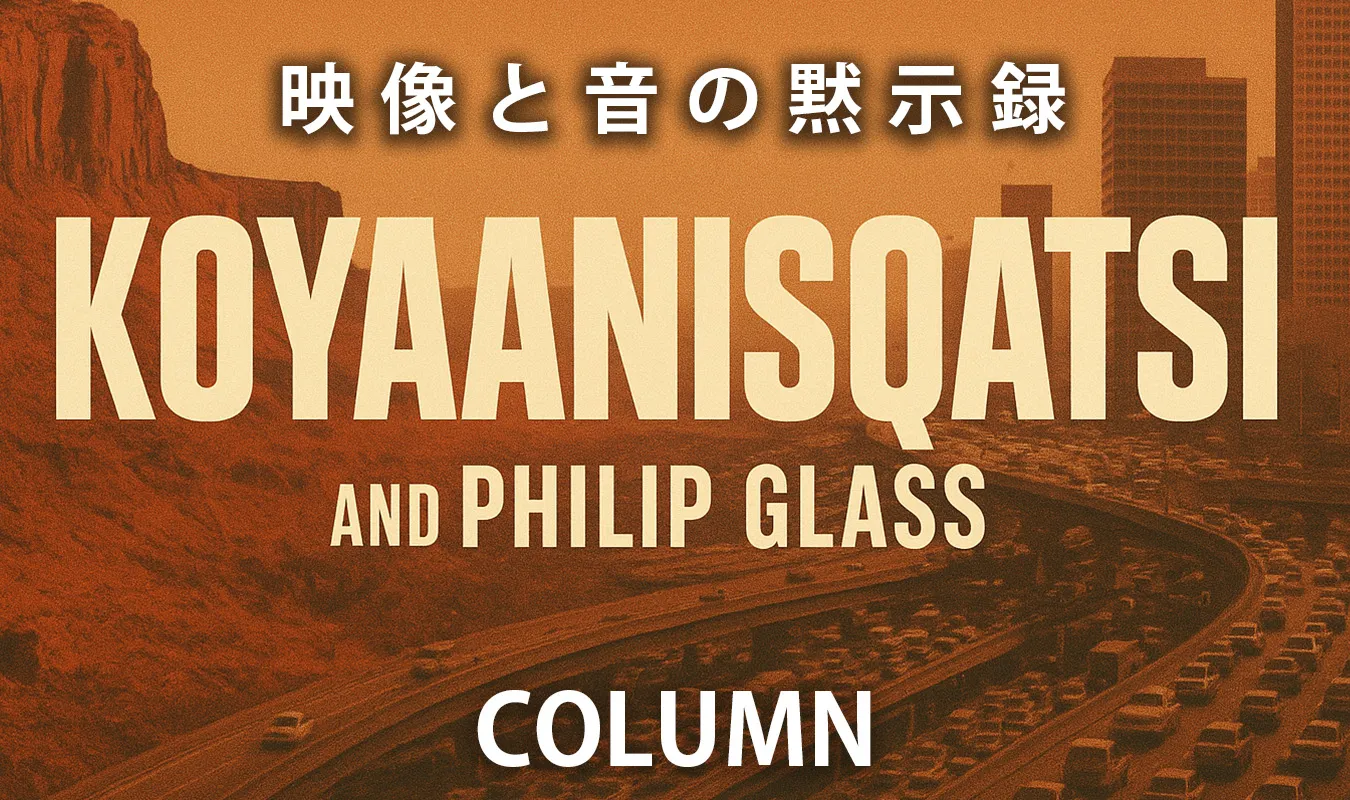
『コヤニスカッツィ(Koyaanisqatsi)』 ——監督はゴッドフリー・レッジオ(Godfrey Reggio)、音楽はフィリップ・グラス(Philip Glass)。
この映画には、ナレーションも台詞も存在しない。
映し出されるのは、自然と人間社会の映像のみ。そしてそれらを貫くのは、グラスのミニマル・ミュージック。
彼のリズム構造と反復の美学は、映像の流れと共鳴しながら、「現代文明の異化」を音として描き出す。
第一章:黙示録としての映像詩
映画のタイトル「Koyaanisqatsi」はホピ族の言葉で「バランスを失った生活」を意味する。
レッジオはこの言葉を、20世紀後半の産業社会・情報社会の象徴として掲げた。
冒頭の映像では、荒野にそびえる赤茶けた岩山が映し出され、静寂の中に低音のコーラス “Koyaanisqatsi” が響く。
やがて、人間の手による文明の機械音、都市の雑踏、そして消費社会の加速がリズムとして重なっていく。
自然と人工。静寂と過密。光と速度。
この映画は「対比」の連続であり、それこそがメッセージである。
第二章:フィリップ・グラスの音響構築
グラスの音楽は、反復を基本とするが、単なる繰り返しではない。
微細な変化が積層することで、「静止と運動のあわい」を生み出す。
彼のスコアは、映像のカットやテンポと精密に同期しており、まるで映像が音楽に編集されているかのようだ。
実際、レッジオとグラスの制作プロセスでは、映像と音が相互に呼応する編集が行われた。
「私は音楽で編集し、映像で作曲した。」
― ゴッドフリー・レッジオ
第三章:制作背景と技術的挑戦
撮影監督のロン・フリック(Ron Fricke)は、後に『バラカ』『サムサーラ』を手がける映像詩人でもある。
彼が開発したタイムラプス撮影・スローモーション技法は、当時まだ珍しいものであった。
この映画は国家や企業の支援を受けず、完全独立制作として始まった。
資金難の中、音楽だけが先に完成し、その後に映像が編集されるという逆転的プロセスが採られたのも特筆すべき点である。
年表:『コヤニスカッツィ』とフィリップ・グラスの軌跡
第四章:ミニマリズムとスピリチュアリティ
グラスの音楽は、西洋クラシックの形式を持ちながら、東洋思想や瞑想音楽の影響を深く受けている。 特に、インド音楽家ラヴィ・シャンカルやチベット僧侶の声楽に影響を受けたリズム構造は顕著だ。
レッジオもまた、修道院での経験を持つ精神的な人物であり、映画全体が現代社会の「祈りなき祈り」として構成されている。
第五章:映像構成と音楽の呼応関係
| シーン | 音楽モチーフ | 意味・効果 |
|---|---|---|
| 荒野とロケット打ち上げ | オルガンの持続音 | 生命と機械の対比 |
| 都市の交通・工場 | シーケンスの反復 | 無限の労働サイクル |
| 顔のクローズアップ | コーラスと減速 | 人間性の回復への問い |
| 崩壊するロケット | 静寂と減衰 | 文明の終焉と再生 |
この表が示す通り、音楽は単なる伴奏ではなく、映像の「感情的構文」を構築している。
第六章:現代への影響
『コヤニスカッツィ』の影響は、後続の映像作品・音楽家・ゲーム・広告にまで及ぶ。 例えば:
- テレンス・マリック『ツリー・オブ・ライフ』
- クリストファー・ノーラン『インターステラー』
- シガー・ロス、マックス・リヒター、ブライアン・イーノなどの現代作曲家群
- 環境映像やVJ文化にも直接的影響を与えた
この作品は単なる映画ではなく、「視聴覚哲学書」とも呼ぶべき存在になった。
図解:文明と自然のリズム構造
レッジオ=グラスが提示したのは、破壊と再生のループ。 その終わりなきリズムは、グラスの音楽そのものでもある。
第七章:音楽的分析 ―― 反復の中の変化
グラスの作曲技法「アディティヴ・プロセス」は、 1フレーズの中で徐々に音符を増減させていく構造を持つ。
例:
123 → 1234 → 12345 → 2345 → 345
この微細な変化が、「静止しているのに進んでいる」という時間の錯覚を生む。 それは、映像のスローモーションやタイムラプスの時間感覚と完全に呼応している。
第八章:『Qatsi三部作』の思想的連続性
| 作品 | 意味(ホピ語) | 主題 |
|---|---|---|
| Koyaanisqatsi | バランスを失った生活 | 産業社会の狂気 |
| Powaqqatsi | 他者の生活を吸い取る生活 | グローバル化と搾取 |
| Naqoyqatsi | テクノロジーによる生活 | デジタル時代の喪失 |
三部作全体で、レッジオとグラスは「現代の神話」を再構築したとも言える。
終章:沈黙の中の再生へ
『コヤニスカッツィ』のラストでは、打ち上げに失敗したロケットの残骸が、 ゆっくりと地上に落ちていく。 その中でグラスの音楽が静かに消えていく瞬間、観客はふと「静けさ」に包まれる。
それは、文明の崩壊ではなく、再生のための余白だ。
音が止むとき、私たちはようやく世界を聴き始める。
参考文献・ディスコグラフィ
- Philip Glass: Koyaanisqatsi (Original Motion Picture Soundtrack), 1983.
- Godfrey Reggio: Koyaanisqatsi (film), 1982.
- Philip Glass: Words Without Music (Memoir), 2015.
- Michael Nyman: Experimental Music: Cage and Beyond, 1974.
- Ron Fricke: Baraka, 1992 / Samsara, 2011.
「Koyaanisqatsi」――それは私たち自身の鏡像である。
Explore more like this
![[Column] Penguin Cafe Orchestra - An imaginary paradise that resonates between ambient and folklore](/../assets/images/column-penguin-cafe-orchestra.webp)
[Column] Penguin Cafe Orchestra - An imaginary paradise that resonates between ambient and folklore
Prologue: Reverberations of a “fictional cafe” found nowhere else in the world
![[Column] Vijaya Anand and](/../assets/images/column-dance-raja-dance.webp)
[Column] Vijaya Anand and "Dance Raja Dance" — South Indian film music as carnival
Prologue: The beat revolution of South India in the late 1980s