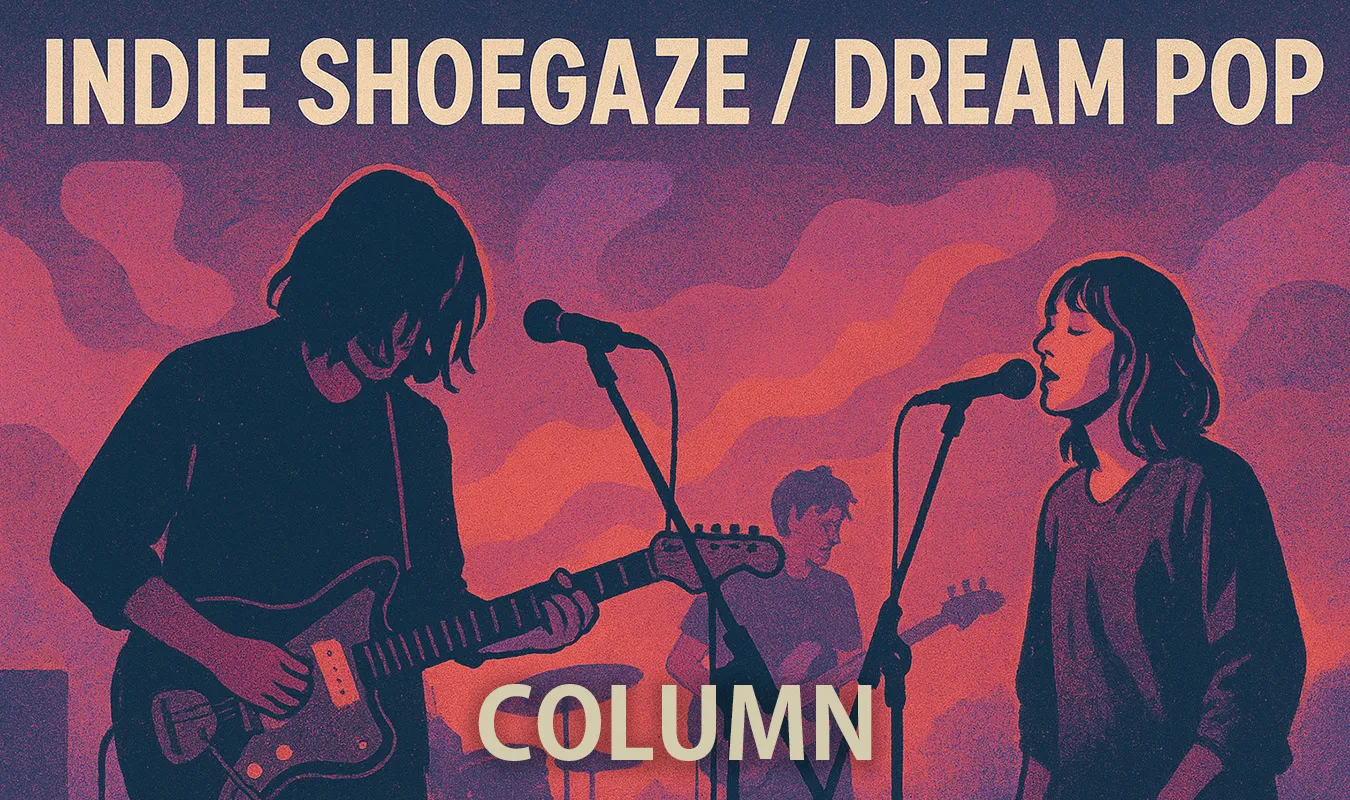
序章:視線を伏せた音楽の誕生
文:mmr|テーマ:音像と感覚の再構築史について
1980年代後半から1990年代初頭にかけて、英国を中心に出現したシューゲイズとドリームポップは、ロック音楽の表現領域を「演奏」から「音像」へと大きく移行させた。 それらの音楽は、即時的なメロディの訴求や明確な歌詞の伝達よりも、音が重なり合うことで生じる空間、残響、感覚的な持続を中心に据えている。
シューゲイズという呼称は、演奏中に足元のエフェクターボードを見つめる姿勢から生まれたものであり、パフォーマンスの内向性を象徴する言葉として定着した。一方、ドリームポップは、より早い時期から存在していたアンビエント的ポップ感覚と、ポストパンク以降の音響志向が融合した結果として形成された。
両者は異なる起源を持ちながらも、音響処理、声の扱い、映像的感覚において密接に接続している。
[“ジャンル名は後付けであり、当事者の多くは当初その分類を意識していなかった”]
第1章:ドリームポップの前史と形成
1-1. ポストパンク以降の音響感覚
1970年代末から1980年代初頭にかけて、ポストパンクはロックの構造を解体し、音色・テクスチャー・空間処理へと関心を移した。 シンセサイザー、リバーブ、ディレイは単なる装飾ではなく、楽曲の構造そのものを形作る要素として機能するようになる。
この流れの中で、歌声は物語を語る主体から、音の一部へと変質していった。
1-2. Cocteau Twins の位置
Cocteau Twinsは、ドリームポップの確立において決定的な役割を果たした。 ギターのロビン・ガスリーは、コーラス、ディレイ、リバーブを多層的に重ね、和音の輪郭を曖昧にしながらも独特の浮遊感を生み出した。
エリザベス・フレイザーのボーカルは、意味を明確に伝えることよりも、発音、抑揚、音節の連なりによって感情的な空気を形成する。 歌詞はしばしば抽象的、あるいは即興的であり、言語の意味は二次的なものとなった。
[“声は情報ではなく、質感として扱われている”]
第2章:ドリームポップのサウンド構造
2-1. ギターと空間処理
ドリームポップのギターは、リフやコード進行を前面に出すのではなく、持続音として配置される。 ディレイは拍に同期するよりも、残響の重なりを生むために使用され、リバーブは音の輪郭を溶かす役割を担う。
2-2. リズムの後景化
ドラムやベースは、楽曲を牽引する存在ではなく、音像を支えるための重心として機能する。 テンポは比較的一定で、劇的な展開よりも、状態の持続が重視される。
第3章:シューゲイズの発生
3-1. インディ・ロックとの接合
1980年代後半の英国インディ・シーンでは、ジャングル・ポップ、ノイズ・ロック、ドリームポップの要素が交錯していた。 その中で、より歪んだギターサウンドと高密度な音の壁を追求したバンド群が登場する。
3-2. My Bloody Valentine の登場
My Bloody Valentineは、シューゲイズを象徴する存在である。 彼らの音楽は、単なる歪みではなく、音程の揺らぎ、ピッチの不安定さ、微細なズレによって構築されている。
ケヴィン・シールズは、トレモロアームを用いた独特の奏法により、コード全体を揺らし続ける音像を作り出した。 これにより、ギターは打楽器的なアタックを失い、連続する波動のような質感を獲得する。
[“演奏の不安定さが、音楽の安定を生んでいる”]
第4章:シューゲイズのサウンド分析
4-1. 歪みの層構造
My Bloody Valentineの楽曲では、複数の歪みギターが重ねられ、それぞれが異なる帯域を占める。 結果として、単音の明瞭さは失われるが、全体として厚みのある音の塊が形成される。
4-2. ボーカルの配置
ボーカルは前面に出ることなく、楽器群の中に埋め込まれる。 歌詞の判別性は意図的に低く抑えられ、声はメロディ楽器の一部として機能する。
第5章:映像的感覚と視覚表現
5-1. ジャケットと色彩
シューゲイズ/ドリームポップのアートワークは、抽象的でぼやけたイメージが多い。 輪郭の曖昧さ、低コントラスト、単色に近い色彩は、音楽の質感と強く連動している。
5-2. ミュージックビデオの傾向
映像は物語を語るものではなく、断片的な光、スローモーション、重ね合わせによって構成される。 カメラワークや編集も、明確な焦点を避け、視覚的な浮遊感を重視する。
[“映像は説明ではなく、感覚の延長として存在する”]
第6章:両ジャンルの差異と重なり
| 要素 | ドリームポップ | シューゲイズ |
|---|---|---|
| 音量 | 比較的抑制的 | 大音量・高密度 |
| 歪み | 少なめ | 多層的 |
| 声の扱い | 浮遊的 | 埋没的 |
| 感覚 | 夢想・内省 | 圧迫・陶酔 |
両者は対立するものではなく、連続体の中に位置している。
第7章:年表
終章:音楽が風景になるとき
インディ・シューゲイズとドリームポップは、音楽を「聴く対象」から「浸る空間」へと変換した。 それは技巧の誇示ではなく、感覚の設計であり、視覚や身体感覚と結びついた総合的な表現である。
My Bloody ValentineとCocteau Twinsは、その異なる方向性において、音楽がどこまで抽象化できるかを示した存在であった。 彼らの残した音像は、現在も多くのインディ作品において、直接的あるいは間接的に反響し続けている。
[“この音楽は終わらない。常に、別の形で鳴り直される”]
追加章A:音響技術と制作環境の変化
A-1. スタジオ技術の発展とジャンル形成
シューゲイズおよびドリームポップの成立は、演奏技術のみならず、1980年代以降の録音技術の変化と密接に関係している。 マルチトラック録音、アウトボード・エフェクター、スタジオ内ミキシング技術の発展は、音楽制作を「記録」から「構築」へと変化させた。
特に、同一パートを複数回録音し、それらを重ねる手法は、音の厚みと曖昧さを同時に生み出す。 この手法はドリームポップにおける空間的広がり、シューゲイズにおける音圧の密度の双方に寄与した。
[“スタジオは楽器の一部として機能し始めた”]
A-2. ミックスにおける前景と後景の再定義
従来のロック・ミックスでは、ボーカルとリード楽器が前景に配置されることが基本であった。 しかしシューゲイズ/ドリームポップでは、この原則が意図的に崩される。
ボーカルは中域に埋め込まれ、ギターやシンセサイザーの残響と同列に扱われる。 この配置は、リスナーの注意を一点に集中させるのではなく、音全体を俯瞰させる効果を生む。
[“何が主役かを曖昧にすること自体が、音楽的意図となる”]
追加章B:リズムと身体感覚の扱い
B-1. ビートの反復と停滞
シューゲイズおよびドリームポップにおけるリズムは、展開を生む装置ではなく、状態を維持するための装置として機能する。 ドラムパターンは比較的単純で、フィルやアクセントの主張は抑えられる。
これにより、楽曲は「進行する時間」よりも「留まり続ける時間」を強調する。
B-2. 身体的高揚の再定義
大音量で演奏されるシューゲイズは、一見すると攻撃的な音楽のように捉えられるが、その身体的体験は異なる。 リズムによる跳躍ではなく、音圧による包囲、持続による没入が中心となる。
これは、観客の身体を前方へ突き動かすのではなく、音の中に沈める体験である。
[“動かされるのではなく、覆われる”]
追加章C:歌詞の位置づけと意味の後退
C-1. 言語の抽象化
Cocteau Twinsに代表されるように、ドリームポップでは歌詞の意味が意図的に不明瞭にされる。 発音、母音の伸び、リズムとの関係性が優先され、語彙的な明瞭さは後景に退く。
これは、言語を情報伝達の手段ではなく、音響素材として再定義する試みであった。
C-2. シューゲイズにおける歌詞の埋没
My Bloody Valentineの作品では、歌詞が完全に聴き取れない箇所も多い。 しかしそれは欠落ではなく、設計された結果である。
言葉が意味を失うことで、リスナーは感情を言語化せずに受け取ることを求められる。
[“理解ではなく、反応が優先される”]
追加章D:視覚表象と匿名性
D-1. バンドの非人格化
シューゲイズ/ドリームポップのアーティストは、自己のキャラクター性を前面に押し出すことを避ける傾向があった。 ステージ上での視線の低さ、照明の暗さ、無表情な佇まいは、演奏者個人を強調しないための装置である。
D-2. 映像における主体の不在
ミュージックビデオやビジュアル素材では、人物が明確に映らない、あるいは意図的にぼかされることが多い。 これは、視覚的にも音楽と同様の匿名性を確保する試みである。
[“誰が鳴らしているかより、何が鳴っているか”]
追加章E:後続ジャンルへの構造的影響
E-1. 1990年代後半以降への継承
シューゲイズとドリームポップは、一時的に商業的注目を失った後も、その手法は地下的に継承された。 オルタナティブ・ロック、ポストロック、アンビエント・ポップにおいて、音像重視の姿勢は再解釈されていく。
E-2. インディ以降の制作環境との接続
宅録環境の普及により、個人単位でも多層的な音響構築が可能になった。 これは、シューゲイズ的な重ね録り、ドリームポップ的な空間処理を、より小規模な制作環境へと拡張した。
[“巨大な音像は、必ずしも巨大な設備を必要としなくなった”]
補章:My Bloody Valentine と Cocteau Twins の対照的到達点
| 観点 | My Bloody Valentine | Cocteau Twins |
|---|---|---|
| 音量 | 極端に大きい | 比較的抑制 |
| 音の揺らぎ | 物理的・演奏的 | 空間的・処理的 |
| 声の役割 | 楽器の一部 | 感情の媒質 |
| 世界観 | 密閉・圧迫 | 拡散・浮遊 |
両者は同一の手法を共有しながら、異なる方向へと到達した。
Explore more like this
![[Column] NTS/Boiler Room live streaming artists and unknown performance culture](/../assets/images/column-nts-boiler-room.webp)
[Column] NTS/Boiler Room live streaming artists and unknown performance culture
Prologue: A new performance space called live streaming
【コラム】 Chillwave / Synthwave 再評価 ― 80sサウンドとインターネット文化の邂逅
80年代サウンドとインターネット文化の再接続
![[Column] Mr.Vegas──Dancehall ambassador who sings of tradition and innovation](/../assets/images/column-mr-vegas.webp)
[Column] Mr.Vegas──Dancehall ambassador who sings of tradition and innovation
Prologue: Carrying the rhythm of Kingston
![[Column] Six companies that shaped DAW history: Apple / Avid / Steinberg / MOTU / Adobe technology history and market strategy](/../assets/images/column-logic-protools.webp)
[Column] Six companies that shaped DAW history: Apple / Avid / Steinberg / MOTU / Adobe technology history and market strategy
Prologue: The evolution of DAW is a story created by the strategies and technological innovations of six companies
![[Column] Charlotte de Witte: Queen of the techno world](/../assets/images/column-charlotte-de-witte.webp)