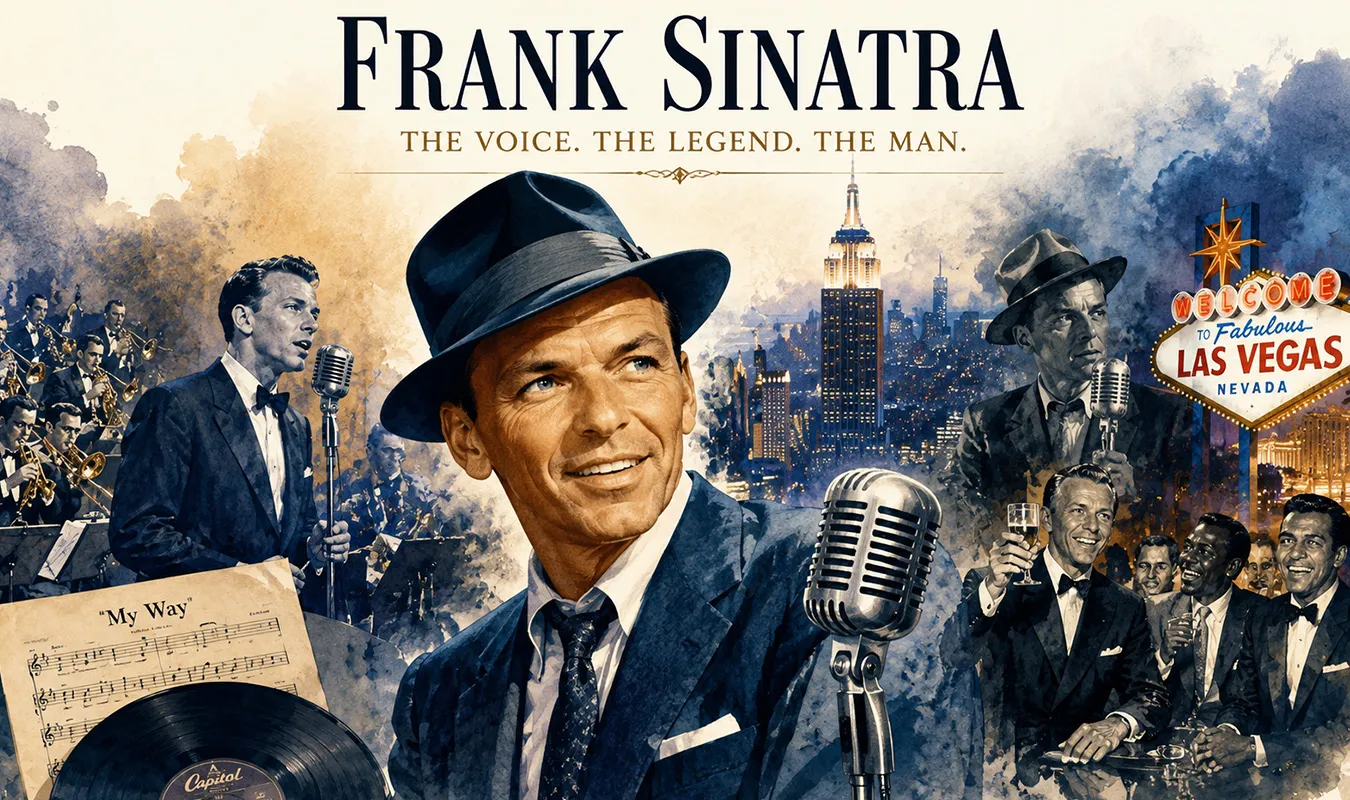
Frank Sinatra ― アメリカという時代を歌った男
| Text: mmr | Theme: Frank Sinatra, a symbol of American popular music. Tracing his eventful life and the huge footprints he left in entertainment history |
「シナトラ以前」と「シナトラ以後」
20世紀の音楽史を振り返るとき、いくつかの人物は単なるスターではなく、一つの時代そのものとして語られる。
Frank Sinatra was a perfect example of this.
彼はジャズ歌手だったのか。
Was he a pop singer?
あるいは映画俳優だったのか。
その答えは、どれも正しい。
さらに言えば、それだけでは足りない。
Sinatra was the embodiment of American culture.
1940年代には若者を熱狂させるアイドルとして登場し、1950年代には一度どん底まで転落する。そして見事な復活を遂げ、1960年代にはラスベガスの王となり、晩年には「アメリカ音楽の象徴」として国民的存在となった。
その生涯は成功の物語ではない。
It was a series of setbacks, restarts, challenges, and changes.
だからこそ、彼の人生は今なお多くの人々を惹きつけている。
シナトラの物語は、一人の歌手の成功談ではなく、20世紀アメリカ文化そのものの縮図だった。
生い立ちと移民社会のなかの少年
ニュージャージー州ホーボーケンで生まれる
Francis Albert Sinatra was born on December 12, 1915 in Hoboken, New Jersey.
両親はイタリア系移民だった。
His father, Antonino Sinatra, is of Sicilian descent.
母ナタリー・ガラヴェンタは北イタリアのリグーリア地方出身だった。
20世紀初頭のアメリカでは、イタリア移民はまだ差別の対象となることも少なくなかった。
ホーボーケンは移民たちが集まる労働者の街だった。
裕福な家庭ではない。
しかし活気に満ちていた。
少年シナトラは勉強よりも音楽に夢中だった。
The event that changed his life occurred in the 1930s.
It was Bing Crosby’s voice on the radio.
クロスビーの滑らかで自然な歌唱は、それまでのオペラ的な発声とは大きく異なっていた。
シナトラは衝撃を受ける。
“I want to be a singer too.”
そう決意した。
学校を中退し、音楽の世界へ飛び込んでいく。
マイク時代の到来
During the 1920s and 1930s, electrical recording and microphone technology developed rapidly.
それまでの歌手は大声で歌わなければならなかった。
しかしマイクが登場したことで、ささやくような表現が可能になる。
シナトラはこの新しい技術を徹底的に活用した。
In later years, many singers would imitate him.
しかし当時、その歌い方は革新的だった。
シナトラは優れた歌手である以前に、マイク時代を理解した最初期のアーティストだった。
ビッグバンド時代のスター誕生
ハリー・ジェームス楽団へ
1939年。
シナトラはトランペット奏者ハリー・ジェームスの楽団に加入する。
これが大きな転機となった。
初めて本格的なレコーディングを経験し、全国規模で名前が知られるようになる。
しかし本当の飛躍は翌年だった。
Joining the Tommy Dorsey Orchestra
1940.
シナトラはトミー・ドーシー楽団へ移籍する。
ドーシーは当時アメリカ最高峰のバンドリーダーだった。
Here Sinatra becomes a national star.
特に女性ファンの熱狂は社会現象となった。
1942年のニューヨーク・パラマウント劇場では、若い女性たちが悲鳴を上げ、失神するほどだった。
後にビートルズやエルヴィス・プレスリーで見られる現象が、すでにシナトラによって先取りされていたのである。
ブレスコントロールの秘密
Dorsey was known as a trombonist.
シナトラは彼の演奏を研究した。
長いフレーズを途切れさせない呼吸法。
滑らかなレガート。
これらを歌唱へ応用した。
結果として、彼独自の流れるようなスタイルが誕生する。
シナトラの歌唱は天性だけではなく、徹底した観察と研究によって築かれていた。
Solo transition and the first golden age
アイドル的人気の爆発
1942年に独立。
ソロ歌手として活動を始める。
It was the era of World War II.
多くの若者が戦地へ向かうなか、シナトラのロマンティックな歌声は人々の心を支えた。
「I’ll Never Smile Again」
「Night and Day」
「Saturday Night」
Hits like this continue.
1940年代半ばには全米最大級のスターとなった。
映画界への進出
音楽だけではない。
Hollywood also took notice of him.
ミュージカル映画を中心に出演を重ねる。
当時のアメリカでは、音楽と映画のスターが重なることは珍しくなかった。
But Sinatra was more than just a singing actor.
演技力そのものを磨き続けたのである。
Against racism
1940年代のシナトラは公民権問題にも積極的だった。
当時としては珍しく、人種差別に反対する立場を明確にしている。
人種平等を訴える活動にも参加した。
これは後年の公民権運動よりかなり早い時期だった。
若き日のシナトラは、エンターテイナーであると同時に社会的発言を行う存在でもあった。
転落の1950年代前半
人気低下
スターの座は永遠ではない。
In the 1950s, the situation changed.
Music trends have changed.
若いスターも次々と登場する。
さらに私生活のスキャンダルも報道された。
人気は急落する。
Crisis of vocal cord hemorrhage
1950年頃。
He also suffers from vocal cord hemorrhage.
歌手にとって致命的ともいえる出来事だった。
仕事は減少。
映画会社との契約も失う。
Sinatra faces the greatest crisis of his life.
ほとんど忘れられた存在へ
1940年代最大のスターだった男は、わずか数年で過去の人とみなされるようになる。
しかし彼は諦めなかった。
This is where the historic revival begins.
True legends are born not through success, but through recovery from failure.
『地上より永遠に』と奇跡の復活
Obsession with movies
シナトラは映画『地上より永遠に』への出演を強く希望した。
The role is small.
The pay is not high either.
それでも彼は出演したかった。
結果として、この判断が人生を変える。
アカデミー助演男優賞受賞
1953.
映画は大成功を収める。
Sinatra himself received critical acclaim and won the Academy Award for Best Supporting Actor.
attracting attention again.
歌手としても復活が始まる。
キャピトル時代の到来
1950年代中盤。
キャピトル・レコードで数々の名盤を制作する。
This is said to be the peak of his career as an artist.
シナトラは過去のアイドルから、成熟した芸術家へと生まれ変わった。
コンセプトアルバムの革命
The expression album
1950年代のポピュラー音楽はシングル中心だった。
しかしシナトラはアルバム全体を一つの作品として構築した。
これは後のロックやポップスにも大きな影響を与える。
Masterpieces
『In the Wee Small Hours』
“Songs for Swingin’ Lovers!”
“Only the Lonely”
『Come Fly with Me』
etc. were produced.
失恋。
孤独。
都会の夜。
A yearning for travel.
Each album has a unified theme.
The Art of Phrasing
シナトラの魅力は声量ではない。
He had the ability to sing as if speaking the lyrics.
一語一語の意味を理解し、物語として届ける。
This technique had a great influence on later generations of vocalists.
Sinatra didn’t just list hit songs, he gave each album a story.
ラット・パックと1960年代
King of Las Vegas
1960年代。
Sinatra became a symbol of Las Vegas.
He enlivened the stage with his friends.
At the center of this was the Rat Pack.
豪華なメンバー
彼らは映画、テレビ、ショービジネスを横断しながら活動した。
They are a group that symbolizes the golden age of entertainment.
Reprise Records established
1960年。
自らレコード会社を設立する。
アーティストが主体的に活動できる環境を目指した。
これは後の音楽産業にも影響を与えた。
Sinatra was not only a singer, but also a force in show business as a whole.
「My Way」と不滅の象徴
世界的アンセムの誕生
1969年。
「My Way」が発表される。
人生を振り返る内容の歌詞。
堂々とした歌唱。
この曲はシナトラの代名詞となった。
Personal rating
Interestingly, Sinatra himself was said to have had mixed feelings about the song in later years.
しかし聴衆は違った。
世界中で人生の節目に歌われる楽曲となった。
スタンダードの継承者
シナトラはアメリカン・ソングブックを次世代へ伝える役割も果たした。
Cole Porter.
ジョージ・ガーシュウィン。
Irving Berlin.
They delivered the works of these composers to a new generation.
「My Way」は単なるヒット曲ではなく、シナトラ自身の人生哲学の象徴として受け止められた。
晩年と国民的存在への到達
世界的レジェンド
1970年代以降も活動を続ける。
一時引退を表明したこともあったが、再びステージへ戻った。
1980年代から90年代にかけては、生ける伝説として扱われるようになる。
Success of duet project
In the 1990s, his collaborations with younger generations also became a hot topic.
世代を超えて支持される存在となる。
1998年死去
1998年5月14日。
82歳で死去。
アメリカ全土が追悼した。
His death was not seen as the death of a single singer, but as the end of an era.
晩年のシナトラはスターを超え、アメリカ文化の象徴そのものになっていた。
フランク・シナトラが残したもの
歌唱法への影響
Many modern vocalists are influenced by Sinatra.
呼吸法。
フレージング。
歌詞解釈。
感情表現。
その多くが現在も受け継がれている。
アルバム芸術の確立
The concept album idea also led to later pop and rock music.
アルバムを一つの作品として聴く文化の発展に貢献した。
Ideal image of entertainment
歌う。
play.
経営する。
speak out to society.
シナトラはエンターテイナーの可能性を大きく広げた。
Frank Sinatra’s legacy goes beyond his work and is etched into the very foundation of modern entertainment.
Chronology
| 年 | 出来事 |
|---|---|
| 1915 | ニュージャージー州ホーボーケンで誕生 |
| 1939 | ハリー・ジェームス楽団加入 |
| 1940 | Joined Tommy Dorsey Orchestra |
| 1942 | ソロ活動開始 |
| 1940年代中盤 | 全米的人気を獲得 |
| 1953 | Academy Award for Best Supporting Actor for From Here to Eternity |
| 1954 | Capitol era begins |
| 1960 | Reprise Records established |
| 1960s | Rat Pack at its peak |
| 1966 | “Strangers in the Night” a big hit |
| 1969 | 「My Way」発表 |
| 1998 | Passed away |
終わりに
Frank Sinatra was more than just a popular singer.
He perfected the art of singing in the microphone era, elevated albums to art form, achieved success in the film industry, and influenced the music business.
そして何より、彼は人生そのものを歌った。
若さの輝き。
孤独。
愛。
失敗。
再起。
pride.
All of this is engraved in his songs.
100年以上前に生まれた人物でありながら、その歌声が今なお新鮮に響く理由はそこにある。
時代を超えて残る芸術とは何か。
その問いへの一つの答えが、フランク・シナトラという存在なのである。
フランク・シナトラは「20世紀最高の歌手」の一人であるだけでなく、アメリカという物語を歌い続けた歴史的人物だった。
Explore more like this