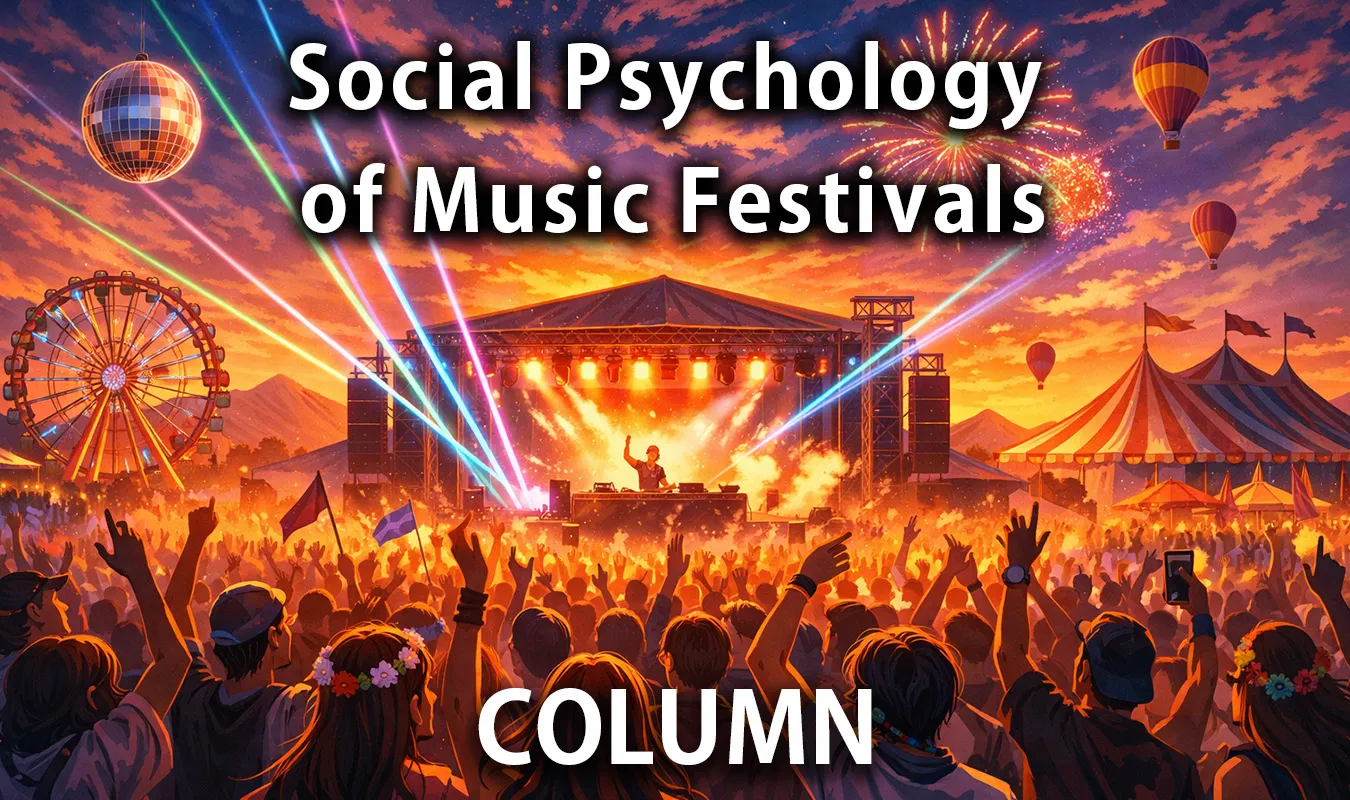
フェスサブカルチャーとは
文:mmr|テーマ:大規模音楽フェスにおける集団心理とサブカルチャー形成の長期的構造分析
フェスサブカルチャーとは、大規模音楽イベントを中心に形成される一時的共同体と、その内部で共有される象徴体系・身体実践・価値観の集合である。 Psychologically, it is explained as a complex phenomenon in which group identification, emotional contagion, depersonalization, liminality, and flow states interact.
フェスは音楽イベントであると同時に、強度の高い社会心理現象でもある。 そこでは一時的共同体が形成され、身体・感情・規範が同期する。
・なぜフェスは日常よりも強い高揚感を生むのか ・なぜ参加者は強い帰属意識を持つのか ・Why do unique cultural styles become established? ・Why does it not disappear even after commercialization?
History
Festival and collective eruption
社会学者Émile Durkheimは、宗教儀礼における強い集団的高揚を「集合的沸騰」と呼んだ。 It is a phenomenon in which an individual is included in a group and enters a state that exceeds normal self-consciousness.
古代から中世にかけて、祭礼は共同体統合の中心装置だった。音楽・舞踊・反復リズムは集団同期を促す。 フェス文化はこの構造を世俗化した形で継承している。
1960年代カウンターカルチャー
1969年のウッドストック・フェスティバルは、約40万人が参加した歴史的イベントである。 反戦運動、ヒッピー文化、ロック音楽が交差し、音楽イベントが社会運動と結びついた。
At this point, the meaning of festivals expanded from ““listening to music” to ““sharing values.”
レイヴと脱個人化
1980年代後半の英国アシッドハウス・レイヴでは、匿名性と反復ビートが強調された。 大音量、暗闇、反復光刺激は自己境界の感覚を弱める。
Rave culture was later institutionalized and developed into huge commercial festivals such as Tomorrowland and Ultra Music Festival.
日本の文脈
1997年開始のFUJI ROCK FESTIVALは、自然環境と音楽体験を統合する形式を確立した。 山間部での開催は都市型フェスとは異なる身体経験を生む。
フェスは宗教儀礼からカウンターカルチャー、そして体験経済へと形態を変えながら進化してきた。
集団心理のメカニズム
Social identification
According to Henri Tajfel’s social identification theory, people form their self-concept by belonging to a group. フェスでは「参加者」というカテゴリーが強調され、内集団意識が生まれる。
共通のリストバンド、Tシャツ、ハンドサインは象徴資本として機能する。
感情伝染
群衆の歓声、跳躍、合唱は感情を拡散させる。 研究では、他者の表情や身体動作を模倣する過程が情動共有を強めることが示されている。
フェスでは数万人規模でこのプロセスが同時進行する。
脱個人化
Philip Zimbardoらの研究によれば、匿名性と群衆性は自己抑制を低下させる。 Darkness, light effects, and sound pressure blur the boundaries of self.
ただし近年の研究では、脱個人化は無秩序を生むのではなく、集団規範により強く従う傾向を示すことが指摘されている。
身体同期
4つ打ちリズムや一定BPMの反復は心拍と同期しやすい。 神経科学研究では、リズム運動がドーパミン放出と関連することが示されている。
フェスは心理理論の集合ではなく、身体と神経系を通じて実装される現象である。
Key Artists
Symbolic presence
Jimi Hendrixは、ウッドストックでの演奏を通じて政治的象徴と音楽を結びつけた。
レイヴ拡張
The Prodigyは攻撃的エネルギーを大規模群衆空間へ導入した。
EDM時代の感情設計
Avicii refined anthemic structure and accelerated choral culture.
アーティストは群衆心理を設計する存在として機能する。
Essential Tracks
・Purple Haze ・Smack My Bitch Up ・Levels
これらに共通するのは反復、ビルドアップ、ピーク構造である。 ピークの瞬間、観客の身体運動は同調する。
音楽構造は群衆心理の設計図である。
Process of subculture formation
- Shared experience
- 象徴の生成
- 反復参加
- 内部規範の確立
- 外部との差異化
このプロセスはBirmingham学派が指摘したサブカルチャー理論と整合的である。
ファッション、アクセサリー、スラングは境界線を可視化する。
経済と制度化
Since the 1990s, festivals have become a tourist attraction. スポンサー、ブランド協賛、SNS拡散が体験を拡張する。
体験経済論によれば、消費者は「物」ではなく「経験」を購入する。 フェスはこの理論の典型例である。
Rather than weakening festivals, commercialization has changed their form and expanded them.
デジタル時代の変化
SNS amplifies prior expectations. Photo and video sharing reproduces experiences secondarily.
Live streaming and virtual festivals have also appeared, but the strength of body synchronization is said to be limited compared to physical spaces.
But online communities sustain a sense of belonging.
フェスは物理空間とデジタル空間の両方で共同体を生成する。
リスクと安全管理
群衆心理はポジティブな効果だけでなく、危険も伴う。 群集雪崩事故の研究では、密度上昇が閾値を超えると制御不能になることが示されている。
近年の大型フェスでは動線設計、密度管理、リアルタイム監視が重視される。
The institutional challenge is to ensure safety while maintaining psychological uplift.
Festivals are established through a balance between freedom and order.
Cultural influence
・ファッション産業への影響 ・Expansion of tourism industry ・都市ブランド戦略 ・音楽消費形態の変化 ・世代アイデンティティ形成
フェス体験は長期的記憶として保存され、人生物語の一部となる。
Festivals are not temporary events, but cultural devices that build memories of life.
FAQ
Why can you make friends with strangers at festivals?
Because common goals and synchronized actions reduce psychological distance.
なぜ同じフェスに何度も行くのか?
帰属意識と記憶の再活性化が報酬系を刺激するため。
商業化でサブカルチャーは消えるのか?
制度化されても新たな周縁文化が生成されるため完全には消滅しない。
Festival subculture continues to evolve at the intersection of psychology, body, and economy.
本稿は社会心理学、社会学、文化研究、神経科学の研究成果をもとに構築した。 フェスは娯楽を超えた「集団心理の実験場」であり、人間が共同で意味を生成する場である。
Explore more like this
【コラム】 なぜ、どの世代も「世界は悪くなった」と感じるのか — 「最近の音楽はつまらない」から始まる、世代・記憶・メディア・社会の奇妙な循環
Why Every Generation Thinks the World Is Getting Worse
【コラム】 The Death of the Human Taste — 「好き」は、本当に自分のものなのか
The Death of the Human Taste