[Column] What is Experimental Folk / Psych Folk?: The intersection of acoustic and experimental music
Column en Experimental Folk Psychedelic![[Column] What is Experimental Folk / Psych Folk?: The intersection of acoustic and experimental music](/../assets/images/column-experimental-folk.webp)
What is Experimental Folk / Psych Folk?
Text: mmr|Theme: Changes over time, techniques, and cultural background centered on Comus, Espers, and Current 93
Experimental Folk and Psych Folk are based on acoustic instruments, ・Dissonance ・Drone ・Storytelling/reading ・Ethnic musical elements ・Electronic sounds and tape operations It is a genre that has expanded the framework of folk music by incorporating such things as folk music.
They range from the psychedelic movement of the late 1960s, the British folk revival, American acid folk, to the post-industrial/experimental music scene of the 1980s to 2000s. Therefore, the genre is defined not so much by a ““uniform sound” as by ““acoustic experiments” centered on acoustics.
1. Origin: Folk psychedelia of the late 1960s and early 70s
British Folk and Acid Folk
The earliest examples of Experimental Folk/Psych Folk can be found in the Acid Folk of the late 1960s and early 1970s. Representative examples are as follows.
-
The Incredible String Band Scottish duo. Introducing Eastern instruments, a microtonal approach, and ritualistic song structures. It is said to be the group that created the prototype of Psych Folk.
-
Comus (1969–) His 1971 debut “First Utterance” was set in the context of British folk, but ・Creepy vocals ・Dissonant acoustic guitar ・Frazy arrangement for flute and violin It has been praised as a work that had a decisive influence on later dark folk/acid folk.
Although Comus was not a commercial success, current 93 and many other dark folk artists have spoken of its influence.
2. 1970s: The emergence of American introspective folk and experimentation
In the United States, psych-folk was not as defined as a collective movement in the United Kingdom, but the following trends are important:
-
John Fahey and the Genealogy of American Primitives Fingerpicking with improvisational, drone, and noise motives. Fahey was a ““folk guitar experimenter’’ and greatly influenced subsequent artists.
-
Tim Buckley’s later works Introducing jazz phrasing and non-linear structures to folk music.
-
Linda Perhacs (“Parallelograms”, 1970) An experimental production that combines tape processing, strings, and chorus work.
During this period, American experimental folk was scattered as ““the personal experiments of singer-songwriters’’ and did not emerge as a movement. However, it became the sound source foundation for the revival from the 1990s onwards, which will be discussed later.
3. 1980s-90s: Influence of Industrial/Neofolk and role of Current 93
In the 1980s and 1990s, “neofolk” with acoustic elements emerged from the British post-industrial scene. One of the central players is Current 93 (led by David Tibet).
Features of Current 93
- Early on there was a strong noise/industrial element.
- Since the 1990s, the focus has shifted to acoustic instruments such as harmonium, guitar, hurdy-gurdy, and percussion.
- Emphasis on mysticism and poetic recitation
- Inheriting Comus and British folk approaches
- Featuring Nick Cave, Michael Cashmore, Ben Chasny (Six Organs of Admittance) and many more
He has defined the current characteristics of Experimental Folk: ““experimental music x acoustic x poetic recitation.’’
Intersection with Neofolk
Neofolk (Death in June, Sol Invictus, etc.) is often politically controversial, but sonically Minimal arrangement x folk guitar x drone x solemn poetry These elements are connected to Psych Folk’s experimental orientation.
4. 2000s: The convergence of new psychedelia and indie folk — the emergence of Espers
In the 2000s, a new trend of Psych Folk/Freak Folk was born mainly on the East Coast of the United States. Espers (Philadelphia, 2002–) is a representative example.
Musical characteristics of Espers
- Acoustic guitar, harp, drone-like synth
- Harmony of traditional folk from the British Isles
- Calm and multi-layered vocals
- Electric / Drone Folk elements
- Contemporary reconstruction of the 1960s-70s acid folk context
They bridged Psych Folk into the realm of indie rock/ambient/drone, and played a key role in the resurgence of Experimental Folk in the 2000s.
Related acts from the same period include
- Devendra Banhart
- Six Organs of Admittance
- Animal Collective (initial)
- Faun Fables Examples include.
5. Post-2010s: Fusion of drone, electro-acoustic, and contemporary music
In the 2010s, Experimental Folk began blurring the lines between acoustic and contemporary music.
Points of note
- Rise of Drone Folk → Earth (from drone metal), Grouper, Julianna Barwick, etc.
- Tape processing × acoustic
- Introduction of chamber music/minimal music
- Fusion with environmental sound/field recording
From around this time, Experimental Folk began to expand its genre boundaries. Ambient / Drone / Chamber Folk / Post-Industrial / Acoustic Minimalism It develops in a branching and overlapping manner.
6. Technique analysis: Elements that make Experimental Folk work
Acoustic characteristics
- Mainly acoustic Guitar, banjo, harp, fiddle, percussion, etc.
- Introduction of non-Western musical instruments sitar, darbuka, hurdy gurdy
- Drone Sustained sounds from synths, organs, and string instruments
- Dissonance/Irregular Tuning Open tuning, microtone
- Spoken word Noticeable in Current 93 and Neofolk series
- Tape loop/inversion processing/reverberation enhancement
- Ethnic music/spiritual elements modes, ritual rhythms, religious poetry, etc.
Thematic features
- Mysticism/Fables/Religious Symbols
- Naturalism/pastoral scenes
- Spiritual world/introspection
- Quotes from folk tales/legends
- Unusual feeling, recollection of altered consciousness (derived from psychedelia)
7. Positioning of Comus・Espers・Current 93
| Artist | Region | Active period | Position |
|---|---|---|---|
| Comus | UK | 1969– | The origin of acid folk. Darkfolk template. |
| Current 93 | UK | 1982– | A fusion of post-industrial and acoustic. The center of neofolk. |
| Espers | USA | 2002– | A symbol of the resurgence of Freak Folk/Psych Folk in the 2000s. |
By juxtaposing these three elements, we can understand that Experimental Folk is ““not a continuous genre, but a phenomenon in which multiple cultural trends are connected experimentally with acoustics as its base.’’
8. By era: Experimental Folk / Psych Folk major chronology
9. Experimental Folk acoustic structure: illustrated
10. Current position: Blurring of boundaries
Experimental Folk in the 2020s has expanded as a genre,
- indie rock
- Ambient
- modern classic
- Visual and audio
- Experimental Pop connected to the boundaries of
As a result, a situation continues in which Comus” dark folkness, Current 93”s poetic experiments, and Espers’ multilayered arrangements are simultaneously referenced. In other words, Experimental Folk has transformed into a “creative process that connects disparate elements with a focus on acoustics,” and is understood more as a methodology than a genre.
Conclusion: Experimental Folk is a “place for acoustic experiments”
Experimental Folk / Psych Folk, within the constraints of acoustic instruments, ・Sound adventure ・Poetic worldview ・Intersection with folk music and religious symbols It is a place where people can try their hand at experimentation, and its core lies in the experimental nature of the creative method itself.
The bizarre acid folk of Comus, the religious recitations of Current 93, and the tranquil, multi-layered arrangements of Espers. What these artists have in common is that they treat folk as a “material” and deconstruct and reconstruct it acoustically and culturally.
Experimental music and folk music are never far apart, and the simplicity of acoustic music allows for more room for experimentation. The resulting ““borderline music’’ is Experimental Folk/Psych Folk.
Explore more like this
![[Column] Neo-Psychedelic Folk](/../assets/images/column-neo-psychedelic-folk.webp)
[Column] Neo-Psychedelic Folk
Prologue: Recursive psychedelia and folk updates
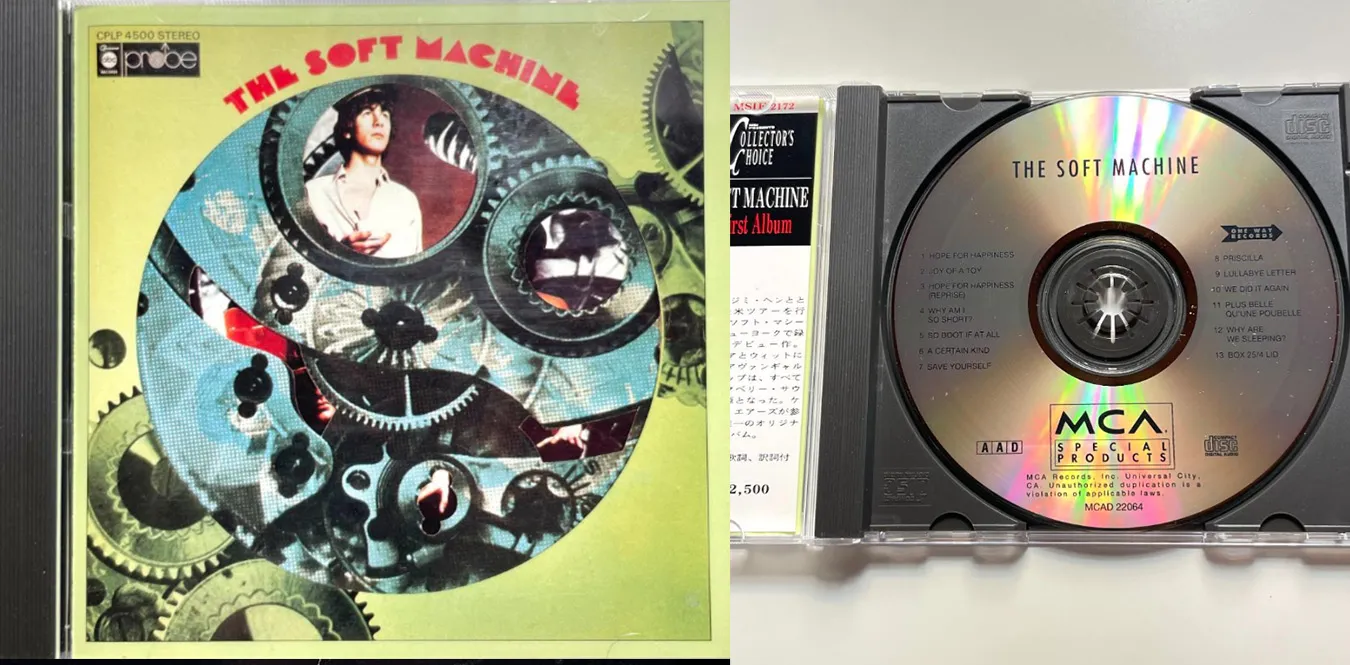
The Soft Machine – The Soft Machine
The Soft Machine is a British progressive jazz-rock band from Canterbury formed in mid-1966 by Mike Rutledge, Robert Wyatt, Kevin Ayers, David Allen, and Larry Nowlin. The band was named...