![[Column] Electro-Funk / Modern Funk](/../assets/images/column-electro-Funk-modern-funk.webp)
Introduction
Text: mmr|Theme: The genealogy of electronic funk and the structure, equipment, rhythm, and visual culture seen in Chromeo and Jamiroquai derivatives
Electro-Funk/Modern Funk is not a name that refers to a specific era or a single movement. This name is a comprehensive framework that refers to the entire process by which the structural principles of funk established in the 1970s have been reorganized while embracing electronic musical instruments and digital production environments.
The essence of funk lies in repeated rhythms, bass lines, and a physical sense of time, rather than chord progressions or melodies. Electro-Funk/Modern Funk has changed its production methods and sound design without losing its essence. As a result, multiple achievements have been made, including studio-based electronic funk and performance-based extended funk.
Chromeo and Jamiroquai derivatives are symbols of this parallel structure, and this article will focus on both to describe the formation process and internal structure of the genre as a whole.
Chapter 1: The original structure of funk
Funk is rhythm and bass driven music. Harmonic progressions are kept to a minimum and the same phrases are repeated for long periods of time. This repetition is not stagnant, but a dynamic structure that is constantly updated by the performer’s accent, timing, and timbre changes.
In 1970s funk, the drums formed a groove based on 16th notes, and the bass manipulated the center of gravity of the beat while intertwining with the kick. Guitars and keyboards functioned as rhythm instruments, with emphasis on cutting and stabbing rather than chords.
At this point, funk already had the qualities of loop-based music, and its later digitization was a natural extension.
Chapter 2: Changes before electronicization
In the late 1970s, advances in studio technology began to change the way funk was produced. With the spread of multi-track recording, performances began to be broken down and treated as material that could be edited. As a result, greater emphasis was placed on rhythmic precision and timbre unity.
Around the same time, electric pianos and early synthesizers were introduced, and the keyboard changed from being just a harmonic instrument to being a timbre player. At this stage, the ideas for later synth basses and electronic leads were being prepared.
Chapter 3: The establishment of Electro-Funk
In the early 1980s, the widespread use of drum machines marked a decisive turning point. Rhythm moves from playing to programming, and tempo and repetition become completely controllable. This removed some of the human fluctuations from funk and gave it a mechanical precision.
However, complete mechanicality undermines the appeal of funk, so a ““pseudo-physicality’’ is introduced using swing values and velocity changes. This idea was inherited from Electro-Funk to Modern Funk.
At the same time, synthesizer basslines became commonplace, and the low range came to be dominated by tonal design rather than playing technique.
Chapter 4: Digital production environment and Modern Funk
Since the 1990s, with the spread of DAWs, individual production has become a realistic option. Funk no longer relies on large bands, but instead changes to music that can be created by a small group of people or by a single producer.
In Modern Funk, each element is clearly organized. It has become common to have a synth bass for low frequencies, a programmed drum for rhythm, and a polyphonic synth for chords, and frequency management at the mix stage is becoming more important.
This arrangement refined the music while eliminating excessive decoration and bringing the groove itself to the forefront.
Chapter 5: Structure of Chromeo derivatives
The Chromeo derivative shows the direction of extracting the elements of funk and reconstructing it with a minimal structure. Horn sections and complex guitar ensembles are eliminated, and the focus is on keyboards, synth bass, drum machines, and vocals.
Vocals are valued more for their acoustic role than emotional expression, and are incorporated into the song structure through effects processing. Singing is treated as a type of lead instrument, and functions to fill the gap between rhythm and chords.
This lineage assumes studio production, and the songs are designed as highly complete products.
Chapter 6: Structure of Jamiroquai derivatives
Jamiroquai derivatives maintain the performance structure of a funk band while incorporating electronic elements. The interaction between drums, bass, guitar, and keyboard is emphasized, and rhythmic fluctuations and dynamics are maintained.
Electronic musical instruments play a supporting role and are used for timbre expansion and spatial processing. Here, live performance and studio production are on the same page, and physical persuasiveness takes precedence over reproducibility.
Chapter 7: Visual Culture
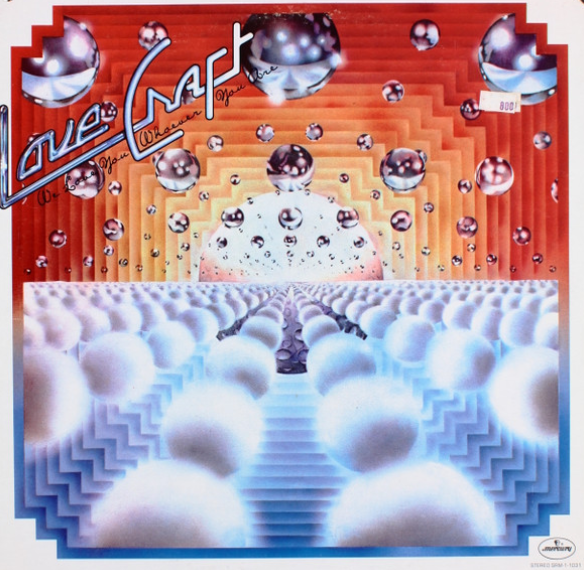
The visuals in Electro-Funk/Modern Funk are closely tied to the structure of the music. Neon colors, chrome tones, and geometric motifs serve as visual devices for repetition and mechanicality.
The design, which references past and future images, visualizes the temporal multi-layered nature of music and gives a consistent aesthetic to the entire genre.
Chapter 8: Equipment configuration
Synthesizers are divided into monophonic and polyphonic parts. The former is in charge of bass and lead, while the latter is in charge of chords and pads, and by avoiding overlapping ranges, the groove becomes clearer.
The drum machine has a limited number of tones and is mainly composed of kick, snare, clap, and hi-hat. Excessive layers are avoided, and the gaps create a groove.
Chapter 9: Rhythm structure details
The basic time signature is 4/4, divided into 16th notes. The hi-hat serves as a time reference point, the kick emphasizes the beat, and the snare or clap emphasizes the second and fourth beats.
The bass does not overlap completely with the kick, but uses slight deviations and backbeats to generate propulsion. This gap is the element that gives the mechanical rhythm a sense of life.
Chapter 10: Structural correlation diagram
Chapter 11: Chronology
Conclusion
Electro-Funk/Modern Funk is not a genre meant to preserve past styles. It is a methodology that constantly adapts the structural principles of funk to the latest production environment.
The Chromeo derivative embodies this methodology from different angles, through abstraction and design, and the Jamiroquai derivative through performance and physicality. The two do not conflict, but coexist as different implementation forms of the same lineage.
This flexibility is why Electro-Funk/Modern Funk continues to function today.