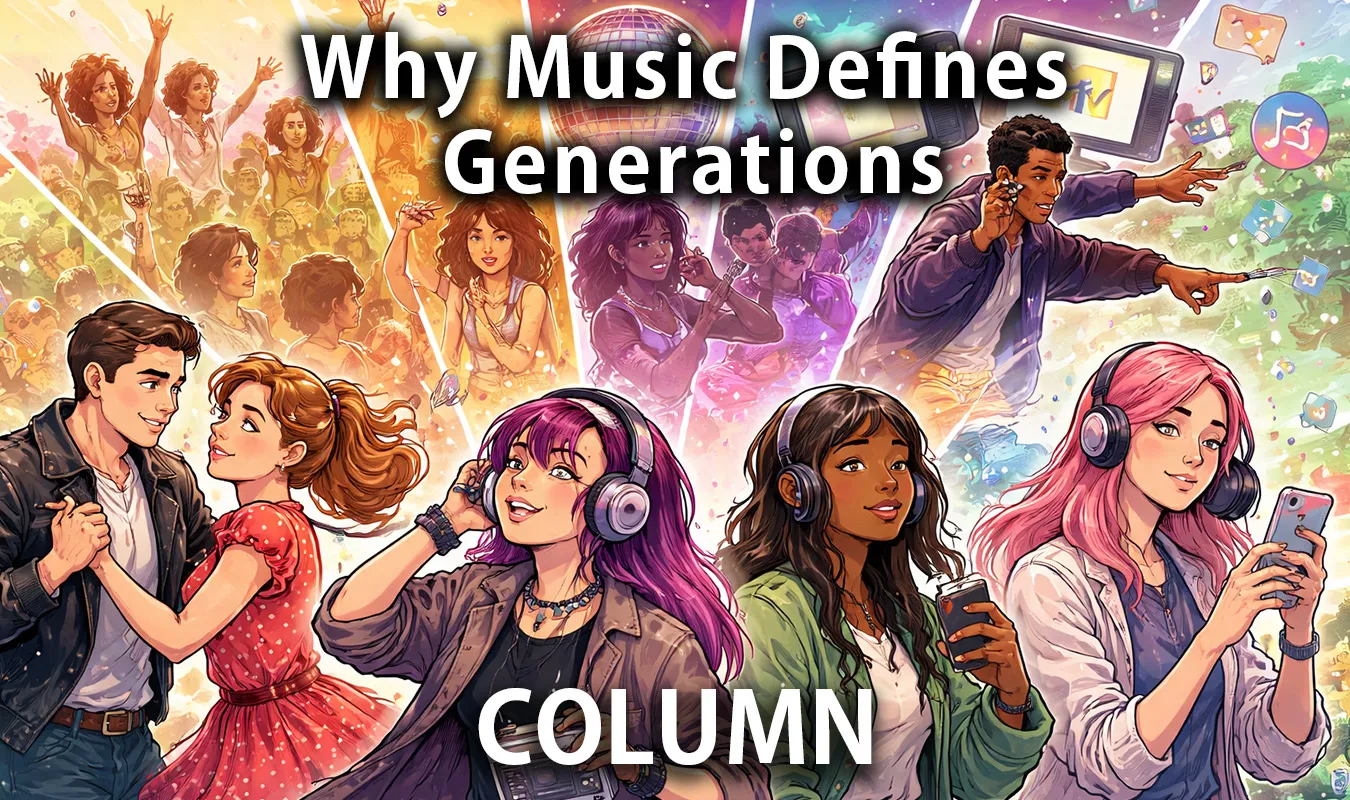
The phenomenon of music and generations
Text: mmr|Theme: Why does music become a symbol of a generation? Deciphering the relationship between music and generational culture from the 20th century to the present, focusing on changes in technology, social movements, and media.
When people talk about a generation, they often think of music.
Rock in the 1960s, disco in the 1970s, synth pop in the 1980s, grunge and hip-hop in the 1990s. Music is not just entertainment; it has functioned as a cultural device that symbolizes the atmosphere, values, and emotions of young people at that time.
Sociologists have long described a generation as a group of people who share the same historical moment. However, in reality, a generation’s memory is not shaped solely by events. A medium is needed to fix the emotions of the event in memory.
Music has played the strongest role in this.
Music is an art that is connected to time, and at the same time it is accompanied by emotion. Many people have experienced the phenomenon of instantly reliving the scenery and emotions of a certain era when they hear a particular song.
This memory system has turned music into a symbol of a generation.
Music is not just a sound, but a device that preserves the emotions of an era and has shaped the memories of generations.
Connection between youth culture and music
One of the reasons why music symbolizes a generation is because of its strong ties to youth culture.
Before the 20th century, music was primarily for social and religious purposes, and cultural differences by age were not that great. However, in the 20th century, with urbanization and the development of popular media, youth culture began to be recognized as an independent social stratum.
Especially after World War II, the concept of the teenager emerged. Postwar economic growth meant that young people had disposable income and became the main consumers of the music market.
This change had a major impact on the music industry.
Record companies and radio stations produce music targeted at young people. As a result, a structure of ““music for each generation’’ was born.
This trend became decisive from the 1950s onwards with the explosive popularity of rock and roll.
Rock and roll wasn’t just new music. It was a culture that symbolized that young people had different values from their parents’ generation.
With the birth of youth culture, music has become the most powerful cultural symbol that differentiates generations.
Generational music created by media technology
In order to understand the relationship between music and generations, we cannot avoid the evolution of media technology.
New music media have always given rise to new generations of culture.
Changes in major music media
| Period | Main Media | Cultural Influence |
|---|---|---|
| 1920s | Radio | Sharing music nationwide |
| 1950s | Records | Expansion of youth market |
| 1970s | Cassette | Personalized Music |
| 1980s | MTV | Visual Culture and Music |
| 2000s | MP3 | Digitalization of music |
| 2010s | Streaming | Algorithm Era |
Radio, for example, transformed music from local to national culture. The experience of listening to the same song at the same time creates a shared generational memory.
Cassette tapes in the 1970s created a more personal music culture. Mixtapes became a means of expressing personal identity.
With the advent of music television in the 1980s, music became associated with visual culture. Music videos have become a comprehensive culture that includes fashion, dance, and visual expression.
Then, in the 21st century, the Internet completely changed the distribution of music.
New music media have always created a new generation of culture.
Music and social movements
Many generations of music are deeply connected to social movements.
Folk songs of the 1960s were associated with the civil rights movement, Punk in the 1970s was born out of political dissatisfaction.
Music was a powerful means of spreading political messages.
The reason is simple. Songs are easy to remember and easy to share with a group.
For example, at demonstrations and rallies, singing creates a sense of solidarity among participants. This structure has been repeated many times throughout history.
Examples of music and social movements
| Age | Music Genre | Social Background |
|---|---|---|
| 1960s | Folk | Civil Rights Movement |
| 1970s | Punk | Economic Anxiety |
| 1980s | Hip Hop | Urban Culture |
| 1990s | Grunge | Feeling of alienation among young people |
| 2000s | Indie | DIY culture |
Music is not just an expression, but also a response to social situations.
Music reflects not only the emotions of a generation, but also the social conditions of the time.
Music as generational identity
Music also has a strong influence on the formation of individual identity.
Psychological research shows that people remember the music most strongly when they listened to it in their late teens or early 20s. This period is an important stage in personality development, and musical experiences are likely to be linked to long-term memory.
Therefore, people feel that the music of their youth is ““their own music.’’
This phenomenon is often referred to as a “reminiscence bump.”
In this way, music becomes not just a part of culture, but a part of an individual’s life.
The reason why different generations have different music is This is because each generation experiences a different historical moment in their youth.
Adolescent musical experiences are long remembered as the core of generational identity.
Globalization and music generation
In the latter half of the 20th century, musical culture began to rapidly transcend national borders.
The recording industry and television created a culture of sharing the same music on a global scale.
For example, rock, disco, hip hop, Each influenced youth culture around the world.
At the same time, however, integration with local culture progressed.
Hip-hop has developed uniquely in each country, Rock also produced different styles in each country.
In other words, generational music is not simply imported; It becomes a new culture by being reinterpreted in each region.
Globalization has made music a universal culture, but it has also created generational music for each region.
Generation music in the streaming era
In the 21st century, the way we listen to music has changed dramatically.
Streaming services provide a huge selection of songs, Listeners can access past and present music at the same time.
This has also influenced the structure of generational music.
In the past, radio and television determined music trends. But now algorithms personalize the listener’s musical experience.
As a result, even people of the same generation listen to vastly different types of music.
Still, the power of music to symbolize a generation remains.
Internet culture is creating new forms of generational music. Social media and video platforms spread new music trends instantly.
Even in the streaming era, music continues to shape generations, but in more diverse ways.
Why music defines generations
The reason why music is at the center of generational culture is due to a combination of factors.
First, music is an art that strongly evokes emotions. Second, it is tied to youth culture. Third, mass sharing is possible through media technology.
When these three elements come together, music becomes a symbol of a generation.
Three elements that create generational music
| Element | Content |
|---|---|
| Emotion | Music is strongly connected to memory |
| Youth culture | Adolescent experiences |
| Media | Possibility of simultaneous sharing |
When these elements come together, Music becomes more than just entertainment; it becomes a cultural symbol.
Music becomes the center of generational culture due to three elements: emotion, youth, and media.
Chronology: History of music and generational culture
| Period | Event | Cultural Meaning |
|---|---|---|
| 1920s | Popularization of radio | National music culture |
| 1950s | Rock and Roll | Birth of youth culture |
| 1960s | Counterculture | Music and Social Movements |
| 1970s | Punk and Disco | Diversification |
| 1980s | MTV | Visual Music Culture |
| 1990s | Grunge and Hip Hop | Generational Identity |
| 2000s | Digital music | Industrial structural changes |
| 2010s | Streaming | Algorithm Culture |
The history of music is also the history of generational culture.
Conclusion: Music is a record of the emotions of the times.
Looking back at history, music has always existed with generations.
It’s not just because young people like music. This is because music is a medium that stores emotions.
Politics, technology, and social change. All of this is remembered through music.
That’s why when people remember a certain era, Sometimes I remember the music before the event.
Music is a record of the emotions of the times, The culture of generations is formed by collecting these records.
Music is a cultural medium that not only records the events of an era, but also preserves the emotions of that era.