序章:声は楽器ではなく、現象である
Text: mmr|Theme: The process by which a voice born from an island of ice and fire melts and redefines the boundaries of pop music
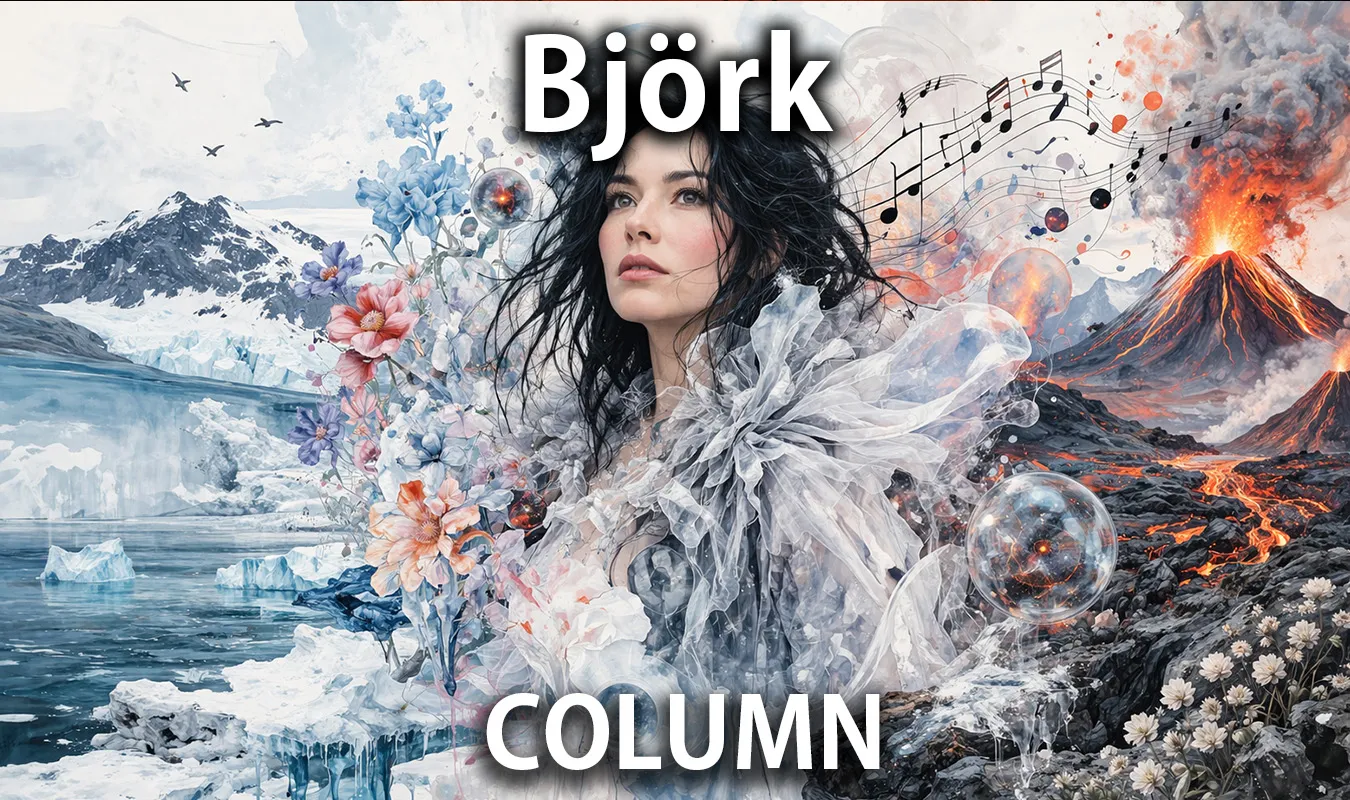
アイスランドという地理的にも文化的にも孤立した環境から、世界のポップミュージックの構造そのものを揺るがした存在がいる。それがBjörkだ。彼女の音楽はジャンルでは括れない。エレクトロニカ、ポップ、クラシック、民族音楽、それらは単なる材料にすぎず、最終的に現れるのは「声」という根源的な現象である。
彼女の声は旋律をなぞるだけではない。震え、裂け、囁き、跳ねる。言葉の意味を離れ、身体そのものの運動として響く。氷河の軋みや火山の鼓動のように、自然の動きと同調する音として存在する。
この感覚は彼女の全キャリアに通底している。音楽とは構造ではなく、流動する現象であるという認識。その視点から見たとき、Björkの作品群は単なるディスコグラフィではなく、ひとつの連続した生命体のように振る舞う。
The moment the voice leaves language, music returns to nature.
幼少期とバンド時代:逸脱の準備期間
1965年、レイキャヴィクに生まれたBjörkは幼少期から音楽教育を受け、フルートやピアノに親しんだ。11歳のとき、彼女は本名であるBjörk Guðmundsdóttir名義でアルバム『Björk』(1977年)を発表する。
この作品はカバー曲を中心とした内容であり、本人の創作性が全面に出たものではないが、彼女の声の特異性はすでに明確に記録されている。アイスランド国内で制作されたこのアルバムは、彼女にとって最初の「録音された自己」であり、後のキャリアの起点として重要な意味を持つ。
1980年代に入ると、彼女はパンクやニューウェーブの文脈へと足を踏み入れる。The Sugarcubesでの活動は、その転機となった。彼らの楽曲「Birthday」は国際的な評価を受け、アイスランドという周縁から世界への回路が開かれる。
しかしバンドという形式は同時に制約でもあった。彼女の表現欲求は、より自由な構造を必要としていた。結果としてソロ活動への移行は必然だったと言える。
The first recordings already contained the germs of later heterogeneity
『Debut』(1993):都市と身体の再接続
His debut solo album, ““Debut,’’ was created in conjunction with London’s club culture. Although influenced by house and dance music, internal deconstruction has already begun.
“Human Behaviour” offers an outsider’s view of humanity, while “Venus as a Boy” highlights the distance between the jazzy harmonies and intimate voices.
It is anecdotally known that in this work she prioritized ““establishing her own musical language” over ““becoming a pop star.” The resulting album was a rare example of commercial success and experimentation at the same time.
ポップの形式を借りながら、その内側で別の言語が生成されていた
“Post” (1995): Genre clash and multifacetedness
続く『Post』は、極端な振れ幅を持つ作品である。ビッグバンド的な「It’s Oh So Quiet」と、インダストリアルな「Army of Me」が同一アルバムに共存する。
This diversity is not confusion, but a direct reflection of her inner plurality. It can be said that the miscellaneousness of the urban environment of London is directly transcribed into the sound.
During production, she was stalked and her living environment was shaken up. This experience is thought to have influenced the sense of tension and disconnection in the work.
Urban noise and personal emotions collide, creating new pop
Homogenic (1997): The inner volcano
『Homogenic』はしばしば彼女の代表作として挙げられる。ここで彼女は「内面の風景」を音として具体化することに成功した。
ストリングスとビートが緊密に結びつき、「Jóga」では地殻変動のような音響が展開される。これは単なる比喩ではなく、実際にアイスランドの地形的イメージが音楽に反映されている。
制作においては、電子音のプログラミングとアナログな演奏が精密に組み合わされている。この融合は後のエレクトロニカにも大きな影響を与えた。
Emotions become scenery, and scenery rises as sound.
“Vespertine” (2001): Micro-acoustics
In “Vespertine,” the scale suddenly shrinks. Clicking sounds, minute electronic sounds, breathing. These delicately overlap to form an extremely intimate space.
This work has a domestic and introverted theme, and was mainly created using a laptop. It was an innovative method at the time, and expanded the possibilities of “private music.”
合唱やハープといった要素も導入され、デジタルとアコースティックの境界が曖昧になる。
最小の音が最大の親密さを生む
“Medúlla” (2004): A universe of voices only
"”Medúlla’’ is composed almost entirely of human voices. Beatbox, chorus, solo voice. These elements overlap to create music that does not require instruments.
この試みは、音楽の最小単位が「声」であることを再確認するものでもあった。政治的・社会的なテーマも含まれ、人間という存在そのものに焦点が当てられている。
声だけで世界は構築できるという極限の実験
『Biophilia』(2011):科学と音楽の交差点
『Biophilia』はアルバムであると同時に教育プロジェクトでもあった。アプリを通じて楽曲と科学的概念が結びつけられ、音楽が学習の媒体として機能する。
Each song corresponds to a natural phenomenon, with themes such as lightning, crystals, and DNA. Here she redefined music as an “interface of knowledge.”
音楽は聴くものから、理解するための装置へと拡張された
“Vulnicura” (2015) and “Utopia” (2017): Wounds and Regeneration
Personal separation is a central theme in Vulnicura, and emotions are depicted over time. Strings and beats intersect, and the pain itself appears as sound.
対照的に『Utopia』では再生と希望が描かれる。フルートアンサンブルや鳥の声が導入され、開放的な音響空間が広がる。
この二作は対になっており、破壊と再生というプロセスを音楽として体験させる。
崩壊と再生、その両方が音楽として刻まれる
Chronology: Björk’s trajectory
Structure diagram: Björk’s musical structure
結語:未完成であることの強度
Björkの作品は常に未完成のように感じられる。それは欠落ではなく、開かれているということだ。聴き手の経験や時間によって意味が変化し続ける。
Her music offers no answers. Rather, it amplifies the question. What is sound, what is emotion, and what is human being? She continues to respond to that question with sounds.
Music continues to exist as a never-ending question
Explore more like this
【コラム】 Experimental Electronic Pop / Art Pop
1. ジャンル概念の再整理