[Column] Aphex Twin's philosophical view of music: coexistence of order and disorder
Column en Experimental Techno![[Column] Aphex Twin's philosophical view of music: coexistence of order and disorder](/../assets/images/column-aphex-twin.webp)
Why is his sound “incomprehensible but beautiful”?
Text: mmr|Theme: Aphex Twin’s philosophical view of music that embodies the coexistence of order and disorder in electronic music
Music usually has a ““conductor of understanding.’’ Melody, rhythm, development—these guide the listener. However, in Aphex Twin’s music, this line of conductor is intentionally severed.
ビートは崩壊し、旋律は断片化され、音の配置は予測不能。それでもなお、聴き手はそこに“美しさ”を感じてしまう。この現象はどこから来るのか。
His works directly affect “perception” rather than understanding. The sound itself is structured so that it reaches the body and emotions before the brain can assign meaning to it. This is a more primitive and intuitive musical experience, different from the harmonic beauty of classical music or the hooks of pop music.
More importantly, the disorder is not completely random. There is always an internal structure to his sound. Behind what appears to be chaos, there is an extremely precise design. This “invisible order” gives the listener a unique sense of security and discomfort at the same time.
つまり、彼の音楽は「理解不能」ではなく、「理解の方法が従来と異なる」だけなのだ。
People feel beauty not because they cannot understand something, but when their way of understanding is updated.
People and anonymity
Richard D. James, also known as Aphex Twin, was born in 1971 in Cornwall, southwest England. It is said that he had a strong interest in electronic devices from an early age, and used to generate sounds using self-made and modified equipment.
彼のキャリアを語る上で欠かせないのが「情報の撹乱」だ。インタビューでは意図的に虚実を混ぜる。例えば、幼少期に銀行強盗を行った、軍用戦車を所有している、夢の中で作曲している——こうした発言は、事実と断定できるものではない。
However, the important thing is not whether it is a lie or true. He is dismantling the ““actual image of an artist”’ itself. In other words, it is a strategy that obscures the relationship between the work and the personality and sways the listener”s interpretation.
Also, his face often appears distorted in his works. This is not only a self-expression, but also a “symbolization of the individual.” By transforming the face, the most identifying information, the question of “who you are” is invalidated.
This anonymity is also a device for focusing on the music itself.
個人を曖昧にすることで、作品だけが純粋に残る。
Masterpieces and evolution of sound
Aphex Twin’s career coincides with the evolution of electronic music itself.
First is Selected Ambient Works 85–92, which is an early masterpiece. This piece is composed of a simple drum machine and floating synth sounds. Emphasis was placed on “space” and “emotion” rather than complexity, and it determined the direction of later ambient techno.
The subsequent Selected Ambient Works Volume II progresses to even more extreme abstraction. The rhythm almost disappears, and a drone-like sound spreads. This work greatly expanded the possibilities of electronic music as environmental music.
In the late 1990s, he took a more aggressive and experimental direction. ““Windowlicker’’ in particular is a work that is widely known for its strange visuals, blurring the boundaries between pop and avant-garde.
and Drukqs in 2001. In this album, ultra-fast and complex drum programming coexists with tranquil piano music. It is here that his aesthetic - the coexistence of chaos and order - is most clearly manifested.
2014’s Syro integrates elements from the past and elevates them to a more sophisticated sound.
彼の作品は進化ではなく、異なる次元への移動の連続である。
Reinventing rhythm
Rhythm is at the heart of Aphex Twin’s innovation.
In club music, rhythm is a device for moving the body. But he destroys that premise. The beat is subdivided, multiple tempos run simultaneously, and the time signature changes constantly.
Still, there’s a groove to his music. Where does this contradiction come from?
His rhythm reproduces ““human deviations’’ to a high degree. It is not completely mechanically accurate, but contains minute fluctuations, so the listener unconsciously senses its physicality.
Furthermore, he treats rhythm not as a “division of time” but as a “sculpture of time.” Time itself is transformed by the arrangement of sounds.
Rhythm is not something that marks time, but a tool that transforms time.
Distance from techno
Aphex Twin is often talked about in the context of techno, but their essence is very different.
In contrast to Detroit Techno’s repetitiveness and functionality, his music is non-functional. Since it is not intended to be used on a dance floor, the structure is free and its development is unpredictable.
Also, although influenced by Ambient, it is more than just ambient music. His sound always requires “listening”.
Belongs to the genre and deviates from it at the same time. This duality places his music in a unique position.
He does not belong to a genre, but transforms the genre itself.
Anecdotes and legends
There are many stories about Aphex Twin.
For example, there is a story where a hard drive full of unreleased songs was left behind on an airplane, and it was later leaked. It is also said that he uses his own software to generate extremely complex rhythms.
Even more famous is his anecdote about live performance. In some cases, they only played back the sound source, betraying the ““performance’’ that the audience expected, and sometimes intentionally caused confusion.
These actions may seem provocative, but for him they are also an attempt to redefine ““the musical experience itself.’’
Creepy images with composite faces and unpredictable promotions are also part of his work world.
The legend is not an exaggeration, but the result of his ideas appearing in reality.
Influence on contemporary music
Aphex Twin’s influence is immeasurable.
The IDM scene that was formed around Warp Records was greatly shaped by his presence.
Additionally, Radiohead’s Thom Yorke has openly stated his influence, and his influence is strongly reflected in his works since Kid A.
Furthermore, contemporary artists such as Flying Lotus and Arca have inherited his ideas while also evolving in their own ways.
His influence extends beyond sonic style. It lies in renewing the question, “What is music?”
彼は音楽の形ではなく、音楽の考え方を変えた。
年表
- 1971年:Richard D. James誕生
- 1992: Selected Ambient Works 85–92 announced
- 1994: Selected Ambient Works Volume II announced
- 1999: “Windowlicker” released
- 2001: Drukqs announced
- 2014: Syro announced
Structure diagram: Chaos and Control
Conclusion: The idea of controlling chaos
Aphex Twin’s music is more than just experimentation. It is a ““methodology’’ for dealing with chaos and order at the same time.
He doesn’t rely on chance. Rather, intentionally design what sounds like a coincidence. As a result, the listener is faced with an unknown experience.
This structure also applies to contemporary creation in general. In an age of information overload, perfect order is boring and total chaos is incomprehensible. It is during this time that new value is created.
His music continues to explore that in-between area.
Controlling chaos is itself the core of modern creativity.
YouTube Podcast
*This podcast is in English, but you can watch it with automatic subtitles and translation.
Explore more like this
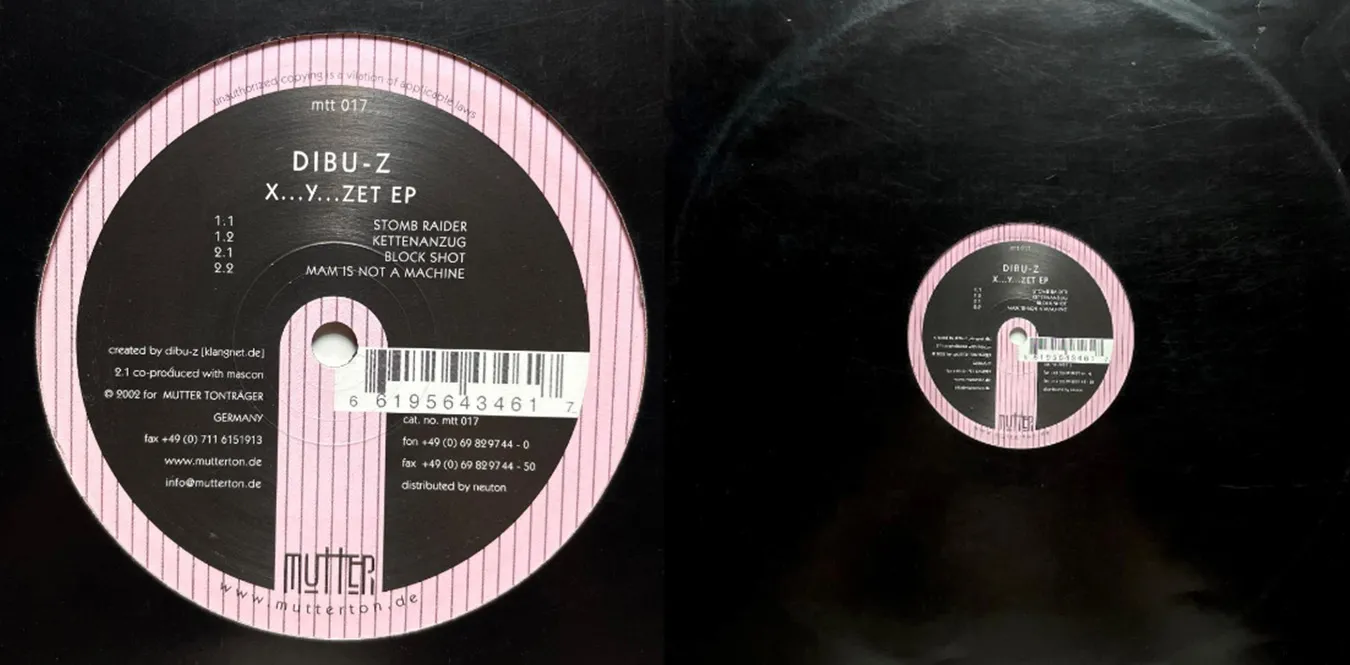
Dibu-Z – X...Y...Zet EP
Curan Stone is American house DJ/producer Curtis Alan Jones, known as Green Velvet. He also works under the names Cajmere, Geo Vogt, Half Pint, and Gino Vittori.
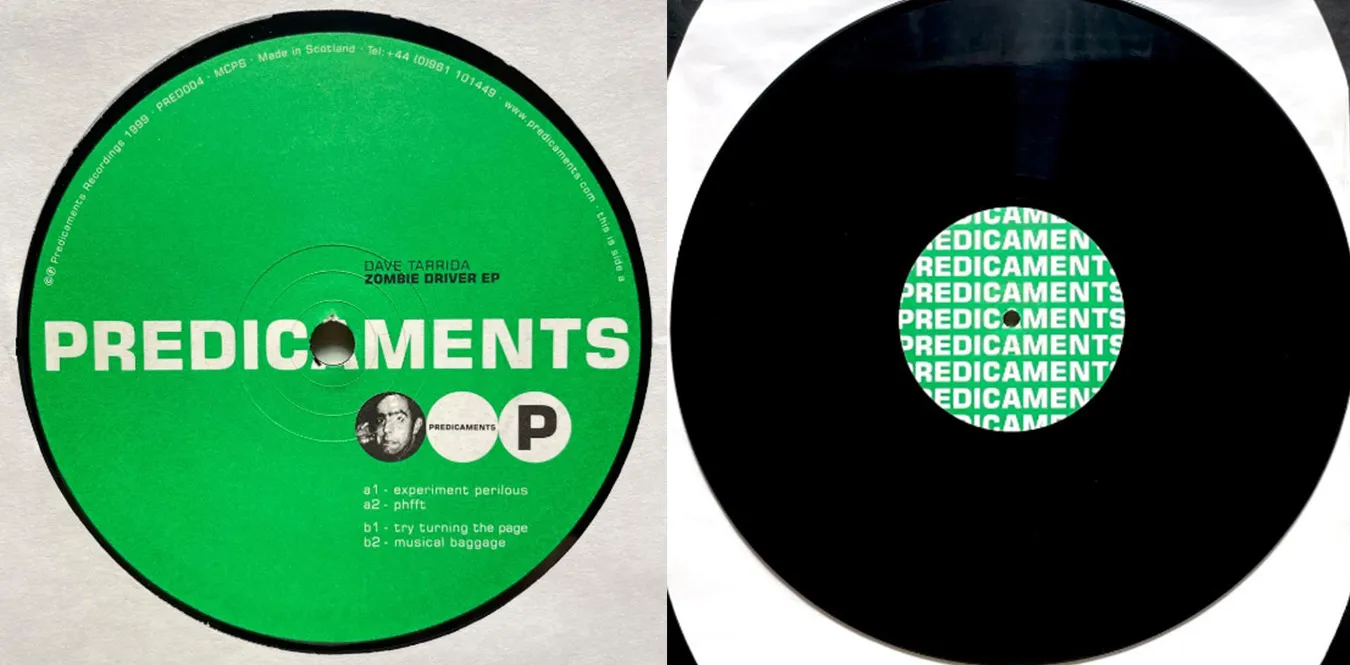
Dave Tarrida – Zombie Driver EP
Dave Tarridaはスコットランド出身のプロデューサー。Steve Glencrossと共にSativae Recordingsを運営していた。
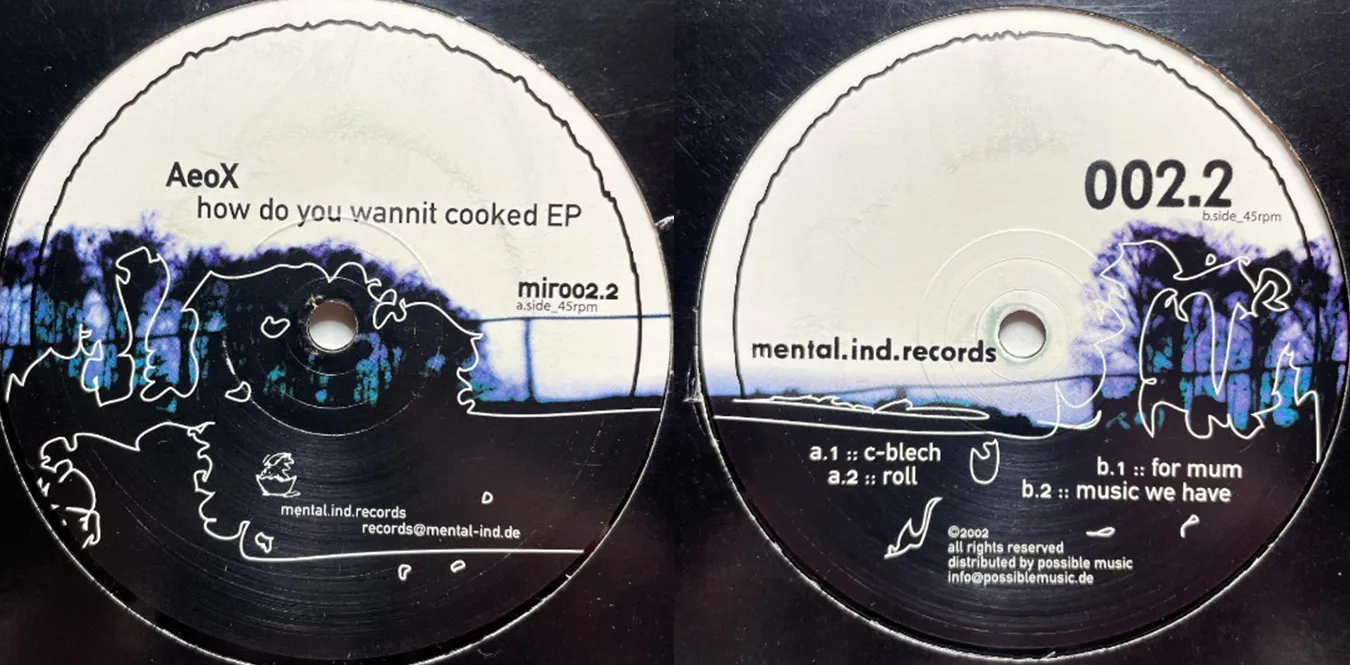
AeoX – How Do You Wannit Cooked EP
AeoXは、1999年から活動するベルリンのテクノパンクバンド。レーベル Null records や Mental Industriesから多数リリースしている。メンバーのHanno Hinkelbeinは、Bill YoungmanとのデュオFurfriendとしても活動している。

【コラム】 Industrial Techno / Hard Experimental Techno
序論:構造化された暴力としてのテクノ