[Column] ANNA: From Brazil to the world, the trajectory of sound that updates the structure of techno

Column en Brazil DJ Techno
[Column] ANNA: From Brazil to the world, the trajectory of sound that updates the structure of techno

Quiet and steady fetal movements that started in Brazil

Text: mmr|Theme: ANNA”s sonic aesthetics and global leap forward, embodying the evolution of Brazilian techno

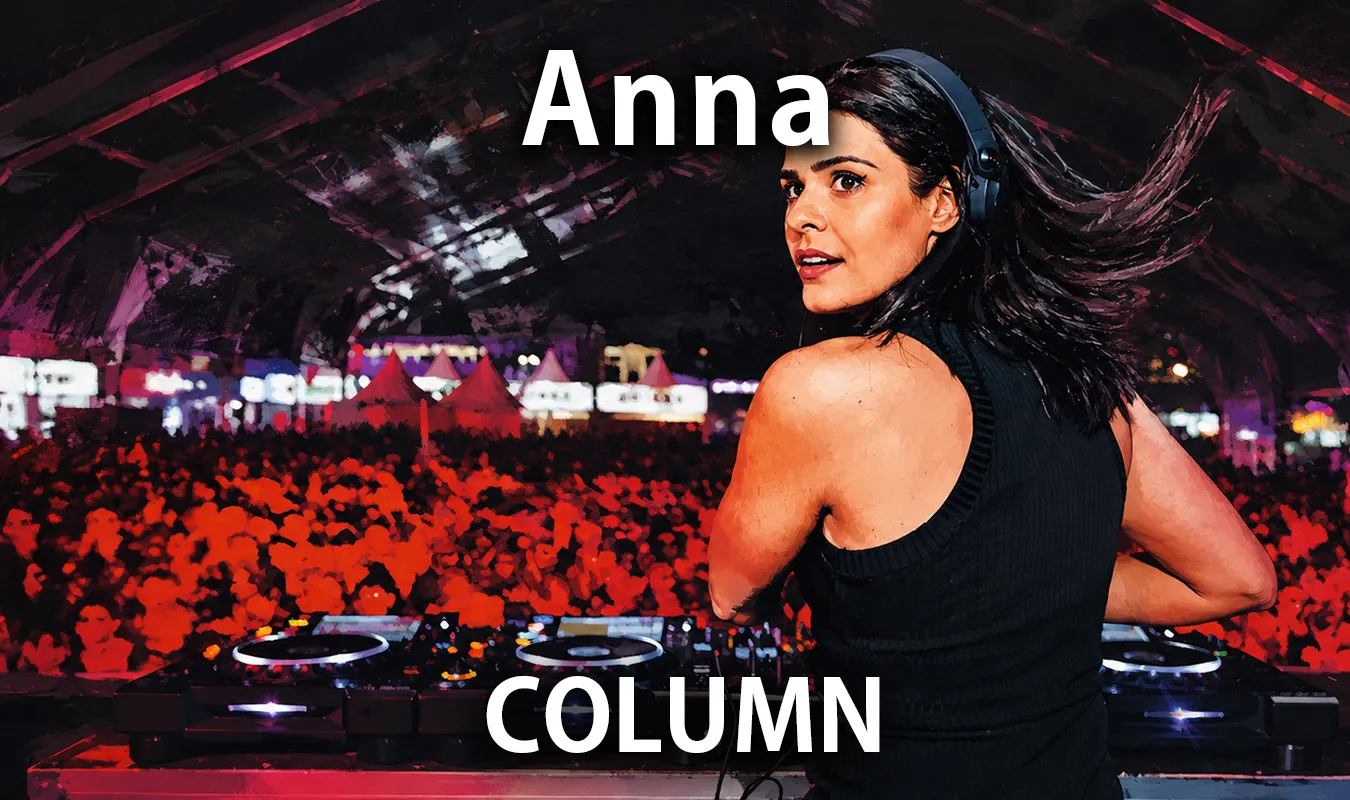
The club scene in Brazil, South America, is often talked about with its flashy festival culture and tropical images. However, behind the scenes, there existed a fertile ground for techno that had undergone a unique evolution different from that of Europe. It was in this context that ANNA (real name: Ana Miranda) emerged.

She was born in Brazil in the late 1980s and grew up surrounded by music from an early age. What is noteworthy is that his family owned a nightclub. Clubs are not just entertainment spaces, but places where people can experience the relationship between music and people, and for ANNA, they played a role similar to educational institutions.

By the time he was a teenager, he had already started working as a DJ, gaining experience playing at local clubs. What was cultivated here was more than just mixing techniques. The sense of reading the atmosphere on the floor, the physical understanding of changes in sound, and the interaction with the audience.

Eventually, she rose to prominence within Brazil and established her presence in the major club scenes in South America. However, at that time, it had not yet become a global breakthrough.

The experience rooted in local club culture was the foundation that gave ANNA’s later sound a deep and persuasive power.


Expanding into Europe and rebuilding the sound

A major turning point in ANNA’s career was her move to Barcelona, ​​Spain. After achieving some success in the South American scene, she moved to Europe in search of a wider stage.

European techno, especially in Berlin, was dominated by minimalist and structural sounds. This environment would have a major influence on ANNA’s musicality.

Her early music was centered around somewhat hard and straightforward techno, but this gradually changed after she moved to Europe. Rather than relying solely on low-frequency pressure, there was a shift to a sound that emphasized spatiality and the layered structure of sound.

This change is not just an imitation of style. ANNA’s uniqueness lies in its ability to maintain a Brazilian sensibility - the physicality and flexibility of the groove - while fusing European architectural aesthetics.

As a result, her music has evolved into something that combines seemingly contradictory elements: ““functional and emotional.’’

Experience in Europe elevated ANNA’s sound from mere club music to “music with structure”


Releases that triggered a breakout

It was a series of trucks released in the late 2010s that made ANNA’s name known around the world. One of the most iconic is “Hidden Beauties.”

This work achieved an extremely high level of balance between functionality and aesthetic sense in techno. It was praised for its delicate sound changes and drama, rather than just a peak-time track.

Furthermore, she has moved closer to the center of the scene by releasing work on labels such as Afterlife and Drumcode.

Each of these labels represents a different trend in techno. Afterlife features a dreamy, cinematic sound, while Drumcode features a more straightforward and energetic techno. ANNA has adapted to both without losing her style.

As a result, she has come to be recognized as someone who crosses the boundaries of genre.

The flexibility to work across multiple labels has pushed ANNA from being just a DJ to a “hub of the scene”


Sound Design: The intersection of function and emotion

ANNA”s greatest feature is their extremely high awareness of sound design. Her tracks don”t just consist of beats and bass, they have multiple layers of sound precisely arranged.

Of particular note are the following elements:

  • Low frequency control (designed not to overexpand)
  • Midrange texture (subtle placement of noise and pads)
  • High frequency accent (sound that is not overly assertive but has a strong presence)

Although these are intended for playback in a club environment, they also have the quality to withstand listening purposes.

Also, there are often “blank spaces” in her music. This blank space is not just silence, but a space designed to create anticipation for what will come next.

Such an approach shows that techno is expanding from mere functional music to artistic expression.

ANNA’s music is created not only by the sound itself, but also by the “arrangement of sounds”


Establishing a global festival and presence

ANNA soon began performing at major festivals around the world. Its name spread not only in Europe but also in North America and Asia.

Particularly at large festivals, the ability to maximize the energy of the floor in a short period of time is required. ANNA has succeeded in meeting these demands while maintaining her own musical style.

Her sets are not just a series of peaks, but are constructed as stories with slow and slow paces. Therefore, the audience will experience not just a dance experience, but a kind of musical journey.

In this respect, ANNA has transformed into something more than just a “DJ”.

Success on the global stage proves that ANNA’s music has the power to transcend cultural boundaries


Chronology: Key points of ANNA’s career

timeline title ANNA Career Timeline 1990s : ブラジルで育つ / 家族のクラブ環境 2000s : DJ活動開始 / 国内での経験蓄積 2010s前半 : 南米シーンでの成功 2010s中盤 : ヨーロッパへ移住(バルセロナ) 2010s後半 : 国際的ブレイク / 主要レーベルからリリース 2020s : 世界的フェス出演 / サウンドの深化

Musical position: Existence that transcends genres

The current techno scene is undergoing fragmentation and fusion at the same time. Among them, ANNA functions as an entity that is not fixed to a specific subgenre.

Her music traverses the following elements:

  • melodic techno *Peak time techno
  • Minimalist structure *Ambient elements

This multi-layeredness symbolizes the complexity of modern club music. Her strength lies in her musicality, which cannot be captured in a single genre.

Although her role as a female DJ is important, her reputation is based solely on the music itself.

ANNA is an artist who transcends the boundaries of genre and is located in the “intermediate realm between function and art.”


Techno as structure: ANNA’s positioning

graph TD A[Brazilian club culture] --> B[Physicality/Groove] C[european techno] --> D[Structure/minimalism] B --> E[ANNA's music] D --> E E --> F[Fusion of function and emotion] F --> G[global reputation]

Conclusion: The present tense of techno that continues to quietly evolve

ANNA’s career has been built not on flashy stories but on steady accumulation. In the process, she has traversed the opposing axes of locality and globality, functionality and artistry.

While her music is optimized for the club environment, it provides a listening experience that goes beyond it. This is also proof that the possibilities of the techno genre are currently expanding.

In the future, ANNA will continue to update her own sound without relying on specific trends. This movement suggests the very future of techno music.

ANNA’s journey proves that techno is not just functional music, but an evolving expression.


Monumental Movement Records

Monumental Movement Records