Factoryという場の成立
文:mmr|テーマ:1960年代ニューヨークにおいて、美術制作と音楽が未分化に交錯した“Factory”という空間の実態と、その音響的・社会的意味、そしてそこに集った人々の逸話を通して文化の核心に迫る
銀色の部屋はなぜ音に満ちていたのか
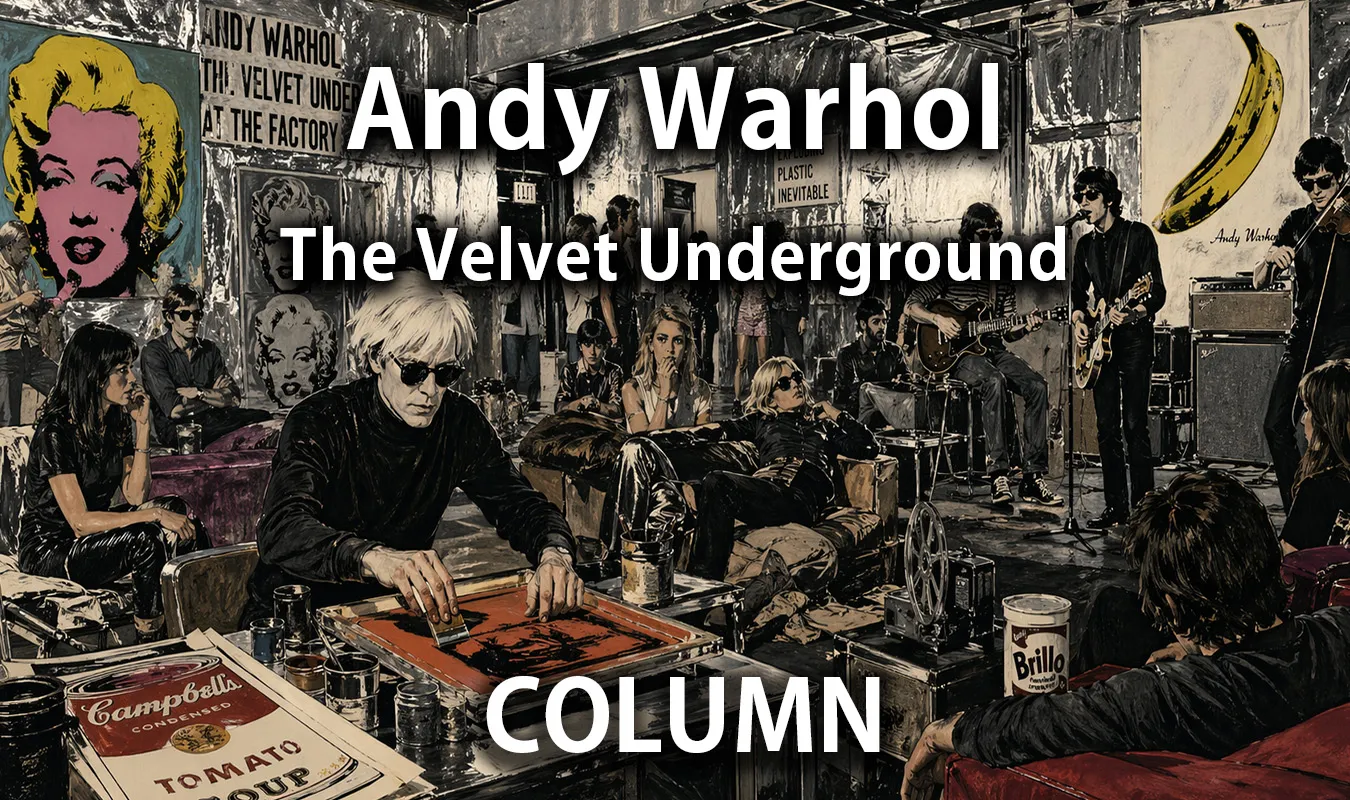
1960年代半ば、Andy Warholが構築した制作拠点「Factory」は、単なるアトリエではなく、常に何かが起き続ける“開かれた場”だった。
壁一面に貼られた銀紙は光を乱反射し、時間感覚を曖昧にする。昼と夜の境界は曖昧で、誰がいつ来ていつ帰るのかも曖昧だった。制作、会話、撮影、ドラッグ、音楽——それらすべてが同時に存在していた。
当時を知る証言の中には、「Factoryでは静寂が不安を呼ぶ」というものがある。音が止まることは、出来事が止まることを意味したからだ。
そのため、The Velvet Undergroundの音楽は単なるBGMではなく、「空間が生きている証明」として鳴り続けていた。
逸話としてよく語られるのは、ウォーホルが来訪者に対してほとんど指示を出さず、ただ場に存在させたという点だ。彼は「何も起きていない状態」すら作品として受け入れていた。
Factoryとは、制御されない出来事そのものを作品化する実験場だった。
The Velvet Undergroundとの接続
音楽を“展示”するという発想
Andy WarholがThe Velvet Undergroundに関わるようになったのは1965年頃である。
この関係は偶然ではなく、当時のニューヨークにおけるアンダーグラウンド文化の交差点として自然に生まれたものだった。
特にLou Reedは文学的バックグラウンドを持ち、音楽を単なる娯楽ではなく「都市の記録」として扱っていた。一方、John Caleは前衛音楽の影響を受け、持続音や不協和音を持ち込んでいた。
この二人の緊張関係が、バンドの独特なサウンドを生み出した。
有名な逸話として、ウォーホルはバンドに対して技術的な指導はほとんど行わず、代わりに「ただ続けろ」と言い続けたと言われている。これはミニマルアートや反復の思想と完全に一致する。
さらに、彼はNicoをバンドに加えることを提案した。これは音楽的判断というより、視覚的・存在的バランスを重視したものだった。
音楽は完成度ではなく、場の緊張を維持するための要素として扱われていた。
Exploding Plastic Inevitable
クラブ空間としてのFactoryの拡張
1966年に始まった「Exploding Plastic Inevitable(EPI)」は、Factoryの内部で行われていたことを外部に持ち出したプロジェクトだった。
このイベントでは、The Velvet Undergroundの演奏とウォーホルの映像が同時に展開された。
Records show that spectators were often confused and even angry. The reason was simple: “I didn’t know where to look.”
逸話として、初めてEPIを体験した観客の一人が「これはコンサートではなく、事故現場のようだ」と語ったとされる。
この“事故のような体験”こそが、ウォーホルの狙いだった。
後のクラブカルチャーやレイヴ文化における「没入」は、ここに原型を見ることができる。
EPI was a device that destroyed appreciation and transformed it into experience.
代表作と空間の物語
作品の背後にある逸話
Andy Warholの代表作は、しばしばクールで無機質なものとして語られるが、その背後には強烈なエピソードが存在する。
Campbell’s Soup Cans ウォーホル自身が日常的に食べていたスープをモチーフにしている。彼は「同じものを繰り返し食べること」に安心を見出していた。
Marilyn Diptych マリリン・モンローの死後に制作され、イメージの増殖と消失が同時に起きる構造を持つ。
Empire 8時間にわたり同じ建物を撮影し続けるこの作品は、上映中に観客が次々と退出したことで有名である。
There are similarly legendary episodes on the music side.
The Velvet Underground & Nico (debut album released in 1967) Although it sold very little in the early years, it later became so influential that it was said that “everyone who heard it started a band.”
White Light/White Heat (second studio album released in 1968) It was rejected by audiences at the time due to its excessive noise and experimental nature.
These works existed on a different level from success and recognition.
代表作とは完成品ではなく、知覚の変化を引き起こす装置だった。
社会と逸話
Factoryに集った人々
Factoryには無数の逸話が残されている。
例えば、来訪者がそのまま映画に出演することは日常的だった。台本は存在せず、ただカメラが回っているだけだった。
ある人物は「自分が出演している映画を後になって初めて知った」と語っている。
また、Edie SedgwickはFactoryの象徴的存在となり、その華やかさと破滅的な人生が伝説化している。
音楽に関しても、Lou Reedはしばしば観客に背を向けて演奏したと言われる。これは観客との関係性を拒否する態度であり、パフォーマンスの概念そのものを問い直すものだった。
Factoryはスターを生む場所であると同時に、スターを消費する装置でもあった。
年表:ウォーホルと音楽空間
1960年代の交差点
ウォーホルは1968年に銃撃され、その後Factoryの性質は大きく変化した。
この出来事は、無秩序な開放空間としてのFactoryの終焉を意味していたとも言われる。
一つの事件が、空間の性質そのものを変えてしまった。
結論
Factoryという神話
Andy WarholとThe Velvet Undergroundが作り出したFactoryは、単なる場所ではなく神話的空間となった。
そこでは
- 音楽
- 映像
- 人間関係
- 偶然
すべてが交差し続けた。
そしてその多くは記録されながらも、同時に語り継がれる“伝説”として残っている。
Factoryとは、事実と逸話が混ざり合いながら今も拡張し続ける文化装置である。