Introduction
文:mmr|テーマ:Afrobeatがナイジェリア国内のライブ文化を中心に発展した事実と、Afro-Fusionが国境を越えた制作・流通環境の中で用いられるようになった経緯を、音楽産業史とディアスポラの動きについて
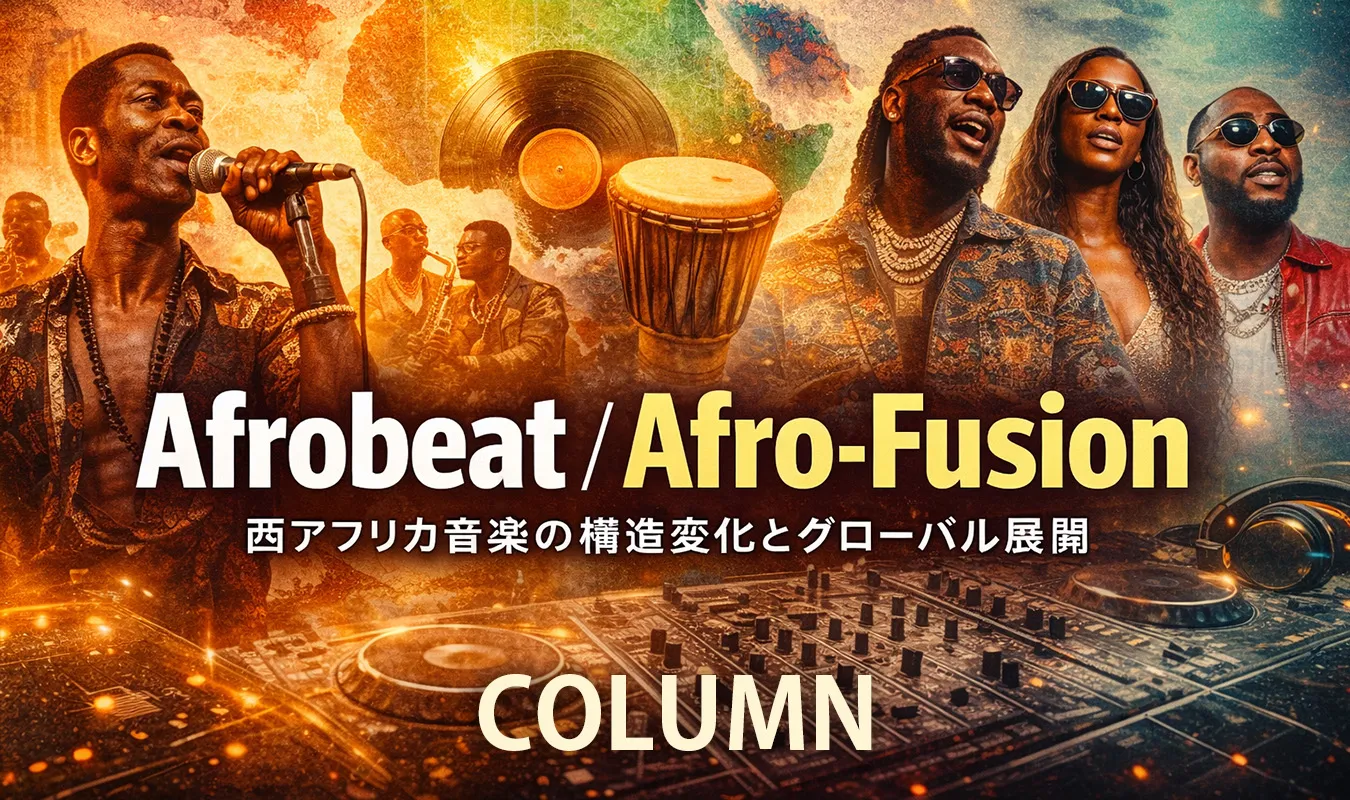
AfrobeatおよびAfro-Fusionは、西アフリカ、とりわけナイジェリアとガーナを起点として形成された音楽文化である。両者はしばしば混同されるが、歴史的背景、音楽構造、社会的役割において異なる位置づけを持つ。本稿では、Afrobeatの成立からAfro-Fusionの展開に至るまでを、確認可能な事実のみをもとに整理し、音楽的特徴、制作技法、社会的文脈、国際的受容の変遷を包括的に記述する。
“本稿は評価や主観的解釈を避け、史料・証言・録音史実に基づく情報のみで構成されている”
西アフリカ音楽の基層
伝統音楽の構造
Many West African folk musics are characterized by polyrhythms, call-and-response, and repetitive structures. In Yoruba, Ewe, and Ashanti musical cultures, structures in which multiple percussion instruments play different frequencies simultaneously are common, and this had a direct influence on later Afrobeat.
Melody emphasizes rhythm and the circulation of phrases rather than scale, and singing is often based on group participation. These characteristics were reorganized into urban music from the mid-20th century onwards, due to urbanization and the spread of recording technology.
植民地期と都市音楽
Colonial rule from the end of the 19th century to the 20th century brought European-derived instruments and harmonic concepts to West Africa. Brass bands, church music, and military bands played throughout the country, blending them with traditional rhythms. The highlife that developed in Ghana is a representative example of this hybridization, and serves as an important prehistory for the later formation of Afrobeat.
Establishment of Afrobeat
Fela Kuti’s activities
Afrobeatという語は、1960年代後半にナイジェリアの音楽家フェラ・アニクラポ・クティによって用いられた。フェラはロンドンで音楽教育を受け、ジャズ、ハイライフ、ソウルを吸収した後、ナイジェリアに帰国した。1969年のアメリカ滞在中、ブラック・パワー運動やファンクの影響を受け、音楽と政治的言説を結びつける方向性を明確にした。
彼が率いたバンド、アフリカ70および後のエジプト80は、長時間演奏、反復的グルーヴ、ホーンセクションを特徴とし、既存のダンス音楽とは異なる形式を確立した。
Musical features
A typical Afrobeat composition consists of a drum set, multiple percussion instruments, electric bass, guitar, horn section, keyboards, and vocals. Although the rhythm is based on 4/4 time, each instrument plays an independent repeating pattern, creating a complex polyrhythm as a whole.
Songs often run over 10 minutes and consist of an intro, a groove development, an improvised solo, and a vocal speech part. The lyrics were written in English, Pidgin English, and Yoruba, and often criticized the political situation, injustice, and power structure in Nigerian society.
“The political nature of the lyrics created tension with the Nigerian government at the time, leading to multiple crackdowns and arrests.”
1970年代の拡大
Acceptance within Nigeria
In the 1970s, Nigeria’s urban culture expanded due to increased oil revenues, and Lagos became the center of the music industry. Afrobeat spread through nightclubs, live music venues, and radio, with many musicians adopting similar formations and styles.
他地域への影響
Afrobeat also influenced neighboring countries such as Ghana, Benin, and Togo. Artists from Benin in particular created unique expressions that combined highlife, local rhythms, and Afrobeat. This led to Afrobeat being recognized as a regional style rather than the music of a single country.
1980年代以降の変化
フェラ・クティ晩年と継承
1980年代後半、フェラの国際的評価は高まった一方、ナイジェリア国内での政治状況は不安定であった。1997年のフェラの死後、その音楽は息子フェミ・クティ、シェウン・クティらによって継承された。彼らは基本的なAfrobeat構造を維持しつつ、現代的な録音技術と国際的制作環境を取り入れた。
Re-evaluation and internationalization
From the late 1990s to the 2000s, Afrobeat was reevaluated in Europe and North America. Through reissues, compilations, and festival appearances, Afrobeat was widely introduced as a branch of world music.
Introducing Afro-Fusion
用語の背景
Afro-Fusionという語は、2000年代以降、アフリカ系アーティストが多様なジャンルを横断的に用いる動向を指すために使用されるようになった。Afrobeatの直接的継承ではなく、ヒップホップ、R&B、レゲエ、ダンスホール、エレクトロニック音楽などとの融合が特徴である。
Nigerian Popular Music
2000年代以降のナイジェリアでは、デジタル制作環境の普及により、個人スタジオでの楽曲制作が一般化した。Afrobeatsと総称されるポップ音楽潮流が形成され、その中でAfro-Fusionはジャンル横断的表現として位置づけられた。
“Afro-Fusion does not have a specific rhythmic type or composition, but is used as a concept to refer to a combination of production methods and cultural origins.”
音楽構造の比較
社会的・文化的文脈
Relationship with politics
From its inception, Afrobeat has been inseparable from political discourse. Live performances had a gathering quality, and lyrics often referred to specific events or policies. On the other hand, Afro-Fusion tends to deal with personal experiences and international identity without making political statements an essential element.
ディアスポラとグローバル化
アフリカ系ディアスポラの存在は、Afro-Fusionの形成に重要な役割を果たした。ロンドン、ニューヨーク、トロントなどの都市では、アフリカ系移民が現地音楽文化と接触し、新たな融合形態を生み出した。
年表
制作技術の変遷
アナログ録音が主流であった1970年代のAfrobeatは、ライブ一発録りに近い形で制作された。複数人の同時演奏が音楽の推進力を生んだ。対照的にAfro-Fusionは、デジタルDAWを用いた分業的制作が中心であり、国境を越えたデータ交換が可能となった。
Conclusion
AfrobeatとAfro-Fusionは、同じ文化圏を共有しながらも、異なる時代背景と制作環境の中で形成された音楽である。前者は特定の歴史的状況に根差した集団的表現であり、後者はグローバル化以降の個別的かつ流動的表現である。本稿で示した事実関係を通じて、両者の連続性と断絶を確認することができる。
“両者は対立概念ではなく、歴史的時間軸上に配置された異なる段階として理解される”
YouTube Podcast
※このPodcastは英語ですが、自動字幕・翻訳で視聴できます
Explore more like this